

 Gaia
GaiaTL;DR
Brand activation agencies for retail brands plan and execute campaigns that bring your brand directly into shoppers' lives through in store demos, pop ups, mobile tours, and digital experiences. The best brand activation agencies for retail brands combine creative strategy with operational depth (staffing, logistics, store level coordination, measurement) and match your specific needs, whether that's full service scale, niche expertise, or purpose driven positioning. This guide defines every key term, breaks down agency types, covers often overlooked topics like POSM design, category strategy, sustainability credential verification, and green claim compliance, and gives you a practical framework for choosing the right partner.
The experiential marketing agency market hit $59.23 billion in 2025 and is projected to reach $77.4 billion by 2032. Retail brands account for a significant share of that spending, yet finding the right activation partner remains surprisingly difficult. Most agency listicles offer names and logos without helping you understand what you're actually buying, or why one type of agency fits your situation better than another.
This guide fixes that. It defines the core terms you'll encounter during your search, explains the meaningful differences between agency types, walks through how to write a request for proposal, and gives you a concrete evaluation framework built around the operational realities of retail.
Explore Grounded World's activation services to see how purpose driven retail activation works in practice.
Quick Answer: What Are the Best Brand Activation Agencies for Retail Brands?
A strong brand activation agency for retail brands combines creative strategy, retail execution, staffing capabilities, logistics management, and measurable performance tracking. The best partner depends on your needs: full service agencies are ideal for national campaigns, specialist agencies excel at focused activations, and purpose driven agencies help brands turn sustainability commitments into measurable retail experiences.
What Is a Brand Activation Agency?
A brand activation agency plans and executes campaigns that bring your brand directly into your customers' lives through live events, retail demos, digital experiences, and product sampling. The goal is to launch something tangible that drives immediate business outcomes: product trial, customer acquisition, content creation, or retail velocity.
This is different from a traditional advertising agency or a general marketing firm. Ad agencies create messages. Brand activation agencies create moments where people interact with your product, form opinions, and (ideally) make a purchase.
The operational scope is what separates a real activation agency from a creative shop that dabbles in events. The right activation partner handles everything from concept to rollout: permits, staffing, vendor management, budgets, logistics, and measurement. If an agency can design a beautiful pop up but can't coordinate across 150 retail locations, they're not a brand activation strategist built for retail.
Why the distinction matters for retail
Retail activation has specific requirements that pure creative agencies often lack: store level coordination with retail partners, inventory management, compliance with retailer guidelines, and the ability to train and deploy brand ambassadors at scale. Practitioners on Reddit and staffing forums note that most activations fail due to operational gaps like poor pacing, inconsistent messaging, and weak handoffs, not bad concepts. The creative idea rarely fails; execution fails.
Brand Activation vs. Experiential Marketing: What's the Difference?
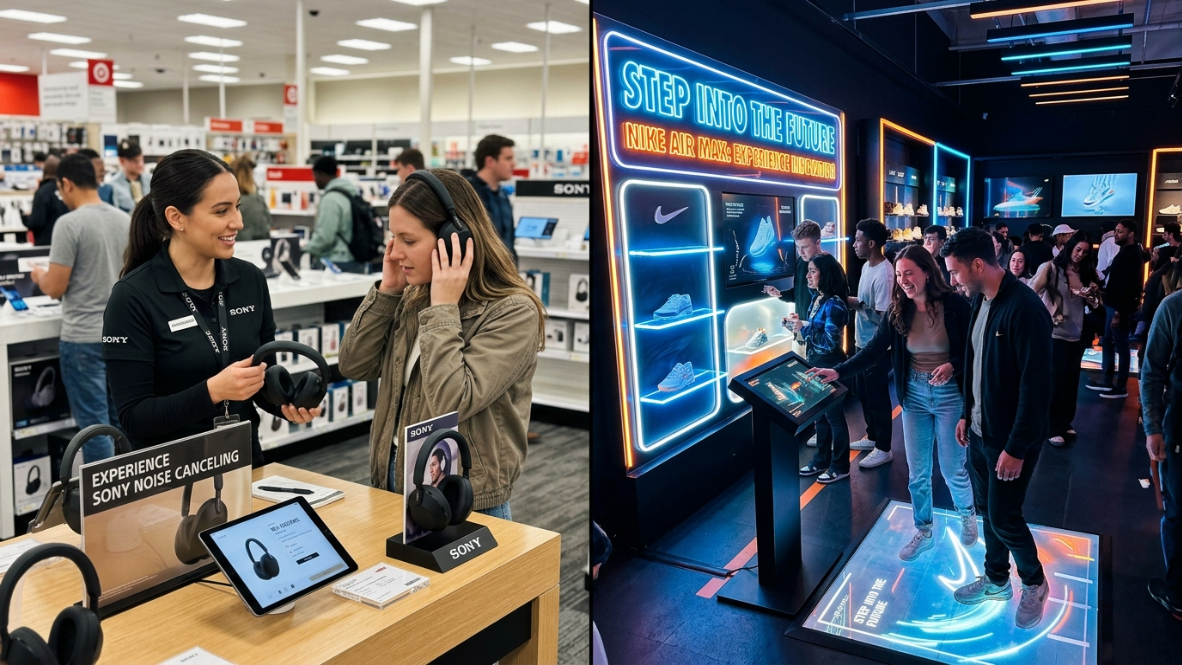
These terms get used interchangeably, and that's a problem. Conflating them leads to misfired agency briefs and misaligned expectations.
Brand activation is a skillfully planned, high impact campaign designed to drive specific results. It's the tactic. You activate a brand to achieve a defined business outcome: launch a product, drive trial, increase retail velocity, shift perception.
Experiential marketing is the broader strategy. It's about designing and delivering memorable, often multi sensory experiences that foster deep emotional connections between an attendee and your brand. Think of experiential marketing as the philosophy; brand activation as the execution.
The clearest way to think about it: experiential marketing is about the experience itself, while brand activation is about bringing your brand message to life. Because experiential marketing works so well at doing that, it's frequently used as the vehicle for brand activation.
Brand Activation | Experiential Marketing | |
|---|---|---|
Focus | Driving a specific action or business outcome | Creating an emotional, memorable experience |
Scope | Campaign level, time bound | Strategic, can span multiple campaigns |
Success metric | Trial, conversion, sales lift | Engagement, sentiment, brand recall |
Retail relevance | Directly tied to point of purchase | May happen anywhere, including far from retail |
Why retail marketers need to understand this
When you brief an experiential marketing agency, they'll design an incredible experience. When you brief a brand activation agency, they'll design a campaign that moves product. For retail, you usually need both, but the activation mindset should lead. Nine out of ten consumers are more inclined to buy from a brand after participating in an experiential campaign, but only if that experience connects to a purchase pathway.
For a deeper comparison of how these approaches interact at shelf, see this shopper marketing vs. retail activation breakdown.
What Is Retail Activation?
Retail activation is a subtype of brand activation that specifically happens in or near a retail environment: a physical store, pop up shop, or anywhere close to the point of purchase.
The broader aim of brand activation is to increase brand awareness and create meaningful connections. Retail activation narrows that focus to the shopping environment, where the distance between experience and purchase shrinks to zero. A shopper encounters your activation, interacts with your product, and can buy it right there.
This proximity is what makes retail activation uniquely powerful. According to EventTrack 2025, 66% of consumers are more likely to purchase a product after interacting with a brand at an event. When that event happens inside the store where they're already shopping, conversion rates climb even higher.
Common retail activation formats
In store demos and sampling. The most direct form. A trained brand ambassador puts your product in a shopper's hands. Practitioners on staffing forums report that a trained brand ambassador drives 3 to 4 times more conversions than someone just standing around, which makes staffing quality one of the highest impact variables in retail activation.
Pop up experiences. According to Retail Insider, the modular pop up is an excellent tool for market testing. It involves creating a temporary space within an established retail environment. Brands can generate exclusivity and urgency without spending capital on a long term lease.
Mobile brand tours. Taking your activation to multiple markets via a branded vehicle or traveling experience. Best for building national awareness with local touchpoints.
Digital and AR activations. QR triggered experiences, augmented reality try ons, or interactive screens that blend physical retail with digital engagement.
Gamification at retail. Turning the shopping experience into a game, whether through loyalty mechanics, scavenger hunts, or interactive challenges that reward trial and purchase.
Influencer led activations. Pairing in store presence with creator content to amplify reach beyond the physical footprint.
Purpose driven activations. Sustainability storytelling at shelf, cause linked campaigns, and activations that make your brand's values tangible at the moment of purchase.
Retail activation costs vary based on campaign format, geography, staffing requirements, production complexity, and duration.
Activation Type | Typical Cost Range |
|---|---|
Single store product demo | $2,000 to $10,000 |
Multi store sampling campaign | $10,000 to $100,000 |
Regional retail activation | $50,000 to $250,000 |
National mobile brand tour | $250,000 to $1M+ |
Large experiential pop up | $100,000 to $500,000+ |
Costs usually include:
Creative strategy
Production
Staffing
Training
Logistics
Retail coordination
Measurement reporting
The cheapest agency is rarely the best value. Poor execution can reduce retailer trust and waste activation spend.
The Role of Point of Sale Material Design in Retail Activation
One topic that rarely gets enough attention in agency selection is point of sale material (POSM) design. POSM includes every physical marketing asset placed at or near the purchase point: shelf talkers, endcap displays, branded fixtures, floor graphics, counter cards, and digital screens.
POSM matters because it's the last thing a shopper sees before deciding to buy. A brilliant activation can drive someone to the shelf, but if the display is generic, hard to find, or inconsistent with the activation messaging, the conversion chain breaks.
The best retail activation agencies either design POSM in house or work closely with production partners to ensure visual and messaging continuity between the activation experience and what appears on shelf. Practitioners on LinkedIn frequently point out that a disconnect between the activation and the shelf display is one of the most common reasons trial doesn't convert to repeat purchase.
When evaluating agencies, ask to see examples of the full activation ecosystem, not just the event or demo, but the POSM, shelf materials, and tactical toolkits that support the campaign at store level.
How Category Strategy Connects to Retail Activation
Category strategy is the discipline of growing an entire product category, not just a single brand, often in partnership with retail buyers. It sounds like a separate function from activation, but the two are deeply connected.
Retail buyers think in categories. They care about category growth, basket size, and how your brand lifts performance across the aisle. When your activation agency understands category strategy, they can frame every campaign in language that retailers want to hear: "This activation will grow the category by X% in participating stores."
Agencies without category strategy fluency tend to pitch activations purely from the brand's perspective. That works for some campaigns, but it limits your ability to get premium in store placement, secure co op funding from retailers, or build the kind of long term retail partnerships that make activation programs sustainable year over year.
If your agency doesn't speak category, consider pairing them with a shopper marketing team that does, or find a partner that integrates both disciplines. For a closer look at how category thinking intersects with activation at retail, see this guide on brand activation at retail.
How Brand Activation Agencies Execute Retail Campaigns
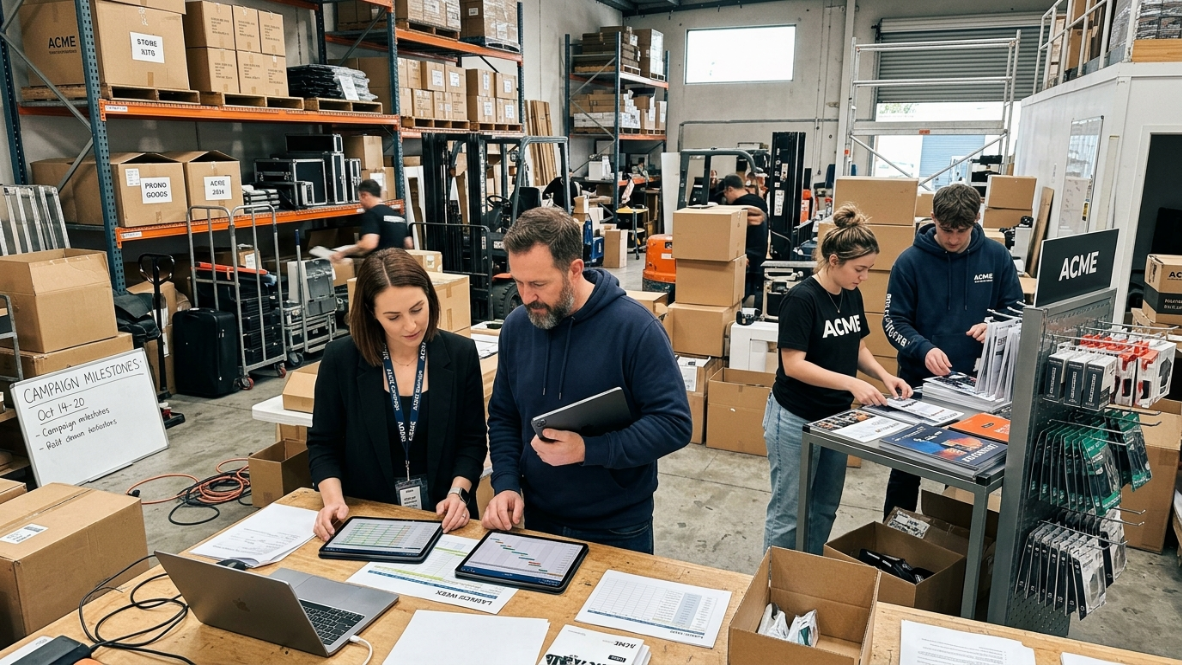
A professional retail activation agency typically follows six stages:
1. Strategy and Audience Research
The agency defines:
Target shopper
Retail environment
Campaign objective
Success metrics
2. Creative Concept Development
The team develops the activation idea, messaging, customer journey, and physical experience.
3. Production Planning
This includes:
Vendor coordination
Permits
Retail approvals
Materials production (including POSM)
Logistics planning
4. Staffing and Training
Brand ambassadors receive:
Product education
Sales scripts
Compliance training
Customer engagement guidelines
A retail activation specialist (the person managing on the ground execution) is often the single most important hire in this phase. This role sits between the agency's strategic team and the field staff, translating the creative brief into operational reality at store level. The best agencies have dedicated activation specialists with deep retail experience, not generalist project managers filling the role.
5. Campaign Execution
The agency manages:
Store schedules
Staff deployment
Inventory
Consumer interactions
6. Measurement and Optimization
Results are analyzed through:
Sales lift
Conversion rates
Consumer feedback
Retail performance
Building a Retail Buyer Sell In Presentation
Here's something most brand activation guides ignore entirely: getting the activation approved by your retail partners in the first place.
Retail buyers are busy, skeptical, and flooded with vendor pitches. A weak sell in presentation can kill a great activation before it launches. The best brand activation agencies help you build a sell in deck that speaks the retailer's language.
A strong sell in presentation includes:
Category context. How the activation benefits the category, not just the brand.
Shopper insight. Data on why the target shopper will respond to this activation format.
Operational plan. Clear logistics, staffing details, and a timeline that shows you won't disrupt store operations.
Projected results. Expected sales lift, trial rates, and category impact based on comparable campaigns.
POSM and visual mockups. Retailers want to see exactly what will appear in their stores.
Risk mitigation. What happens if things go wrong, and how you'll handle it.
Practitioners on Reddit's retail marketing communities emphasize that the brands getting the best in store placement are the ones who treat the retailer as a partner, not a distribution channel. Your sell in presentation is where that partnership starts.
If your activation agency can't help you build and deliver this presentation, that's a gap worth noting during evaluation.
Types of Brand Activation Agencies for Retail Brands
Not all activation agencies are built for the same job. Understanding the taxonomy helps you match your needs to the right partner, which is the single most important step in finding the best brand activation agencies for retail brands.
Full service agencies
Best for large, multi channel campaigns with brand level complexity. These agencies bring structure and scale, handling everything: project management, creative, vendors, and reporting. They're a good fit for complex, multi region rollouts where a single team needs to coordinate across channels and markets.
The tradeoff: full service agencies carry overhead. Their processes are built for big budgets, and smaller brands sometimes find themselves paying for layers of management they don't need.
Specialist and niche agencies
Best for specific campaign types like AR, retail demos, sampling, or live events. Specialist agencies are smaller, focused teams that do one thing really well. You get faster communication, less red tape, and deep executional skills in their area of expertise.
The tradeoff: if your activation needs evolve beyond their specialty, you'll need to bring in additional partners.
Experiential design and production firms
These agencies focus on the physical and sensory environment: building immersive spaces, designing interactive installations, and producing the tangible elements of an activation. They're the firms that build the pop up, design the booth, or engineer the mobile tour vehicle.
The tradeoff: they're builders, not strategists. You'll still need someone to define the campaign objectives, develop the messaging, and handle measurement.
Strategy first activation partners
These agencies lead with research, consumer insights, and brand activation strategy before moving into execution. They're valuable when you need to align internal stakeholders, define clear objectives, or navigate complex retail partner relationships before anything gets built.
The tradeoff: some strategy first firms lack the on the ground operational muscle to execute at scale. The familiar problems surface during vetting: bloated decks, vague timelines, shiny pitches that crumble when you press for execution details.
Purpose driven activation agencies
This is the category most competitor listicles completely ignore, and it's becoming increasingly important for retail brands with sustainability or social impact commitments.
A purpose driven activation agency specializes in translating brand values into authentic, point of purchase experiences. They understand how to make sustainability commitments visible, verifiable, and emotionally resonant without crossing the line into greenwashing.
This matters because purpose driven brands face challenges that generic experiential agencies aren't built to solve: communicating complex sustainability claims in a 30 second retail interaction, aligning activations with B Corp or Science Based Targets frameworks, and bridging the gap between what consumers say they value and what they actually buy.
Best Brand Activation Agencies for Retail Brands in 2026
The best brand activation agency depends on campaign scale, retail channel, budget, and operational requirements. Instead of ranking agencies universally, brands should compare partners based on specialization, geographic reach, retail experience, and measurement capabilities.
Agency | Best For | Strengths | Ideal Client |
|---|---|---|---|
Grounded World | Purpose driven retail activation | Sustainability focused experiences, impact storytelling, category strategy | Purpose led brands |
Jack Morton | Large global brand experiences | Global production capabilities, enterprise campaigns, experiential strategy | Fortune 500 brands |
GMR Marketing | Sports, entertainment, large scale activations | Integrated experiential campaigns and sponsorship activation | National consumer brands |
Momentum Worldwide | Retail and shopper experiences | Omnichannel activation, consumer engagement | Large retail brands |
Mosaic | Retail execution and shopper marketing | Field marketing, retail programs, merchandising | Consumer packaged goods brands |
Factory360 | Experiential campaigns and events | Creative production and brand experiences | Mid market brands |
The best agency is not necessarily the largest. Retail brands should prioritize partners with proven experience in their specific retail environment, including store coordination, staffing, measurement, and compliance.
What Makes Purpose Driven Brand Activation Different?
The intention action gap
Here's the central problem: most consumers say they want to buy sustainably, but their behavior at shelf tells a different story. This disconnect, the intention action gap, is the defining challenge for purpose driven retail brands.
Generic activation agencies don't address this gap because they don't even name it. They'll run a sampling campaign or build a pop up, but they won't design the activation around the specific behavioral barriers that prevent good intentions from becoming purchases. You can learn more about closing the intention action gap and why it demands a different approach.
Greenwashing risk vs. authentic values expression
With greenwashing backlash intensifying, retail brands can't afford to run activations that overstate their sustainability credentials. An activation that feels performative does more damage than no activation at all. Purpose driven agencies understand how to communicate impact claims that are specific, verifiable, and grounded in real commitments, not vague aspiration.
Sustainability Credential Verification and Green Claim Compliance
Two operational areas separate serious purpose driven agencies from pretenders: sustainability credential verification and green claim compliance.
Sustainability credential verification means confirming that the claims your activation makes are backed by real certifications, data, or third party audits. If your activation says "carbon neutral," the agency should know what standard that claim references, whether it's been independently verified, and what documentation needs to be available if a retailer or regulator asks questions. Practitioners on LinkedIn's sustainability marketing groups regularly flag examples of brands making claims at retail that fall apart under scrutiny, damaging both the brand and the retailer's credibility.
Green claim compliance goes further. Regulatory bodies in the US, EU, and UK are tightening rules around environmental marketing claims. The FTC's Green Guides, the EU's Green Claims Directive, and the UK's CMA guidance all set expectations for substantiation, specificity, and clarity. An activation that uses vague language like "eco friendly" or "sustainable" without qualification risks regulatory action and consumer backlash.
The best purpose driven activation agencies build compliance into the creative process. They review claims before they appear on POSM, train brand ambassadors on what they can and cannot say, and ensure every element of the activation, from shelf talkers to social content, meets current regulatory standards.
If your agency can't explain how they handle green claim compliance, that's a red flag. This is especially true for brands selling into retailers like Whole Foods, Target, or Walmart that have their own sustainability claim review processes.
For more on avoiding greenwashing in marketing, see this guide on how to avoid greenwashing.
How sustainability becomes the activation itself
The best purpose driven retail activations don't treat sustainability as a feature to mention. They make it the experience. Think: activations that let shoppers trace a product's supply chain via an interactive display, or sampling events paired with a quantified environmental impact story that gives the purchase meaning beyond the product itself.
Learn how purpose driven marketing drives results for retail brands navigating this space.
How to Write a Request for Proposal (RFP) for Retail Activation
Once you've identified the type of agency you need, the next step is a well structured request for proposal. A vague RFP attracts vague responses. A specific one filters for the agencies that can actually deliver.
A strong retail activation RFP should include:
Brand overview. Who you are, what you sell, your positioning, and any relevant certifications (B Corp, Fair Trade, etc.).
Campaign objectives. Be specific. "Drive trial among millennial shoppers in 50 Target locations in Q3" is better than "increase brand awareness."
Target audience. Demographics, psychographics, and shopping behavior.
Retail channels. Which retailers, how many stores, and any existing retailer relationships or constraints.
Scope of work. What you need the agency to handle (strategy, creative, staffing, POSM design, measurement, sell in support).
Budget range. Agencies consistently say that hiding the budget wastes everyone's time. Provide at least a range so proposals are grounded in reality.
Timeline. Launch date, key milestones, and any retailer deadlines.
Measurement expectations. What KPIs you'll use to evaluate success.
Sustainability or purpose requirements. If you're a purpose driven brand, state your credential verification and green claim compliance expectations upfront.
Evaluation criteria. How you'll score proposals (experience, creative, cost, measurement, values alignment).
One project manager shared in a YouTube walkthrough of agency selection that the most productive RFP processes include a "reverse pitch" step, where the brand presents its challenges and the agency asks questions before submitting a proposal. This filters out agencies that just submit templated responses.
Evaluating Cost vs. Value in Retail Activation
Price is the easiest variable to compare. Value is harder, and it's where the real decision lives.
A low cost agency that delivers weak execution can damage retailer relationships, waste product samples, and produce unmeasurable results. A higher cost agency that delivers strong execution, clear measurement, and retail partner coordination can pay for itself many times over.
Here's a framework for evaluating cost vs. value:
Factor | Low Cost Agency Risk | High Value Agency Indicator |
|---|---|---|
Staffing | Untrained, unreliable brand ambassadors | Vetted talent with retail experience and product training |
POSM | Generic templates, inconsistent with activation | Custom designed, integrated with activation messaging |
Measurement | Post campaign guesswork | Pre defined KPIs with real time tracking |
Retailer coordination | Brand handles all store level logistics | Agency manages retailer relationships directly |
Compliance | No process for green claims or retailer guidelines | Built in review for regulatory and retailer compliance |
Sell in support | None | Agency helps build and present retailer pitch |
The brands getting the strongest ROI from activation spend are the ones who evaluate total value, not just the line item cost. On average, brands that execute well designed experiential campaigns report returns of 3:1 to 5:1 on their spend. But "well designed" is doing a lot of work in that sentence.
Brands that implement structured measurement see 74% higher budget approval rates for future experiential programs. Your CFO will thank you.
Brand Activation Agency Selection Checklist
Evaluation Factor | Why It Matters | Questions To Ask |
|---|---|---|
Retail experience | Retail requires store coordination and compliance | Have you activated in our retail channels before? |
Geographic coverage | National campaigns require operational scale | Can you staff multiple markets simultaneously? |
Measurement capability | Determines ROI and future budgets | What KPIs will you track, and how? |
Staffing infrastructure | Brand ambassadors influence conversion | How are staff trained and managed? |
Retailer relationships | Prevents execution problems | How do you coordinate with retailers? |
POSM and tactical toolkit design | Ensures shelf level continuity | Can you show POSM examples from past campaigns? |
Category strategy fluency | Strengthens sell in and retailer buy in | How do you frame activations in category terms? |
Sustainability expertise | Critical for purpose driven brands | How do you validate impact claims? |
Green claim compliance | Protects against regulatory and reputational risk | What's your process for reviewing environmental claims? |
Sell in support | Gets activations approved by retail buyers | Will you help build and present the retailer pitch? |
How to Choose the Best Brand Activation Agency for Your Retail Brand
Finding the best brand activation agencies for retail brands is less about rankings and more about fit. Here's a practical evaluation framework.
1. Define your objectives first
Before you talk to any agency, get specific about what you need. Are you launching a new product? Driving trial in a new retail channel? Increasing velocity for an existing SKU? Communicating a sustainability commitment? The answer determines which agency type you need.
2. Match agency type to your activation needs
Use the taxonomy above. A 200 store sampling tour requires different capabilities than a single flagship pop up. A purpose driven activation for a B Corp brand needs a different agency than a standard product launch demo.
3. Write a strong RFP
Use the RFP framework outlined above to attract specific, comparable proposals. Include your budget range, measurement expectations, and any sustainability or compliance requirements.
4. Evaluate portfolio and industry expertise
An agency that offers deep experience in your industry, along with creativity and demonstrated successes, is likely to produce a higher ROI. Ask for case studies in your specific retail channel, not just "retail" broadly.
5. Check measurement capabilities before reviewing creative
This is where most brand marketers get the sequence wrong. They fall in love with creative concepts and ask about measurement later. Flip that order.
The most effective experiential campaigns bake measurement into the blueprint from day one, not as a final exam.
6. Assess values alignment
This matters for every brand, but it's non negotiable for purpose driven ones. If your brand holds B Corp certification, has Science Based Targets, or centers sustainability in its positioning, your agency partner needs to understand that world, not just accommodate it. Ask about their own sustainability practices, not just their client work.
7. Probe operational depth
Ask specific questions: How do you handle staffing across multiple regions? What's your process for coordinating with retail partners? How do you manage inventory and POSM logistics? What happens when a store manager pushes back on your activation footprint?
The best brand activation agencies for retail brands have answers to these questions that are detailed, experienced, and specific to retail. Agencies that wave these concerns away are telling you something important about their capabilities.
8. Understand the timeline
Planning a brand activation campaign typically takes 4 to 12 weeks, depending on complexity, scale, and logistics. Smaller digital activations or in store promotions may require less lead time, while large scale experiential events or mobile brand tours need more. If an agency promises a 200 store rollout in three weeks, be skeptical.
Key Metrics for Evaluating Retail Brand Activations
Once you've chosen an agency and launched your activation, here's what to measure. These are the metrics that separate vanity reporting from genuine performance insight.
Foot traffic and dwell time. How many people entered your activation zone, and how long did they stay? Dwell time is often a better indicator of engagement quality than raw traffic.
Trial to purchase conversion. The percentage of people who sampled or interacted and then bought. This is the gold standard metric for retail activation. A strong retail activation agency will coordinate with store level operations to track this accurately.
Sales lift. Same store sales comparison during and after activation vs. control stores or baseline periods. The most credible measure of commercial impact.
Social media mentions and UGC. Organic content generated by attendees. Valuable for extending reach beyond the physical activation footprint.
Lead capture volume and quality. Relevant for brands building direct consumer relationships alongside retail partnerships.
Brand favorability and sentiment shift. Pre/post surveys measuring perception change. Research shows that 80% of attendees are more likely to trust a brand after engaging with it in person.
Cost per qualified engagement. Total activation cost divided by the number of meaningful interactions (not just impressions). This is the efficiency metric that helps you compare activation performance across formats and locations.
For more on building a measurement integrated activation approach, see this guide on sustainability marketing for retail brands.
Quick Reference Glossary of Brand Activation Terms
Brand activation. A campaign designed to bring a brand to life through direct consumer interaction, driving specific business outcomes like trial, purchase, or awareness.
Experiential marketing. The broader strategy of creating memorable, multi sensory experiences that build emotional connections between consumers and brands.
Retail activation. Brand activation that takes place in or near a retail environment, from in store demos to pop ups.
In store activation. Any activation happening inside a physical retail location, including demos, displays, sampling, and interactive installations.
Shopper marketing. Marketing focused on influencing purchase decisions along the path to purchase, often overlapping with retail activation but encompassing broader media and messaging tactics.
Brand experience. The sum of all sensory, emotional, and cognitive interactions a consumer has with a brand across touchpoints.
Brand ambassador. A trained representative who engages consumers on behalf of a brand during activations, demos, or events.
Field marketing. Face to face marketing activities conducted in the field (stores, events, public spaces) to drive awareness and sales.
POSM (Point of Sale Materials). Physical marketing materials placed at or near the point of purchase: displays, signage, shelf talkers, and branded fixtures.
Category activation. Activation focused on driving growth for an entire product category, often in partnership with retailers.
Pop up activation. A temporary branded space or experience, usually in a high traffic location, designed to create urgency, exclusivity, and direct interaction.
Mobile tour. A traveling brand activation that visits multiple markets, often using a branded vehicle or portable experience setup.
Purpose driven activation. Activation that centers a brand's social or environmental purpose as the core experience, making values tangible at the point of purchase.
Intention action gap. The disconnect between what consumers say they value (e.g., sustainability) and what they actually buy. Closing this gap is the central challenge for purpose driven retail brands.
Retail activation specialist. The person responsible for managing on the ground execution of a retail activation campaign, bridging agency strategy and field operations.
Green claim compliance. The process of ensuring environmental marketing claims meet regulatory standards (FTC Green Guides, EU Green Claims Directive) and retailer requirements.
Sustainability credential verification. Confirming that sustainability claims used in activations are backed by certifications, third party audits, or verifiable data.
Frequently Asked Questions
What does a brand activation agency actually do?
A brand activation agency plans and executes campaigns that create direct interaction between your brand and consumers. For retail brands specifically, this includes in store demos, product sampling, pop up experiences, mobile tours, and digital activations. The agency handles strategy, creative, staffing, logistics, retail partner coordination, and performance measurement.
How much does a retail brand activation cost?
Costs vary enormously depending on scale, format, and geography. A single in store demo program might run a few thousand dollars, while a national mobile tour can cost six or seven figures. The more important question is ROI: well designed campaigns typically return 3:1 to 5:1 on spend, so focus on measurement capability when evaluating cost.
How long does it take to plan a retail activation?
Expect 4 to 12 weeks depending on complexity. A simple in store sampling program at a handful of locations might come together in a month. A multi region mobile tour or large scale pop up needs 8 to 12 weeks minimum. Agencies promising faster timelines for complex rollouts should be questioned closely.
What's the difference between a brand activation agency and an experiential marketing agency?
Brand activation agencies focus on driving specific business outcomes (trial, conversion, sales lift) through direct consumer interaction. Experiential marketing agencies focus on creating memorable experiences that build emotional brand connections. In practice, many agencies do both, but the starting point matters: activation leads with outcomes, experiential leads with experience design.
How do I know if I need a purpose driven activation agency?
If your brand has sustainability commitments, social impact initiatives, or values based positioning that needs to come through at retail, a purpose driven agency brings specialized skills. They understand how to communicate impact claims without greenwashing, how to bridge the intention action gap, and how to make purpose tangible at shelf. Generic agencies tend to treat sustainability as a messaging layer rather than a strategic foundation.
What metrics should I track for retail brand activations?
The essential metrics are trial to purchase conversion, sales lift (vs. control stores), foot traffic, dwell time, cost per qualified engagement, and social/UGC output. For purpose driven activations, add brand favorability shift and sustainability perception scores. The key is defining these before launch, not after.
Can a small brand afford professional activation agencies?
Yes, but match the agency type to your budget. Specialist or niche agencies often work with smaller budgets and deliver focused expertise. You don't need a full service agency for a 20 store sampling program. What you do need is an agency with genuine retail operational experience, regardless of size.
What's the biggest mistake brands make when hiring activation agencies?
Choosing based on creative portfolios alone, without evaluating operational depth and measurement capabilities. A beautiful concept that falls apart in execution wastes budget and damages retailer relationships. Ask about staffing processes, store level logistics, and how the agency tracks performance before you ask about creative ideas.
What should I include in a request for proposal for retail activation?
A strong RFP includes brand overview, specific campaign objectives, target audience, retail channels and store counts, scope of work, budget range, timeline, measurement expectations, sustainability or compliance requirements, and evaluation criteria. The more specific your RFP, the better the proposals you'll receive.
How do I verify an agency's sustainability claims?
Ask for third party certifications (B Corp, 1% for the Planet), documented compliance processes, and examples of how they've handled green claim review for past clients. Purpose driven agencies should be able to walk you through their credential verification process in detail.
Finding the best brand activation agencies for retail brands comes down to clarity: knowing what you need, understanding the agency types available, and evaluating partners on operational capability, measurement rigor, category fluency, and compliance readiness, not just creative flair. Whether you're running a 10 store sampling campaign or a national purpose driven retail experience, the right agency makes the difference between a moment that moves product and money spent on a forgettable afternoon.
Ready to discuss your retail activation goals? Get in touch.