

 Gaia
GaiaTL;DR
Shopper marketing is the strategic discipline that covers the entire path to purchase, from pre shop digital influence through in store experience to post purchase retention. Retail activation is a specific tactical execution within that discipline, bringing brands to life through demos, sampling, pop ups, and experiential moments at the point of sale. They are not synonyms. Shopper marketing provides the data, insights, and retailer alignment; retail activation translates that strategy into tangible in store experiences that drive conversion.
Quick Answer
Shopper marketing and retail activation are not the same. Shopper marketing is the long term strategy that influences shoppers throughout the entire buying journey, from product discovery and retail media to shelf experience and post purchase engagement. Retail activation is one tactical component of that strategy, focusing on in store experiences such as product demonstrations, sampling, pop up events, and interactive displays that drive immediate purchase decisions. In most organizations, shopper marketing defines the plan while retail activation executes part of it.
Shopper marketing and retail activation get used interchangeably in meetings, briefs, and org charts. That’s a problem, because treating them as the same thing leads to misallocated budgets and confused teams. One is a strategy. The other is an execution format within that strategy. Understanding the difference matters whether you’re a CPG brand marketer building an annual plan, a category manager negotiating with retailers, or an agency team pitching activation concepts.
This guide breaks down each term, shows how they relate to each other, and explains why the distinction carries real commercial consequences.
Shopper Marketing vs Retail Activation at a Glance
If you need to… | Use Shopper Marketing | Use Retail Activation |
|---|---|---|
Build annual retail strategy | ✅ | ❌ |
Increase retailer partnerships | ✅ | ❌ |
Improve digital shelf content | ✅ | ❌ |
Launch product sampling | ❌ | ✅ |
Run pop up experiences | ❌ | ✅ |
Execute experiential marketing | ❌ | ✅ |
Coordinate retail media | ✅ | Sometimes |
Improve long term shopper loyalty | ✅ | Supports it |
Capture first party data | ✅ | ✅ |
Personalize the shopping experience | ✅ | Supports it |
What Is Shopper Marketing?
Shopper marketing is the discipline of driving conversion by engaging people when they are actively shopping, both in physical stores and online. It covers everything from shelf signage and secondary displays to search optimization on retailer websites, product page content, ratings management, and retail media ads. The common thread is targeting the moment of purchase rather than building long term brand image.
The concept was first developed by Walmart and Procter & Gamble more than 30 years ago. What started as a focus on in store merchandising has expanded into an omnichannel practice that spans digital and physical touchpoints.
The Shopper vs Consumer Distinction
One concept that often trips people up: shoppers and consumers are not always the same person. A consumer is whoever uses the product. A shopper is whoever buys it. A parent buying cereal for their kids is the shopper; the kids are the consumers. A purchasing manager ordering office supplies is the shopper; the employees who use those supplies are the consumers.
This distinction is foundational to shopper marketing. The messaging, media placement, and activation design all change depending on whether you’re targeting the person making the purchase decision or the person who ultimately uses the product. Practitioners on Reddit frequently point out that brands confuse these two roles and end up running “consumer campaigns in a retail wrapper” that fail to address actual shopping behavior, decision triggers, or the in store context. Shopper marketing specifically targets the buyer’s mindset at the moment of decision, which demands different creative, different placement, and different measurement than consumer advertising aimed at building preference over time.
The Scope Is Broader Than Most People Think
Shopper marketing encompasses the full path to purchase. It starts with pre shop digital influence (social media, search, retailer apps), moves through the in store or online shopping experience, and extends into post purchase retention. A practitioner blog by a former Conagra shopper marketer describes the discipline this way: the tactics change, the terminology evolves, but the underlying power shifts are remarkably consistent. Whenever control of the shopper relationship moves, shopper marketing reorganizes itself around that new center of gravity.
That practitioner insight captures something important. Shopper marketing is not a fixed set of tactics. It is a strategic discipline that adapts to wherever shoppers make decisions.
Common Shopper Marketing Tactics
Shopper insights and behavioral research
Retailer specific strategy and sell in stories
Promotional planning and execution
In store displays and point of purchase materials
Digital shelf optimization (product content, imagery, reviews)
Retail media advertising
Category management collaboration
Omnichannel path to purchase mapping
First party data collection and activation (more on this below)
How It Gets Measured
Shopper marketing tracks macro level KPIs: market share shifts, household penetration, basket size, retailer specific sales lift, and return on marketing investment across channels. The measurement is tied to business outcomes, not just campaign performance.
For brands looking to connect their brand activation strategy to shopper marketing, the key is aligning brand building goals with the commercial realities of the retail environment.
What Is Retail Activation?
Retail activation refers to in store marketing strategies designed to engage shoppers through direct, tangible interactions. These activations involve product demonstrations, live experiences, sampling events, pop ups, interactive displays, and limited time retail events. Unlike traditional advertising, retail activation brings a brand to life in a physical or digital retail space, influencing purchase decisions right at the point of sale.
The critical framing here: retail activation is a specific type of brand activation. It is the execution layer, not the strategy layer. Both retail and brand activation share the goal of deepening customers’ connections with a brand, but retail activation narrows the focus to what happens in and around the store.
Common Retail Activation Formats
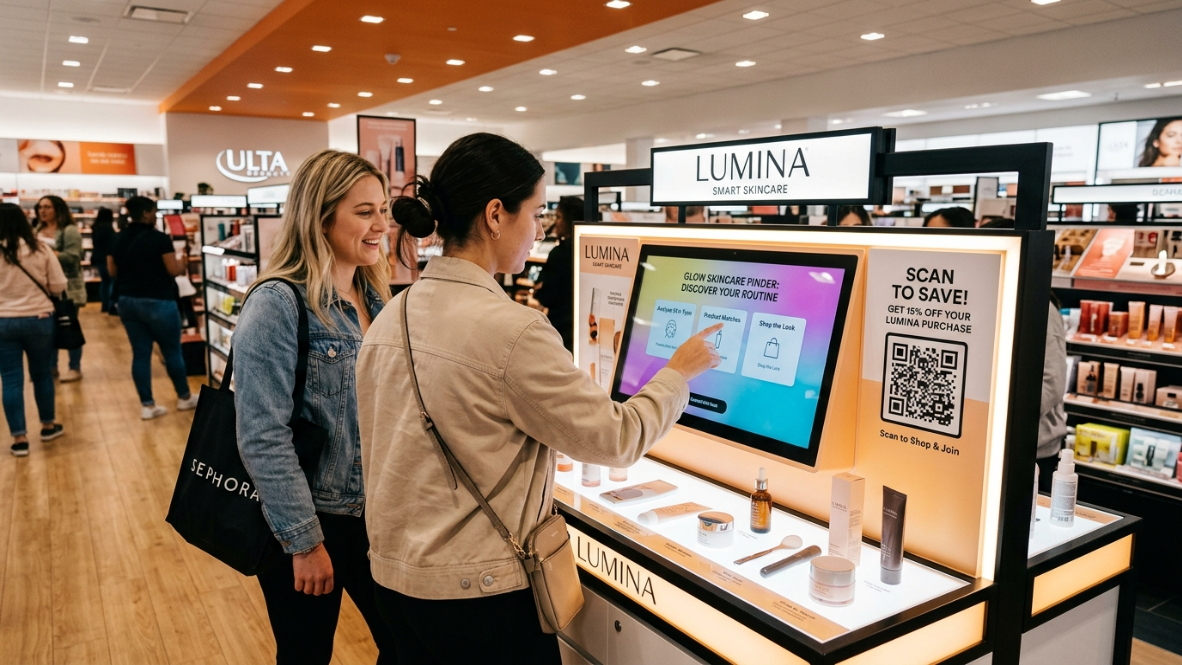
Product sampling and demonstrations (90% of consumers who taste a product express intent to purchase, making sampling one of the most effective formats)
Pop up shops and store in store experiences
Interactive displays and branded stations
AR/VR experiences at shelf
Limited time events tied to seasonal moments or launches
QR code activations and receipt based cashback programs
Retailtainment experiences (see dedicated section below)
These formats differ from traditional consumer marketing because they focus on point of purchase urgency and immediate conversion instead of broad awareness alone. For a deeper look at experiential execution at retail, see this guide on brand activation at retail.
How It Gets Measured
Retail activation measurement tends to be more tactical and immediate: foot traffic changes, dwell time at displays, social media engagement from in store moments, conversion rates, and direct sales lift during the activation period. Businesses track these KPIs to assess the impact on revenue, including customer satisfaction metrics and ROI analysis.
For examples of what high performing executions look like in practice, see these retail activation examples that drove measurable sales results.
Shopper Marketing vs Retail Activation: Side by Side Comparison
This comparison table captures the core differences between shopper marketing and retail activation across key dimensions.
Dimension | Shopper Marketing | Retail Activation |
|---|---|---|
Definition | Strategic discipline covering the full shopper journey | Tactical execution creating direct interactions in retail environments |
Scope | Full path to purchase: pre shop, in store, post purchase, online and offline | Specific moments within retail environments |
Timing | Ongoing, always on strategic planning | Campaign based and time limited |
Tactics | Insights, retailer sell in, displays, retail media, digital shelf, promotions | Demos, sampling, pop ups, interactive displays, experiential events |
Measurement | Market share, penetration, basket size, sales lift | Foot traffic, dwell time, conversion rate, event specific ROI |
Budget Ownership | Typically brand/trade marketing teams | Often shared between brand, shopper, and retailer teams |
Digital/Physical | Omnichannel by design | Primarily physical, increasingly incorporating digital elements |
Data Focus | First party data strategy, shopper insights, behavioral analytics | Event level data capture, scan data, engagement metrics |
Relationship | The strategic umbrella | One execution tool within the umbrella |
The simplest way to remember the relationship: shopper marketing is the long term strategy, and retail activation (sometimes called shopper activation) is the execution at the point of decision. White Label Loyalty puts it well: the activation might be scanning a QR code or submitting a receipt for cashback, but the strategy behind it is what determines whether that activation drives lasting results.
Retailtainment: Where Retail Activation Meets Entertainment
One of the fastest growing trends blurring the line between shopper marketing and retail activation is retailtainment, the fusion of retail and entertainment. The term describes any experience in a store environment designed to entertain shoppers while driving commercial outcomes.
Think about it this way: a standard product demo is retail activation. A product demo embedded in a live cooking show with a local chef, accompanied by music, giveaways, and a photo wall for social sharing? That’s retailtainment.
Retailtainment goes beyond sampling or signage. It turns the store into a destination. Examples include in store concerts, gamified treasure hunts, interactive art installations tied to a product launch, and branded play areas in grocery stores that keep families shopping longer. Costco’s legendary sampling stations are arguably the most scaled version of retailtainment in the U.S., though they rarely get labeled that way.
The strategic logic is straightforward. As e commerce captures more routine replenishment purchases, physical retail needs to offer something a screen cannot. Retailtainment gives shoppers a reason to show up. For brands, it creates longer dwell times, higher engagement, and more shareable moments. Practitioners on LinkedIn note that retailtainment activations consistently outperform traditional displays on social media impressions, sometimes by 5x to 10x, because shoppers voluntarily create content about experiences they enjoy.
But retailtainment only works when it connects back to a shopper marketing strategy. A flashy in store event that doesn’t align with the category insight, the retailer’s priorities, or the brand’s commercial objectives is just expensive noise. The best retailtainment executions start with a shopper insight (“this category is losing trips to online,” or “families feel rushed in this aisle”) and then design an entertainment layer that solves a real problem.
First Party Data Capture: The New Currency of Shopper Marketing
The deprecation of third party cookies and tightening privacy regulations have made first party data the most valuable asset in shopper marketing. And retail activations have become one of the most effective collection mechanisms.
How Activations Generate First Party Data
Every retail activation is a data collection opportunity. QR code scans, receipt uploads, contest entries, loyalty program sign ups, app downloads at shelf, and even physical interactions tracked through sensors all generate first party data that brands can own. Unlike impressions or awareness metrics, this data tells you exactly who engaged, when, and often what they purchased afterward.
GroupM forecasts retail media to be the fastest growing media channel, with 17.5% growth in 2024, and roughly 68% of advertisers are already working with one or more retail media networks. But what makes retail media so powerful is the first party purchase data that retailers can provide. Shopper marketing teams increasingly design activations with data capture as a primary objective, not an afterthought.
The Strategic Value
For shopper marketing, first party data does three things. First, it builds owned audiences that can be retargeted across channels, reducing dependence on retailer media networks. Second, it feeds closed loop measurement by connecting activation engagement to actual purchase. Third, it creates a feedback loop that makes future activations smarter. Brands that treat every in store interaction as a data opportunity can build shopper profiles that inform everything from promotion design to new product development.
Practitioners in CPG forums emphasize that the brands winning at shopper marketing in 2025 and 2026 are the ones that built first party data infrastructure early. One brand manager shared on a YouTube walkthrough that their team increased repeat purchase rates by 22% simply by using email addresses collected during sampling events to send personalized follow up offers within 48 hours.
Personalization in Activation: Moving Beyond One Size Fits All
Personalization has been a buzzword in digital marketing for years, but it’s now transforming retail activation in tangible ways. The combination of first party data, retail media capabilities, and smarter in store technology means activations no longer have to deliver the same message to every shopper.
What Personalized Activation Looks Like
At the most basic level, personalization means tailoring offers based on purchase history. A loyalty app that surfaces a coupon for a complementary product while a shopper is in the relevant aisle is personalized activation. At the more sophisticated end, it means dynamically adjusting digital signage based on time of day, shopper demographics detected by sensors, or even weather conditions that shift category demand.
Retailer apps from Kroger, Walmart, and Target already push personalized offers tied to location and past purchases. These represent the convergence of shopper marketing strategy and retail activation execution. The strategy layer determines which shoppers to target with which message at which moment. The activation layer delivers that message through a screen, a display, or a human interaction.
Why It Matters for 2026
According to one trade marketing study, 79% of consumers say the shopping experience matters as much as product quality. Personalization directly improves that experience by making it relevant. Shoppers who receive offers aligned with their actual needs and preferences are more likely to convert, more likely to feel positively about the retailer, and more likely to return.
The challenge is execution complexity. Personalized activation requires data infrastructure, retailer cooperation, and creative flexibility. Most brands are somewhere on the journey, with large CPG companies furthest ahead thanks to their retail media investments and loyalty data partnerships.
For brands exploring how to integrate these capabilities into a broader plan, building an integrated marketing strategy that accounts for personalization at every touchpoint is increasingly table stakes.
How Shopper Marketing and Retail Activation Work Together
Separating shopper marketing vs retail activation into “strategy” and “execution” is not just an academic exercise. It determines how work flows from insight to impact.
The Typical Flow
Insights first. Shopper marketing teams study how people shop the category, what triggers brand switching, and where decisions get made. This includes distinguishing between the shopper and the consumer, because the decision maker at shelf may not be the end user.
Retailer sell in. Those insights get packaged into a story that convinces a specific retailer to support the activation with placement, promotion, or co funding.
Activation design. The retail activation is built to match both the brand’s objectives and the retailer’s priorities, using formats that fit the store environment. Increasingly, this step includes planning for data capture and personalization.
Measurement. Results feed back into the shopper marketing strategy, refining future activations. First party data collected during activation informs the next cycle.
Without the strategy layer, retail activations become random tactics disconnected from business goals. Without the activation layer, shopper marketing strategies stay in slide decks.
The Triple Win Framework
Practitioners consistently emphasize that effective shopper marketing programs are built on value exchange. As one practitioner guide from Cliffedge Marketing explains, retailers won’t give you an incremental display because they like your packaging. They want you to demonstrate how you’ll drive volume. An effective shopper marketing strategy creates a triple win:
For the brand: increased sales, trial, and loyalty
For the shopper: a better, more engaging shopping experience
For the retailer: higher foot traffic, basket size, and category growth
This framework is especially useful when building a customer engagement strategy that aligns shopper marketing with broader brand initiatives.
Related Terms Explained
The SERP for shopper marketing vs retail activation surfaces confusion across several overlapping terms. Here is how they all fit together.
Trade Marketing vs Shopper Marketing
Trade marketing focuses on building relationships with wholesalers, distributors, and retailers to increase demand within the supply chain. It is a B2B function. Shopper marketing focuses on the end consumer’s shopping experience. In mature Western markets like North America and Western Europe, these functions tend to be distinct and specialized. In other regions, they often overlap or are treated as synonymous.
Retail Media vs Shopper Marketing
Retail media refers specifically to the buying and selling of advertising within retailer ecosystems: think sponsored product ads on Amazon, Walmart Connect, or Instacart. Shopper marketing is the broader umbrella. Retail media is one tool within it, alongside displays, promotions, digital shelf content, and in store activations.
The growth of retail media networks has been dramatic. Retail media is now the fastest growing media channel, and this growth is reshaping how shopper marketing teams allocate budgets. But it hasn’t replaced the discipline. It has expanded it, particularly by giving brands access to retailer first party data for targeting and measurement.
Commerce Marketing: The Evolution
Some confusion about shopper marketing vs retail activation stems from organizational changes. Around the time of the COVID pandemic, many CPG companies rebranded their shopper marketing departments as “commerce marketing.” The logic was clear: shoppers’ paths to purchase had become more chaotic, more digitized, and less dependent on in store activities. Shopper marketers’ responsibilities expanded to include social media, retail media, search marketing, and various online selling platforms. As one industry publication put it, commerce marketing is the undeniable future of shopper marketing, if not already its present.
Shopper Activation vs Retail Activation
These terms are virtually synonymous. Both describe the tactical, campaign based execution of engaging shoppers at or near the point of purchase. “Shopper activation” tends to appear more in CPG specific contexts, while “retail activation” is used more broadly across industries.
The In Store Decision Myth: Context Matters
You will hear that “70% of purchase decisions are made in store.” This statistic gets cited constantly in shopper marketing conversations, but it needs context.
The original source was a 1996 POPAI study of point of purchase marketing in supermarkets. What it actually said was that about 70% of brand decisions are made in store, meaning shoppers often know they need laundry detergent but choose which brand at the shelf. A follow up POPAI study in 2012 put the in store decision rate at 76%.
But practitioners challenge even this. One consultant reports studying many categories and finding very few that get anywhere close to 76%. In one category (kid’s milk), the in store decision rate was below 5%. This matters enormously for how brands balance retail activation spending against pre shop digital influence. Categories with high brand loyalty or pre planned purchases need a different shopper marketing approach than impulse driven categories.
The takeaway: don’t let a single statistic drive your entire activation strategy. Category level data should shape the mix of pre shop, in store, and post purchase tactics.
The Purpose Driven Advantage in Shopper Marketing and Retail Activation
Most content about shopper marketing vs retail activation focuses purely on commercial mechanics. But for purpose driven brands, there is a distinct strategic advantage worth exploring.
Why Purpose Creates Better Activations
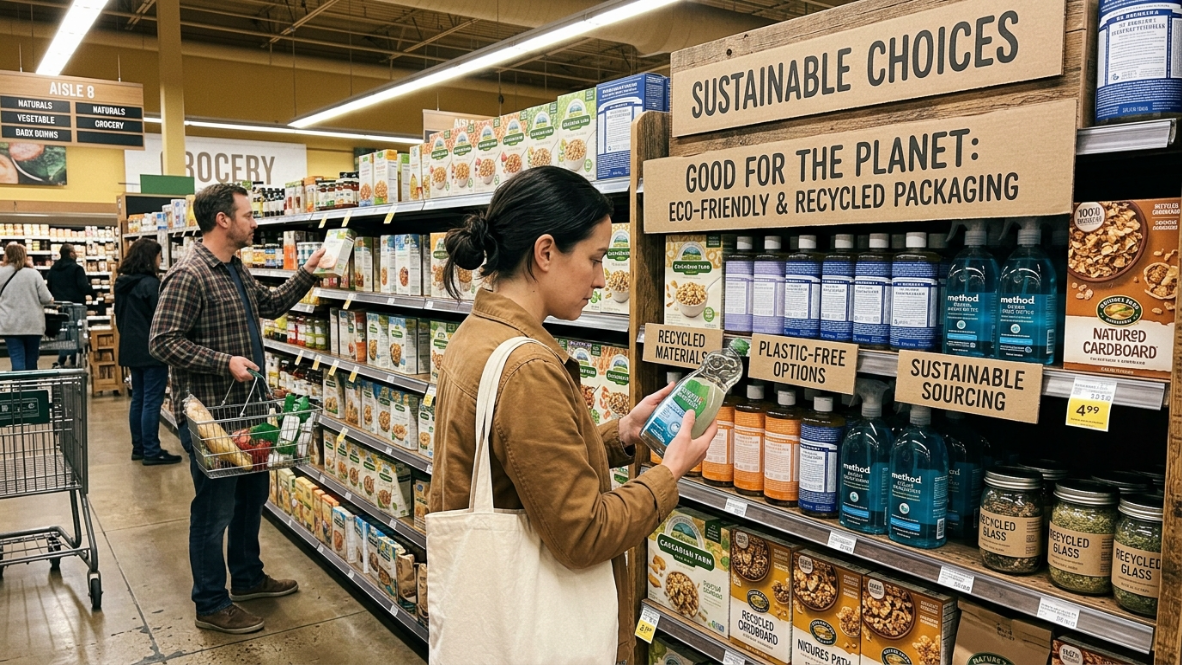
Retail activations work best when they have substance, something genuine to communicate. Purpose driven brands that have real commitments to sustainability, ethical sourcing, or social impact have a natural advantage: their activations can tell authentic stories rather than relying solely on price promotions or novelty.
Consider the intention action gap. Research consistently shows that consumers say they care about sustainability but don’t always follow through at shelf. 79% of consumers say the shopping experience matters as much as product quality. This gap represents both a challenge and an opportunity. Well designed retail activations can close it by making sustainability commitments tangible, visible, and easy to act on in the moment of choice. For brands grappling with this challenge, understanding why consumers don’t buy sustainable products is the starting point.
Consumers increasingly prefer brands with ethical and sustainable practices. And 64% of Gen Z and Millennial shoppers specifically prefer brands with sustainable values, making purpose a commercial lever, not just a nice to have.
Sustainability at Shelf vs Corporate Messaging
Abstract sustainability claims on a corporate website don’t influence purchase decisions. But a well designed retail activation that shows exactly what “sustainably sourced” means, through visual storytelling, interactive elements, or sampling, can. The most effective approach makes values tangible at the exact moment someone is deciding what to put in their cart.
Retailtainment formats are particularly well suited to purpose driven storytelling. An interactive display that lets a shopper trace a coffee bean’s journey from farm to shelf, or a sampling station staffed by a farmer who grew the ingredients, creates the kind of credible, memorable experience that abstract claims never can.
For brands wanting to activate brand purpose through retail, the key is connecting high level commitments to specific, credible, in store moments.
Business Goal | Best Approach |
|---|---|
Increase awareness inside retailers | Shopper Marketing |
Improve retailer relationships | Shopper Marketing |
Launch new product | Both |
Drive impulse purchases | Retail Activation |
Increase basket size | Shopper Marketing |
Generate social buzz | Retail Activation |
Build omnichannel strategy | Shopper Marketing |
Test experiential concepts | Retail Activation |
Capture first party shopper data | Both |
Personalize the path to purchase | Shopper Marketing |
Practical Takeaways: When to Use Which
Use Shopper Marketing When:
Building a cross retailer annual plan that needs strategic coherence
Developing retailer specific strategies that require insights, sell in stories, and measurement frameworks
Integrating digital and physical touchpoints into one connected program
Investing in retail media as part of a broader omnichannel approach
Aligning trade spending with brand building objectives
Building first party data infrastructure for long term shopper relationships
Targeting different shopper segments with personalized messaging
Use Retail Activation When:
Launching a new product and needing to drive trial
Creating memorable in store moments that generate social sharing
Making abstract brand values (like sustainability) tangible at the point of purchase
Driving foot traffic to specific retailers or store sections
Testing new formats or messages in a controlled, measurable environment
Collecting first party data through QR codes, sign ups, or receipt scans
Creating retailtainment experiences that turn stores into destinations
The most effective programs treat shopper marketing as the strategic foundation and retail activation as one of its most powerful execution tools. Neither works well in isolation.
Heading into 2026, Path to Purchase Institute notes that shopper marketers face a mix of transformation and tension: the need for connected measurement, a shift from short term ROAS to long term value, the rise of AI native commerce, and continued disruption across discovery channels. Brands that understand the full hierarchy, from strategy through execution, will be better positioned to adapt.
Talk to our team about building retail activation strategies grounded in brand purpose and commercial results.
Frequently Asked Questions
Is retail activation a subset of shopper marketing?
Yes. Shopper marketing is the strategic discipline covering the entire path to purchase. Retail activation is one execution format within that discipline, focused on creating direct interactions with shoppers in retail environments through demos, sampling, pop ups, and experiential moments.
What is the difference between a shopper and a consumer?
A shopper is the person making the purchase decision. A consumer is the person who uses the product. They can be the same person, but often they’re not. A parent buying snacks for their children is the shopper; the children are the consumers. Shopper marketing targets the buyer’s decision making process, while consumer marketing targets the end user’s preferences and brand perception. Getting this distinction wrong leads to campaigns that look good on paper but fail at shelf.
Are shopper activation and retail activation the same thing?
Essentially, yes. Both terms describe tactical, campaign based execution at or near the point of purchase. “Shopper activation” is more common in CPG contexts, while “retail activation” is used more broadly. The core concept is identical.
How does trade marketing differ from shopper marketing?
Trade marketing focuses on the B2B relationship with retailers, wholesalers, and distributors to increase supply chain demand. Shopper marketing focuses on the end consumer’s shopping experience. In mature Western markets these are typically separate functions, though in other regions they often overlap.
What is commerce marketing, and how does it relate to shopper marketing?
Commerce marketing is an expanded version of shopper marketing that emerged around the COVID pandemic. As paths to purchase became more digital and fragmented, shopper marketing departments in many CPG companies rebranded as commerce marketing to reflect responsibilities that now include social media, retail media, search marketing, and e commerce platforms.
What is retailtainment and why does it matter?
Retailtainment is the blending of retail and entertainment to create in store experiences that engage shoppers beyond traditional product displays. It matters because as e commerce captures more routine purchases, physical stores need to offer something a screen cannot. Retailtainment gives shoppers a reason to visit, increases dwell time, and generates social content. It sits within the retail activation toolkit but requires shopper marketing strategy to deliver commercial results.
Is the “70% of decisions made in store” statistic accurate?
It is often cited but needs context. The original 1996 POPAI study found that about 70% of brand decisions (not category decisions) are made in store. The rate varies enormously by category, from below 5% in some categories to over 70% in others. Brands should use category specific data rather than relying on this single number.
What KPIs should I track for retail activation vs shopper marketing?
Retail activation KPIs tend to be immediate and tactical: foot traffic, dwell time, conversion rate, social media engagement, first party data records collected, and direct sales lift during the activation window. Shopper marketing KPIs are broader: market share, household penetration, basket size, retailer specific sales lift, and long term return on marketing investment.
How does first party data change the shopper marketing equation?
First party data gives brands direct ownership of shopper relationships rather than depending entirely on retailer data or third party cookies. Activations that capture email addresses, app downloads, or loyalty sign ups create audiences that can be retargeted, personalized, and measured across channels. This data also enables closed loop measurement, connecting in store engagement to actual purchase behavior.
Can small or purpose driven brands compete in shopper marketing?
Absolutely. Purpose driven brands often have a natural advantage in retail activation because they have authentic stories to tell at shelf. While they may not match the trade budgets of large CPG companies, they can create high impact, shareable moments that build both brand equity and sales. The key is using genuine commitments rather than manufactured promotional narratives.