

 Gaia
GaiaTL;DR
A retail activation agency plans and executes campaigns that bring brands to life at or near the point of purchase, from in-store demos and pop-ups to digital-physical hybrid experiences. These agencies differ from general marketing firms by focusing on measurable outcomes like sales lift and trial conversion rather than impressions alone. The best ones combine strategy, staffing expertise, logistics coordination, and measurement rigor. Purpose-driven retail activation is an emerging specialization that translates brand values into shopper behavior change at the shelf.
Quick Answer
A retail activation agency helps brands increase in-store sales by planning and managing campaigns where shoppers make purchasing decisions. Services typically include product sampling, in-store demonstrations, pop-up experiences, brand ambassador staffing, retail merchandising, logistics, and campaign measurement. Unlike a traditional marketing agency that focuses on awareness, a retail activation agency focuses on influencing purchase behavior and delivering measurable business outcomes such as sales lift, product trial, conversion rates, and return on investment (ROI). Businesses usually hire these agencies when launching products, expanding into new retailers, running seasonal promotions, or needing expertise that internal marketing teams lack.
Key Takeaways
Retail activation agencies specialize in converting shoppers into buyers.
Their success is measured by sales, product trials, and conversion—not impressions.
Most agencies provide strategy, staffing, logistics, creative execution, and reporting.
Retail activations are most valuable during product launches and retailer promotions.
Well-executed campaigns often outperform traditional advertising because they influence purchase decisions at the point of sale.
Purpose-driven retail activation is becoming a competitive advantage as consumers increasingly expect brands to demonstrate their values in-store.
What Is a Retail Activation Agency?
A retail activation agency is a specialized firm that designs, staffs, and manages marketing campaigns within retail environments to drive product trial, purchase, and brand engagement. These agencies work inside the constraints of physical and digital stores, coordinating everything from product sampling programs and interactive displays to pop-up shops and retailer partnership campaigns.
Think of it this way: a general marketing agency might build your brand campaign. A retail activation agency makes that campaign work inside a Target, a Whole Foods, or a Costco, where the rules, relationships, and shopper psychology are fundamentally different from any other marketing channel.
The term sits under the broader umbrella of brand activation strategy, which encompasses any initiative designed to create direct consumer interaction with a brand. Retail activation narrows the focus to environments where purchase decisions happen, whether that’s a physical aisle, an online storefront, or a pop-up near the point of sale.
If you’re evaluating whether your brand needs this type of support, Grounded World’s Activate services offer a useful reference point for what strategic retail activation looks like in practice.
How a Retail Activation Campaign Works
Understanding the process helps brands know what they're paying for and where agencies create value.
Stage | Agency Responsibility | Deliverable |
|---|---|---|
Discovery | Understand goals and retailers | Campaign strategy |
Planning | Budget, locations, staffing | Activation plan |
Creative | Design displays and experiences | Retail assets |
Staffing | Recruit and train ambassadors | Field team |
Logistics | Ship materials and coordinate stores | Execution readiness |
Launch | Execute campaign | Live activation |
Measurement | Collect sales and engagement data | ROI report |
Optimization | Improve future campaigns | Recommendations |
What Does a Retail Activation Agency Do?
The scope of work varies by agency, but core capabilities typically include:
Strategy and planning. Before any activation goes live, the agency researches the retail environment, shopper behavior, and competitive landscape. Strategic agencies begin with diagnosis rather than jumping to execution. This might involve assessing the category dynamics at a specific retailer, identifying shopper pain points, or mapping how a brand’s positioning translates to the shelf.
Creative concepting and design. This covers everything from display design and POSM (point of sale materials) to the look and feel of a pop-up experience. The creative has to work within retailer guidelines, which are often strict about dimensions, materials, and messaging.
Staffing and training. This is where many activations succeed or fail. Agencies recruit, train, and manage brand ambassadors, demo staff, and field marketing teams. According to data from EventStaff, stores that add just one trained staff member during peak hours see up to 2x higher engagement than understaffed setups.
Logistics and coordination. Running sampling programs across 200 stores in 30 days requires serious operational infrastructure: inventory management, store-level scheduling, compliance checks, and real-time troubleshooting.
Measurement and reporting. The best retail activation agencies track hard metrics, not just foot traffic. They report on sales lift, trial-to-purchase conversion, CRM signups, and cost per activation. An EventTrack study found that 98% of consumers are more inclined to purchase after attending an activation event, but proving that for your specific campaign requires closed-loop measurement.
For a deeper look at how these activities play out in store, the guide on brand activation at retail covers the execution layer in more detail.
Retail Activation Agency Services Checklist
Not every agency offers the same capabilities. Before hiring one, confirm they provide the services your campaign requires.
Service | Usually Included |
|---|---|
Retail strategy | ✓ |
Shopper marketing | ✓ |
Brand ambassadors | ✓ |
Product demonstrations | ✓ |
Product sampling | ✓ |
Pop-up stores | ✓ |
Retail merchandising | Often |
Retail media integration | Sometimes |
Logistics management | ✓ |
Performance reporting | ✓ |
Sales analysis | Better agencies |
ROI tracking | Better agencies |
Sustainability activation | Specialized agencies |
Types of Retail Activation Agencies
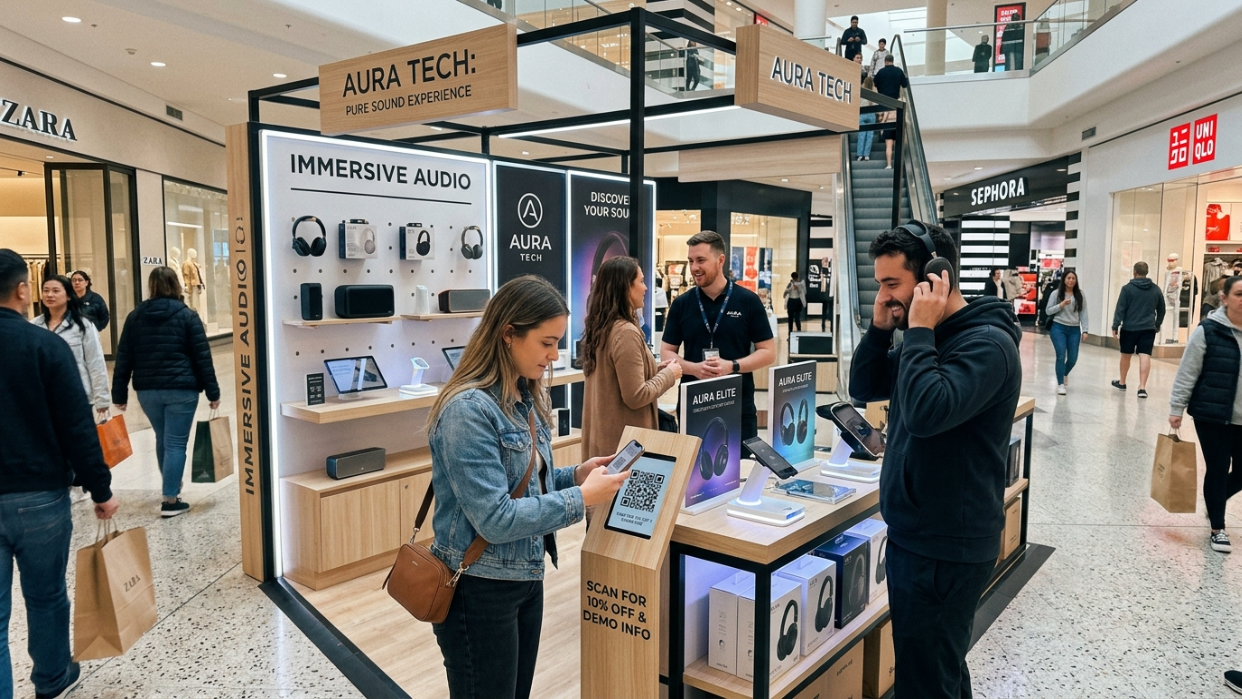
Not all retail activation agencies do the same thing. The market has fragmented into distinct specializations.
Experiential and In-Store Activation
These agencies create immersive, shareable moments inside retail spaces. Pop-ups, interactive installations, live demonstrations, and sensory experiences. The goal is to make a product memorable at the exact moment a shopper is making a decision. Eventbrite research shows that 74% of consumers say engaging with branded experiential events makes them more likely to purchase.
Field Marketing and Sampling at Scale
Some agencies specialize in volume. They activate across dozens or hundreds of locations simultaneously, deploying brand-trained representatives with standardized protocols and detailed reporting. Agencies like Attack! build their entire model around this, activating 50 locations in 10 days with same-store sales lift tracked.
Shopper Marketing Activation
These agencies focus on the mechanics of how shoppers navigate categories and make decisions. Their work includes POS displays, category strategy, selling stories for retail buyers, and promotional programs designed to influence behavior at the shelf.
Digital and Hybrid Activation
Modern shoppers walk into stores with phones in hand. Digital activation agencies build AR experiences, QR-code-triggered content, geo-targeted mobile offers, and connected in-store technology that bridges online and physical shopping. This is an increasingly important specialization as retail media grows. As of 2025, retail media represents over $122 billion in global digital ad spend, on track to reach $160 billion by 2027.
Purpose-Driven Retail Activation
This is the newest and least served segment. Purpose-driven retail activation agencies help brands translate sustainability commitments and social impact work into tangible in-store experiences. Rather than simply producing a beautiful pop-up, they ground the activation in behavioral science and values alignment. Understanding purpose-driven marketing principles is essential for this approach to work.
Retail Activation Examples
Examples help illustrate how retail activation agencies solve different business problems.
Industry | Activation Example |
|---|---|
Food & Beverage | In-store sampling with coupons |
Beauty | Product demonstrations and consultations |
Consumer Electronics | Interactive product experience |
Pet Products | Free samples with loyalty signup |
Household Goods | Side-by-side product comparison |
Sustainable Products | QR code explaining environmental impact |
Apparel | Limited-time pop-up collection |
Health & Wellness | Expert consultations inside stores |
Retail Activation Agency vs. Brand Activation Agency vs. Experiential Marketing Agency
These terms overlap significantly, which causes real confusion. Here’s how to think about the distinctions:
Retail Activation Agency | Brand Activation Agency | Experiential Marketing Agency | |
|---|---|---|---|
Primary environment | In-store, near-store, retail digital | Any consumer touchpoint | Events, festivals, public spaces |
Core focus | Purchase conversion at retail | Brand awareness and engagement | Memorable brand experiences |
Typical metrics | Sales lift, trial conversion, cost per activation | Brand recall, engagement rate, social mentions | Attendance, dwell time, social amplification |
Retailer relationships | Essential | Sometimes | Rarely |
Staffing model | Retail-trained brand ambassadors | Varies | Event-focused brand ambassadors |
In practice, many agencies span two or all three of these categories. The distinction matters most when you’re evaluating whether an agency understands the specific constraints of retail execution: compliance requirements, retailer approval processes, store-level logistics, and the pressure of performing at the point of purchase.
For a broader view of how brand activation strategy connects these disciplines, the explainer on brand experience strategy provides useful context.
Industries That Benefit Most
Retail activation agencies are commonly used by:
Consumer packaged goods (CPG)
Food and beverage brands
Beauty and cosmetics
Consumer electronics
Apparel brands
Home improvement
Health and wellness
Pet products
Household goods
Sustainable consumer brands
When Do You Need a Retail Activation Agency?
Several scenarios make hiring a retail activation agency the smart move rather than handling things in-house or through a general marketing partner.
Product launch at retail. You’re entering a new retailer or launching a new SKU and need to drive trial fast. A sampling program across 100+ stores with trained staff, real-time reporting, and coordinated logistics is not something most brand teams can manage internally.
Retailer partnership campaigns. When a retail partner offers co-marketing opportunities, seasonal placements, or endcap programs, an activation agency knows how to maximize those investments and navigate the retailer’s specific requirements.
Seasonal and promotional activations. Holiday programs, back-to-school campaigns, and tent-pole events require rapid scaling and de-scaling of staff and materials.
Brand repositioning in-store. If your brand is shifting its positioning, an activation agency can translate that shift into a physical experience shoppers encounter at the shelf, not just in advertising.
Sustainability storytelling at point of sale. This is where the gap between brand promise and shopper reality is widest. If your company has genuine sustainability commitments, bringing them to life in a retail environment requires specialized expertise. Practitioners on Reddit and marketing forums consistently note that purpose claims fall flat at retail without tangible, demonstrable proof points.
Considering one of these scenarios? Reach out for a discovery conversation to explore what activation could look like for your brand.
Signs Your Business Needs a Retail Activation Agency
You may benefit from hiring an agency if:
Product launches are underperforming.
Retail partners request promotional support.
Internal teams lack field marketing expertise.
You need trained brand ambassadors.
Campaigns span multiple retail locations.
Measuring in-store ROI is difficult.
Sales growth has stalled despite advertising.
Retail execution is inconsistent across stores.
What Makes a Good Retail Activation Agency?
Execution Quality Over Creative Flash
One consistent theme across practitioner communities is that execution matters more than the idea. Multiple agency owners and brand managers on LinkedIn and in YouTube walkthroughs of activation case studies emphasize the same ratio: execution is 70%, the concept is 30%. A brilliant activation concept with poorly trained staff, late inventory, or misaligned timing will underperform a simpler concept executed flawlessly.
Staffing Capabilities
Staffing is the number one failure point in retail activation. Practitioners on Reddit report that most brands don’t fail because their activation ideas are weak. They fail because the people executing them aren’t prepared. The best agencies pair different staff roles strategically. One experienced agency operator shared that the ideal pop-up pairs a high-energy greeter who invites people in with a separate explainer who handles deeper product questions. Never put one person in both roles.
Typical staffing costs range from $22 to $40 per hour depending on role and location. A standard 2 to 3 person team for a six-hour activation runs $300 to $900.
Measurement Rigor
The convergence of retail media and experiential activation means agencies must now prove ROI with the same discipline as digital campaigns. Agencies that can provide closed-loop measurement, connecting activation activity to actual sales data, are pulling ahead of those offering only qualitative reports. Research from PubMatic shows retail media is 50% more effective than social media at driving consumer action, but only when measurement systems are in place to capture it.
Retailer Relationships
When you’re inside a big-box retailer’s four walls, the rules are different. A good retail activation agency has existing relationships with store operations teams, understands compliance requirements, and knows the approval timelines for each retailer. This institutional knowledge saves weeks of back-and-forth.
Brand and Values Alignment
This matters more than most selection guides acknowledge. An agency that doesn’t understand your brand values will produce generic activations. For brands with sustainability or social impact positioning, the agency needs to understand how to translate those commitments credibly. Otherwise, the activation risks feeling hollow, or worse, triggers accusations of greenwashing. The guide on how to avoid greenwashing outlines the specific pitfalls to watch for.
Questions to Ask Before Hiring
Before signing an agreement, ask:
How do you measure ROI?
Can you share recent retail case studies?
Do you recruit your own staff?
How do you train brand ambassadors?
What retailers have you worked with?
How do you report sales lift?
Who owns campaign data?
What happens if staffing shortages occur?
How do you handle compliance?
What technology do you use for reporting?
Common Mistakes to Avoid
Over-Complexity
One of the most documented retail activation mistakes is cramming too many messages, activities, and options into a single experience. Shoppers confronted with complexity disengage entirely. Simplicity focused on one core experience consistently outperforms elaborate activations. A snack brand running tastings doesn’t need an AR game, a social media contest, and a sweepstakes all layered on top.
Wrong Location or Timing
A misaligned location or poorly timed activation wastes budget and creates false signals about product demand. If an activation underperforms because it ran during off-peak hours in a low-traffic location, the data will wrongly suggest the product lacks appeal. Meet your audience where they already are.
Neglecting Staff Training
Even brands that invest heavily in display design and creative often cut corners on staff training. The result is a beautiful activation staffed by people who can’t answer basic product questions or handle objections. Allocate at least as much budget to training as you do to materials.
No Measurement Plan
Running an activation without a clear measurement framework is surprisingly common. If you can’t connect the experience to a business outcome, you’re spending money on a nice event, not a marketing investment. Combining digital and in-store campaign measurement has delivered a 24% year-over-year increase in ROI for retail brands that get it right.
Misalignment With Brand Identity
Activations that feel disconnected from the brand’s broader positioning confuse shoppers rather than converting them. A customer engagement strategy should inform activation design so the in-store experience reinforces rather than contradicts what shoppers encounter elsewhere.
The Role of Purpose in Retail Activation
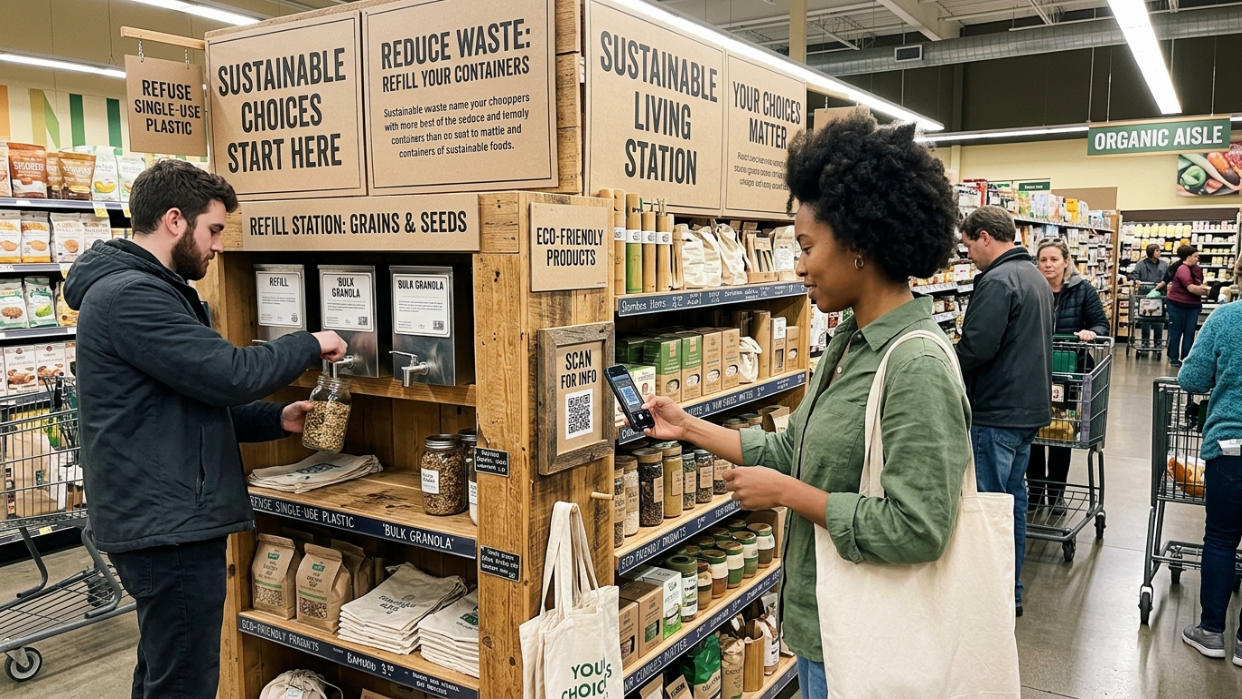
Here’s where the conversation gets interesting and where most retail activation agencies have a blind spot.
The Intention-Action Gap
Consumers overwhelmingly say they care about sustainability. But at the shelf, behavior tells a different story. Data from Brands for Good and Harris Poll reveals a 20-point gap between stated importance and action taken when it comes to energy-smart choices, and a 15-point gap around choosing more sustainable products. This is the intention-action gap, and it’s the central problem purpose-driven retail activation exists to solve.
The deeper explanation of why customers say they care but don’t buy unpacks the behavioral science behind this disconnect.
Why Purpose Gives Brands an Activation Advantage
Brands with genuine sustainability commitments have something real to demonstrate at retail, not just claim. A cleaning product that can show its reduced packaging footprint in a side-by-side comparison. A food brand that lets shoppers trace ingredient sourcing through a QR code. A personal care company that collects empty containers in-store as part of a refill program.
These are not just marketing tactics. They’re experiences that make abstract sustainability commitments concrete and verifiable at the moment of purchase. According to Market Xcel, 76% of consumers are more likely to purchase from brands that offer tailored, relevant experiences.
The Translation Problem
The challenge is translation. Brand purpose developed for stakeholder communications or corporate strategy rarely works unmodified in retail environments where shoppers make split-second decisions under time pressure. Purpose-driven retail activation requires agencies that understand behavioral science, not just event production, to bridge the gap between what a brand stands for and what a shopper does at the shelf.
Most retail activation agencies are operationally excellent but strategically shallow on purpose. They can build and staff a beautiful pop-up but can’t tell you why shoppers who claim to value sustainability walk right past the sustainable option. This is the emerging frontier of the field, and the agencies that figure it out will command disproportionate value.
A Strategic Approach to Purpose-Driven Activation
Strategic agencies follow a phased model: first diagnosing the gap between brand intention and shopper behavior, then articulating a positioning that resonates at retail, then activating with campaigns designed to close that gap, and finally accelerating results through measurement and iteration. This kind of structured approach separates a retail activation agency with strategic depth from one that’s purely an execution shop.
Explore Gaia’s AI-assisted assessment to understand how diagnostic tools can inform activation strategy before a single dollar is spent on execution.
Cost Benchmarks for Retail Activation
Budgets vary enormously depending on scope, but here are reference points:
Single-location experiential activation: Most fall in the $3,500 to $7,500 range according to AltTerrain’s cost analysis.
Staffing costs: $22 to $40 per hour per person, depending on the role and market. A typical two to three person team for six hours runs $300 to $900.
Multi-location sampling programs: Costs scale linearly with location count but decrease per-unit as volume increases. A 50-store program might run $75,000 to $150,000 depending on duration and staffing density.
Digital/hybrid activations: Technology costs (AR development, geo-targeting platforms, connected displays) add $10,000 to $50,000+ on top of physical activation expenses.
Even though 80% of consumer spending happens in-store, 90% of retail media advertising is online, according to EMARKETER. This imbalance means in-store activation is underinvested relative to where purchase decisions actually happen, creating an opportunity for brands willing to show up physically.
Retail Activation ROI Benchmarks
While results vary by industry, brands often monitor these KPIs.
KPI | Common Benchmark |
|---|---|
Product Trial Rate | 20–60% |
Coupon Redemption | 10–30% |
Sales Lift | 10–40% |
Repeat Purchase | Varies by category |
CRM Sign-ups | Campaign dependent |
Engagement Rate | Store dependent |
Cost per Engagement | Campaign dependent |
Return on Activation Spend | Measured against incremental sales |
Related Terms
Retail activation: The broader practice of bringing brands to life in retail environments, whether done by an agency or in-house.
Brand activation strategy: The strategic framework guiding how a brand creates direct consumer interactions across all channels.
Shopper marketing: Marketing focused on influencing purchase decisions along the path to purchase, often in collaboration with retail partners.
Retail media: Advertising sold by retailers on their owned properties (websites, apps, in-store screens), now exceeding $122 billion globally.
Integrated marketing strategy: The coordination of multiple marketing channels and tactics to deliver a unified brand message.
POSM (Point of Sale Materials): Physical marketing materials placed at or near checkout and display areas to influence purchase decisions.
Category strategy: The planning process that determines how products are positioned, priced, and promoted within a retail category.
Retail Activation Agency Selection Checklist
Before hiring an agency, verify that it has:
Retail-specific experience
Existing retailer relationships
National staffing capability
Logistics management
Campaign measurement tools
ROI reporting
Strong references
Compliance expertise
Digital integration capability
Experience within your product category
Frequently Asked Questions
What is a retail activation agency?
A retail activation agency is a specialized marketing firm that plans, staffs, and executes campaigns within retail environments. Their work includes product sampling, in-store demonstrations, pop-up experiences, interactive displays, and shopper marketing programs, all designed to drive product trial and purchase at or near the point of sale.
How much does it cost to hire a retail activation agency?
Costs depend on scope. A single-location experiential activation typically falls between $3,500 and $7,500. Multi-location programs scale from there. Staffing alone runs $22 to $40 per hour per person. Most agencies scope projects individually based on store count, duration, staffing needs, and creative complexity.
What’s the difference between a retail activation agency and a brand activation agency?
A brand activation agency works across all consumer touchpoints, from events and festivals to digital campaigns. A retail activation agency focuses specifically on retail environments where the proximity to purchase decisions creates different constraints and opportunities. Many agencies operate across both, but the retail specialization requires specific skills like retailer relationship management and store-level logistics.
How do you measure the success of a retail activation?
The strongest retail activation agencies measure sales lift, trial-to-purchase conversion rates, CRM signups, and cost per activation. Combining digital and in-store measurement has been shown to deliver a 24% year-over-year ROI increase. At minimum, you should be able to connect activation spend to a measurable commercial outcome.
When should a brand hire a retail activation agency instead of handling activations in-house?
The tipping point usually comes with scale or complexity. If you need to run activations across multiple stores, manage temporary staff in different markets, navigate retailer compliance requirements, or report on sales lift with rigor, an agency’s infrastructure and expertise will outperform an in-house effort. Single-store, simple activations can often be managed internally.
What is purpose-driven retail activation?
Purpose-driven retail activation translates a brand’s sustainability or social impact commitments into tangible, in-store experiences that influence shopper behavior. Instead of just claiming values in advertising, these activations demonstrate them at the point of purchase, helping close the gap between what consumers say they care about and what they actually buy.
What are the biggest mistakes brands make with retail activations?
The most common failures are over-complexity (too many messages or activities), poor staff training, wrong location or timing, no measurement plan, and misalignment between the activation and the brand’s broader positioning. Of these, staffing quality is consistently cited by practitioners as the single biggest factor separating successful activations from wasted budget.
Ready to explore what strategic retail activation could look like for your brand? Start a conversation with Grounded World to discuss your goals and get a clear picture of the path forward.