

 Gaia
TLDR
A CSR measurement framework is the structured system an organization uses to assess its social, environmental, and governance performance against defined objectives. The most widely used frameworks include GRI, SASB, SROI, Theory of Change, and the B Impact Assessment. Most organizations benefit from combining two or more. Without a clear measurement framework, companies can’t prove impact, improve programs, or protect themselves from greenwashing accusations.
For 2026, organizations must assess CSRD applicability using the amended EU reporting rules rather than assuming that any company doing business in Europe is automatically covered. Following the Omnibus I amendments, the general CSRD scope focuses on EU companies with more than 1,000 employees and more than €450 million in annual net turnover. Specific thresholds and conditions also apply to certain non-EU parent companies and their EU operations.
The European Sustainability Reporting Standards (ESRS) provide the detailed disclosure requirements for companies within scope. The European Commission adopted revised ESRS in July 2026 to simplify reporting requirements and reduce administrative burdens.
Companies should verify their reporting obligations against the latest EU legislation and national implementation rules before selecting a reporting framework. GRI and ISSB can complement sustainability reporting, but they do not automatically replace applicable CSRD requirements.
Get a complimentary assessment to identify where your measurement gaps are.
Direct Answer: What Is a CSR Measurement Framework?
Key Takeaway: A CSR (Corporate Social Responsibility) measurement framework is a structured system of standards, indicators, and metrics used by organizations to plan, track, and evaluate their environmental, social, and governance (ESG) impacts. The leading CSR measurement frameworks include:
GRI (Global Reporting Initiative): Best for broad impact materiality and multi-stakeholder reporting.
ISSB (IFRS S1/S2 - incorporating SASB): Best for investor-focused financial materiality.
CSRD / ESRS: Required for companies operating within or doing business with the European Union (Double Materiality).
SROI (Social Return on Investment): Best for monetizing social value and calculating CSR ROI.
Theory of Change / Logic Models: Best for internal program strategy and mapping causal impact.
B Impact Assessment: Best for overall operational sustainability and B Corp certification.
What Is a CSR Measurement Framework?
A CSR measurement framework is the structured system of principles, indicators, and processes an organization uses to assess its performance in corporate social responsibility. It defines what gets measured, how data is collected, and how results are evaluated against objectives.
Put simply: CSR measurement quantifies the performance of organizations in the field of Corporate Social Responsibility. The “framework” part provides the scaffolding, the logic for deciding which metrics matter, how they connect to each other, and what story they tell.
This is harder than it sounds. Because the definition of CSR itself varies across countries, industries, and individual companies, measurement creates a compounding problem. You need both a shared understanding of what CSR means for your organization and a set of indicators that actually capture it. Academic research has found that “the measurement systems used and the various concepts of CSR have no systematic basis” and that “indicators seem to be chosen on the whim of the moment.”
A good CSR measurement framework replaces that improvisation with intentional, repeatable assessment.
CSR Measurement vs. ESG Measurement: What's the Difference?
CSR measurement and ESG measurement are closely related, but they serve different purposes. CSR measurement evaluates how effectively an organization fulfills its social and environmental responsibilities, while ESG measurement assesses specific environmental, social, and governance factors that influence business performance, risk exposure, and stakeholder decisions.
Although the two approaches overlap, they are not interchangeable.
Comparison | CSR Measurement | ESG Measurement |
|---|---|---|
Primary focus | Corporate responsibility and social impact | Environmental, social, and governance performance |
Main objective | Evaluate responsibility initiatives and outcomes | Assess sustainability-related risks, impacts, and opportunities |
Typical audience | Employees, communities, customers, leadership | Investors, regulators, lenders, stakeholders |
Common metrics | Volunteer participation, community investment, educational outcomes | GHG emissions, board composition, workplace safety, governance risks |
Measurement approach | Program evaluation, impact assessment, KPIs | Standardized indicators, disclosures, risk assessments |
Common frameworks | Theory of Change, SROI, GRI | ISSB, SASB, GRI, ESRS |
Reporting | Often voluntary and internally driven | Increasingly influenced by regulatory and disclosure requirements |
How CSR and ESG Work Together
CSR initiatives often generate the activities and outcomes that organizations subsequently measure through ESG reporting.
For example, a company might introduce a community education program as part of its CSR strategy. Its CSR measurement system tracks the number of students reached, improvements in learning outcomes, and the program's social value.
Its broader ESG reporting may disclose community investment, human capital impacts, and relevant social performance indicators.
The distinction is important: CSR describes an organization's responsibility and initiatives, while ESG provides a structured way to assess and disclose relevant performance, impacts, risks, and opportunities.
How a CSR Measurement Framework Works
The most important conceptual distinction in CSR measurement, and the one most teams get wrong, is the difference between what you did and what changed because of it.
The Four-Level Model: Inputs, Outputs, Outcomes, and Impact

Every CSR measurement framework organizes performance data along a progression from resources invested to systemic change achieved. Here’s what each level means:
Level | What It Measures | Example |
|---|---|---|
Input | Resources committed to an initiative | Training budget, CSR team headcount, grant funding allocated |
Output | Work delivered or activities completed | Events held, volunteer hours logged, meals served |
Outcome | Change caused in people’s lives or environments | Literacy rates improved, emissions reduced, employee retention increased |
Impact | Broader systemic shift over time | Community poverty rate decreased, regional air quality improved |
Outputs are the products or services a program delivers. Outcomes are the results, with the most important defining the effect on people’s lives and wellbeing.
The Most Common Error
Most CSR programs report outputs as if they were outcomes. Saying “we logged 10,000 volunteer hours” is an output. Saying “500 students improved their reading scores” is an outcome. The first describes activity. The second describes change.
Practitioners on Reddit and in sustainability forums consistently flag this confusion as the root cause of weak CSR reporting. When executives see a list of activities rather than a story about change, they rightly question whether the investment is worth it.
Other recurring errors include calling a logframe a Theory of Change, presenting monitoring data as evaluation evidence, and claiming attribution where only contribution can be shown. A well-built CSR measurement framework forces you to be honest about which level of evidence you actually have.
Example of a CSR Measurement Framework in Practice
Consider a company that launches a workforce development program to improve employment opportunities for people from underserved communities.
Instead of measuring success only through donations, training sessions, or volunteer hours, the organization creates a measurement system that tracks progress from initial investment to long-term employment outcomes.
The following example shows how the four-level measurement model works.
Measurement level | Example metric | Illustrative result | What it demonstrates |
|---|---|---|---|
Input | Program investment | $100,000 | Financial resources committed |
Input | Volunteer hours | 500 hours | Employee resources contributed |
Output | Participants enrolled | 200 people | Program reach |
Output | Training completed | 160 people | Program delivery |
Outcome | Participants securing employment | 100 people | Employment results |
Outcome | Participants retaining employment after six months | 80 people | Employment sustainability |
Impact | Improved household economic stability | Evaluated over multiple years | Longer-term social change |
Note: These figures are hypothetical and demonstrate how an organization can structure its measurement system. They are not industry benchmarks.
How to Interpret the Results
The company invested $100,000 and enrolled 200 participants. However, the number of people enrolled does not establish whether the initiative succeeded.
The more meaningful indicators are the employment and retention outcomes.
If 100 participants secure employment and 80 retain their jobs after six months, the company has evidence of a measurable program outcome.
Longer-term evaluation could examine wage progression, household income stability, and employment retention over several years.
Which KPIs Should the Company Track?
The organization should establish a baseline before the program begins and track:
Enrollment and program completion rates.
Employment placement rate.
Six-month and twelve-month employment retention.
Average wage changes among participants.
Cost per participant employed.
Participant satisfaction.
Employer satisfaction.
Changes in household economic stability, where measurable.
This approach turns CSR reporting from a record of activities into an evidence-based assessment of results.
Major CSR Measurement Frameworks Compared
CSR measurement frameworks do not all serve the same purpose. Some establish standardized sustainability disclosure requirements, while others help organizations evaluate program effectiveness, quantify social value, or assess overall business practices.
Understanding these differences is essential when choosing a framework.
Framework | Framework type | Main measurement focus | Best application |
|---|---|---|---|
GRI Standards | Sustainability reporting standards | Impacts on the economy, environment, and people | Stakeholder-focused impact reporting |
ISSB (IFRS S1/S2) | Sustainability disclosure standards | Financially material sustainability risks and opportunities | Investor-focused reporting |
SASB Standards | Industry-based disclosure standards | Industry-specific sustainability topics and metrics | Industry-level financial materiality |
CSRD / ESRS | Regulatory reporting framework and disclosure standards | Double materiality and sustainability disclosures | Organizations within applicable EU reporting scope |
SROI | Social impact valuation methodology | Monetary value of social outcomes | Evaluating the value of social investments |
Theory of Change | Program design and evaluation methodology | Causal relationships between activities and impact | Designing and evaluating CSR initiatives |
B Lab Standards / B Impact Assessment | Organizational assessment and certification system | Business practices and stakeholder impacts | Assessing and improving organizational performance |
ISO 26000 | Social responsibility guidance standard | Organizational responsibility principles and practices | Developing responsible business practices |
Reporting Standards vs. Impact Measurement Methods
One important distinction is that reporting standards and impact measurement methodologies solve different problems.
Reporting standards help organizations determine what information to disclose and how to present it consistently. GRI, ISSB, and ESRS fall into this category.
Impact measurement methodologies help organizations understand whether their initiatives produce meaningful results. SROI and Theory of Change are examples.
Organizational assessment systems evaluate broader business practices. B Lab's assessment system is an example, while ISO 26000 provides guidance on social responsibility.
An organization may use all three categories together. For example, it can use Theory of Change to design a community program, SROI to evaluate its social value, and GRI to disclose relevant organizational impacts.
This distinction prevents organizations from treating every CSR framework as interchangeable.
GRI Standards: Measuring Corporate Impacts on People and the Environment
The Global Reporting Initiative (GRI) Standards provide a widely used framework for organizations to identify, measure, and report their impacts on the economy, environment, and people.
Unlike investor-focused disclosure frameworks, GRI emphasizes the organization's impacts on stakeholders, including employees, communities, customers, suppliers, and the environment.
The GRI Standards use a modular structure consisting of three main categories:
GRI Standard category | Purpose | Example |
|---|---|---|
Universal Standards | Establish general reporting requirements applicable across organizations | GRI 2: General Disclosures |
Sector Standards | Identify material impacts commonly associated with specific industries | Industry-specific sustainability impacts |
Topic Standards | Provide disclosures for individual sustainability topics | GRI 305: Emissions and GRI 401: Employment |
The Universal Standards include GRI 1, GRI 2, and GRI 3. Together, they establish the reporting principles, organizational disclosures, and process for determining material topics.
When Should an Organization Use GRI?
GRI is particularly useful for organizations that need to:
Report their environmental and social impacts.
Explain how material sustainability issues are managed.
Improve transparency with employees and communities.
Provide comparable sustainability disclosures.
Communicate performance to a broad stakeholder audience.
GRI can also complement ISSB reporting. An organization may use GRI to communicate its wider impacts while using ISSB Standards to disclose sustainability-related risks and opportunities that could affect its financial prospects.
GRI's official Standards provide the latest requirements and guidance for organizations developing sustainability reports.
SASB/ISSB: The Investor Lens
The Sustainability Accounting Standards Board (SASB) Standards provide industry-specific guidance on sustainability-related risks and opportunities that may affect a company's financial performance. They include disclosure topics, quantitative and qualitative metrics, and technical protocols designed to improve comparability within industries.
The International Sustainability Standards Board (ISSB) is responsible for maintaining and enhancing the SASB Standards. Its global disclosure framework includes IFRS S1, which addresses general sustainability-related financial disclosures, and IFRS S2, which focuses on climate-related disclosures.
SASB Standards and ISSB Standards serve complementary purposes. Organizations applying IFRS S1 should consider relevant SASB industry-based guidance when identifying sustainability-related risks and opportunities. SASB can also be used independently as an industry-specific measurement and disclosure resource.
SROI: Putting a Number on Social Value
Social Return on Investment quantifies the social and environmental benefits generated by CSR initiatives in monetary terms. An SROI ratio of 3:1 means that an investment of €1 produces €3 in social value. SROI is powerful for making the business case internally, though the methodology requires careful assumptions about valuation. For a deeper look at measurement approaches, see this social impact measurement guide.
Theory of Change: The Strategic Foundation
A Theory of Change maps the causal logic between inputs, activities, outputs, outcomes, and long-term impact. It forces organizations to articulate not just what they do but why they believe it will produce the change they intend. A well-built Theory of Change is the foundation for selecting meaningful metrics. Without it, measurement efforts tend to track whatever is easy to count rather than whatever matters.
B Impact Assessment and B Corp Certification
B Lab's B Impact Assessment is part of its broader system for measuring and improving business impact. It evaluates how a company operates across social, environmental, governance, and stakeholder-related areas.
An important 2026 update is that B Lab has transitioned to its new B Lab Standards (V2), replacing the legacy certification model based primarily on achieving 80 out of 200 points. The updated approach introduces mandatory requirements across seven impact topics, with requirements tailored to a company's size, industry, and operating context.
Organizations should distinguish between historical B Corp scores under the previous assessment model and certification under the updated standards. The B Impact Assessment remains useful for evaluating business practices, but its certification requirements should not be confused with a standalone CSR program evaluation framework.
If you’re evaluating agencies with verified B Corp credentials, this guide to B Corp marketing agencies provides a useful starting point.
How to Choose the Right CSR Measurement Framework
The right framework depends on your organizational context, the audience for your reporting, and the type of change you’re measuring. A corporate CSR team running employee volunteer programs has fundamentally different needs than an impact fund measuring portfolio-level outcomes.
Here’s a practical decision path:
If your primary audience is investors, start with SASB/ISSB. Layer in GRI if you also need broader stakeholder reporting.
If you need to justify program budgets internally, SROI gives you the monetary language executives respond to. Companies show an average of 13% higher profitability when engaged in CSR initiatives, but you need your own numbers, not industry averages.
If you’re designing a new program, build a Theory of Change first. This becomes the blueprint that tells you what to measure and why.
If you want to benchmark your whole organization, the B Impact Assessment provides a comprehensive diagnostic.
If you need to report to multiple audiences, combine frameworks. Most organizations benefit from a hybrid approach: Theory of Change for internal alignment, GRI or ISSB for standardized external reporting, and SROI for specific program evaluation.
One practitioner on LinkedIn, Katie Emick, has proposed a “5 R Framework” for showing linkages between CSR and key business areas. It’s designed to help quantify the strategic importance of CSR in a way that resonates with executives. This kind of hybrid thinking, borrowing structures from multiple sources, reflects how CSR measurement actually works in practice.
CSR Measurement Tools: Software and Resources for Tracking Performance
CSR measurement tools help organizations collect, organize, analyze, and report information about their social and environmental performance.
While a measurement framework defines what an organization should measure, measurement tools help teams manage the actual data collection and evaluation process.
The right tools depend on company size, reporting requirements, available resources, and the complexity of CSR programs.
Common Types of CSR Measurement Tools
Tool category | Main function | Example application |
|---|---|---|
ESG reporting software | Collect and organize sustainability disclosures | GRI and ISSB reporting |
Carbon accounting software | Calculate greenhouse gas emissions | Scope 1, 2, and 3 tracking |
Social impact assessment tools | Evaluate program outcomes | Community development initiatives |
Employee engagement platforms | Track workforce participation | Volunteer programs |
Survey and feedback platforms | Collect stakeholder feedback | Community and employee assessments |
Data visualization software | Present performance trends | CSR dashboards and KPI reporting |
What Should Organizations Look for in CSR Measurement Software?
When selecting a measurement platform, consider the following capabilities:
Data integration: Can the platform collect information from HR, finance, operations, and sustainability systems?
KPI tracking: Can it monitor performance against predefined targets?
Reporting capabilities: Does it support the organization's applicable reporting standards?
Audit trails: Can the organization trace reported information to its original data?
Stakeholder reporting: Can results be communicated to different audiences?
Scalability: Can the system support additional programs and reporting requirements as the organization grows?
Smaller businesses may initially use spreadsheets and existing business software. Larger organizations with complex reporting obligations may benefit from dedicated sustainability management platforms.
The important distinction is that software does not replace a measurement methodology. Organizations must first determine what they need to measure before selecting the technology to manage that information.
KPIs Inside a CSR Measurement Framework
There’s no universal set of KPIs that applies across industries or CSR pillars. But most frameworks organize indicators across four domains.
Implementation Architecture Tip:
To prevent data silos, organize your metrics hierarchy using this four-tier flow:
Inputs (Budget/FTE) -> Outputs (Activities/Hours) -> Outcomes (Behavioral Changes) -> Impact (Systemic Long-Term Shift)
Ensure every Outcome KPI ties directly to a financial or strategic business objective (such as lower employee turnover, reduced regulatory compliance risks, or higher brand trust).
CSR Metrics and KPIs: What Should Organizations Measure?
CSR metrics are quantitative or qualitative indicators used to evaluate how effectively an organization achieves its corporate responsibility objectives. The most useful KPIs measure not only the resources invested and activities completed but also the outcomes and long-term changes created.
Organizations should select metrics based on their industry, material issues, stakeholder expectations, and CSR objectives.
CSR category | KPI | How to measure it | Measurement frequency |
|---|---|---|---|
Environmental | Scope 1 and 2 emissions | Metric tons of CO₂e | Monthly or quarterly |
Environmental | Energy consumption | kWh consumed | Monthly |
Environmental | Renewable energy share | Renewable energy ÷ total energy × 100 | Quarterly |
Environmental | Waste diversion rate | Waste diverted ÷ total waste × 100 | Quarterly |
Social | Employee volunteer participation | Participating employees ÷ eligible employees × 100 | Quarterly |
Social | Community beneficiaries | Number of individuals reached | Quarterly |
Social | Training completion rate | Completed participants ÷ enrolled participants × 100 | Per program |
Social | Employment retention | Participants retained ÷ participants employed × 100 | Six or twelve months |
Governance | Ethics training completion | Employees completing training ÷ eligible employees × 100 | Annually |
Governance | Supplier audit coverage | Suppliers audited ÷ suppliers in scope × 100 | Annually |
Governance | Policy compliance | Verified compliance findings and violations | Quarterly |
Financial | Cost per beneficiary | Program expenditure ÷ beneficiaries reached | Per program |
Financial | SROI ratio | Present value of net social benefits ÷ investment | Per evaluation |
Financial | CSR program ROI | Defined attributable financial benefits relative to program costs | Annually |
How to Choose Meaningful CSR KPIs
A good CSR KPI should meet five requirements:
Relevant: It measures an issue connected to the organization's CSR objectives.
Measurable: It has a clear definition, unit, and calculation method.
Comparable: It can be evaluated against a baseline or previous reporting period.
Actionable: Management can use the result to improve performance.
Verifiable: The underlying information can be checked against reliable evidence.
Organizations should avoid selecting KPIs simply because the information is easy to collect. A high number of volunteer hours, for example, does not necessarily demonstrate improved community outcomes.
The strongest CSR measurement systems connect activity metrics to measurable outcomes and explain how those outcomes contribute to longer-term impact.
Environmental KPIs
Greenhouse gas emissions (Scope 1, 2, and 3), energy consumption and renewable energy percentage, water usage, waste diversion rates, and packaging sustainability metrics. S&P 500 companies most commonly disclose GHG emissions, water consumption, and energy consumption as environmental metrics.
Social KPIs
Beneficiaries reached, employee volunteer participation rates, diversity and inclusion metrics (female and minority employees), community investment totals, safety incident rates, and education or health outcomes for program participants. For inspiration on what strong social programs look like, explore these social impact campaign examples.
Governance KPIs
Board diversity, ethics training completion, anti-corruption policy compliance, supply chain audit results, and stakeholder engagement frequency.
Financial KPIs
SROI ratios, cost per beneficiary, employee turnover reduction (companies see a 52% decrease in turnover among new hires who participate in purpose programs), and direct revenue tied to purpose-driven product lines.
The critical principle: every KPI should connect to either a strategic business priority or a specific social or environmental outcome. If a metric doesn’t inform a decision, it’s noise.
Common Challenges in CSR Measurement
No Universal Standard
There’s no universal formula for measuring CSR. The frameworks above provide structure, but every organization must adapt them to its own context, goals, and stakeholder expectations. This customization requirement is a feature, not a bug, but it means getting started takes real strategic thought.
The Executive Credibility Gap
This is perhaps the biggest barrier. Benevity’s Impact Labs research found that 47% of executives strongly agree their company’s CSR initiatives create positive business impact, but the same percentage say those initiatives can be difficult to push forward because of low perceived value. The measurement framework is the bridge across this gap. Without evidence, even supportive executives can’t justify continued investment.
Data Silos and Attribution
CSR data often lives in multiple systems: HR tracks volunteer hours, operations tracks emissions, marketing tracks campaign performance, finance tracks donations. A successful measurement strategy requires consistent data practices and cross-functional collaboration. Attribution is equally difficult. When an employee’s engagement improves after volunteering, was it the volunteer program, a new manager, or a raise? Honest CSR measurement acknowledges contribution rather than claiming sole attribution.
Long Time Horizons
Outcomes often unfold over months or years, making them harder to tie back to a single initiative. A community health program might take three years to show measurable results. This creates tension with quarterly reporting cycles and requires patience, staged milestones, and leading indicators that signal you’re on track.
Cost of Disclosure
Part of the challenge is “lowering the cost for firms to figure out what needs to be disclosed.” Building measurement infrastructure takes time and money, especially for smaller organizations. The investment pays off, but the upfront cost is a genuine barrier.
If your team is struggling with these challenges, exploring a diagnostic assessment can help identify which gaps are most urgent.
Why Measurement Protects Against Greenwashing
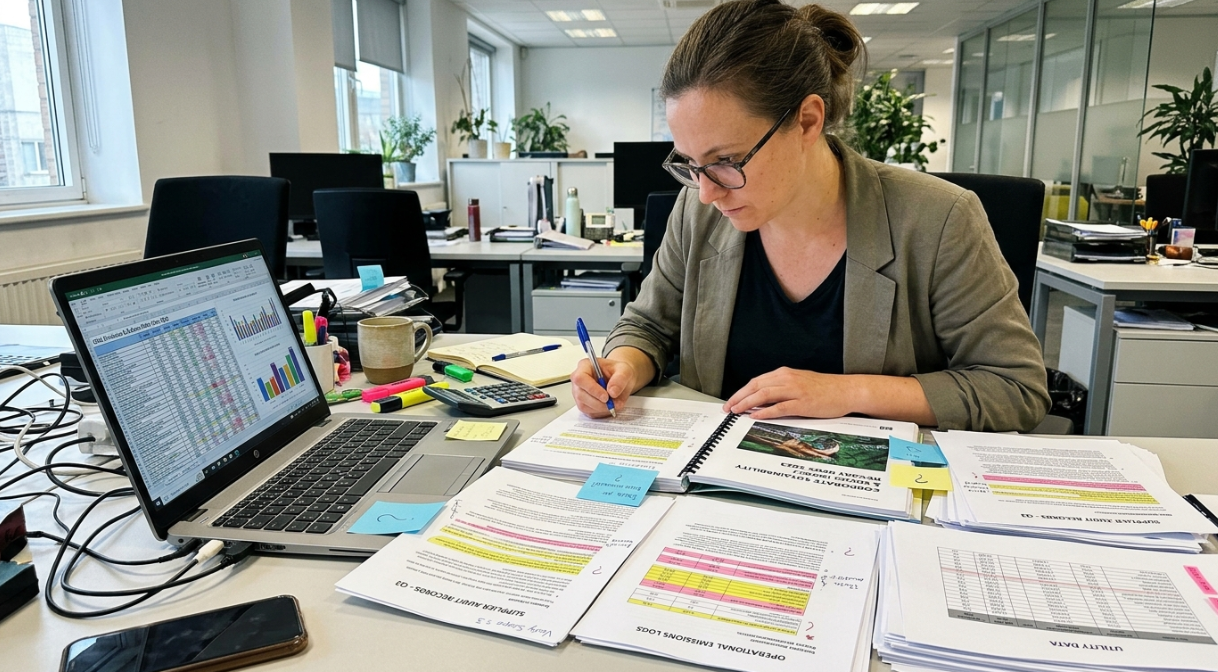
Without a CSR measurement framework, there’s no evidence base. And without evidence, organizations face risk on both sides.
Greenwashing is the risk of overclaiming: making sustainability promises that sound good but aren’t backed by data. When CSR indicators aren’t material and then get communicated publicly, it raises the risk of external criticism for greenwashing or appearing insincere.
Greenhushing is the opposite problem: staying silent about genuine progress because you’re afraid of scrutiny. For more on navigating this tension, see this breakdown of greenwashing vs. greenhushing.
There’s also a subtler challenge that has emerged: storywashing. This relies on feel-good, emotive messaging where the action behind it is thin or nonexistent. A company publishes a beautifully produced video about community impact but can’t point to measurable outcomes. A measurement framework is the antidote to all three.
Greenwashing risk operates at multiple levels: communication misalignment (vague claims without quantitative evidence), selective disclosure (cherry-picking positive metrics), and strategic misalignment (purpose statements disconnected from actual operations). A framework forces alignment at each level. To go deeper on how to avoid greenwashing, that resource covers the communications side in detail.
CSR Measurement and Business Outcomes
The most effective CSR measurement frameworks don’t treat social impact and commercial performance as separate domains. They treat measurement as the connective tissue between the two.
The logic is straightforward. Connect each CSR initiative to a clear business priority, whether that’s retention, engagement, brand perception, or leadership development. If there’s no clear connection, it will be difficult to prove value later. Then measure both the social outcome and the business outcome simultaneously.
The data supports this approach. Companies engaged in CSR show an average of 13% higher profitability. New hires who participate in purpose programs stay longer, with a 52% decrease in turnover. But these benefits only become visible when you measure them. And right now, less than half of executives bother to calculate CSR ROI at all.
This is what practitioners mean when they talk about the intention-action gap in CSR. Organizations intend to create impact. Many actually do create impact. But without measurement, they can’t prove it, can’t communicate it credibly, and can’t improve it. Purpose-driven campaigns that combine strong storytelling with measurement consistently outperform those that rely on narrative alone.
CSR measurement also serves as a cross-functional alignment tool. When sustainability, marketing, HR, and finance are all working from the same measurement framework, CSR stops being an isolated initiative housed in the communications department and becomes embedded in strategy. The biggest challenge, as academic research consistently shows, is to integrate CSR practices into company strategy rather than treating them as an add-on.
CSR Measurement Framework Template
Organizations can build a CSR measurement framework using a simple structure that connects business objectives, stakeholder priorities, performance indicators, data sources, and evaluation methods.
The following template can be adapted for community investment, employee engagement, environmental sustainability, ethical sourcing, and other CSR initiatives.
Component | What to define | Example |
|---|---|---|
CSR objective | What the initiative aims to achieve | Improve access to education |
Material issue | Which social or environmental issue is being addressed | Educational inequality |
Target stakeholders | Who should benefit from the initiative | Students from underserved communities |
Baseline | Existing conditions before the initiative | 40% program completion rate |
Inputs | Resources committed | $100,000 annual budget |
Activities | What the organization will do | Provide educational training |
Outputs | Immediate deliverables | 200 students enrolled |
Outcomes | Measurable changes | Improved literacy and completion rates |
Impact | Longer-term change | Improved educational opportunities |
KPIs | Indicators used to measure performance | Completion and literacy improvement rates |
Data sources | Where measurement information comes from | Attendance records, assessments, surveys |
Measurement frequency | When data will be collected | Monthly and annually |
Accountability owner | Who is responsible for reporting | CSR program manager |
Evaluation method | How results will be assessed | Pre- and post-program assessments |
Example of a Completed CSR Measurement Objective
Objective: Improve educational outcomes among underserved students.
Target: Enroll 200 students and achieve an 80% program completion rate within 12 months.
Primary KPIs:
Number of students enrolled.
Program attendance rate.
Training completion rate.
Changes in assessment scores.
Student progression after program completion.
Data collection: Enrollment records, attendance tracking, assessments, and follow-up surveys.
Evaluation: Compare baseline educational performance with results after participation and conduct follow-up assessments to determine whether improvements are sustained.
This template helps CSR teams move from broad corporate responsibility commitments to measurable objectives with clear accountability.
Getting Started: A Practical Sequence
For organizations building their first CSR measurement framework, or rebuilding one that isn’t working, here’s a practical sequence:
Define your CSR scope. What social, environmental, and governance issues are material to your business and stakeholders?
Build a Theory of Change. Map the causal logic from your activities to the change you want to see. This is your measurement blueprint.
Select your frameworks. Choose one or two external frameworks (GRI, SASB, SROI) based on your primary audience.
Identify KPIs at each level. Make sure you have indicators for inputs, outputs, outcomes, and impact, not just the easy-to-count outputs.
Establish baselines. You can’t measure change without knowing where you started.
Build data infrastructure. Break silos. Create shared dashboards. Assign ownership for each metric.
Report honestly. Show what’s working, what isn’t, and what you’re learning. Credibility comes from transparency, not perfection.
If this process feels overwhelming, working with a specialist agency that connects purpose to commercial outcomes can accelerate the work significantly.
FAQ
What is the difference between CSR measurement and ESG reporting?
CSR measurement assesses performance against a company’s own social responsibility objectives and commitments. ESG reporting is a broader disclosure framework focused on environmental, social, and governance factors that affect financial performance. The two overlap significantly, especially with frameworks like GRI and SASB, but ESG reporting is increasingly regulated while CSR measurement remains largely voluntary and internally driven.
What is SROI and how is it calculated?
Social Return on Investment (SROI) quantifies the social and environmental value created by an initiative in monetary terms. The basic calculation compares the net present value of benefits to the net present value of investments. An SROI ratio of 3:1 means that every €1 invested produces €3 in social value. The methodology requires identifying stakeholders, mapping outcomes, valuing those outcomes in financial terms, and establishing attribution.
Can small businesses use a CSR measurement framework?
Yes. Small businesses don’t need enterprise-level reporting infrastructure. A simple Theory of Change combined with a handful of meaningful KPIs is enough to start. The B Impact Assessment is also designed to be accessible for smaller organizations and provides a structured entry point. The key is to focus on outcomes, not just activities, regardless of scale.
How often should CSR be measured?
Most organizations benefit from continuous monitoring of output-level data (monthly or quarterly) and periodic evaluation of outcomes (annually or biannually). Impact assessment, which looks at broader systemic change, typically happens every two to five years. The cadence should match your reporting obligations, stakeholder expectations, and program timelines.
Why do so many CSR programs only report activities?
Outcomes are harder to measure, take longer to emerge, and require more sophisticated data collection than outputs. Many CSR teams lack the resources, expertise, or organizational mandate to move beyond activity tracking. There’s also a comfort factor: reporting 10,000 volunteer hours feels productive even if you can’t demonstrate what those hours accomplished. Breaking this pattern requires leadership commitment and a clear Theory of Change.
How does B Corp certification fit with other CSR measurement frameworks?
The B Impact Assessment evaluates overall organizational practices across governance, workers, community, environment, and customers. It’s a benchmarking tool for how a business operates, not a measurement tool for individual program outcomes. Most B Corps use additional frameworks (GRI, SROI, or custom logic models) to measure specific initiative-level performance alongside their B Impact Assessment.
What is the biggest mistake organizations make in CSR measurement?
Treating measurement as a reporting exercise rather than a strategic tool. When measurement exists only to fill an annual report, it produces vanity metrics. When it’s integrated into program design and decision-making, it drives genuine improvement. The question to ask isn’t “what can we report?” but “what do we need to know to make better decisions?”
How do I connect CSR measurement to business ROI?
Start by connecting each CSR initiative to a specific business priority: employee retention, brand trust, customer acquisition, risk reduction. Then measure both the social outcome and the associated business metric. For example, if your volunteer program aims to improve employee engagement, track both community outcomes and engagement survey scores. The link becomes visible when you measure both sides of the equation.
What are the five main steps of CSR measurement?
The five main steps of CSR measurement are defining objectives, identifying material issues, selecting appropriate KPIs, collecting baseline and performance data, and evaluating results. Organizations should also communicate findings transparently and adjust their CSR programs based on the evidence.
What is the difference between CSR reporting and CSR measurement?
CSR measurement is the process of collecting and evaluating information about an organization's social, environmental, and governance performance. CSR reporting communicates the results of that measurement to stakeholders. Measurement generates the evidence, while reporting explains what the evidence means.
What is the best CSR measurement framework for small businesses?
Small businesses can begin with a Theory of Change or simple logic model combined with a small number of relevant KPIs. This approach avoids unnecessary reporting complexity while allowing the organization to measure progress. Businesses seeking broader sustainability reporting can also explore GRI or applicable voluntary reporting standards.
What are the four levels of CSR measurement?
The four levels of CSR measurement are inputs, outputs, outcomes, and impact. Inputs represent resources invested, outputs represent completed activities, outcomes represent measurable changes, and impact refers to broader long-term effects on people, society, or the environment.
Can an organization use multiple CSR measurement frameworks?
Yes. Organizations frequently combine frameworks because each serves a different purpose. For example, Theory of Change can guide program design, SROI can evaluate social value, and GRI can support broader sustainability disclosures. ISSB may be added when financially material sustainability information needs to be reported.
How can organizations measure the success of CSR initiatives?
Organizations can measure CSR success by comparing actual results against predefined objectives and baseline data. Useful indicators include emissions reductions, employee participation, community outcomes, beneficiary retention, cost per beneficiary, and SROI. The most meaningful evaluation considers both immediate outputs and longer-term outcomes.