

 Gaia
TL;DR
Most stakeholder engagement is performative, producing reports nobody reads and consultations that change nothing. Effective stakeholder engagement for social impact requires specific goals, internal alignment before external outreach, co-creation instead of consultation, and measuring outcomes rather than activity. Projects with strong stakeholder engagement plans succeed significantly more often than those without structured frameworks. This guide covers practitioner-tested strategies that connect engagement to measurable social and commercial results.
What Is Stakeholder Engagement for Social Impact?
Stakeholder engagement for social impact is the process of involving communities, employees, beneficiaries, nonprofit partners, investors, and other affected groups in designing, implementing, and evaluating initiatives that create measurable social change. Effective engagement goes beyond surveys and consultations by giving stakeholders meaningful opportunities to influence decisions, co-create solutions, and evaluate outcomes. The strongest approaches combine inclusive stakeholder mapping, measurable objectives, shared decision-making, transparent communication, and continuous feedback.
Why Most Stakeholder Engagement Fails to Produce Impact
Organizations hold town halls. They send surveys. They publish glossy sustainability reports with quotes from community leaders. And nothing changes.
The problem isn’t a lack of engagement activity. It’s that most organizations treat stakeholder engagement as a communications exercise rather than a strategic capability. They engage stakeholders to check a box, not to co-create outcomes.
The data tells a clear story. Organizations with solid stakeholder plans see significantly higher project success rates compared to those winging it. Companies that genuinely listen to stakeholders perform better in executing strategic plans and building long-term trust.
Those gaps represent the difference between impact programs that create lasting change and ones that quietly fade after the launch event.
The strategies below go beyond generic advice like “communicate early and often.” Each one addresses a specific failure point in how organizations engage stakeholders for social impact, backed by research and practitioner experience.
What is Stakeholder Engagement for Social Impact? (Core Takeaway)
Stakeholder engagement for social impact is the systematic practice of involving the people affected by, interested in, or able to influence social initiatives directly in their design, execution, and measurement.
Unlike traditional corporate communications or superficial consultations, true social impact engagement relies on four core pillars:
Lived Experience Mapping: Prioritizing the voices of direct beneficiaries alongside traditional power and influence axes.
Co-Creation over Consultation: Moving past annual surveys and town halls to build strategies alongside stakeholders.
Internal Alignment: Synchronizing cross-functional teams (marketing, operations, sustainability, leadership) before external outreach.
Outcome Measurement: Tracking actual decisions influenced and behavioral changes rather than vanity activity metrics (e.g., meeting attendance or survey counts).
The 6-Step Stakeholder Engagement Framework for Social Impact
An effective stakeholder engagement framework provides a repeatable process for identifying the right people, gathering meaningful input, translating feedback into decisions, and measuring the resulting social impact.
Organizations can use the following six steps to move from informal stakeholder communication to structured, outcome-driven engagement.
Step 1: Identify and Map Stakeholders
Identify everyone who can influence, is affected by, or has a legitimate interest in the initiative. Include beneficiaries, community members, employees, nonprofit partners, government representatives, funders, suppliers, and investors.
Map stakeholders according to their influence, interest, and proximity to the social issue.
Step 2: Define Engagement Objectives
Determine what the organization needs to learn, change, or achieve through engagement. Set measurable objectives that connect stakeholder participation to specific program decisions and social outcomes.
Step 3: Select Appropriate Engagement Methods
Choose engagement methods based on stakeholder needs, accessibility, and the level of participation required. Options include interviews, surveys, focus groups, community workshops, advisory boards, and participatory design sessions.
Step 4: Facilitate Meaningful Participation
Give stakeholders opportunities to influence decisions rather than simply react to completed proposals. Explain which decisions are open to change, what constraints exist, and how their contributions will be considered.
Step 5: Communicate Decisions and Measure Results
Document stakeholder feedback, explain how it influenced decisions, and measure both engagement quality and program outcomes. Share progress updates so participants can see the consequences of their involvement.
Step 6: Review and Improve Engagement
Evaluate which stakeholder groups participated, which voices were missing, and whether the engagement process produced meaningful changes. Use these findings to improve future engagement activities.
A successful framework is continuous rather than linear. Organizations should revisit stakeholder priorities, engagement methods, and impact objectives as programs and community needs evolve.
At-a-Glance: 12 Strategies Compared
Strategy | Best For | Difficulty | Impact Potential | Often Overlooked? |
1. Stakeholder Mapping by Influence + Lived Experience | All organizations | Low | High | Yes |
2. Specific, Measurable Engagement Goals | Nonprofits, ESG reporters | Low | High | Yes |
3. Internal Alignment Before External Engagement | Brands, cross-functional teams | High | Very High | Severely |
4. Co-Creation Over Consultation | Social enterprises, brands | Medium | Very High | Yes |
5. Build Cross-Sector Partnerships for Amplified Impact | Brands, large NGOs | High | Very High | Partially |
6. Make Storytelling as a Core Engagement Tool | All organizations | Medium | High | Poorly executed |
7. Close the Intention-Action Gap | Purpose-driven brands | High | Very High | Almost entirely |
8. Center Equity and Marginalized Voices | Nonprofits, foundations | Medium | High | Somewhat |
9. Prevent Stakeholder Fatigue and Practice Ethical Engagement | All organizations | Medium | High | Yes |
10. Use Multi-Channel Digital Engagement | All organizations | Medium | Medium-High | Rarely tied to impact |
11. Measure Outcomes, Not Activity | All organizations | High | Very High | Severely |
12. Create Feedback Loops and Close the Loop Publicly | All organizations | Low | High | Yes |
13. Embed Engagement in Operations, Not Projects | Mature organizations | High | Very High | Yes |
1. Map Stakeholders by Influence AND Lived Experience
Traditional stakeholder mapping uses a power-interest matrix. You plot people based on their authority and how much they care. This approach has a blind spot the size of a building: it systematically undervalues the people most affected by your social impact work.
A study on stakeholder engagement in research found that while existing literature typically identifies three stakeholder groups, closer examination revealed a fourth, beneficiaries, that organizations consistently overlooked. Funders and partners get seats at the table. The communities you’re trying to help often don’t.
Fix this by adding “lived experience” as a mapping axis alongside influence and interest. Participants in stakeholder engagement training reported feeling better equipped to identify and influence stakeholders when they considered authority, influence, and lived experience together.
How to implement:
Create a three-axis map: influence (who can make decisions), interest (who cares), and proximity (who lives with the consequences).
Include internal stakeholders in the same exercise. Marketing, operations, leadership, and sustainability teams each hold different pieces of the puzzle.
Revisit the map quarterly. Stakeholder dynamics shift as programs evolve.
Weight lived experience heavily when deciding who shapes strategy versus who simply receives updates.
Stakeholder Mapping Matrix: Who Should You Engage First?
A stakeholder mapping matrix helps organizations prioritize engagement based on each group's influence, level of interest, and proximity to the social issue. However, organizations should not use influence alone to determine whose voices matter.
Stakeholder group | Influence | Proximity to impact | Recommended engagement |
|---|---|---|---|
Beneficiaries and community members | Variable | Very High | Co-creation workshops and interviews |
Nonprofit partners | Medium-High | High | Joint planning and working groups |
Employees | Medium-High | Medium-High | Internal forums and feedback sessions |
Funders and investors | High | Variable | Strategic briefings and reporting |
Government representatives | High | Variable | Formal consultations and policy discussions |
Suppliers and service providers | Medium | Medium | Operational meetings and assessments |
Community leaders | Medium-High | High | Advisory groups and local consultations |
Use this matrix as a starting point, not a universal ranking. Stakeholders with limited formal influence may still deserve priority because they experience the greatest consequences of an initiative.
The goal is to identify who needs to participate in decisions, who needs regular communication, and who may require additional support to participate meaningfully.
2. Set Engagement Goals That Are Specific and Measurable

“Gathering community input” is not a goal. It’s a vague aspiration that produces vague results.
Practitioners who’ve worked through failed engagement processes consistently point to the same root cause: nobody defined what success looked like before starting. Broad goals lack direction. Instead, target specific outcomes like “forming a Community Advisory Board of 12 residents by Q3” or “identifying investor ESG data priorities for the next reporting cycle.”
Every engagement goal should connect to a social outcome. What will change because of this engagement? If you can’t answer that question, the engagement is decorative.
For examples of what goal-driven CSR campaigns look like in practice, organizations with clear objectives consistently outperform those running engagement for engagement’s sake.
3. Align Internal Stakeholders Before Going External
This is the biggest blind spot in stakeholder engagement for social impact. Nearly every article on the topic jumps straight to community engagement, donor relations, or beneficiary input. They skip the hard, unglamorous work of getting your own house in order first.
When marketing, sustainability, operations, and leadership aren’t aligned on the narrative, external stakeholders receive fragmented messages. The sustainability team promises deep community partnership. The marketing team frames the same initiative as a brand campaign. Operations wasn’t consulted and can’t deliver on either promise. Trust erodes before the first community meeting happens.
Internal misalignment is especially damaging for consumer brands trying to connect purpose to commercial outcomes. A report found that 67% of employees expect their company to play a role in tackling social issues. When internal teams don’t share that conviction, external engagement rings hollow.
How to implement:
Run a cross-functional alignment session before any external engagement begins. Get marketing, sustainability, operations, and leadership in the same room with the same brief.
Create a shared narrative document that defines what the organization is trying to achieve, why stakeholder input matters, and what decisions are actually on the table.
Identify internal blockers early. Who doesn’t buy in? What are their concerns? Address those before they surface externally.
Organizations struggling with cross-functional alignment often benefit from structured co-creation processes. Activating brand purpose requires internal teams to agree on what that purpose means in practice before external stakeholders can be meaningfully involved.
4. Use Co-Creation, Not Consultation
There’s a fundamental difference between asking stakeholders what they think and inviting them to build something with you. Most organizations default to consultation: surveys, town halls, comment periods. These methods extract information. They don’t distribute ownership.
Academic research is direct on this point. Traditional approaches to stakeholder engagement are often transactional and fail to incorporate the relational, influencing practices required to co-create system-wide change. The findings push toward shared ownership of strategy making, not just shared input.
Co-creation means stakeholders shape strategy, not just react to it. The difference in outcomes is substantial. When people help build something, they’re invested in its success. When they’re merely consulted, they feel like window dressing.
How to implement:
Replace annual surveys with participatory design sprints where stakeholders and internal teams solve problems together.
Use joint solution development: present the problem and constraints, then co-develop options rather than presenting pre-made solutions for feedback.
Create standing working groups (not just advisory boards) where stakeholders have decision-making power over specific aspects of the program.
Start small. A single co-creation workshop on one program element builds trust faster than a grand consultation process.
Practitioners on Reddit and in nonprofit forums frequently note that the most successful co-creation happens when organizations are transparent about constraints. Telling stakeholders “here’s our budget, here’s our timeline, here’s what’s genuinely flexible” builds more trust than pretending everything is open for discussion when it isn’t.
5. Build Cross-Sector Partnerships for Amplified Impact
No single organization has access to all the stakeholders it needs. A consumer brand might connect with customers but struggle to reach marginalized communities. A nonprofit might have deep community trust but no commercial distribution channel. An academic institution might have rigorous research capacity but no operational infrastructure.
Research on multinational enterprises found that organizations with dynamic capabilities focus their stakeholder engagement for social impact by reducing tensions with external stakeholders through cross-sector partnerships, with internal stakeholders through strategic intent, or with both through routinization. The key insight: partnerships aren’t just nice to have. They’re a structural solution to engagement gaps.
External partners from across sectors can foster trust with beneficiaries and contribute knowledge of local conditions that headquartered teams simply lack.
How to implement:
Map your stakeholder access gaps. Which groups can’t you reach credibly on your own?
Identify potential partners who already have trusted relationships with those groups. NGOs, academic institutions, community organizations, and faith-based groups all have different access.
Structure partnerships with clear roles: who engages which stakeholders, who synthesizes input, who makes decisions.
For brands pursuing strategic partnerships for impact, define shared metrics upfront so both partners are accountable to the same outcomes.
6. Make Storytelling a Core Engagement Tool
Data alone doesn’t create stakeholder buy-in. A chart showing a 15% improvement in educational outcomes is informative. A video of a student describing how a tutoring program changed their family’s trajectory is transformative.
No impact strategy succeeds in isolation. Engaging stakeholders like employees, beneficiaries, donors, investors, and community leaders creates collective ownership of the goals, helps in identifying real needs, and builds trust. Storytelling is the mechanism through which that ownership forms.
The critical distinction: stories should be told by stakeholders, not just about them. When beneficiaries share their own narratives, the power dynamic shifts. Stakeholders stop being subjects of engagement and become authors of it.
How to implement:
Train beneficiaries and community members in basic storytelling (structure, consent, platforms) rather than extracting their stories for organizational use.
Build a library of stakeholder-generated impact narratives that can be shared in board presentations, donor communications, and public reporting.
Use stories to create accountability. When a community member shares their experience publicly, the organization is publicly accountable to that narrative.
Effective impact storytelling goes beyond feel-good content. It creates emotional commitment that sustains engagement through the inevitable difficult phases of social impact work.
7. Close the Intention-Action Gap
Here’s a problem almost nobody in the stakeholder engagement world talks about: people say they’ll participate, but they don’t follow through. They sign up for advisory boards and skip meetings. They agree to co-create and then go silent. They express passionate support in surveys and take zero action afterward.
This intention-action gap is one of the most significant barriers to effective stakeholder engagement for social impact. It’s well-documented in consumer behavior research (where people say they’ll buy sustainable products but don’t) and applies equally to stakeholder engagement.
Why it happens:
Friction: the engagement process is too complicated, too time-consuming, or too far from people’s routines.
Ambiguity: stakeholders don’t know exactly what’s expected of them or when.
Lack of feedback: people don’t see results from their participation, so they stop participating.
How to close it:
Reduce friction ruthlessly. Fewer steps, shorter meetings, simpler language.
Create accountability structures. Pair stakeholders, set micro-commitments, establish check-in rhythms.
Build immediate feedback loops. Show stakeholders within days, not months, how their input is being used.
Apply behavior change frameworks to your engagement design. The same principles that drive consumer action apply to stakeholder participation.
One nonprofit practitioner described adjusting their approach after early failures: instead of abandoning engagement structures, they simplified language, reframed invitations around purpose, and offered repeated opportunities for involvement. Participation rates recovered.
8. Center Equity and Marginalized Voices
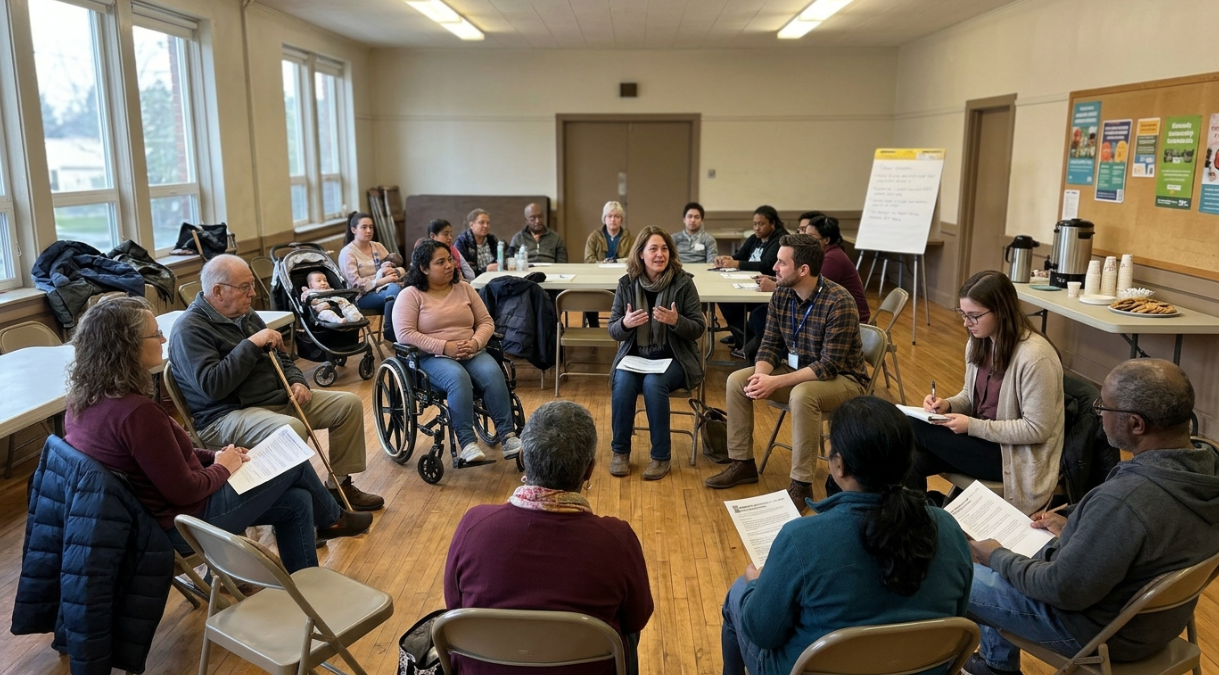
Stakeholder engagement that only reaches the most accessible, most vocal, or most powerful people isn’t stakeholder engagement. It’s an echo chamber with extra steps.
Research on social impact assessment emphasizes the need to design engagement processes that amplify marginalized voices, address power imbalances, and ensure sustainability benefits are distributed fairly. Yet a South African study on corporate social investment found that beneficiaries, the people most affected by social impact programs, were the least engaged stakeholder group. Organizations consistently prioritized funders, board members, and partners.
This isn’t just an equity problem. It’s an effectiveness problem. Engagement that excludes the people closest to the issue produces solutions that miss the mark.
How to implement:
Audit current engagement: who participates, who doesn’t, and why. Track demographics including income, geography, language, and disability status.
Remove access barriers: offer childcare, transportation, translation, multiple time options, and digital alternatives.
Compensate participants for their time. Expecting marginalized communities to donate their labor to your impact program is extractive.
Use trusted intermediaries from the community to facilitate engagement rather than relying on organizational staff.
Set representation targets. If your program serves a specific population, that population should make up a proportionate share of your engagement participants.
9. Use Multi-Channel and Digital Engagement
Stakeholder engagement often defaults to a single format: in-person meetings. That works for some people and excludes many others. Digital and multi-channel approaches expand who can participate and when.
Social networks are central to initiating the communication process. Creating posts on platforms where specific interest groups or communities gather allows organizations to reach stakeholders they’d never encounter in a conference room. Social listening, dedicated community spaces, short-form video, and interactive surveys each serve different engagement purposes.
Practitioners on forums note that some of the most effective stakeholder input has come from informal conversations, piggyback sessions added to existing meetings, and volunteer-facilitated focus groups. Expensive, elaborate engagement programs often perform worse than low-budget tactics that meet people where they already are.
How to implement:
Identify where your stakeholders already spend time online and offline. Don’t build new platforms; go to existing ones.
Use asynchronous engagement (surveys, discussion boards, video responses) alongside synchronous options (live meetings, workshops) so participation isn’t limited by schedule.
Create dedicated digital spaces for ongoing dialogue, not just one-time input. A Slack channel, WhatsApp group, or online community can sustain engagement between formal touchpoints.
Track channel-specific participation rates to understand which methods reach which stakeholder groups.
10. Measure Engagement Against Impact Outcomes, Not Activity
This strategy separates organizations that are serious about stakeholder engagement for social impact from those that are performing it. Most organizations measure engagement using activity metrics: how many people attended, how many surveys were completed, how many meetings were held. These metrics tell you nothing about whether engagement produced results.
The shift is from outputs to outcomes. Outputs show what actions were taken. Outcomes reveal the actual impact. A study analyzing 387 specific examples of stakeholder influence found that 306 had a direct impact on outcomes, demonstrating that meaningful involvement leads to more user-focused and practical results.
Key engagement metrics worth tracking include feedback scores, satisfaction ratings, percentage of decisions influenced by stakeholder input, health of stakeholder relationships, reaching specific target audiences, and gaining participation from marginalized groups.
How to implement:
For every engagement activity, define the intended outcome before starting. What decision will this inform? What behavior will it change?
Track “decisions influenced”: how many organizational decisions were directly shaped by stakeholder input in the past quarter?
Measure behavioral changes among stakeholders: did donors increase giving after engagement? Did community members adopt recommended practices? Did employees change how they work?
Report engagement outcomes alongside impact outcomes. They should tell a connected story.
Building a proper social impact measurement framework that integrates stakeholder engagement metrics with program outcomes ensures you’re measuring what matters.
Stakeholder Engagement KPIs: What Should Organizations Measure?
Effective stakeholder engagement measurement combines participation metrics, engagement quality indicators, decision-making influence, and longer-term social outcomes.
Organizations should avoid relying exclusively on attendance figures or survey completion rates. These indicators show participation but do not establish whether engagement improved decisions or created meaningful change.
Measurement category | Example KPI | What it reveals |
|---|---|---|
Participation | Number of stakeholders participating | Reach of engagement activities |
Representation | Percentage of priority groups represented | Whether relevant voices are included |
Accessibility | Number of participation barriers addressed | Whether engagement is inclusive |
Engagement quality | Stakeholder satisfaction and perceived influence | Whether participants feel heard |
Decision influence | Number of decisions changed through stakeholder input | Whether feedback affects organizational decisions |
Responsiveness | Percentage of feedback items receiving a documented response | Whether organizations follow up |
Relationship health | Stakeholder trust and relationship assessments | Whether engagement strengthens relationships |
Social outcomes | Changes in relevant program outcome indicators | Whether the initiative creates intended social results |
How to Measure Stakeholder Influence
One useful indicator is the percentage of eligible decisions that were materially influenced by stakeholder input.
Use this formula:
Stakeholder Influence Rate = (Number of Decisions Materially Influenced by Stakeholder Input ÷ Total Decisions Reviewed) × 100
For example, if an organization reviews 20 program decisions and finds that stakeholder input materially influenced 8 of them, its stakeholder influence rate is 40%.
This is an illustrative calculation, not an industry benchmark. Organizations should define what qualifies as material influence and use a consistent review process.
The most meaningful measurement systems connect engagement indicators to the organization's broader theory of change. They should show not only whether stakeholders participated, but whether their involvement contributed to better decisions and intended social outcomes.
11. Create Feedback Loops and Close the Loop Publicly
Nothing kills stakeholder engagement faster than the feeling of shouting into a void. People give their time, share their perspectives, offer their lived experience, and then hear nothing back. The next time you invite them to participate, they don’t show up.
Best practice is to share a feedback summary with stakeholders within two weeks, highlighting key findings and actions taken. Two weeks, not two months. Speed signals respect.
Closing the loop publicly means showing stakeholders exactly how their input shaped decisions. “Based on community advisory board feedback, we changed X” is more powerful than any engagement invitation you’ll ever send.
How to implement:
Set a standard: feedback summaries go out within 14 days of any engagement activity.
Include three elements in every summary: what was said, what decisions were made as a result, and what happens next.
Be honest when input didn’t change the decision. Explain why. Stakeholders respect transparency more than the illusion of influence.
Regularly update stakeholders on progress, findings, and next steps. Transparency builds trust over time.
Organizations that fail to close feedback loops risk more than disengagement. In an era of heightened scrutiny around corporate purpose claims, engagement without follow-through can look like greenwashing. Understanding how to avoid greenwashing in your communications applies directly to how you report back on stakeholder engagement.
12. Embed Engagement Into Operations, Not Projects
The final and most important strategy: stop treating stakeholder engagement as a project with a start and end date. Stakeholder engagement should be a continuous process, with phases aligned to important impact measurement milestones throughout the investment cycle.
Most organizations engage stakeholders when a report is due, a strategy is being written, or a crisis has occurred. This episodic approach produces episodic results. Stakeholders are engaged just long enough to produce a quote for the annual report, then forgotten until next year.
Research on corporate social innovation found that reducing tensions through routinization, embedding engagement into regular operational rhythms, is more effective than addressing internal or external stakeholder tensions in isolation.
How to implement:
Establish quarterly engagement touchpoints that are built into the operational calendar, not bolted onto project timelines.
Create standing advisory structures (community boards, employee panels, beneficiary councils) with consistent membership and clear mandates.
Assign engagement responsibilities to specific roles, not just the sustainability team. When engagement is everyone’s job, it’s no one’s job. When it’s someone’s explicit responsibility with dedicated time, it actually happens.
Review engagement effectiveness in the same meetings where you review program performance. Make them inseparable.
Stakeholder Engagement Plan: Practical Template and Example
A stakeholder engagement plan translates engagement objectives into specific activities, responsibilities, communication methods, and measurable outcomes. It helps organizations coordinate participation and ensure stakeholder feedback influences actual decisions.
A practical engagement plan should include the following elements:
Stakeholder group: Who needs to participate?
Engagement objective: What does the organization want to achieve?
Engagement method: How will stakeholders participate?
Frequency: When and how often will engagement happen?
Responsible person: Who manages the relationship?
Success indicator: How will the organization evaluate engagement quality?
Example Stakeholder Engagement Plan
Consider a nonprofit organization launching a community education initiative. The organization needs input from students, parents, teachers, local partners, and funders before finalizing the program.
Stakeholder group | Engagement objective | Method | Frequency | Success indicator |
|---|---|---|---|---|
Students | Identify learning barriers | Focus groups | Before launch and quarterly | Student recommendations incorporated |
Parents | Understand family needs | Interviews and surveys | Quarterly | Participation and satisfaction |
Teachers | Improve program delivery | Workshops | Monthly | Teaching recommendations implemented |
Community partners | Coordinate local resources | Joint planning meetings | Monthly | Shared activities delivered |
Funders | Align funding with program objectives | Progress briefings | Quarterly | Funding priorities informed by evidence |
How to Use the Engagement Plan
Identify the stakeholders most affected by the initiative.
Define what decisions or outcomes their participation should influence.
Select accessible engagement methods for each group.
Assign a responsible person to manage communication and follow-up.
Record feedback and document the decisions influenced by it.
Review the plan regularly and adjust it as stakeholder needs change.
An engagement plan should remain flexible. Stakeholder priorities, program conditions, and participation levels can change over time. Review the plan whenever significant changes occur rather than treating it as a document that only needs updating once a year.
The Business Case for Stakeholder Engagement in Social Impact
Stakeholder engagement is not simply a corporate social responsibility activity or a requirement for sustainability reporting. When integrated into organizational strategy, it can improve decision-making, strengthen relationships, identify operational risks, and help organizations develop initiatives that respond to real community needs.
There are four important business benefits.
1. Stronger Stakeholder Trust
Consistent communication, transparent decision-making, and visible responses to stakeholder feedback help organizations build more credible relationships with employees, customers, communities, and partners.
Trust is strengthened when organizations demonstrate that engagement leads to action rather than treating participation as a public relations exercise.
2. Better Strategic Decision-Making
Stakeholders often understand operational problems, community needs, and social barriers that organizational leadership may overlook.
Involving these groups early can reveal implementation challenges, identify overlooked needs, and help organizations design more relevant programs.
3. Stronger Employee and Community Relationships
Internal stakeholder engagement gives employees opportunities to contribute to organizational priorities, while community engagement helps organizations understand the effects of their activities.
Both are important for building long-term relationships and aligning organizational commitments with actual behavior.
4. Reduced Social and Operational Risks
Early engagement can help organizations identify concerns about accessibility, environmental effects, community disruption, and unequal distribution of benefits.
Addressing these concerns before implementation can reduce conflict, improve project acceptance, and support more responsible decision-making.
Ultimately, stakeholder engagement creates value when organizations use stakeholder knowledge to improve decisions and deliver measurable outcomes. Its commercial value should be evaluated through evidence such as stronger relationships, reduced project risks, improved program performance, and better-informed strategic decisions.
For organizations looking to connect brand purpose with measurable social impact, start with a conversation about building a more effective engagement strategy.
7 Common Stakeholder Engagement Mistakes to Avoid
Even organizations with formal stakeholder engagement strategies can struggle to produce meaningful results. The problem is often not a lack of communication but poor planning, unequal participation, or failure to act on stakeholder feedback.
The following mistakes can weaken engagement and damage long-term relationships.
1. Engaging Stakeholders Too Late
Inviting stakeholders to comment after major decisions have already been made creates the impression that participation is symbolic.
How to avoid it: Involve affected groups during problem identification, planning, and program design rather than waiting until implementation.
2. Prioritizing Powerful Stakeholders Over Affected Communities
Organizations often give greater attention to investors, executives, and funders because these groups have formal decision-making authority.
How to avoid it: Give beneficiaries and affected communities meaningful opportunities to influence decisions, even when they have limited institutional power.
3. Treating Attendance as Proof of Engagement
A large meeting does not necessarily indicate meaningful participation. People may attend without feeling comfortable sharing concerns or influencing decisions.
How to avoid it: Measure representation, participation quality, feedback responsiveness, and decisions influenced.
4. Ignoring Accessibility Barriers
Language differences, transportation costs, disabilities, work schedules, and digital access can prevent important stakeholder groups from participating.
How to avoid it: Offer accessible venues, translation, flexible scheduling, compensation where appropriate, and multiple participation channels.
5. Making Promises Without Resources
Organizations can damage trust when they invite stakeholders to propose solutions but lack the budget, staffing, or authority to implement them.
How to avoid it: Explain organizational constraints before engagement begins and distinguish between decisions that can and cannot change.
6. Failing to Communicate What Happened to Feedback
Stakeholders may stop participating when organizations collect feedback but never explain what happened afterward.
How to avoid it: Publish feedback summaries, document decisions, and explain why certain recommendations were accepted or rejected.
7. Measuring Activities Instead of Outcomes
Counting meetings and surveys does not show whether stakeholder engagement improved program decisions or social conditions.
How to avoid it: Connect engagement indicators to measurable organizational and social impact objectives.
Avoiding these mistakes helps organizations move from one-time consultation exercises toward continuous, transparent, and accountable stakeholder relationships.
How Stakeholder Engagement Supports ESG and Sustainability Reporting
Stakeholder engagement plays an important role in environmental, social, and governance (ESG) reporting because it helps organizations understand which issues matter to affected groups and how organizational activities influence them.
Rather than relying exclusively on internal assessments, organizations can use stakeholder feedback to identify material concerns, evaluate social risks, and improve the relevance of sustainability disclosures.
Stakeholder Engagement in ESG Reporting
There are several ways stakeholder engagement contributes to ESG reporting:
Environmental issues: Communities can provide feedback about pollution, resource use, land development, and environmental risks.
Social issues: Employees, beneficiaries, and local communities can identify concerns involving working conditions, accessibility, human rights, and community well-being.
Governance issues: Investors, employees, and other stakeholders can provide perspectives on transparency, accountability, organizational conduct, and decision-making.
How to Integrate Stakeholder Feedback Into ESG Reporting
Identify relevant stakeholder groups and the sustainability issues that may affect them.
Select engagement methods that allow affected groups to communicate their concerns.
Document feedback and identify recurring risks or priorities.
Evaluate how stakeholder input influences organizational decisions and reporting priorities.
Disclose relevant engagement processes, outcomes, and limitations.
Organizations should distinguish between stakeholder engagement and materiality assessment. Engagement is a process for understanding stakeholder perspectives, while materiality assessment involves evaluating which sustainability matters are relevant under the reporting framework being used.
Stakeholder feedback can inform reporting, but it should not replace independent evidence, impact measurement, or transparent disclosure.
For example, the Global Reporting Initiative (GRI) framework provides guidance for reporting on an organization's impacts on the economy, environment, and people. Organizations should consult the applicable GRI Standards and other relevant reporting requirements when designing their engagement and disclosure processes.
Frequently Asked Questions
What is stakeholder engagement for social impact?
Stakeholder engagement for social impact is the practice of involving the people affected by, interested in, or able to influence social change initiatives in the design, execution, and measurement of those initiatives. It goes beyond informing stakeholders to actively incorporating their perspectives, lived experience, and decision-making into how programs are built and how success is defined.
How do you measure whether stakeholder engagement is actually working?
Move beyond activity metrics like attendance numbers and survey completion rates. Track the percentage of organizational decisions influenced by stakeholder input, behavioral changes among engaged stakeholders, satisfaction and relationship health scores, and whether engagement reached marginalized groups. The key question is always: did engagement change something, or just document something?
What’s the difference between stakeholder consultation and co-creation?
Consultation asks stakeholders to react to pre-formed plans. Co-creation invites stakeholders to shape strategy alongside organizational teams from the outset. Research shows that consultation tends to be transactional, while co-creation builds shared ownership of outcomes and produces more practical, user-focused solutions. Co-creation requires more time upfront but delivers stronger results and sustained participation.
Why do stakeholders stop participating in engagement programs?
The most common reasons are friction (participation is too complicated or time-consuming), lack of visible impact (stakeholders don’t see how their input was used), and vague purpose (engagement goals aren’t specific enough to feel meaningful). Applying behavioral science principles, like reducing barriers, creating accountability, and building fast feedback loops, addresses all three issues.
How often should organizations engage stakeholders?
Stakeholder engagement should be continuous, not episodic. Quarterly formal touchpoints are a reasonable minimum, supplemented by ongoing digital engagement and standing advisory structures. Organizations that only engage when a report is due or a crisis hits produce shallow, inconsistent input that doesn’t inform strategy.
Which stakeholder groups are most commonly overlooked?
Beneficiaries, the people most directly affected by social impact programs, are consistently the least engaged stakeholder group. Organizations tend to prioritize funders, board members, partners, and customers while neglecting the communities their programs serve. Internal stakeholders, particularly cross-functional teams beyond the sustainability department, are also frequently overlooked.
Can small organizations with limited budgets do effective stakeholder engagement?
Yes. Practitioners report that some of the most effective stakeholder input comes from informal conversations, sessions piggybacked onto existing meetings, and volunteer-facilitated focus groups. Expensive, elaborate engagement programs often perform worse than simple, low-friction approaches that meet stakeholders where they already are. The key is specificity of goals, not size of budget.
How does stakeholder engagement connect to ESG and sustainability reporting?
Stakeholder engagement is increasingly a required component of sustainability and ESG reporting frameworks. But effective engagement goes far beyond collecting quotes for a report. When done well, stakeholders help determine what to measure, which criteria to use, and what data and methods are most appropriate. This produces reporting that reflects genuine impact rather than organizational self-assessment.