
 Gaia
GaiaTL;DR
The best CSR campaigns share five traits: the cause fits the business, the commitment is backed by proof, people can participate, the work continues long term, and the scale matches the company’s role in the problem. This article breaks down 12 corporate social responsibility campaigns from Patagonia, REI, Dove, Airbnb, LEGO, TOMS, and more, evaluating what worked, what backfired, and what other brands should copy or avoid. A scoring framework (the 5P Scorecard) and practical playbook are included.
Why CSR Campaigns Matter More Than They Used To
Consumers keep saying they want brands to act responsibly. And the data backs them up, at least in surveys. PwC’s 2024 Voice of the Consumer Survey found that consumers were willing to pay an average 9.7% sustainability premium even amid cost-of-living pressure. That number matters, but it comes with a caveat: willingness in a survey is not the same as behavior at the shelf. The gap between what people say and what they do remains one of the hardest problems in sustainability marketing.
Still, staying silent carries risk too. Edelman’s 2024 Trust Barometer found that when brands do not communicate their actions on societal issues, 51% of people assume the brand is doing nothing or hiding something.
This article is not a gallery of feel-good campaigns. It is a strategic teardown. Each of the 12 CSR campaign examples below is evaluated for its proof, participation mechanic, brand fit, measurable outcomes, and honest limitations. The goal is to help marketers, sustainability leads, and brand strategists figure out what actually builds trust, and what just looks like it does.
For more examples beyond CSR specifically, see this guide to social impact campaign examples.
Quick Answer: What Are the Best CSR Campaign Examples?
The best CSR campaigns connect a company's core business to a specific social or environmental problem, back the message with measurable action, give customers or employees a clear way to participate, and maintain the commitment beyond a single advertising cycle. Strong examples include Patagonia's Worn Wear, REI's #OptOutside, Dove's Self-Esteem Project, Airbnb.org, LEGO Replay, TOMS' giving model, and IKEA's People and Planet Positive strategy. The right campaign depends on the company's industry, resources, audience, and ability to prove impact.
CSR Campaign Definition
A CSR campaign is a public-facing initiative through which a company addresses a social, environmental, community, or ethical issue through measurable action. Unlike a campaign based only on advertising or donations, a strong CSR campaign connects the company's message to operational behavior, customer or employee participation, and evidence of impact. CSR campaigns can include advocacy, education, sustainability, charitable giving, circularity, or community programs.
What Counts as a CSR Campaign
Corporate social responsibility (CSR) describes a company’s commitment to operate responsibly toward people, communities, society, and the environment. But “CSR campaign” is used loosely. People apply it to everything from a single Super Bowl ad to a decade-long operational strategy.
For this article, a CSR campaign is a public-facing initiative that communicates and activates a company’s social or environmental responsibility. The strongest ones are backed by business action, not just brand messaging. They fall into several types:
Time-bound campaigns: A specific creative activation, like Always’ #LikeAGirl.
Long-running platforms: A sustained impact system, like Dove’s Self-Esteem Project.
Business models: Impact built into every transaction, like Who Gives A Crap or Warby Parker.
Advocacy movements: Policy or social change efforts, like The Body Shop’s Forever Against Animal Testing.
Operational rituals: Company behavior made public, like REI’s #OptOutside.
Understanding this distinction matters. A company claiming a CSR campaign should be able to point to something beyond a press release. For a deeper look at what separates real brand purpose from marketing copy, that distinction is worth exploring.
CSR vs. Cause Marketing vs. Brand Activism vs. ESG
These terms overlap, but they are not interchangeable.
Term | What It Means | Typical Example | Primary Focus |
|---|---|---|---|
CSR | A company's broader responsibility to society and stakeholders | Employee programs, community investment, responsible sourcing | Business responsibility |
CSR campaign | A public-facing initiative that activates a specific CSR commitment | LEGO Replay or REI #OptOutside | Communication + participation |
Cause marketing | Marketing connected to a particular cause, often involving a purchase or promotion | Product-linked donations | Marketing |
Brand activism | A public position on a social, political, or cultural issue | Ben & Jerry's advocacy | Public opinion and social change |
ESG | A framework for evaluating environmental, social, and governance factors | Emissions, workforce, governance reporting | Business and investor performance |
The Simple Difference
CSR is the broadest concept. A CSR campaign is a public-facing initiative within that broader responsibility. Cause marketing is primarily a marketing mechanism connected to a cause. Brand activism involves taking a public position on an issue, while ESG is generally used to assess business performance across environmental, social, and governance factors.
A campaign can belong to more than one category. For example, an advocacy campaign can be both a CSR initiative and an example of brand activism.
Common Types of CSR Campaigns
CSR campaigns typically fall into several recurring models:
Sustainability and Environmental Campaigns
These focus on emissions, waste, circularity, conservation, sustainable products, or responsible resource use. Patagonia, LEGO, and IKEA provide useful examples.
Community and Social Impact Campaigns
These use company resources, products, services, or partnerships to address a community need. Airbnb.org and Warby Parker illustrate this approach.
Employee Engagement Campaigns
These make employees active participants in the company's social or environmental mission. REI's #OptOutside is a strong example.
Advocacy Campaigns
These aim to change public policy, industry standards, or social behavior. The Body Shop demonstrates how a brand can combine customer participation with nonprofit advocacy.
Education and Behavior-Change Campaigns
These seek to change attitudes or behavior through education, research, storytelling, or participation. Dove and Always are examples.
Purchase-Linked Giving Campaigns
These connect customer purchases to donations or social outcomes. TOMS and Warby Parker demonstrate the model, although both also show why these models need careful impact design.
Business-Model CSR
These integrate social or environmental impact into the company's economics rather than treating CSR as a separate marketing activity. Who Gives A Crap is a useful example.
How We Evaluated: The 5P CSR Campaign Scorecard
Not all CSR campaigns deserve the label “best.” To separate the campaigns that built real trust from those that just generated impressions, each entry below is evaluated using five criteria.
1. Problem Fit. Does the cause connect to the company’s product, category, supply chain, audience, or expertise? A fashion brand addressing textile waste has fit. A fast-food chain launching a biodiversity campaign has a harder argument to make.
2. Proof. Can the brand show what it changed, funded, measured, or built? Proof means data, not just sentiment.
3. Participation. Can customers, employees, communities, or partners take a clear action? The best CSR campaigns give people something to do, not just something to feel.
4. Permanence. Is the campaign tied to a long-term program, or is it a one-off stunt?
5. Proportionality. Is the commitment large enough relative to the company’s size, revenue, and role in the problem? A billion-dollar company donating $10,000 is not proportional.
Explore Grounded World’s assessment tools to evaluate where your brand’s CSR story stands before launching a campaign.
5P CSR Campaign Scorecard: The 12 Examples Compared
Each campaign is scored from 1 to 5 across Problem Fit, Proof, Participation, Permanence, and Proportionality. The scores are an editorial framework for comparison, not an independently audited ranking.
Campaign | Fit | Proof | Participation | Permanence | Proportionality | Total / 25 |
|---|---|---|---|---|---|---|
Patagonia Worn Wear | 5 | 5 | 5 | 5 | 5 | 25 |
REI #OptOutside | 5 | 5 | 5 | 5 | 4 | 24 |
Dove Self-Esteem Project | 5 | 5 | 4 | 5 | 4 | 23 |
LEGO Replay | 5 | 5 | 5 | 4 | 4 | 23 |
Airbnb #WeAccept / Airbnb.org | 5 | 5 | 5 | 5 | 3 | 23 |
Who Gives A Crap | 5 | 5 | 5 | 5 | 3 | 23 |
Always #LikeAGirl | 5 | 4 | 5 | 4 | 4 | 22 |
Warby Parker | 5 | 5 | 4 | 5 | 3 | 22 |
The Body Shop | 5 | 5 | 5 | 5 | 2 | 22 |
IKEA People & Planet Positive | 5 | 5 | 3 | 5 | 4 | 22 |
TOMS | 5 | 4 | 5 | 5 | 3 | 22 |
Ben & Jerry's | 5 | 5 | 5 | 5 | 2 | 22 |
How to interpret the score: A high total does not mean a campaign is universally “better.” It means the campaign provides a strong model across the five dimensions. A lower Proportionality or Proof score can also highlight where other brands should be cautious before copying the model.
How We Selected the Best CSR Campaign Examples
The campaigns in this guide were selected based on five factors: relevance to the company's core business, evidence of measurable action, audience participation, longevity, and proportionality of the commitment.
We also considered whether each example offers a lesson that another company can realistically adapt. A famous campaign is not automatically a strong CSR model. Campaigns were therefore evaluated for both their public impact and their usefulness as a strategic example.
The 5P framework is designed to answer five questions:
Problem Fit: Does the issue connect naturally to the company's business or impact?
Proof: Can the company demonstrate what it actually changed or funded?
Participation: Can customers, employees, partners, or communities take meaningful action?
Permanence: Does the initiative extend beyond a short-term marketing cycle?
Proportionality: Is the commitment meaningful relative to the company's role and resources?
This approach also means a campaign can be highly successful while still having limitations. The goal is not to identify perfect companies, but to identify CSR strategies worth studying.
Best CSR Campaign Examples by Goal
Different CSR objectives call for different campaign models. The strongest example is not necessarily the most famous campaign; it is the one whose structure matches the business problem you are trying to solve.
CSR Goal | Example | Why It Works | Best For |
|---|---|---|---|
Circularity and reuse | Patagonia Worn Wear | Gives customers an alternative to buying new | Apparel and durable goods |
Employee engagement | REI #OptOutside | Makes employee behavior part of the campaign | Retail and member brands |
Education and social impact | Dove Self-Esteem Project | Turns a brand message into a long-term program | Beauty and wellness |
Cultural change | Always #LikeAGirl | Reframes a damaging social belief | Consumer brands |
Inclusion and humanitarian aid | Airbnb #WeAccept / Airbnb.org | Uses the company's platform to facilitate participation | Marketplaces and platforms |
Product reuse | LEGO Replay | Makes responsible disposal simple | Consumer product brands |
Purchase-linked giving | Warby Parker | Connects the product directly to the social need | DTC and consumer brands |
Advocacy | The Body Shop | Combines brand reach with NGO-led advocacy | Values-led brands |
Brand activism | Ben & Jerry's | Makes social issues part of long-term brand identity | Mission-led brands |
Business-model impact | Who Gives A Crap | Builds social impact into the economics of the company | Challenger brands |
Operational sustainability | IKEA | Connects sustainability to products and operations | Large retailers |
Giving model evolution | TOMS | Demonstrates how impact models can change based on evidence | Social enterprises |
Which CSR Campaign Is Best for Your Business?
If your goal is circularity, study Patagonia and LEGO. If your goal is employee participation, study REI. If your goal is education and behavior change, study Dove and Always. If your business operates a platform or marketplace, Airbnb provides a useful model. For advocacy and activism, The Body Shop and Ben & Jerry's show how brands can build long-term movements. For a business-model approach, study TOMS, Warby Parker, and Who Gives A Crap.
12 Best CSR Campaigns to Learn From
1. Patagonia: Don’t Buy This Jacket and Worn Wear
Best for: Durable-goods brands building circularity programs.
On Black Friday 2011, Patagonia ran a full-page New York Times ad with the headline “Don’t Buy This Jacket.” The goal, as Patagonia’s own write-up explains, was to ask people to think before buying and acknowledge that every product carries environmental cost. That admission, from a company selling jackets, was the tension that made the campaign credible.
Patagonia later extended this logic through Worn Wear, a repair and resale platform that launched in 2012 and grew into pop-ups, repair events, and a dedicated used-gear store.
Key proof points:
Over $140M in cash and in-kind donations to grassroots environmental groups through its 1% for the Planet commitment since 1985.
IMD’s case study notes that sales increased roughly 30% in the nine months after the ad.
Worn Wear creates a practical alternative to buying new.
Tradeoffs and limitations:
A campaign against overconsumption paradoxically increased brand desire and revenue.
The message only holds if the product is genuinely durable and repairable.
Practitioners on Reddit praise Patagonia’s repair service but note that Worn Wear pricing can feel high when used gear costs only slightly less than new sale items.
What to copy: Make the tension explicit. Admit your product has impact. Then give customers a concrete alternative: repair, resale, trade-in, or refill.
Visible commitment: Full-page national newspaper ad, repair and resale infrastructure, product take-back logistics, decades of 1% giving.
For brands interested in environmental CSR, these sustainability campaigns that drive results offer additional models.
2. REI: #OptOutside
Best for: Retailers using employee experience as brand proof.
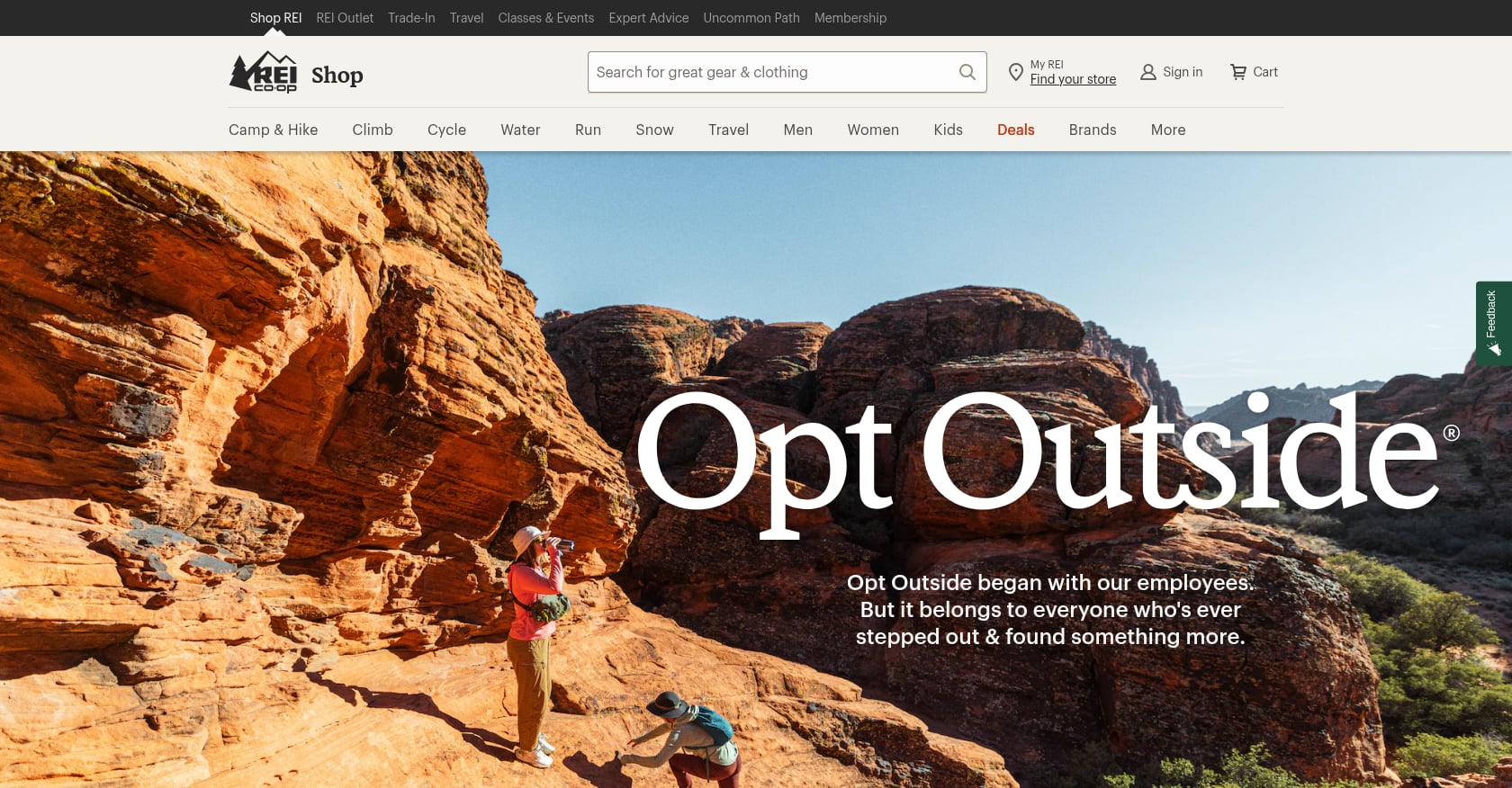
In 2015, REI closed all 143 stores on Black Friday, paid employees to spend time outside, and invited the public to #OptOutside. It also gave $5.9 million that year to more than 300 nonprofits caring for 1,000 outdoor spaces. The practice later became permanent.
Key proof points:
Retail TouchPoints reported a 9.3% revenue increase and 23% digital sales increase in 2015.
The campaign became an annual ritual, which strengthened the brand’s ownership of the idea.
Tradeoffs and limitations:
Employee-focused Reddit threads reveal that some part-time workers questioned eligibility rules and reduced hours around the holiday, complicating the narrative.
The ritual works because REI has strong membership loyalty. A purely transactional retailer would struggle to replicate it.
The brand must keep investing in outdoor access, not just the symbolic day.
What to copy: Make a real operational sacrifice. Invite participation through a simple, ownable behavior. Turn the campaign into a tradition, not a one-off. Practitioners on Reddit describe #OptOutside as one of the few things that makes REI feel distinct, but they also note that the employee experience must match the promise.
Visible commitment: Lost Black Friday store revenue, paid employee time off, nonprofit funding, ongoing campaign infrastructure.
3. Dove: Campaign for Real Beauty and Self-Esteem Project
Best for: Beauty and wellness brands tackling category harm.
Dove challenged narrow beauty standards starting in 2004, and then evolved the idea into something far more durable: the Dove Self-Esteem Project. According to Dove’s own reporting, the program has reached over 82 million young people with self-esteem education and aims to help 250 million by 2030.
Key proof points:
The Guardian reported in 2004 that the “real women” campaign doubled sales of Dove’s firming cream range within a month and increased market share from 1% to 6%.
The Self-Esteem Project provides educational toolkits, not just advertisements.
Tradeoffs and limitations:
Empowerment messaging is vulnerable when the parent company or broader beauty category still profits from insecurity.
Time magazine criticized the campaign for using female empowerment to sell soap, and Reddit threads show some consumers find it overplayed.
Representation without impact infrastructure eventually feels hollow.
What to copy: Anchor the campaign in a real category tension. Build education or tools around the message. Measure reach beyond impressions. Keep the platform alive for years, not months.
Visible commitment: Long-term advertising investment, educational resources, expert partnerships, and ongoing program targets tracked publicly.
4. Always: #LikeAGirl
Best for: Brands reframing cultural language tied to their audience.
Always (by P&G) transformed the phrase “like a girl” from an insult into an empowerment statement. Before the campaign, only 19% of girls had a positive association with the phrase. After watching the film, 76% said they no longer viewed it as an insult.
Key proof points:
The Marketing Society’s case material reported a U.S. purchase-intent increase from 42% to 46% and a 6.93% lift in brand preference.
The campaign won the Cannes Lions Grand Prix for Glass Lions in 2015.
Tradeoffs and limitations:
The campaign risks becoming a “great film” without lasting programmatic support.
Brands should avoid exploiting vulnerable groups without clear, measurable benefit to those groups.
Ongoing investment in girls’ confidence programs (not just advertising) is required to maintain credibility.
What to copy: Find a cultural phrase or behavior that harms your audience. Use research to expose the tension. Let real people demonstrate the issue. Create a participatory hashtag that reframes the language.
Visible commitment: Global creative production, media distribution, research, social participation mechanics, and brand platform support.
5. Airbnb: #WeAccept and Airbnb.org
Best for: Platform businesses turning core infrastructure into social impact.
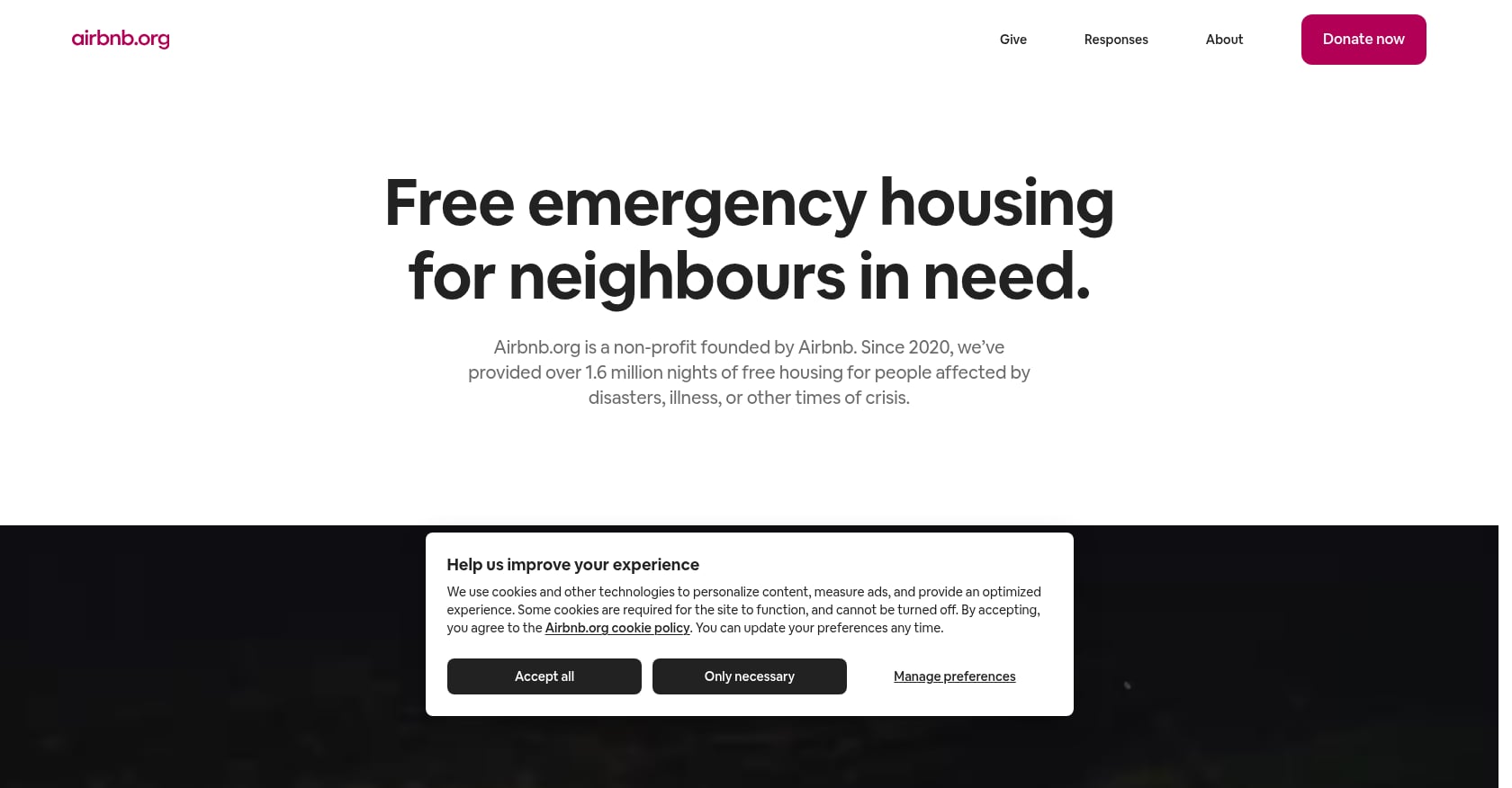
Airbnb launched #WeAccept during the 2017 Super Bowl amid debate around the U.S. travel ban. It pledged to provide housing relief for 100,000 people in need over five years and $4 million to the International Rescue Committee. Since Airbnb.org launched in 2020, it has provided over 1.4 million nights of free temporary housing to more than 210,000 refugees and asylum seekers.
Key proof points:
#WeAccept was the top advertiser hashtag during the 2017 Super Bowl, generating more than 33,000 tweets during the first half.
Airbnb.org converted a values statement into measurable platform infrastructure.
Tradeoffs and limitations:
Host discussions on Reddit reveal the operational complexity: damage, boundary disputes, unclear rules, and emotional burden on individual hosts who deliver the impact.
Local community threads point out the irony of Airbnb helping with housing crises while being blamed for housing-market pressure in many cities.
A Super Bowl statement raises expectations for long-term follow-through.
What to copy: Use your company’s core capability to solve a real problem. Make participation easy for the platform community. Work through trusted nonprofit partners. But do not ignore the people who bear the operational cost of delivering the promise.
Visible commitment: Super Bowl media, nonprofit funding, housing pledges, platform infrastructure, host and community mobilization.
6. LEGO: LEGO Replay
Best for: Product companies making reuse frictionless.
LEGO Replay lets families donate used bricks, which are cleaned, sorted, and distributed to children in need through partners like First Book. The program launched in the U.S. in 2019 and expanded to Canada (2020) and the U.K. (2024).
Key proof points:
LEGO’s 2023 Sustainability Progress Report says Replay had supported over 151,000 children across the U.S. and Canada.
The program requires no complete sets, lowering the barrier to participation.
Tradeoffs and limitations:
Limited geography frustrates customers in markets where Replay is not yet available.
Sorting, cleaning, and shipping add real operational cost.
Reddit users recommend local schools and libraries as alternatives, especially for mixed-brand bricks that Replay does not accept.
What to copy: Turn product durability into a social-impact asset. Make the customer action simple (box it up, drop it off). Partner with education nonprofits. Avoid shaming anyone; make reuse feel generous.
Visible commitment: Logistics, free shipping labels, cleaning and sorting operations, nonprofit partnerships, geographic expansion.
7. TOMS: One for One and the Evolved Giving Model
Best for: Social enterprises evolving a simple giving model.
TOMS pioneered the One for One model, giving a pair of shoes for every pair purchased. According to TOMS’ current FAQ, the company later shifted from in-kind giving toward grant-based giving, donating a portion of profits to support children’s education, health, and wellbeing. The brand says it has positively impacted over 105 million people.
Key proof points:
The simplicity of “buy one, give one” made TOMS one of the most recognized social enterprise brands globally.
The evolution of the model shows responsiveness to criticism.
Tradeoffs and limitations:
A randomized study of TOMS shoe donations in rural El Salvador found the overall impact appeared negligible in contexts where children already owned shoes.
Reddit discussions echo the longstanding critique that buy-one-give-one models can undercut local markets and oversimplify poverty.
Wharton researchers have noted that in-kind donations can create unintended consequences if poorly designed.
What to copy: Make the participation mechanic instantly understandable. Build giving into the transaction. But be willing to evolve the model when evidence shows limitations. TOMS’ shift from donated products to funded outcomes is the lesson, not the original model.
Visible commitment: Donated product, supply-chain and distribution costs, grant funding, impact-partner management.
8. The Body Shop: Forever Against Animal Testing
Best for: Values-led retailers building advocacy coalitions.
In 2017, The Body Shop and Cruelty Free International launched Forever Against Animal Testing, collecting 8.3 million petition signatures delivered to the United Nations in 2018. The partnership won a 2024 Engage for Good Halo Award for advocacy work, with a Canadian campaign alone generating over 630,000 signatures.
Key proof points:
Record-breaking petition scale for a retail brand.
Concrete policy ambition: a global end to cosmetics animal testing.
Stores and staff served as mobilization infrastructure.
Tradeoffs and limitations:
The Body Shop International entered U.K. administration in February 2024 and filed for U.S. and Canadian bankruptcy in March 2024. Ethical heritage does not guarantee business resilience.
Reddit beauty communities show nostalgia for the brand alongside uncertainty about its survival.
Advocacy campaigns require genuine policy expertise, not just signing mechanics.
What to copy: Partner with a credible NGO. Make the ask simple and political. Use physical retail spaces as activism infrastructure. But never assume that values protect a brand from weak commercial fundamentals.
Visible commitment: Global petition infrastructure, nonprofit partnership, staff and store mobilization, public policy engagement.
9. Ben & Jerry’s: Save Our Swirled and Social Mission Activism
Best for: Activist brands where governance protects the mission.
Ben & Jerry’s 2015 campaign Save Our Swirled was one of the brand’s largest coordinated actions on climate justice. But it was really just one moment in a decades-long pattern. The brand’s 2023 Social and Environmental Assessment Report describes activism focused on human rights, refugee support, marginalized communities, and environmental protection.
Key proof points:
A Google Think interview with Ben & Jerry’s noted that social justice has been part of the brand for nearly 50 years, not a marketing gimmick.
The brand’s independent board was designed to protect the social mission, even under Unilever ownership.
Tradeoffs and limitations:
AP reported that Ben & Jerry’s sued Unilever in 2024, alleging the parent company failed to respect the independent board’s authority over brand integrity.
Reddit sentiment is polarized: some view the activism as authentic, while others call it corporate virtue signaling from a multinational subsidiary.
Not every brand has the governance structure or audience permission to behave this way.
What to copy: Be consistent over decades, not months. Put activism into governance, not only social posts. Accept that true activism will repel some people. Build partnerships with movements rather than speaking over them. But do not attempt this without leadership that accepts real conflict.
Visible commitment: Global activism teams, campaign partnerships, public advocacy, governance structures, legal defense of social mission.
10. Warby Parker: Buy a Pair, Give a Pair

Best for: DTC brands connecting product utility to access.
Warby Parker’s program distributes glasses through partners for every pair purchased. The company reports that over 25 million pairs have been provided to people in need across more than 80 countries.
Key proof points:
The program directly links the brand’s core product to the social need, creating a clean cause-to-commerce connection.
Cumulative impact reporting (25M+ pairs) gives the program measurable weight.
Tradeoffs and limitations:
Reddit threads show mixed sentiment on Warby Parker as a product: some praise affordability, while others cite declining lens quality and customer service.
CSR does not immunize a brand from product complaints. Impact may win trial, but performance wins repeat.
Buy-one-give-one models need transparency about distribution logistics and whether they build local capacity.
What to copy: Tie impact directly to the product’s core utility. Report cumulative outcomes clearly. Work with partners who can distribute effectively.
Visible commitment: Partner distribution, donated eyewear, school programs, public impact reporting.
11. Who Gives A Crap: 50% Profits Donated
Best for: Challenger commodity brands differentiating through mission.
Who Gives A Crap donates 50% of profits to water, sanitation, and hygiene partners. The brand launched after a 50-hour toilet-sit stunt that raised $50,000 in pledges, a founding story that shows how humor and commitment can make an unglamorous issue memorable.
Key proof points:
50% of profits is a hard number that is easy to evaluate and hard to dismiss.
The brand built purpose into a commodity category (toilet paper) where differentiation is typically about softness, not social impact.
Tradeoffs and limitations:
Reddit users discuss the brand like any other product: price per roll, dust, bamboo versus recycled, softness. Some report declining quality over time.
In commodity categories, impact may win the first purchase, but product performance determines loyalty.
The mission does not protect against price sensitivity. Practitioners on Reddit note that a “sustainability tax” is only tolerable when the product truly performs.
What to copy: Build the mission into the business model, not just the marketing. Use humor to make a serious issue approachable. Be transparent about where money goes. But never forget that the product still has to work.
Visible commitment: 50% profit donation, foundation distribution, impact partnerships, brand-led education around sanitation.
12. IKEA: People and Planet Positive
Best for: Large retailers embedding sustainability at operational scale.
IKEA’s People and Planet Positive strategy, launched in 2012, spans renewable energy, responsible sourcing, plant-based foods, circular services, and home sustainability. It is more corporate platform than discrete campaign, but its influence on the best CSR campaigns conversation is significant because it shows how scale changes the equation.
Key proof points:
IKEA connects sustainability to the product offer itself: affordable, lower-impact home goods.
The strategy touches sourcing, logistics, in-store experience, and consumer behavior.
Tradeoffs and limitations:
This is a broad sustainability strategy, not a single campaign, which can make it harder for readers to extract a copyable lesson.
Large-scale platforms require procurement change, reporting infrastructure, and ongoing operational investment.
The breadth of the commitment can dilute the storytelling impact of any single initiative.
What to copy: Help consumers change behavior at scale by making lower-impact choices the default. Use retail infrastructure to normalize responsible options. Connect product, logistics, sourcing, and customer behavior into one coherent story.
Visible commitment: Renewable energy investment, responsible sourcing standards, circular service programs, plant-based food innovation, public sustainability reporting.
What the Best CSR Campaigns Have in Common
Looking across all 12 examples, six patterns emerge:
They are specific. None of these campaigns says “we care about the planet.” They name the issue and the action: repair jackets, close stores, educate 250 million young people, house refugees, end cosmetics animal testing.
They cost something. Closing stores on Black Friday, donating 50% of profits, building repair systems, funding nonprofit partners, changing sourcing. The commitment is visible enough to be credible. As one LinkedIn practitioner put it, if the launch film is bigger than the commitment, the campaign is vulnerable.
They invite participation. People can donate bricks, sign petitions, go outside, buy differently, host a refugee family, or repair a garment. The best CSR campaigns turn audiences into participants.
They are measurable. Signatures collected, people reached, products repaired, nights of housing, glasses distributed. The campaigns that survive scrutiny are the ones that report outcomes, not just impressions. For brands figuring out how to move consumers from intention to action, these behavior change campaign examples offer additional frameworks.
They fit the brand. The cause is connected to what the company sells, does, or affects. Patagonia and overconsumption. Dove and beauty standards. Airbnb and housing. LEGO and long-lasting bricks.
They survive scrutiny. Employees, customers, Reddit users, journalists, and regulators can all look under the hood. The campaigns on this list are not perfect, but they are defensible because the brand can point to real operational proof.
What Makes a CSR Campaign Credible?
A credible CSR campaign usually has five characteristics:
A specific problem. The company identifies the issue it is addressing rather than relying on broad statements about “doing good.”
A measurable commitment. The company can report money invested, people reached, products repaired, emissions reduced, policy outcomes, or another meaningful metric.
A connection to business behavior. The company changes something it controls, such as product design, sourcing, employee policies, logistics, pricing, packaging, or customer experience.
A meaningful participation mechanism. Customers, employees, suppliers, or communities have a clear way to contribute.
Transparent limitations. Credible brands do not present every initiative as perfect. They explain where the program is limited, what remains unresolved, and how the approach is evolving.
The strongest CSR campaigns therefore communicate two things at the same time: what the company is doing and what it still needs to improve.
Why CSR Campaigns Fail
Understanding failure patterns is as valuable as studying success. Here are the most common reasons CSR campaigns backfire:
No operational backing. The ad says one thing; the business does another. BP spent heavily on “Beyond Petroleum” branding before the 2010 Deepwater Horizon spill. If the core business is materially tied to the harm, campaign language will be judged against operations, not aspirations.
Cause mismatch. The cause is trending but unrelated to the brand’s category, audience, or expertise. Consumers and employees notice.
Oversized marketing, undersized impact. As one LinkedIn article on CSR argued, campaigns become hollow when companies spend more energy on promotion than on real outcomes, noting that brands should first address their own pay, supply chain, carbon footprint, and externalities before launching a campaign.
Vague claims. Terms like “sustainable,” “eco-friendly,” or “good for the planet” without substantiation are exactly the kind of claims the FTC’s Green Guides exist to address. The regulatory environment is tightening. To go deeper on what this means for brands, explore this guide on how to avoid greenwashing.
No employee alignment. Staff are asked to promote a purpose they do not experience internally. REI’s #OptOutside works partly because employees get the day off. When workers see a gap between the public story and their own experience, they fact-check the brand in public.
Short-term stunt. No follow-through after launch. A campaign that disappears after the press cycle signals that the commitment was never real.
Unintended consequences. In-kind donations can undercut local markets. Platform participation can burden hosts or partners. A sustainability worker on Reddit noted that a 1% donation can feel like a “token gesture” if it is not embedded into business strategy.
How to Measure a CSR Campaign
A CSR campaign should be measured across more than impressions or social engagement. The most useful measurement system separates impact, behavior, brand, and risk metrics.
Measurement Area | Example Metrics |
|---|---|
Social impact | People reached, beneficiaries served, donations distributed, education hours |
Environmental impact | Emissions avoided, products repaired, materials reused, waste diverted |
Participation | Sign-ups, donations, repairs, pledges, employee participation |
Behavior change | Adoption rate, repeat participation, product return rate |
Brand impact | Trust, consideration, preference, sentiment, purchase intent |
Business impact | Revenue, retention, acquisition, customer lifetime value |
Risk | Complaints, negative sentiment, regulatory concerns, greenwashing allegations |
Transparency | Reporting frequency, third-party verification, target progress |
The Most Important Rule
Do not use a single metric to prove CSR success. A campaign can generate millions of impressions without producing meaningful social impact. Conversely, a smaller program can create significant impact without becoming a viral campaign.
The strongest measurement system connects the public-facing campaign to a real-world outcome.
How to Build a CSR Campaign Worth Copying
For teams ready to move from inspiration to strategy, here is a practical sequence.
Start with the business impact. Ask what problem your category contributes to. Where do you have credibility? What are you willing to change? What would critics say? Do not start with a tagline. Start with what the company is willing to fund, repair, stop, disclose, or advocate for.
Quantify the intention-action gap. Many consumers say they want responsible options. But behavior changes only when brands reduce friction, increase motivation, and make the choice commercially and emotionally worthwhile. Understanding the gap between stated values and actual behavior is where most CSR campaigns either get traction or stall.
Choose the campaign model. Options include donation models, advocacy campaigns, behavior-change challenges, repair or take-back programs, employee participation programs, platform mobilization, education initiatives, product-linked access models, or pre-competitive coalitions. The model should fit the brand, not the trend. A strong brand activation strategy can help translate the model into market action.
Build proof before promotion. This means third-party certification, impact partners, baseline data, public targets, product or operational changes, independent evaluation, transparent reporting, and customer participation data. If you cannot prove it, do not claim it.
Create the participation mechanic. Answer one question: what do we want people to do? Donate bricks. Repair a jacket. Spend Black Friday outdoors. Sign a petition. Buy a product that funds a specific outcome. Clarity here separates campaigns that scale from campaigns that drift.
Measure both cause and business impact. Track cause outcomes (people reached, emissions reduced, policy signatures), behavior outcomes (participation, repeat action, adoption), brand outcomes (trust, sentiment, purchase intent), and risk outcomes (complaints, backlash, greenwashing claims).
If your team needs support building a campaign with these elements, exploring CSR agencies that specialize in consumer-brand work is a practical next step.
What to Copy (Quick Reference)
Patagonia: Tell the truth about your own impact before critics do.
REI: Make a visible operational sacrifice.
Dove: Turn a category problem into a long-term education platform.
Always: Use research to reframe a cultural belief.
Airbnb: Use your core infrastructure, not just your media budget.
LEGO: Make the responsible customer action easy.
TOMS: Keep the promise simple, but evolve the model when evidence demands it.
The Body Shop: Partner with credible advocates when seeking policy change.
Ben & Jerry’s: Do not attempt activism unless leadership accepts conflict.
Warby Parker: Connect the product directly to the problem.
Who Gives A Crap: Make impact part of the business model and voice.
IKEA: Help customers change behavior at scale.
FAQs
What is a CSR campaign?
A CSR campaign is a public-facing initiative that activates a company’s responsibility to people, society, communities, or the environment. It can take the form of a sustainability campaign, advocacy effort, donation model, education program, employee engagement initiative, or behavior-change activation. The strongest campaigns connect business action to public participation.
What is the best CSR campaign example?
There is no single best for every brand. Patagonia’s “Don’t Buy This Jacket” is one of the strongest sustainability examples because the message was risky, category-relevant, and backed by decades of environmental giving and repair infrastructure. REI’s #OptOutside is one of the strongest retail examples because the company made a real operational sacrifice. Dove’s Self-Esteem Project is one of the most effective long-term platforms because it moved beyond advertising into measurable education.
What makes a CSR campaign successful?
The best CSR campaigns score well on five criteria: problem fit (the cause connects to the business), proof (the brand shows real action), participation (people can do something), permanence (the campaign is tied to a long-term program), and proportionality (the commitment is scaled to the company’s size and role in the issue).
How do you measure a CSR campaign?
Measure impact outcomes (people helped, emissions reduced, donations made, policy signatures, products repaired), behavior outcomes (participation rate, adoption, repeat action), brand outcomes (trust, sentiment, purchase intent, earned media), and risk outcomes (complaints, backlash, greenwashing claims).
What is the difference between CSR, cause marketing, and brand activism?
CSR is the broad responsibility of a business to society and the environment. Cause marketing is a marketing campaign that promotes or funds a specific cause, often linked to sales. Brand activism involves taking public positions on social or political issues. A cause-marketing campaign can be part of CSR, but CSR should be broader than a promotion. Brand activism goes further than either by deliberately accepting polarization.
How can a small business run a CSR campaign?
Small brands should not try to replicate Super Bowl-scale campaigns. Better options include partnering with one credible nonprofit, picking a cause tied directly to the product or community, setting one measurable goal, showing operational change, inviting a simple customer action, reporting progress honestly, and starting local before scaling.
How do you avoid greenwashing in a CSR campaign?
Avoid vague terms like “eco-friendly” or “sustainable” unless the brand can substantiate the specific claim. Use third-party certifications, publish baseline data, partner with independent evaluators, and report both successes and shortfalls. The FTC’s Green Guides provide a legal baseline for environmental marketing claims in the U.S., and regulatory scrutiny is increasing globally.
Do CSR campaigns increase sales?
Several examples on this list show commercial lift: Patagonia saw a reported 30% sales increase after “Don’t Buy This Jacket,” REI reported a 9.3% revenue increase in 2015, and Dove doubled firming cream sales within a month. But CSR cannot compensate for weak value. The product still needs to work. Purpose may win the first purchase; performance wins repeat.
Ready to build a CSR campaign backed by proof and grounded in real behavior change? Get in touch with Grounded World to start with a discovery call and complimentary landscape assessment.