
 Gaia
GaiaTL;DR
Most sustainability campaigns raise awareness but fail to change what people actually do. The 12 best sustainability campaigns profiled here broke that pattern, closing the gap between good intentions and real action while delivering measurable commercial results. From Patagonia’s counterintuitive anti-consumption ad that boosted sales by 30% to Hellmann’s food waste campaign that sold 248 million pounds of mayonnaise, each example proves that purpose and profit work together when the strategy is right. This article breaks down what each campaign did, why it worked through a behavioral lens, and what other brands can steal.
Quick Answer: What Are the Best Sustainability Campaigns?
The best sustainability campaigns combine measurable environmental or social impact with behavioral design that changes consumer actions. The strongest examples include Patagonia's "Don't Buy This Jacket," Dove's "Campaign for Real Beauty," IKEA's "Live Lagom," Adidas × Parley's "Run for the Oceans," and Hellmann's "Make Taste, Not Waste." These campaigns succeeded because they reduced friction, aligned sustainability with product value, and produced measurable business results.
What Is a Sustainability Campaign?
A sustainability campaign is a marketing initiative designed to encourage environmentally or socially responsible behavior while supporting measurable business objectives. Unlike traditional corporate social responsibility programs, sustainability campaigns integrate environmental, social, or governance goals directly into products, customer experiences, operations, or brand messaging to influence behavior and create long-term value.
Why Most Sustainability Campaigns Fail (and What Sets the Best Apart)
Here’s the tension every brand marketer should understand: 65% of consumers say they want to buy sustainable products, but only 26% actually do. Researchers call this the intention-action gap, and it’s the graveyard where most sustainability campaigns go to die.
The numbers are getting worse, not better. The percentage of people who say they’ve adopted climate-friendly activities fell from 65% to 53% between September 2021 and March 2023. Good intentions are eroding, and brands that rely on awareness alone are losing ground.
Why? Three reasons keep showing up.
Guilt doesn’t sell. The Harris Poll found that ads emphasizing how humans are destroying the environment perform poorly: just 42% of consumers said they’d be more likely to buy from a company running those ads. Fear and shame push people away.
Announcements aren’t strategies. Over 80% of corporate sustainability announcements fail to connect their initiatives to value creation. And while 74% of CEOs prioritize sustainability, only 45% of companies measure its ROI. No measurement means no iteration, which means no results.
Friction kills follow-through. To bridge the intention-action gap, brands need to address four friction points: cost (eliminate the green premium), ease (make the sustainable choice the default), trust (use third-party verification), and reward (connect planetary benefits to immediate personal benefits). Most campaigns address zero of these. For a deeper look at these barriers, see this guide on removing barriers to sustainable purchasing.
The campaigns below are exceptional precisely because they tackled these problems head-on. Each one moved people from intention to action and generated commercial returns in the process.
Explore Grounded World’s approach to diagnosing intention-action gaps →
At-a-Glance Comparison: 12 Best Sustainability Campaigns
# | Campaign | Brand | Year | Type | Key Metric | Behavioral Mechanism |
|---|---|---|---|---|---|---|
1 | Don’t Buy This Jacket | Patagonia | 2011 | Anti-consumption | +30% sales | Radical transparency |
2 | Campaign for Real Beauty | Dove | 2004 | Social impact | $2B → $4B sales | Cultural conversation |
3 | Live Lagom | IKEA | 2014 | Behavior change | +28% sales (workshops) | Friction reduction |
4 | Run for the Oceans | Adidas × Parley | 2017 | Participatory activation | 14M+ participants | Gamified action |
5 | Make Taste, Not Waste | Hellmann’s | 2021 | Product-cause alignment | 248M lbs sold | Product relevance |
6 | Carbon Footprint Labels | Allbirds | 2020 | Radical transparency | +457% brand awareness | Data-driven trust |
7 | Uncrap the World | Who Gives A Crap | 2012 | Community building | 50% profits donated | Humor + sacrifice |
8 | #BringBackOurBottles | The Body Shop | Ongoing | Circular economy | Global rollout | Simple action + reward |
9 | Beyond Plastic™ | Grove Collaborative | 2020 | Personalized impact | 96% customer trust | Individual tracking |
10 | Clean Future | Unilever | 2020 | Supply-chain innovation | WARC Gold Award | Structural commitment |
11 | Wear Wool, Not Fossil Fuel | Woolmark | 2022 | Cultural reframing | 270M+ impressions | Narrative flip |
12 | WIN@sea | Vattenfall | 2025 | Energy storytelling | Celebrity-driven reach | Humor + tangibility |
How We Ranked These Sustainability Campaigns
Campaigns were evaluated using five criteria:
Ranking Factor | Weight | What We Measured |
|---|---|---|
Commercial impact | 30% | Revenue growth, sales, market performance |
Behavioral change | 25% | Evidence of changing consumer behavior |
Longevity | 20% | Campaign duration and sustainability |
Transparency | 15% | Reporting, verification, and measurement |
Scalability | 10% | Ability to replicate the campaign across markets |
Only campaigns with publicly available performance data and measurable outcomes were included.
Now, the full breakdown.
The 12 Best Sustainability Campaigns, Ranked by Impact
1. Patagonia, “Don’t Buy This Jacket”
Best for: Brands with deep operational credibility ready to lead with radical honesty.
Year: 2011, ongoing philosophy
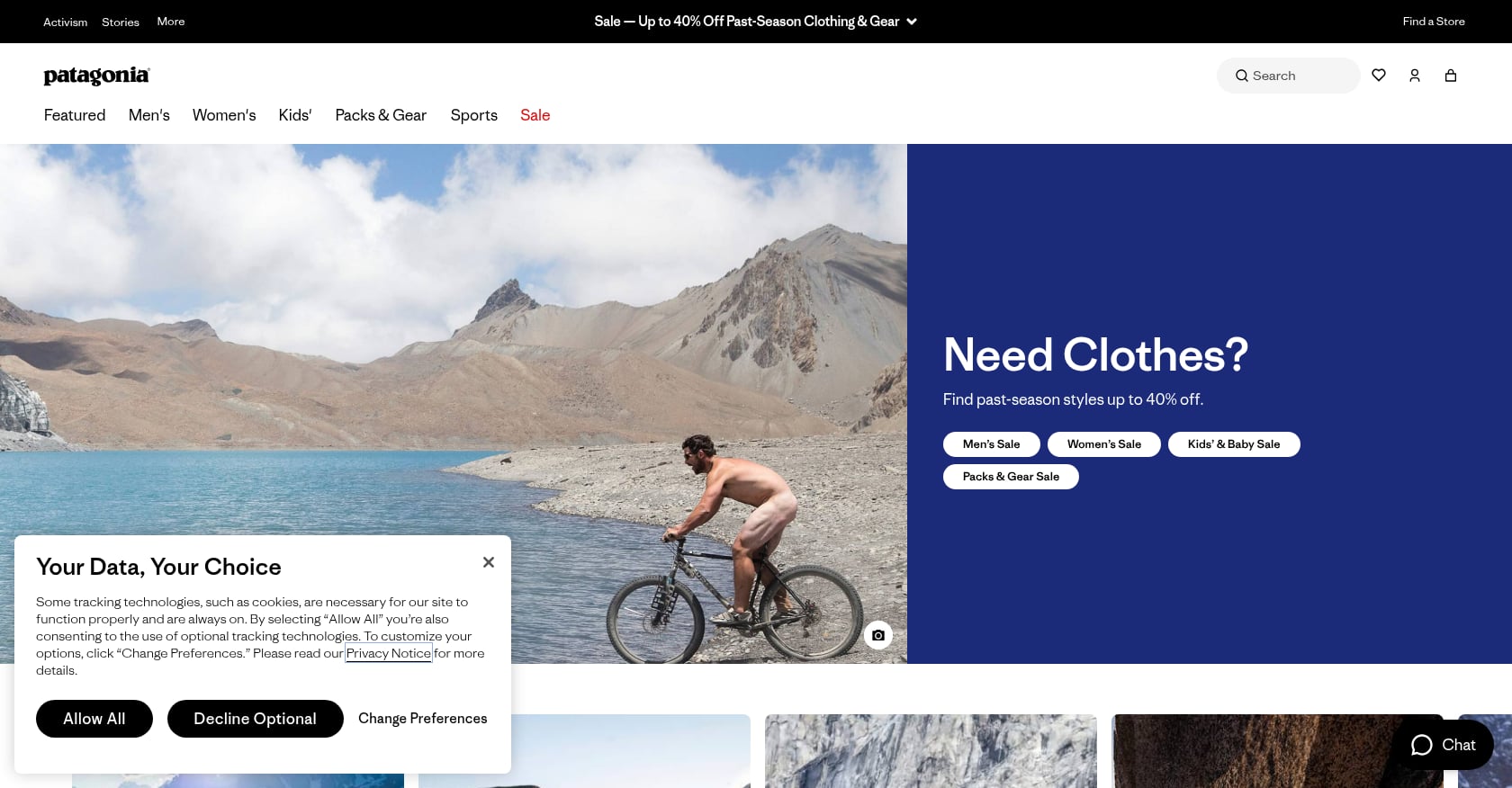
What they did: On Black Friday 2011, Patagonia ran a full-page ad in The New York Times telling people not to buy their jacket. Below the image, the ad detailed the 36 gallons of water required to produce it, the 20 pounds of carbon dioxide emitted, and the waste generated. It was an anti-consumption message from a company that sells things.
Key results:
30% sales increase following the campaign
$1 billion in annual sales by 2017
Company valuation grew to approximately $3 billion
In 2022, founder Yvon Chouinard transferred ownership to a trust, directing roughly $100 million annually to climate action
Why it worked: The campaign operated on radical transparency, a behavioral mechanism that builds trust by voluntarily disclosing information that seems to work against your own interest. Patagonia wasn’t asking people to feel guilty. It was demonstrating that the brand’s values ran deeper than its revenue targets. That counter-intuitive honesty created enormous social proof and word-of-mouth.
Limitations: This approach requires years of credibility built before the moment of truth. A brand without Patagonia’s track record attempting the same move risks looking performative. Practitioners on sustainability forums consistently point out that radical transparency only works when it’s backed by operational reality, not just marketing copy.
Key lesson: Transparency that appears to hurt your short-term interest builds the kind of trust that compounds into long-term commercial advantage. This is a textbook example of purpose-driven brand storytelling done right.
2. Dove, “Campaign for Real Beauty”

Best for: Brands wanting to own a cultural conversation for decades.
Year: 2004, ongoing
What they did: Dove’s research found that only 2-4% of women considered themselves beautiful. That insight became the foundation for a campaign that replaced airbrushed models with real women, challenged beauty industry norms, and built an educational infrastructure reaching millions of young people.
Key results:
Sales doubled from $2 billion to $4 billion in three years
Generated €6 billion for Unilever in 2023
Reached over 114 million young people through educational programs
Named a top campaign of the 21st century by both Ad Age and PRWeek
Why it worked: Dove identified a cultural tension (the gap between how beauty was portrayed and how women actually experienced it) and positioned the brand as the solution. The behavioral mechanism was cultural conversation, creating social permission to reject impossible standards. It wasn’t a sustainability campaign in the environmental sense, but it’s one of the best sustainability campaigns in the broadest definition: sustaining human wellbeing and self-worth.
Limitations: The brand has faced scrutiny for Unilever’s broader plastic pollution footprint. This tension highlights a critical lesson: purpose campaigns require operational follow-through. A bold message that contradicts corporate behavior becomes a liability.
Key lesson: The strongest campaigns don’t just promote a product. They capture an unresolved cultural tension and give it a brand-shaped resolution. But the promise has to extend beyond marketing into operations.
3. IKEA, “Live Lagom”
Best for: Retail brands embedding behavior change into the shopping experience.
Year: 2014, ongoing
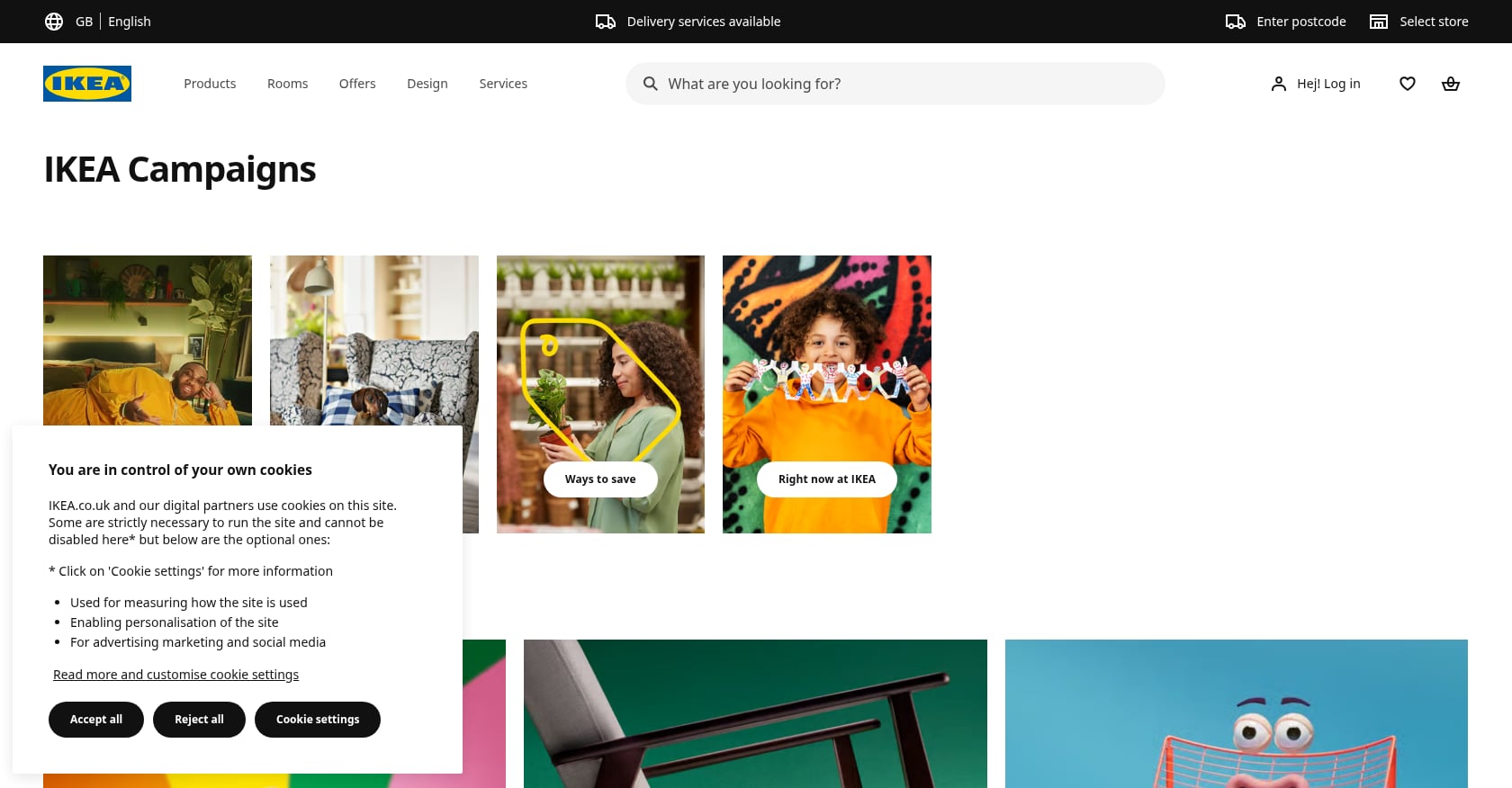
What they did: IKEA launched Live Lagom (a Swedish concept meaning “just the right amount”) as a social experiment, recruiting households to adopt more sustainable daily habits using IKEA products. It evolved from the Kalmar Project in Sweden into a multi-year initiative recognized by the University of Surrey as a genuine behavior change program.
Key results:
Interactive workshops on sustainable products increased sales by 28% over a four-week period, making it the most successful sales period across launch areas
1,500 “Lagomers” reported saving hundreds on household bills
Participants reported feeling happier and more in control of their lives
Won CSR Engagement/Marketing Campaign of the Year
Why it worked: The IKEA team realized something crucial: they shouldn’t talk about “sustainability” because average consumers don’t get excited about the word. Instead, they wrapped behavior change in a culturally authentic concept. Lagom isn’t about sacrifice. It’s about balance. The campaign reduced friction by showing people that sustainable living is about doing less, not more, and that IKEA products could facilitate that shift.
Key lesson: Reframe sustainability in language your audience already values. Don’t ask people to save the planet. Help them save money, simplify their lives, and feel good about it.
4. Adidas × Parley, “Run for the Oceans”

Best for: Brands wanting participatory activation tied to product innovation.
Year: 2017, ongoing
What they did: Adidas and Parley for the Oceans created a global running movement where every kilometer logged contributed to ocean plastic cleanup efforts. The campaign integrated through to product with the UltraBOOST Parley shoe, made from recycled ocean plastic. This is a standout example of brand activation strategy that connects physical participation to commercial outcomes.
Key results:
14+ million participants, making it the largest sustainability brand movement globally
Over 50 million pairs of shoes produced with Parley Ocean Plastic since the partnership began in 2015
Major sales increases across Adidas sustainable product lines
Why it worked: Adidas didn’t ask people to donate money or sign a petition. They gamified the action. Running was already something millions of people did. The campaign simply attached meaning to existing behavior and made participation effortless through a tracking app. The product tie-in was critical: you could literally wear the result of collective action on your feet.
Key lesson: The best sustainability campaigns don’t ask people to start new behaviors. They attach purpose to behaviors people already enjoy, then connect the loop back to product.
5. Hellmann’s, “Make Taste, Not Waste”
Best for: CPG brands that can tie a sustainability issue directly to their product’s use case.
Year: 2021, ongoing
What they did: Hellmann’s invested in a multi-year food waste reduction campaign anchored by Super Bowl advertising (featuring Amy Schumer) and supported by recipe content showing how mayonnaise helps transform leftovers into meals worth eating. The campaign supports the UN’s goal of cutting food waste by 50% by 2030.
Key results:
7.4% increase in Millennial household penetration, outpacing the mayonnaise category
Over 248 million pounds of mayonnaise sold over four years
24.4% increase in social media conversation around food waste following Super Bowl airings
Why it worked: Hellmann’s found the perfect intersection between product utility and planetary benefit. Mayonnaise genuinely helps use up leftover ingredients, so the sustainability message wasn’t bolted on. It was baked in. The campaign also benefited from the “reward” mechanism: saving money by wasting less food is an immediate personal benefit that doesn’t require sacrifice.
Key lesson: The most credible sustainability campaigns emerge when the product itself is part of the solution. If you have to stretch to connect your product to the cause, consumers will notice.
6. Allbirds, Carbon Footprint Labels

Best for: Brands ready to compete on transparency rather than vague claims.
Year: 2020, ongoing
What they did: Allbirds became the first fashion and footwear brand to label every product with its carbon footprint, similar to nutritional labels on food. They then open-sourced the methodology, inviting competitors to adopt the same standard.
Key results:
“Meet Your Shoes” Spotify campaign increased brand awareness by 457%
Featured in AdWeek, Business Insider, New York Magazine, and MindBodyGreen
Third-party certifications including B Corp, FSC, and ZQ Merino validated the claims
Why it worked: Carbon labels address the trust friction point directly. Instead of saying “we’re sustainable,” Allbirds showed exactly how sustainable (or not) each product was. The open-sourcing move amplified credibility: a company confident enough to share its methodology signals it has nothing to hide. The approach helps brands avoid greenwashing by replacing vague promises with verifiable data.
Limitations: As the Financial Times noted, “the catch-22 of any sustainable brand is that the more it produces, the less sustainable it becomes.” Growth and sustainability exist in genuine tension, and Allbirds’ financial struggles in recent years underscore that transparency alone doesn’t solve the business model challenge.
Key lesson: Data beats claims. If you can quantify your impact and submit it to third-party verification, you build the kind of trust that vague “eco-friendly” messaging never will.
7. Who Gives A Crap, “Uncrap the World”
Best for: Startups and DTC brands building community through bold, humorous brand voice.
Year: 2012 origin, “Uncrap the World” campaign ongoing
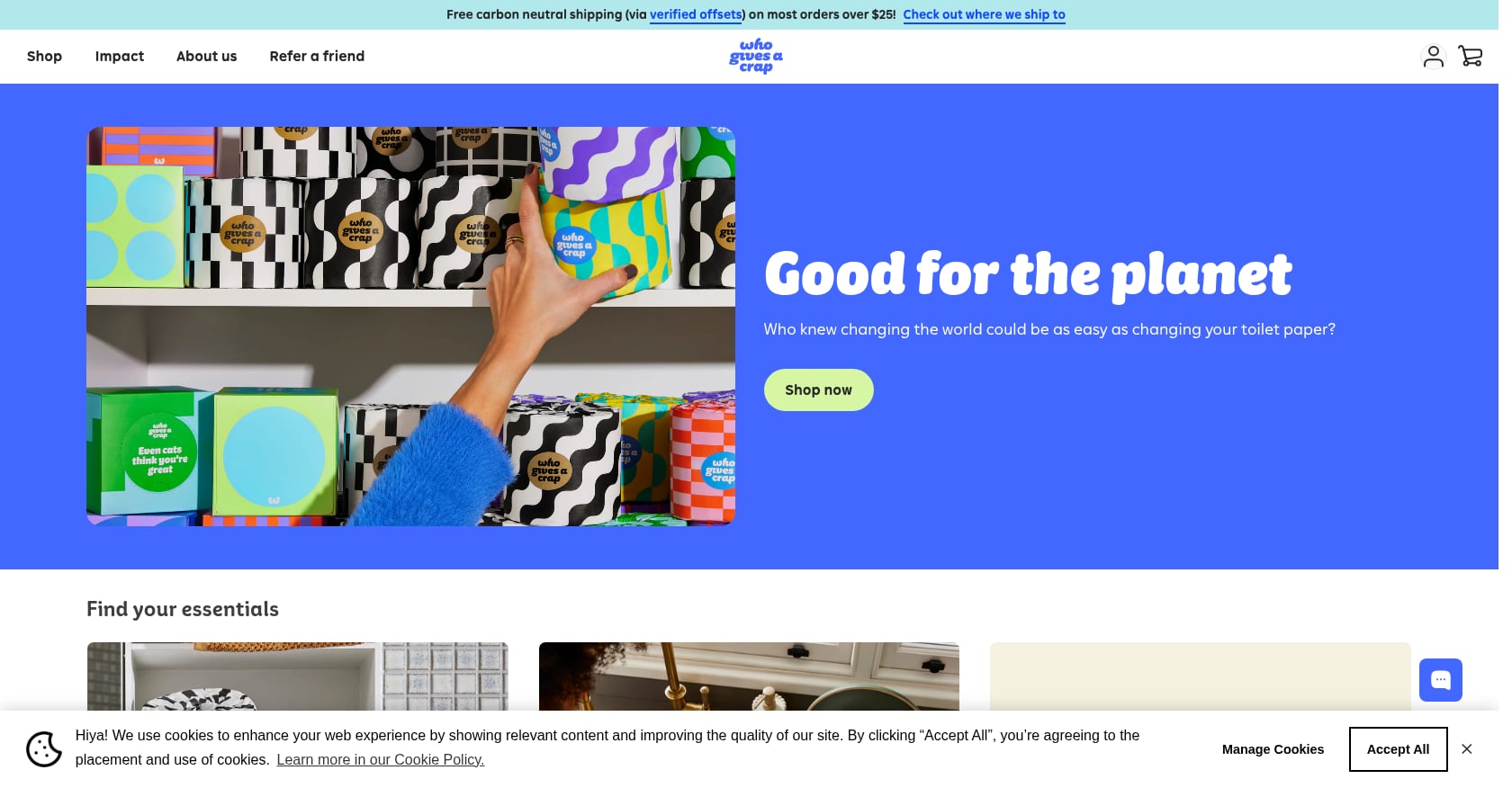
What they did: Co-founder Simon Griffiths launched the brand by live-streaming himself sitting on a toilet in a cold warehouse for 50 hours until they raised $50,000. The company donates 50% of profits to provide water and sanitation access for the 2.4 billion people globally who lack a toilet. The “Uncrap the World” campaign, a partnership with The Guardian, expanded the brand’s reach with characteristically irreverent messaging.
Key results:
Guardian partnership garnered 2.5 million impressions
Won the Campaign Ad Net Zero Award for holistic sustainability (from production through vegan catering and greener media delivery)
50% of all profits donated since founding
Why it worked: Humor. While most eco-brands default to earnest messaging about saving the planet, Who Gives A Crap built a brand personality that makes sustainability entertaining. Practitioners comparing brands like Seventh Generation and Who Gives A Crap observe that “Who Gives a Crap’s method of change is tangible, sacrificial, and designed to signal positive social norms,” which is what builds genuine fandom rather than passive awareness.
Key lesson: Sustainability doesn’t have to be serious to be taken seriously. Humor reduces the psychological friction that makes people tune out cause-related messaging. This is an excellent cause marketing case study.
8. The Body Shop, “#BringBackOurBottles”
Best for: Beauty and CPG brands piloting circular economy programs at retail.
Year: Ongoing
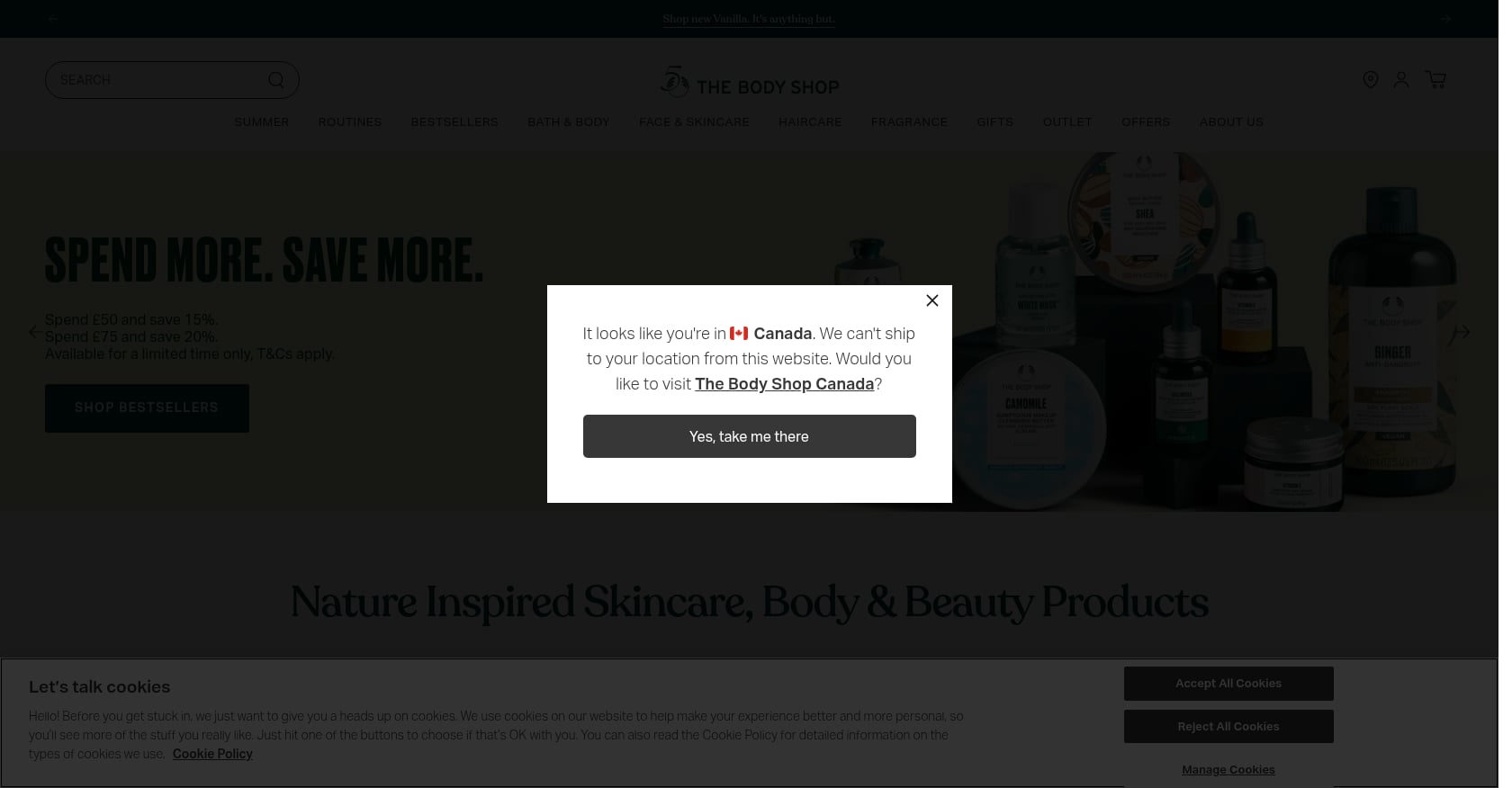
What they did: The Body Shop launched #BringBackOurBottles in Indonesia and expanded globally, encouraging customers to return empty product packaging to stores. The brand partnered with TerraCycle to install recycling bins in retail locations worldwide, creating a closed-loop system.
Key results:
Scaled from a single-market pilot to global rollout
Established a replicable model for in-store circular economy behavior
Why it worked: The campaign combined two powerful behavioral mechanisms: simplicity and reward. Return the bottle (one simple action), get a redeemable incentive (immediate reward). By placing recycling bins in stores, The Body Shop removed the “where do I recycle this?” friction that stops most consumers. The physical act of returning a bottle also creates a moment of brand re-engagement, turning waste into a touchpoint.
Key lesson: Circular economy programs succeed when the action required is dead simple and the reward is immediate. Don’t make customers figure out logistics.
9. Grove Collaborative, “Beyond Plastic™”
Best for: E-commerce brands that can build personalized sustainability tracking.
Year: 2020, ongoing
What they did: Grove Collaborative launched the Beyond Plastic campaign alongside a partnership with rePurpose Global, collecting over 15 million pounds of plastic waste since 2020. They appointed Drew Barrymore as Sustainability Investor and Advocate, producing “Wish-cycling” educational videos that generated over 1.2 billion earned media impressions. The campaign’s standout feature was individualized “impact receipts” showing each customer their personal environmental contribution.
Key results:
Drew Barrymore partnership generated over 1.2 billion earned media impressions
96% of customers report trusting Grove to provide safe, healthy products
Nearly 80% say shopping with Grove changed their daily sustainability habits
Why it worked: Personalization. Rather than telling customers about aggregate impact (“we’ve saved X tons of plastic”), Grove showed each individual what their purchases accomplished. This personal impact receipt mechanism taps into the psychological reward of seeing your own contribution quantified. It transforms a transaction into a relationship.
Key lesson: Make sustainability measurable at the individual customer level. Aggregate numbers feel abstract. Personal impact feels motivating.
10. Unilever, “Clean Future”
Best for: Enterprise brands ready to back rhetoric with structural investment.
Year: 2020, ongoing
What they did: Unilever committed €1 billion to replacing fossil-fuel-derived carbon in cleaning products with renewable or recycled alternatives. The initiative rolled out across its Dirt Is Good brands (including Persil and Omo) in over 80 markets, communicated through a “Carbon Rainbow” framework that translated complex chemistry into accessible consumer messaging.
Key results:
Won WARC Gold and Sustainability Awards for Most Effective Purposeful Campaign
Record brand power scores across Dirt Is Good product lines
Structural supply-chain transformation, not just messaging
Why it worked: While most sustainability campaigns operate at the communication layer, Clean Future operated at the supply-chain layer. The €1 billion investment made it impossible to dismiss as greenwashing. The Carbon Rainbow framework (categorizing carbon sources by color) gave consumers and media a simple mental model for understanding what would otherwise be opaque industrial chemistry. The framework was simple enough to cross cultural boundaries but specific enough to feel meaningful in each of the 80+ markets where it was adapted to local contexts. This is what sustainability marketing that works looks like at enterprise scale.
Limitations: This approach requires massive capital and organizational alignment. It’s not replicable for smaller brands, but the principle (back your claims with structural change) applies at any scale.
Key lesson: The credibility gap in sustainability marketing closes when investment matches messaging. Words are cheap. Supply-chain transformation is not.
11. Woolmark, “Wear Wool, Not Fossil Fuel”
Best for: Industry bodies or heritage brands reframing existing products against new competitors.
Year: 2022
What they did: Woolmark launched a campaign educating fashion audiences about the environmental impact of synthetic fabrics and repositioning wool as the renewable, sustainable alternative. The core call-to-action was simple: “Check the Label.”
Key results:
Over 270 million impressions
90 million video views
Brand perception of wool as “environmentally-friendly,” “fashionable,” and “good quality” increased by up to 29%
Why it worked: Woolmark flipped the innovation narrative. In fashion, “new” typically means “synthetic” and “high-tech.” This campaign reframed wool, one of the oldest materials in human history, as the genuinely innovative choice because it’s renewable, biodegradable, and doesn’t shed microplastics. The “Check the Label” CTA reduced complexity to a single action anyone could take while shopping.
Key lesson: Sometimes the most powerful sustainability story isn’t about creating something new. It’s about reframing something old as the better alternative.
12. Vattenfall, “WIN@sea” (with Samuel L. Jackson)
Best for: Energy companies and B2B brands making technical sustainability stories accessible.
Year: 2025
What they did: European energy company Vattenfall featured Samuel L. Jackson challenging outdated perceptions of wind farms. The campaign promoted a limited-edition seaweed snack produced through WIN@sea, which explores how offshore wind turbines can support marine biodiversity and sustainable food production.
Why it worked: Wind energy is abstract. You can’t hold it, taste it, or share it on social media. Vattenfall made it concrete by turning wind turbines into a food product story, literally creating a snack from the marine ecosystem that wind farms can nurture. Jackson’s star power grabbed attention, but the seaweed snack gave people something tangible to experience. This is one of the best sustainability campaigns of 2025 precisely because it solved the oldest problem in clean energy marketing: making the invisible visible.
Key lesson: Abstract sustainability stories need a physical anchor. Give people something they can see, touch, or taste.
5 Patterns the Best Sustainability Campaigns Share
After studying these 12 campaigns, clear patterns emerge. The best sustainability campaigns aren’t just creative. They’re strategically designed to overcome the specific barriers that stop people from acting on their values.
1. They make the sustainable choice the easiest choice.
IKEA didn’t lecture people about carbon footprints. They showed how “just the right amount” saves money and simplifies life. The Body Shop put recycling bins right where customers shop. Hellmann’s turned leftovers into recipes. In every case, friction was removed before the campaign even launched.
2. They connect purpose to product, not just to corporate social responsibility.
The campaigns that drove the strongest commercial results (Patagonia, Adidas, Hellmann’s, Allbirds) all tied sustainability directly to what the product does. Purpose wasn’t a sidebar. It was the value proposition. Brands looking for more on this should explore brand purpose examples that demonstrate this connection.
3. They measure and report results publicly.
Allbirds labels every product with its carbon footprint. Grove sends personalized impact receipts. Patagonia publishes environmental cost data about its own products. Radical transparency builds trust at a time when consumer skepticism toward green claims is at an all-time high.
4. They invest for years, not quarters.
Dove’s Campaign for Real Beauty is two decades old. Adidas × Parley has run for eight years. IKEA’s Live Lagom is a multi-year initiative studied by universities. The campaigns that build lasting commercial value treat sustainability as a brand platform, not a seasonal campaign.
5. They close the intention-action gap, not just raise awareness.
This is the most important pattern. Every campaign on this list removed a specific barrier between wanting to do the right thing and actually doing it. Whether through friction reduction, gamification, humor, personalization, or transparency, they all bridged the gap that causes most sustainability campaigns to underperform. Understanding a behavior change framework is essential for replicating this.
The Sustainability Campaign Framework
Use this framework to diagnose where your campaign should focus.
Consumer Barrier | Consumer Question | Campaign Solution | Example |
|---|---|---|---|
Cost | Is this more expensive? | Remove the green premium | IKEA |
Ease | Is this harder? | Simplify the process | The Body Shop |
Trust | Can I believe these claims? | Use transparency and verification | Allbirds |
Reward | What's in it for me? | Provide immediate benefits | Hellmann's |
Before launching a campaign, identify the dominant friction point. Solving one barrier exceptionally well is often more effective than addressing all four simultaneously.
5 Common Sustainability Campaign Mistakes
1. Leading with guilt
Fear-based messaging consistently underperforms compared with positive, solution-oriented campaigns.
2. Separating sustainability from the product
Consumers are skeptical when sustainability appears disconnected from the product's actual value.
3. Making customers do extra work
Additional steps reduce participation and increase abandonment.
4. Failing to measure outcomes
Awareness metrics alone rarely predict commercial performance.
5. Treating sustainability as a short-term promotion
The strongest campaigns become long-term brand platforms rather than seasonal initiatives.
How to Build a Sustainability Campaign That Actually Works
Studying these campaigns is useful. Applying their principles to your own brand is where value is created.
Start by diagnosing the gap. Where does intention exceed action for your customers? Is it cost (they think sustainable options are more expensive), ease (the sustainable choice requires extra steps), trust (they’re skeptical of your claims), or reward (they don’t see a personal benefit)? Your campaign strategy should address the specific friction point you identify, not all four at once.
Use behavioral design, not just messaging. Community practitioners consistently emphasize that “collaboration is the only way forward in the sustainability conversation, but it requires brands, agencies, or organizations to be specific and honest with what they are best at.” The campaigns above succeeded not because of clever copywriting but because they redesigned the choice architecture around their products.
Tie sustainability to commercial outcomes from day one. Project ROI 2025 found that sustainability has the potential to boost firm value by up to 36% and sales by up to 20%. Meanwhile, Morgan Stanley’s 2025 research shows that 83% of companies can now measure sustainability ROI as confidently as traditional investments. The data is clear. Sustainability is a growth strategy, not a cost center.
Many first-generation sustainability brands failed because they overemphasized environmental attributes at the expense of performance, functionality, price, or design. The lesson: don’t sacrifice the basics. Make the sustainable option at least as good on conventional dimensions, then let sustainability be the tiebreaker.
Talk to Grounded World about diagnosing your brand’s intention-action gap →
What the Market Data Says About Sustainability as a Business Driver
For anyone still building the internal business case, the numbers are compelling.
Kantar BrandZ research shows that sustainability perceptions contribute $193 billion to the collective value of the Global Top 100 Most Valuable Brands. 88% of companies now see sustainability as a value-creation opportunity. And 70% of consumers consider sustainability when making purchase decisions, with 81% believing businesses should help improve the environment.
The commercial opportunity is clear. But so is the risk of doing it badly. Consumers respond well to brands advertising preventive environmental actions (like reducing waste or using sustainable materials) and specific pledges. They respond poorly to doom-and-gloom messaging. The brands on this list understood that distinction.
Which Sustainability Campaign Strategy Works Best for Your Industry?
Industry | Recommended Strategy | Best Example |
|---|---|---|
Fashion | Radical transparency | Patagonia |
Retail | Behavior-change programs | IKEA |
Consumer packaged goods | Product-cause alignment | Hellmann's |
Beauty | Circular economy programs | The Body Shop |
E-commerce | Personalized impact tracking | Grove Collaborative |
Enterprise | Supply-chain transformation | Unilever |
Startups | Community building | Who Gives A Crap |
Energy | Storytelling and visualization | Vattenfall |
Conclusion
The best sustainability campaigns share a common DNA: they treat sustainability as a commercial strategy, not a compliance exercise. They measure results, remove friction, connect purpose to product, and invest for the long term.
The gap between consumer intention and consumer action isn’t closing on its own. It closes when brands design campaigns that make the sustainable choice the obvious choice. Every example above proves this is possible, and profitable.
Whether you’re a CPG brand looking to connect your product to a cause, a retail brand redesigning in-store behavior, or a startup building community through bold messaging, the playbook is in these campaigns. Study them. Steal what works. Then make it your own.
Book a discovery call with Grounded World →
Frequently Asked Questions
What makes a sustainability campaign successful?
The most successful sustainability campaigns close the intention-action gap by removing friction (cost, ease, trust, or reward barriers), connecting purpose directly to the product, and measuring results publicly. Campaigns that only raise awareness without changing behavior consistently underperform.
Do sustainability campaigns actually drive sales?
Yes. Patagonia’s “Don’t Buy This Jacket” led to a 30% sales increase. Dove doubled from $2 billion to $4 billion. IKEA’s Live Lagom workshops drove 28% sales growth. Sustainability perceptions contribute $193 billion to the value of the world’s top 100 brands, according to Kantar BrandZ.
What is the intention-action gap in sustainability marketing?
The intention-action gap describes the disconnect between what consumers say they’ll do (65% express interest in buying sustainable products) and what they actually do (only 26% follow through). Closing this gap requires addressing cost, ease, trust, and reward barriers through behavioral design, not just messaging.
How do brands avoid greenwashing in sustainability campaigns?
The strongest approach is radical transparency: labeling products with verified environmental data (as Allbirds does), using third-party certifications, open-sourcing methodologies, and ensuring marketing claims are backed by operational changes. Brands that make vague or unsubstantiated claims face growing consumer backlash and regulatory risk.
Which sustainability campaigns are considered the best of all time?
Consistently cited examples include Patagonia’s “Don’t Buy This Jacket,” Dove’s “Campaign for Real Beauty,” IKEA’s “Live Lagom,” Adidas × Parley’s “Run for the Oceans,” and Hellmann’s “Make Taste, Not Waste.” Each has delivered measurable commercial results over multiple years.
Why do most corporate sustainability campaigns fail?
Over 80% of corporate sustainability announcements fail to connect initiatives to value creation. Common failure points include guilt-based messaging (which consumers reject), disconnection from the core product, lack of ROI measurement, and treating sustainability as a one-off campaign rather than a long-term brand platform.
How much can sustainability boost brand value?
Research from Project ROI 2025 found that sustainability can boost firm value by up to 36%, profitability by up to 21%, and sales by up to 20%. Companies that measure sustainability ROI (83% now say they can) outperform those that treat it as unmeasurable.
What types of sustainability messaging do consumers respond to best?
Consumers respond most favorably to preventive environmental actions, specific pledges, and messages that connect planetary benefits to personal benefits (saving money, better product performance). Messages emphasizing environmental destruction or guilt perform significantly worse, with only 42% of consumers responding positively.