

 Gaia
GaiaTL;DR
Most “behavior change campaigns” listed online are just awareness campaigns with a green label. This article filters for 10 campaigns that changed a specific, measurable behavior, and explains the behavioral science mechanism behind each one. From Patagonia’s paradoxical sales spike to the CDC’s million sustained quitters, these behavior change campaign examples show what it takes to close the gap between good intentions and real action.
What is a behavior change campaign?
A behavior change campaign is a structured intervention designed to move people from awareness or intention to a specific, measurable action—such as quitting smoking, changing a purchase behavior, or adopting a new habit. Unlike traditional marketing, it defines a target behavior first, removes barriers (friction, motivation, capability gaps), and measures real-world actions instead of just awareness or engagement.
What Makes a Behavior Change Campaign Different from a Marketing Campaign
Here’s the uncomfortable truth about most campaigns that claim to change behavior: they don’t. They raise awareness. They shift sentiment. They win awards. But they rarely move people from intention to action.
The National Social Marketing Centre’s benchmark criteria are clear on this point. Effective behavior change interventions must have specific behavioral goals, not attitude goals, not awareness goals. The target is what people do, not what they think or feel.
That distinction matters because the gap between caring and doing is enormous. Harvard Business Review found that 65% of consumers say they want to buy purpose-driven brands, yet only about 26% actually follow through. Other research puts the number even lower, with just 16% of concerned consumers purchasing sustainable products. This is the intention-action gap, and it’s where most campaigns quietly fail.
A genuine behavior change campaign starts with the behavior you need to shift, diagnoses what blocks it (using frameworks like COM-B or the Fogg Behavior Model), and measures whether people actually did something different. Traditional marketing starts with a message and hopes behavior follows. That hope is usually misplaced.
The behavior change campaign examples below were selected because each one can point to a specific behavior that shifted and a measurable result. Each entry includes a breakdown of the behavioral mechanism that made it work, so you can apply the same thinking to your own campaigns.
Explore Grounded World’s approach to diagnosing the barriers between intention and action.
Behavior Change Campaign vs Marketing Campaign
Aspect | Behavior Change Campaign | Traditional Marketing |
|---|---|---|
Primary goal | Change specific behavior | Increase awareness or sales |
Measurement | Real-world actions | Clicks, impressions, sentiment |
Starting point | Behavioral barrier analysis | Messaging or creative idea |
Frameworks used | COM-B, Fogg Model, Nudge Theory | Branding, funnels, persuasion |
Success metric | Quit rates, purchases, adoption | Engagement, recall, reach |
Key takeaway: Behavior change campaigns are not communication strategies—they are systems for modifying real-world actions.
At-a-Glance: All 10 Behavior Change Campaign Examples Compared
Campaign | Brand | Year | Behavior Targeted | Key Mechanism | Measurable Result | Sector |
|---|---|---|---|---|---|---|
Don’t Buy This Jacket | Patagonia | 2011 | Reduce mindless consumption | Cognitive dissonance | 30% sales increase | Brand/Sustainability |
Tips From Former Smokers | CDC | 2012–present | Quit smoking | Vivid testimony + practical resources | 1M sustained quits | Public Health |
Campaign for Real Beauty | Dove | 2004–present | Shift self-perception, change purchase | Social norm change | $2.5B to $4B+ revenue | Brand/Social |
Inglorious Fruits & Vegetables | Intermarché | 2014 | Buy imperfect produce | Reframing + economic incentive | 24% store traffic increase | Sustainability/Retail |
Climate Action Starts at Home | IKEA | 2018–present | Adopt lower-energy habits | Choice architecture | 52% footprint reduction vs. 2016 | Sustainability/Brand |
It’s Like Milk But Made for Humans | Oatly | 2014–present | Switch from dairy to oat milk | Identity shift | 83% more TrueViews than forecast | Brand/Sustainability |
Great British Beauty Clean Up | L’Occitane & SBC | 2025 | Return empty packaging | Friction reduction + social proof | Cross-industry adoption | Sustainability/Retail |
Slowvember | The Ordinary | 2023–present | Reduce impulse buying | Temporal reframing | Black Friday store closures held | Brand/Anti-consumerism |
Sustainable Lifestyles Tests | BSR/AT&T/Walmart | 2013 | Energy efficiency, sustainable purchasing | Lead with personal benefits | AT&T messaging reframed entirely | Cross-sector |
The Fun Theory | Volkswagen | 2009 | Take stairs, use trash cans | Gamification + novelty | 66% more people took stairs | Social/Brand |
Core Behavioral Science Models Used in Campaigns
This improves semantic SEO and helps you rank for “behavior change frameworks” queries.
COM-B Model (Capability, Opportunity, Motivation)
Used when diagnosing why a behavior is not happening.
Capability → Does the user know how?
Opportunity → Is it physically/socially possible?
Motivation → Do they want to do it?
Fogg Behavior Model
Behavior happens when:
Motivation is high enough
Ability is simple enough
A prompt exists
Nudge Theory
Focuses on:
Changing choice architecture
Default options
Environmental design
👉 Most successful campaigns combine all three.
The 10 Campaigns, Analyzed
1. Patagonia, “Don’t Buy This Jacket” (2011)
Best for understanding: How cognitive dissonance can redirect consumer behavior rather than suppress it.
Behavior targeted: Reduce mindless consumption. Buy only what you need. Repair and reuse before replacing.
What they did: On Black Friday 2011, Patagonia ran a full-page New York Times ad asking customers not to buy their jacket. The ad laid bare the environmental cost of a single product: 135 liters of water and 20 pounds of CO2. It was a direct challenge to the biggest shopping day of the year.
Results:
30% sales increase in the year following the campaign
Sustained business growth over subsequent years
Established Patagonia as the definitive brand purpose example in outdoor apparel
Why it worked: The campaign created cognitive dissonance. Customers were forced to confront the contradiction between their desire to consume and their environmental values. But instead of suppressing demand, it redirected it. Consumers still purchased, but they felt justified choosing Patagonia over less transparent alternatives. The paradox illustrates something important: honesty about environmental costs can strengthen brand loyalty, not weaken it.
Key takeaway: Transparency about negative impact can function as a trust signal that shifts purchasing behavior toward your brand, not away from it.
2. CDC, “Tips From Former Smokers” (2012–Present)
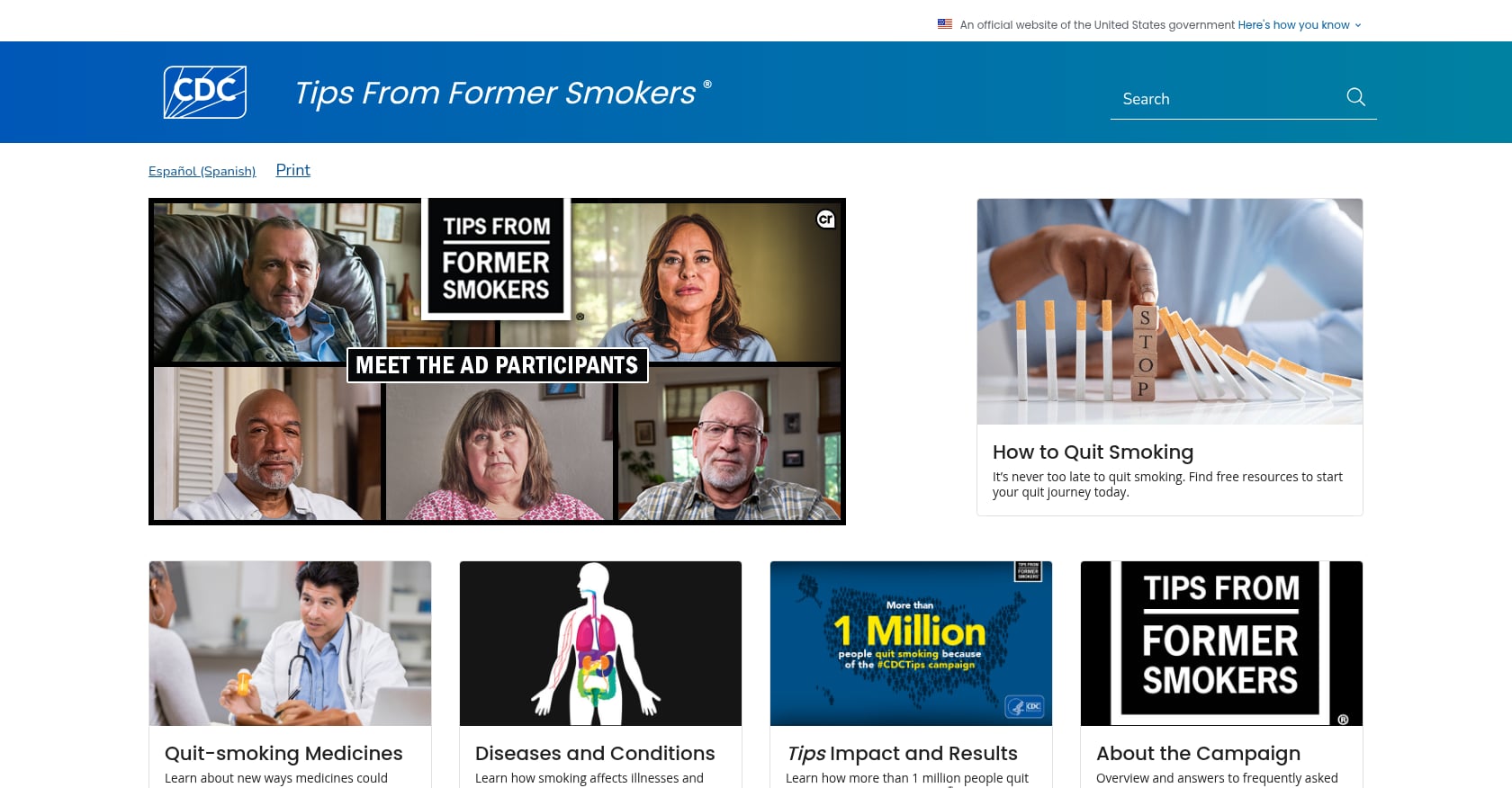
Best for understanding: How vivid personal testimony, paired with practical resources, drives sustained behavior change at population scale.
Behavior targeted: Quit smoking.
What they did: The CDC launched a series of graphic advertisements featuring real former smokers sharing personal stories of serious health consequences, from amputations to tracheotomies. Critically, every ad directed viewers to 1-800-QUIT-NOW and free cessation resources.
Results:
16.4 million quit attempts and approximately 1 million sustained quits between 2012 and 2018
Over 2 million additional calls to 1-800-QUIT-NOW during 2012–2023
An estimated 129,000 early deaths prevented
$7.3 billion saved in smoking-related healthcare costs
Why it worked: This is one of the most studied behavior change campaign examples in public health. The graphic content works because it uses vivid, authentic testimony (not actors, not statistics) to make distant consequences feel immediate. But the crucial detail most analyses miss is that the campaign always paired emotional motivation with a clear, low-friction action path. Calling a quitline is simple and free. Without that pairing, the emotional content alone would have generated distress without behavior change. Research on COVID-19 messaging confirmed this principle: a Harvard study of 16,000 people found that negative framing alone didn’t change attitudes or behaviors.
Key takeaway: Emotional intensity drives attention. Practical, frictionless next steps drive action. You need both.
3. Dove, “Campaign for Real Beauty” (2004–Present)
Best for understanding: How reshaping cultural norms can drive both social behavior change and commercial growth simultaneously.
Behavior targeted: Shift women’s self-perception of beauty. Change beauty standards. Influence purchase behavior toward Dove.
What they did: When research revealed that only 2% of women globally considered themselves beautiful, Dove built an entire campaign ecosystem around real women (not models), challenging the beauty industry’s narrow standards. The “Real Beauty Sketches” video became one of the most-viewed ads in history, hitting 50 million views within 12 days and eventually surpassing 180 million.
Results:
Revenue grew from $2.5 billion to over $4 billion within a decade
Over $150 million in free media coverage
Free media exposure worth 30 times the initial spend
Why it worked: The campaign operated on two behavioral levels. At the social level, it normalized a broader definition of beauty through repeated exposure and social proof, making it easier for women to internalize a more positive self-image. At the commercial level, identity-based messaging (“this brand is for women like me”) created a powerful purchase driver. This wasn’t cause marketing bolted onto a product. It was the product story itself.
Key takeaway: When the behavior you want to change is rooted in cultural norms, you need to reshape the narrative, not just the message.
4. Intermarché, “Inglorious Fruits and Vegetables” (2014)

Best for understanding: How reframing combined with economic incentives can shift purchasing behavior overnight.
Behavior targeted: Buy imperfect produce. Reduce food waste.
What they did: French supermarket Intermarché bought “ugly” fruits and vegetables from producers who would have otherwise discarded them, sold them at a 30% discount in dedicated aisles, and created juices and soups from the produce to demonstrate quality. Each item got a playful name: “the grotesque apple,” “the ridiculous potato.”
Results:
Produce sold out, with 1.2 times the average sales per store in the first two days
24% increase in overall store traffic
5% sustained increase in fruit and vegetable aisle sales
Five major competitors launched similar campaigns afterward
Why it worked: This is a textbook example of stacking multiple behavioral levers. Reframing turned a perceived flaw into a character trait (motivation lever). The 30% discount reduced the financial barrier (opportunity lever). The dedicated aisle and prepared soups reduced the effort required to try something new (capability lever). This kind of multi-lever approach aligns with what the COM-B model prescribes for effective brand activation.
Key takeaway: The most effective behavior change campaign examples don’t rely on a single persuasion technique. They stack mechanisms.
5. IKEA, “Climate Action Starts at Home” (2018–Present)
Best for understanding: How choice architecture and store layout can nudge behavior without requiring conscious decision-making.
Behavior targeted: Adopt lower-energy, lower-waste habits at home (air drying, cycling, using LED bulbs, reducing water waste).
What they did: Rather than running a traditional advertising campaign, IKEA embedded behavior change into the physical shopping experience. Sustainable living products are showcased in special sections that store visitors walk through to reach in-store cafes. The messaging focuses on what individual customers can do today, without extra cost, to reduce their footprint.
Results:
IKEA achieved a 52% reduction in the climate footprint from products customers use at home, measured against their 2016 baseline
On track toward a stated goal of 70% reduction by 2030
Why it worked: IKEA understood that most people won’t seek out sustainable alternatives on their own, but they’ll engage with them if the alternatives appear in their natural path. This is choice architecture: restructuring the environment so the desired behavior becomes the default rather than the exception. The personal benefit framing (save money on energy) does the motivational heavy lifting.
Key takeaway: Sometimes the most powerful behavior change intervention isn’t a campaign at all. It’s redesigning the environment where decisions happen.
6. Oatly, “It’s Like Milk But Made for Humans” (2014–Present)
Best for understanding: How identity-based messaging can shift an entire product category, not just a brand preference.
Behavior targeted: Switch from dairy milk to oat milk.
What they did: For two decades, Oatly marketed rational benefits like “cholesterol-lowering” and “calcium-enriched” with flat sales. Under new creative leadership, they reframed the entire proposition. Instead of competing on nutrition labels, they positioned oat milk as a statement about who you are: someone who thinks critically about food systems, finds absurdity in drinking another species’ milk, and doesn’t take themselves too seriously.
Results:
On YouTube, campaigns delivered 83% more TrueViews and a 24% higher view-through rate than anticipated
Oatly grew from a niche Scandinavian brand to a global IPO-valued company
Why it worked: People weren’t rationally comparing nutrition facts. They were making fast, emotional decisions rooted in identity and values. Oatly’s genius was recognizing that the barrier to switching wasn’t information (capability), it was identity (motivation). Their distinctive, polarizing brand voice gave people a tribe to join, not just a product to try.
Key takeaway: When rational arguments fail to change behavior, identity-based positioning often succeeds. This connects directly to why consumers don’t buy sustainable products even when they say they want to.
7. L’Occitane and the Sustainable Beauty Coalition, “Great British Beauty Clean Up” (2025)
Best for understanding: How cross-industry coalitions reduce friction and create social proof for new recycling behaviors.
Behavior targeted: Return empty beauty packaging for recycling or reuse.
What they did: L’Occitane and other major beauty brands launched a coordinated campaign across in-store, web, social media, press, and CRM channels, making it easy for consumers to find return locations, understand what’s accepted, and feel part of a larger movement. The timing was strategic, launching around Mother’s Day when beauty purchases spike.
Why it worked: The campaign tackled the two biggest barriers to packaging return: not knowing where to go (friction) and feeling like one person’s effort doesn’t matter (motivation). The cross-industry coalition created social proof, signaling that this isn’t one brand’s initiative but an industry norm. Mapping return locations reduced the friction of figuring out logistics.
Key takeaway: For behaviors that require new infrastructure (return, recycling, reuse), reducing friction matters more than increasing motivation.
8. The Ordinary, “Slowvember” (2023–Present)
Best for understanding: How temporal reframing can disrupt impulse-buying behavior.
Behavior targeted: Reduce impulse buying. Encourage mindful purchasing decisions.
What they did: The Ordinary challenged Black Friday by offering a consistent 23% discount throughout all of November, then closing both online and physical stores on Black Friday itself. The message: you don’t need urgency to get a good deal. Take your time.
Why it worked: Black Friday works by compressing decision windows, creating artificial scarcity that bypasses rational evaluation. The Ordinary inverted this by expanding the purchase window, removing the urgency trigger that drives impulse buys. This is temporal reframing: changing when and how decisions are made rather than what people decide.
Key takeaway: Sometimes the most effective behavior change technique is removing the triggers that cause the unwanted behavior, rather than adding messages against it.
9. BSR Sustainable Lifestyles Frontier Group, AT&T, Walmart, McDonald’s, and eBay Tests (2013)
Best for understanding: Why leading with personal benefits outperforms leading with sustainability messaging.
Behavior targeted: Various, including energy efficiency, sustainable purchasing, and recycling behaviors.
What they did: A consortium of brands from BSR’s Sustainable Lifestyles Frontier Group tested behavior change insights in actual market conditions. Each brand identified a sustainable behavior they could influence and experimented with different messaging approaches.
Key finding: AT&T discovered that the most effective messaging for a digital home security and energy automation system focused on benefits like security and control over one’s home, not carbon footprint reduction. The sustainability angle was real, but it wasn’t the motivator.
Why it worked: This finding has been replicated across multiple categories. When sustainability is the sole value proposition, it underperforms compared to leading with functional, personal benefits and layering sustainability as a secondary value-add. The gap between purchase intent and purchase behavior narrows when the immediate personal benefit is clear.
Key takeaway: Don’t make people choose between what’s good for them and what’s good for the planet. Frame the sustainable option as the personally superior one.
10. Volkswagen, “The Fun Theory” (2009)
Best for understanding: How gamification and novelty can make desired behaviors intrinsically rewarding.
Behavior targeted: Take the stairs instead of the escalator. Use trash cans. Obey speed limits.
What they did: Volkswagen turned a Stockholm subway staircase into a giant piano keyboard. Each step played a musical note when stepped on. They also created a “World’s Deepest Bin” that played a long falling sound effect when trash was dropped in, and a speed camera lottery that entered law-abiding drivers into a prize draw.
Results:
66% more people chose the stairs over the escalator when the piano stairs were active
The campaign generated millions of YouTube views and spawned a global submissions platform
Why it worked: The campaign proved a deceptively simple principle: making the desired behavior more fun than the alternative is often more effective than telling people to change. In COM-B terms, this is a pure motivation intervention. The capability and opportunity to take stairs already existed. What was missing was a reason to bother.
Key takeaway: Before adding more information, education, or guilt to your campaign, ask: can you make the target behavior more enjoyable?
Patterns Across These Behavior Change Campaign Examples
Looking across all 10 campaigns, five patterns emerge consistently:
They target a specific, measurable behavior. Not “sustainability” or “wellness” in the abstract. Patagonia targeted mindful purchasing. The CDC targeted quit attempts. Intermarché targeted buying ugly produce. Specificity is non-negotiable.
They diagnose the real barrier before choosing tactics. The COM-B model proposes that behavior requires three components: capability, opportunity, and motivation. The best campaigns in this list identified which component was missing and intervened accordingly. Oatly addressed motivation through identity. IKEA addressed opportunity through store layout. The CDC addressed capability by providing a quitline. For a deeper look at these models, see this guide to behavior change frameworks for marketing.
They reduce friction before amplifying motivation. Intermarché put ugly produce in a dedicated aisle. L’Occitane mapped return locations. The Ordinary removed urgency. In every case, making the desired behavior easier preceded or accompanied the motivational messaging.
They lead with personal benefit, not guilt. The BSR/AT&T finding is perhaps the most actionable insight in this entire article. Sustainability as a sole selling point consistently underperforms. The campaigns that work frame the sustainable behavior as the personally advantageous one.
They measure actual behavioral outcomes. Practitioners on Reddit report that many campaign briefs miss this entirely, failing to define the behavior to shift, the audience mindset, or what action people should take afterward. One marketer working on a mental health behavior change campaign shared that teens weren’t visiting the site or taking surveys, making it nearly impossible to prove the campaign changed anything. They suggested proxy metrics like video completion rates and resource downloads as workarounds. This reflects a broader problem: the instinct is to measure what’s easiest (impressions, clicks, shares) rather than what matters.
If you’re building a behavior change marketing strategy, these five patterns form the minimum viable framework.
Why Most Behavior Change Campaigns Fail
For every campaign on this list, dozens launched with similar ambitions and fizzled. The behavior change field has a documented bias toward publishing successes over examining failures, which makes the failure modes harder to study but not less real.
The most common reasons behavior change campaigns fail:
No specific behavior defined. “Raise awareness about ocean plastic” is not a behavior. “Get 10,000 households to switch from single-use to reusable produce bags by Q3” is a behavior. Without this specificity, you can’t design an intervention or measure its impact. For more on removing barriers to sustainable purchasing, this distinction is foundational.
Over-reliance on fear and guilt. Research consistently shows that fear-based messaging can make people feel worse without changing what they do. Fear grabs attention. It doesn’t sustain action, especially when the recommended behavior feels difficult, distant, or uncertain.
Measuring the wrong things. As one practitioner put it bluntly: “Clicks are not behavior change unless the behavior is the click.” Impact measurement for behavior change campaigns requires tracking actual behavioral indicators, whether that’s quit attempts, packaging returns, purchase switches, or energy usage changes.
Treating information as sufficient. Traditional marketing has long overestimated the power of information campaigns to change individual behavior. Telling people that recycling is important doesn’t create recycling behavior. Making the recycling bin closer than the trash can does.
Common Mistakes in Behavior Change Campaign Design
1. Confusing awareness with behavior change
Awareness does not guarantee action.
2. Overloading campaigns with information
Information alone rarely changes behavior.
3. Ignoring friction costs
Small barriers (time, effort, confusion) stop behavior change more than lack of motivation.
4. Using fear without pathways
Fear without a clear next step leads to avoidance, not action.
5. Measuring the wrong metrics
Clicks, impressions, and reach are not behavior outcomes.
How to Apply These Lessons: A Practitioner Checklist
If you’re designing your own behavior change campaign, these six steps distill what the best examples above have in common:
Define the specific behavior. Name it. Quantify it. Set a timeline.
Diagnose barriers using COM-B or the Fogg model. Is the target audience lacking capability, opportunity, or motivation? Your answer determines your entire strategy.
Lead with personal benefits. Layer purpose and sustainability as secondary reinforcement, not the headline.
Reduce friction before amplifying motivation. Make the desired behavior easier, cheaper, or more convenient than the current behavior.
Test messaging with real audiences before scaling. The BSR consortium approach of testing in actual market conditions is the gold standard.
Measure behavioral outcomes. Track what people did, not just what they saw or said.
Book a discovery call with Grounded World to diagnose what’s blocking behavior change in your category and design campaigns that actually move the needle.
Related Topics in Behavioral Science and Marketing
To go deeper into implementation, explore:
Behavior change frameworks in marketing strategy
How COM-B model applies to product design
Nudge theory in digital product UX
Reducing friction in customer journeys
Measuring behavioral outcomes in campaigns
Frequently Asked Questions
What is a behavior change campaign?
A behavior change campaign is a research-based initiative designed to move people from awareness or intention to specific, repeated action. Unlike traditional marketing, which focuses on attitudes and awareness, behavior change campaigns define a target behavior upfront, diagnose what blocks it, and measure whether people actually did something different.
What behavioral science frameworks are used in behavior change campaigns?
The most widely applied frameworks are the COM-B model (which assesses whether people have the Capability, Opportunity, and Motivation for a behavior), the Fogg Behavior Model (which maps behavior as a function of motivation, ability, and prompts), and nudge theory (which restructures choice environments to make desired behaviors easier). The best campaigns layer multiple frameworks rather than relying on one.
How do you measure the success of a behavior change campaign?
Measure actual behavioral outcomes: quit attempts, product switches, packaging returns, energy usage reductions, or verified purchases. Avoid relying solely on awareness metrics like impressions or reach. When direct behavioral measurement is difficult, practitioners recommend proxy metrics like resource downloads, video completion rates, or quitline calls that correlate with the target behavior.
Why do most behavior change campaigns fail?
The most common failure modes are: not defining a specific target behavior, relying on fear or guilt as primary motivators, measuring awareness instead of action, and treating information alone as sufficient to change behavior. The field also has a documented bias toward studying successes, which means failure patterns are underreported and under-learned.
What is the intention-action gap in behavior change?
The intention-action gap describes the disconnect between what people say they’ll do and what they actually do. In sustainability, 65% of consumers say they want purpose-driven brands, but only about 26% follow through with purchases. Effective behavior change campaigns are specifically designed to close this gap by reducing friction, reframing benefits, and making the target behavior easier than the alternative.
Can behavior change campaigns work for commercial brands, not just public health?
Yes. Several of the most effective behavior change campaign examples, including Patagonia, Oatly, Intermarché, and IKEA, are commercial brands that achieved both behavioral and business outcomes. The key is aligning the desired behavior change with genuine brand value rather than treating it as a bolt-on CSR initiative.
How is a behavior change campaign different from cause marketing?
Cause marketing ties a brand to a social cause, often through donations or awareness partnerships. Behavior change campaigns go further by targeting a specific action and designing interventions to make that action happen. A cause marketing campaign might raise awareness of food waste. A behavior change campaign, like Intermarché’s, gets people to actually buy the ugly produce.
What role does reducing friction play in behavior change campaigns?
Friction reduction is arguably the single most important tactical lever in behavior change design. Across every successful example in this article, from IKEA’s store layout to L’Occitane’s return location maps to the CDC’s free quitline, making the desired behavior easier was either the primary intervention or a critical supporting element. Motivation gets people interested. Friction reduction gets them across the finish line.