
 Gaia
GaiaTLDR
The intention action gap is the distance between what people say they want to do and what they actually do. Closing the intention action gap is not about making people care more. It is about making the desired action easier, more credible, more rewarding, and more repeatable than the default behavior. Most gaps are design problems, not caring problems. Brands that treat them as conversion challenges rather than moral failures are the ones that turn purpose into real behavior change.
Direct Answer: How Do You Close the Intention Action Gap?
Closing the intention action gap requires making the desired behavior easier, more valuable, more credible, and more convenient than the default behavior.
Research across behavioral science, sustainability marketing, and consumer psychology shows that people often fail to act on good intentions because of friction, unclear actions, lack of trust, weak incentives, poor access, competing habits, ambivalence, state context mismatch, or socially prescribed perfectionism.
Brands can close the intention action gap by:
- Defining a specific behavior.
- Segmenting audiences by real barriers, not just demographics.
- Removing barriers and friction.
- Increasing immediate rewards.
- Building trust through evidence and outcome confidence.
- Creating implementation prompts with coping plans for obstacles.
- Embedding actions into existing routines through behavior centered design.
- Using identity based messaging that connects the action to who the person wants to be.
- Simplifying choices through default dosing and reduced decision load.
- Designing systemic communication that reinforces action at every touchpoint.
- Measuring actual behavior instead of stated intentions.
The most effective interventions focus on changing the environment around a decision rather than trying to increase motivation alone.
What Is the Intention Action Gap?
The intention action gap is the measurable distance between what people intend to do and what they actually do. For brands, it is the single biggest reason purpose commitments fail to convert into behavior, sales, or impact.
A person intends to buy the sustainable product, recycle correctly, exercise three times a week, or switch to a refill format. Then the moment arrives and they do not follow through.
The Decision Lab defines it as the discrepancy between intentions or plans and actual actions, often shaped by immediate gratification and choice environments. BehaviourWorks Australia puts it more plainly: the gap happens when actions do not match intentions, when people simply do not do what they wanted to do.
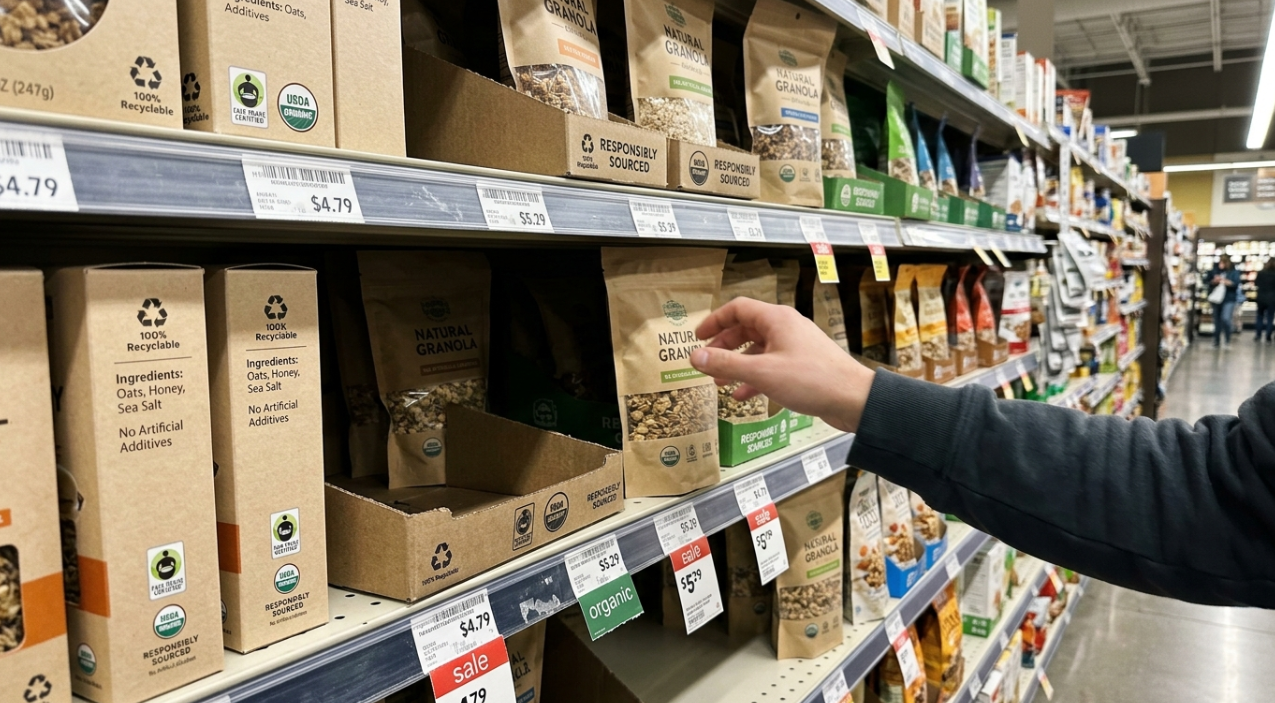
Here is what it looks like in practice. A shopper says they want to buy sustainable cleaning products. At the store, the sustainable option costs more, the claim on the label is vague, the package is unfamiliar, and they are in a hurry. They grab their usual product and move on. The intention was real. The action lost to price, habit, confusion, and convenience.
That is the intention action gap.
Understanding this gap is the first step toward fixing it. If your brand’s sustainability investments are not producing the behavior change you expected, the gap is probably where the answer lives.
Explore Grounded World’s AI assisted assessment tools to diagnose sustainability marketing challenges.
What Does Closing the Gap Mean?
Closing the intention action gap does not mean convincing people to care more. Most people already care. The problem is that caring does not automatically produce action.
To close the gap, you change the conditions around the behavior so the intended action becomes specific, easy, credible, rewarding, and repeatable. In practical terms:
- Clarify exactly what the person should do
- Remove friction at the moment of decision
- Connect the action to an immediate, personal benefit
- Build trust into the claim
- Create prompts that trigger the behavior, along with coping plans for when obstacles arise
- Make the action fit an existing routine
- Link the behavior to the person’s identity
- Simplify choices so the right option is the default
- Resolve ambivalence before expecting commitment
- Measure actual behavior, not just attitudes
Trellis frames this as a reward effort balance: consumers act when perceived benefits exceed effort. Brands close the intention action gap by reducing effort, increasing rewards, or both.
The shift here is from persuasion to design. Stop asking “how do we convince people?” and start asking “what is stopping them?”
The Intention Action Gap Framework
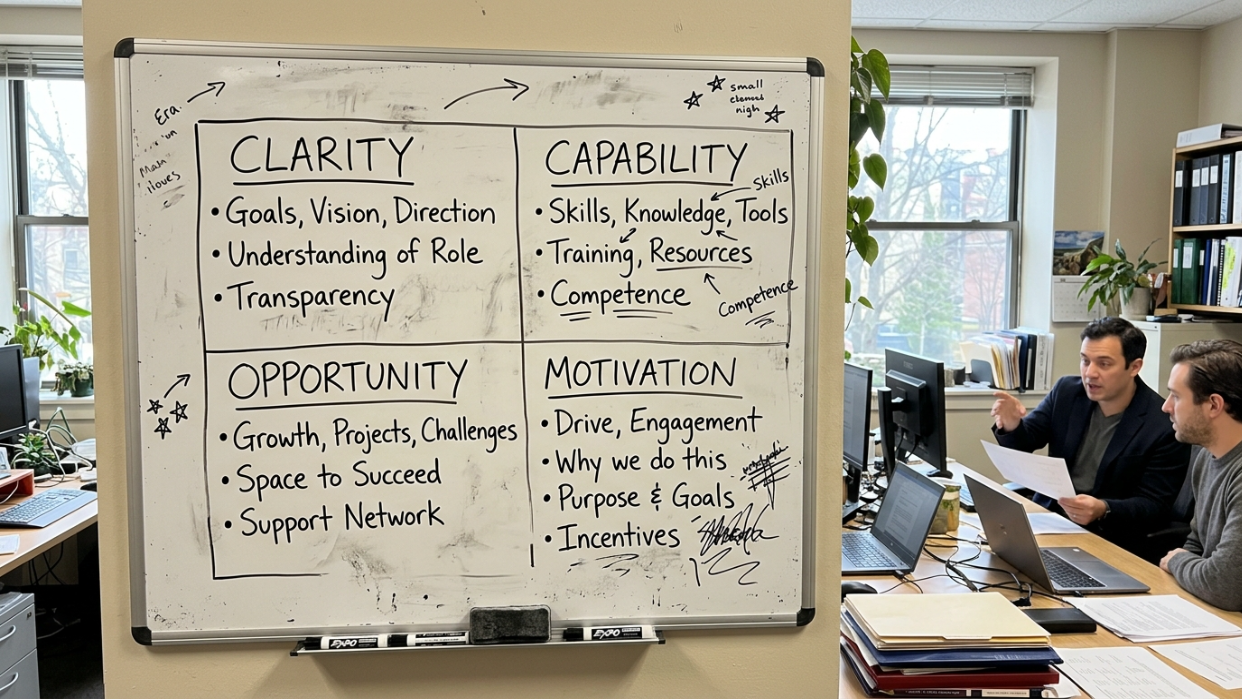
Most intention action gaps can be traced to one of four categories:
| Category | Question | Example |
|---|---|---|
| Clarity | Do people know what to do? | Confusing recycling instructions |
| Capability | Can people do it? | Lack of knowledge or confidence |
| Opportunity | Is the behavior easy? | Product unavailable or expensive |
| Motivation | Is the reward worth the effort? | Benefits feel distant |
Together these dimensions explain why people often fail to act even when they genuinely care.
Pinpointing which of the four is blocking your audience is a diagnostic exercise, and it is exactly where Grounded World’s discovery process begins.
Brands that diagnose the correct category can choose interventions that directly address the root cause instead of assuming awareness is the problem.
State Context Mismatch: Why Good Intentions Disappear at the Moment of Truth
One underappreciated cause of the intention action gap is something behavioral scientists call state context mismatch. The mental and physical state in which someone forms an intention is often radically different from the state in which they need to execute it.
A person sitting at home on a Sunday evening, calm and reflective, decides to start buying refillable cleaning products. By Wednesday at 6 PM, they are standing in a crowded store after a long day, two kids in tow, mentally depleted. The intention formed in a “cool” cognitive state now needs to execute in a “hot” one. The contexts do not match, and the intention evaporates.
This is not laziness. It is a predictable failure mode. Research on hot cold empathy gaps (a concept developed by George Loewenstein) shows that people systematically underestimate how different they will feel in a future state. When you are calm, you cannot accurately predict what you will do when stressed, rushed, or hungry.
State context mismatch explains several patterns that puzzle marketers:
- High survey intent, low in store conversion. The survey was completed at a desk. The purchase decision happens under time pressure with competing priorities.
- Strong campaign engagement, weak follow through. People engage with sustainability content when they are in a reflective mode (scrolling at night, reading an article). They shop in an automatic mode (habitual routes through the store, grabbing familiar products).
- Post purchase regret working in reverse. Instead of regretting the purchase, people regret not making the purchase they intended, then repeat the same pattern next time because the same mismatch recurs.
The practical fix is to design interventions that reach people in the state they will actually be in when the decision happens. This means moving prompts from awareness channels (where people are reflective) to point of decision contexts (where people are rushed). It also means using implementation intentions and coping plans that specifically anticipate the state shift.
Brands building behavior change marketing strategies should audit not just what messages they send but when and where those messages arrive relative to the decision moment.
Reasons vs. Excuses: Understanding What People Tell Themselves
When people fail to act on their intentions, they generate explanations. Some of those explanations are genuine reasons rooted in real barriers. Others are excuses, post hoc rationalizations that protect self image without reflecting the actual cause.
The distinction matters enormously for brands trying to close the intention action gap. If you design your intervention around an excuse rather than a reason, you solve the wrong problem.
A genuine reason sounds like: “The refill station is 20 minutes from my house and I only have one car.” An excuse sounds like: “I would buy sustainable products if they were more available,” said by someone who walks past three options every week without noticing them.
Practitioners on Reddit surface this tension frequently. In threads about sustainable shopping, some users offer detailed, specific barriers (price per unit, product performance, ingredient concerns) while others give vague, shifting explanations that change depending on the product category. The vague explanations often mask something else: ambivalence, habit strength, or identity mismatch.
How can brands tell the difference?
- Reasons tend to be specific and consistent. The same barrier shows up across situations and over time. When the barrier is removed, behavior changes.
- Excuses tend to be vague and mobile. Remove one objection and another appears. The person is not blocked by a specific obstacle; they are not yet committed to the behavior.
This does not mean people offering excuses are dishonest. Most of the time, they genuinely believe their own explanation. The distinction is diagnostic, not moral. When a brand encounters mobile objections, the real intervention is usually addressing ambivalence or identity mismatch rather than solving the stated surface barrier.
The practical takeaway: use observed behavior data, not just self reported barriers, to identify what is actually stopping people. The Recycling Partnership’s approach of home visits and direct observation is so effective precisely because it bypasses the reason vs. excuse problem entirely.
The Role of Consumer Segmentation in Closing the Gap
One of the biggest mistakes brands make is treating all consumers as one group. Not everyone who fails to act faces the same barrier. Consumer segmentation, specifically barrier based segmentation, is what separates effective interventions from wasted spend.
Traditional segmentation divides audiences by demographics or psychographics. That tells you who people are but not why they are stuck. A more useful approach segments by the specific barrier each group faces: confusion, cost sensitivity, distrust, habit strength, ambivalence, or access constraints.
Consider two shoppers who both say they want sustainable laundry detergent. One does not buy it because the price premium feels unjustified. The other does not buy it because they cannot tell which label claims are real. Same intention, completely different barriers, completely different solutions.
Practitioners on Reddit describe this disconnect regularly. In sustainability marketing threads, some users focus entirely on price as the dealbreaker while others say they would pay more if they trusted the claim. A single message aimed at “sustainability minded consumers” misses both groups.
Effective segmentation for closing the intention action gap asks:
- What is the barrier? Cost, trust, access, habit, knowledge, ambivalence, or social context.
- When does the gap appear? During search, at shelf, at checkout, or post purchase.
- What would make the action easier for this specific group? Price parity, clearer proof, better availability, or a simpler routine.
This kind of segmentation feeds directly into tailored engagement. Once you know why different groups stall, you can design different interventions for each.
For a deeper look at how barrier based segmentation connects to purchasing decisions, see barriers to sustainable purchasing and how to remove them.
Ambivalence: The Hidden Limit on Intention Strength
Not all intentions are created equal. Some are firm commitments. Others are closer to wishes wrapped in uncertainty. Ambivalence, holding both positive and negative evaluations of the same behavior simultaneously, is one of the most powerful brakes on action.
A person might genuinely want to buy the sustainable option and genuinely resent paying 30% more for it. They might value reducing plastic waste and find the refill process annoying. These are not separate people with separate barriers. They are the same person, holding contradictory feelings at the same time.
Ambivalence weakens intention strength. A meta analysis published in Psychological Bulletin found that attitudinal ambivalence reduces the predictive power of attitudes on behavior. When someone is ambivalent, their stated intention becomes an even worse predictor of what they will actually do. The already weak 18% to 23% explanatory power of intentions drops further.
This has direct implications for how brands interpret market research. A consumer who says “I intend to buy sustainable products” while harboring unresolved doubts about price, quality, or efficacy is not a reliable future buyer. They are an ambivalent intender, and the ambivalence needs to be addressed before any friction reduction or default dosing will work.
Several approaches help resolve ambivalence:
- Acknowledge the trade off directly. Instead of pretending the sustainable option has no downsides, name the tension: “Yes, refills take an extra step. Here is why 80,000 members think it is worth it.” Honesty about trade offs builds credibility and reduces the internal conflict.
- Provide trial experiences. Ambivalence often dissolves through direct experience. A sample, a trial size, or a money back guarantee lets the ambivalent person test the behavior without full commitment.
- Stack benefits to tip the balance. If the negative evaluation is “it costs more,” add enough positive evaluations (better ingredients, less clutter, longer lasting) that the overall balance shifts.
- Segment ambivalent consumers separately. They need different messaging than fully committed intenders. Pushing a hard call to action on an ambivalent person can trigger reactance and push them further from action.
Ambivalence sets a ceiling on how much any downstream intervention can accomplish. A perfectly designed choice environment still underperforms when the person walking into it has not resolved their internal conflict about the behavior itself.
Identity Based Messaging: Making Action About Who You Are
Most sustainability messaging focuses on outcomes: “buy this to save the planet” or “choose this to reduce plastic.” Those appeals matter, but they compete against a more powerful force at the moment of decision: identity.
Identity based messaging reframes the action as a reflection of the kind of person someone already wants to be. Instead of asking someone to do something good, it invites them to be someone good. The difference sounds subtle. The behavioral effect is not.
Research in social psychology has shown this repeatedly. A study by Bryan et al. found that asking people “to be a voter” rather than “to vote” significantly increased turnout. The noun form activates identity; the verb form describes a task. When the action becomes part of who you are rather than something you do, follow through increases because abandoning the behavior now feels like abandoning a piece of yourself.
The same principle applies in sustainability contexts. “Be a refiller” works differently than “refill your bottle.” “Join the zero waste community” works differently than “reduce your waste.” One LinkedIn practitioner in sustainable branding described identity framing as “the difference between giving people a task and giving them a tribe.”
Practitioners on Reddit have noted a related pattern in fitness communities. Posts that frame exercise as “I am a runner” rather than “I am trying to run more” tend to come from people who actually sustain the habit. The identity statement creates internal consistency pressure: once you see yourself as that kind of person, skipping the behavior creates cognitive dissonance.
For brands, identity based messaging has several practical applications:
- Naming your community. Give your customers a label they want to claim. Patagonia does not just sell jackets; it cultivates a community of people who see themselves as environmental stewards.
- Using noun framing over verb framing. “Be a conscious shopper” rather than “shop consciously.” “Become a refill member” rather than “sign up for refills.”
- Connecting sustainability to aspirational self concepts. The target identity does not have to be “environmentalist.” It could be “smart parent,” “thoughtful host,” “someone who knows what they are buying,” or “the person in the friend group who finds the better option.”
- Making the identity visible. Loyalty tiers, profile badges, shareable impact summaries, and community features all let people signal the identity to others, which reinforces it.
Identity based messaging does not replace friction reduction or trust building. It amplifies them. When the action is easy, credible, and tied to who someone wants to be, the intention action gap narrows from multiple directions at once.
This connects naturally to how brands build consumer trust in sustainability, because trust and identity reinforce each other.
The Design Principle of Goal Alignment
Many intention action gaps persist not because people lack motivation but because the system around them pulls in conflicting directions. Goal alignment is a design principle that ensures every element of the product, service, communication, and purchase environment points toward the same behavioral outcome.
When goals are misaligned, even well designed nudges fail. A brand might run a sustainability campaign encouraging refills while its retail partner places the single use version at eye level and puts the refill pouch on a bottom shelf. The communication says one thing; the environment says another. The consumer receives contradictory signals, and the path of least resistance wins.
Goal alignment requires auditing the entire system around a target behavior:
- Does pricing support the goal? If the sustainable option costs significantly more per unit, the pricing structure is working against the behavior the brand is trying to encourage.
- Does retail placement support the goal? The physical or digital position of the product should make it easier to choose, not harder to find.
- Does the post purchase experience support repeat behavior? If the refill process is confusing, or if the subscription is hard to manage, the system undermines the initial purchase.
- Do internal incentives align? If the sales team is compensated on single use SKU volume while the marketing team promotes refills, internal misalignment will show up as external inconsistency.
Goal alignment also applies to messaging consistency across touchpoints. When the sustainability story told in advertising does not match what the consumer sees on the shelf, at checkout, or in the packaging, credibility erodes. This is where purpose driven storytelling becomes essential: the narrative must hold together at every point where the consumer encounters it.
Practitioners on Reddit who discuss sustainable product launches frequently point out misalignment as the root cause of failure. Products marketed as eco friendly but wrapped in excessive packaging, or positioned as affordable but priced 40% above the conventional alternative. These contradictions do not just create skepticism. They actively widen the intention action gap by making the “right” choice feel incoherent.
The fix is to treat goal alignment as a cross functional design exercise, not a marketing task. Product, pricing, retail, operations, and communications all need to point in the same direction. Without that alignment, individual interventions are fighting against the system they exist within.
Simplification and Default Dosing: Fewer Choices, More Action
If identity based messaging answers “why should I care?”, simplification and default dosing answer “what exactly should I do, and how much?”
One of the most underappreciated causes of the intention action gap is decision overload. People walk into a store or land on a product page and face dozens of options, each with different claims, certifications, price points, and formats. The cognitive cost of evaluating all of this is high. When evaluation feels like work, the easiest path is to grab the familiar option or do nothing at all.
Default dosing is a specific application of simplification. Instead of asking consumers to figure out the right amount, the right frequency, or the right configuration, you pre set the optimal choice. The consumer can change it, but the starting point is already correct.
Examples of default dosing in practice:
- Pre filled subscription cadences. A refill delivery service that defaults to a 30 day cycle based on average usage, rather than asking the customer to calculate how often they need a refill.
- Recommended bundles. Instead of letting shoppers assemble their own sustainable starter kit from 40 SKUs, offer a curated “essentials” bundle as the default purchase.
- Pre selected sustainable options. At checkout, the carbon neutral shipping option or the recyclable packaging option is already selected. The customer has to actively opt out rather than opt in.
- Portion guidance on packaging. Concentrated cleaning products that include a pre measured cap or a dosing line, so the consumer does not have to guess.
A YouTube walkthrough from a UX researcher demonstrated how a grocery delivery app increased selection of “imperfect produce” boxes by 34% simply by making it the default add on during checkout rather than a separate browsable category. The product did not change. The design of the choice did.
Simplification extends beyond defaults:
- Reducing the number of claims on packaging. One clear, specific claim outperforms five vague ones. The OECD found that at least 40% of reviewed e commerce websites used tactics that could be perceived as misleading, partly because of claim clutter.
- Offering fewer but better options. Three well differentiated tiers convert better than twelve overlapping SKUs.
- Making comparison effortless. Side by side displays, clear “better / best” labeling, or simple iconography that communicates the key difference in under two seconds.
Practitioners on Reddit who discuss decision fatigue in sustainable shopping often describe the experience as “paralysis by eco label.” When every product on the shelf has a different certification, a different shade of green packaging, and a different set of claims, the customer cannot tell which one is actually better. Many default to price or brand familiarity.
For brands looking to simplify their sustainability claims strategy, reducing claim clutter is often the single highest impact change.
Socially Prescribed Perfectionism: When the Fear of Doing It Wrong Prevents Doing It at All
A growing body of research on perfectionism reveals a specific risk for behavior change campaigns: socially prescribed perfectionism. This is the belief that other people hold unrealistically high standards for you, and that failure to meet those standards will result in judgment or rejection.
In sustainability contexts, this manifests as a paralyzing fear of “doing it wrong.” A consumer wants to recycle but worries about contaminating the stream. Someone considers buying sustainable fashion but fears being called out for not going far enough (why not buy secondhand instead?). A parent thinks about switching to cloth diapers but anticipates criticism from both sides: too much effort from one camp, not enough commitment from another.
Social media amplifies this dynamic considerably. Online sustainability communities can be intensely judgmental. Practitioners on Reddit have described how zero waste forums sometimes create a culture where anything short of perfection is attacked. One user in a sustainability discussion put it bluntly: “People are afraid to start because they know they will be told they are not doing enough.”
When people perceive that the social standard is perfection, and that anything less invites criticism, many choose inaction over imperfect action. The gap widens not from lack of caring but from fear of inadequacy.
This is a real limit on behavior change messaging. Campaigns that inadvertently set perfectionist standards (“go fully zero waste,” “eliminate all single use plastic”) can backfire by making the bar feel unreachable. The consumer who cannot achieve the ideal decides not to try at all.
Effective approaches to counteract this risk include:
- Normalizing imperfect action. “You do not have to be perfect. Start with one swap.” This kind of messaging explicitly gives permission to be partial, which is often enough to unlock initial behavior.
- Celebrating progress over perfection. Impact dashboards and loyalty features that show cumulative progress (“you have saved 12 bottles this year”) work better than all or nothing metrics.
- Showing diverse, realistic examples. Not every brand ambassador needs to be a zero waste influencer living out of a mason jar. Showing regular people making small, imperfect changes reduces the perceived social standard.
- Separating the action from the judgment. Frame the behavior as a practical choice, not a moral test. “Smart families choose refills” is less judgmental than “responsible families eliminate waste.”
This connects to identity based messaging, but with an important nuance. The identity offered should be aspirational yet achievable. If the identity feels like it requires perfection, it becomes another source of anxiety rather than motivation.
Brands running sustainability campaigns should test whether their messaging inadvertently triggers perfectionism by asking target consumers not just “does this motivate you?” but “does this make you feel like you could actually do it?”
Tailored Engagement and Outreach
Generic campaigns produce generic results. Once consumer segments are defined by their specific barriers, outreach should be tailored to each segment’s sticking point.
This means different messages, different channels, and sometimes different product formats for different groups. A price sensitive segment needs to see cost per use comparisons, not carbon offset stories. A trust skeptical segment needs third party certifications and transparent supply chain data, not lifestyle imagery. A habit locked segment needs point of decision nudges and defaults, not another awareness ad.
One LinkedIn practitioner working in CPG sustainability marketing described tailored engagement as “meeting people at their specific moment of hesitation, not just at the top of the funnel.” The point is that outreach becomes a precision tool rather than a megaphone.
Tailored engagement also extends beyond the first purchase. Post purchase communication, refill reminders, usage tips, and community features all help move a one time buyer toward repeat behavior. The gap does not close permanently after one transaction. It reopens every time the next decision arrives.
Systemic Communication: Reinforcing Action Across Every Touchpoint
Most brands communicate sustainability in bursts: a campaign launch, an annual report, a social media push during Earth Day. Then silence. This pattern creates awareness spikes that decay quickly because the message is not reinforced at the moments that matter.
Systemic communication is the opposite approach. It means embedding behavior supporting messages across every consumer touchpoint, from advertising to shelf labels, from checkout prompts to post purchase emails, from packaging instructions to loyalty programs.
Think of it as a communication system rather than a communication campaign. Each touchpoint reinforces the same clear action, adapts the message to the context, and reduces the chance that intention fades between touchpoints.
A few practical examples:
- At awareness stage: Connect the sustainable behavior to a personal benefit. Use identity based framing to link the action to who the consumer wants to be.
- At shelf or product page: Show a clear, specific claim with visible proof. Reduce comparison effort. Use default dosing to pre select the right option.
- At checkout: Use defaults (opt in to the refill program, choose carbon neutral shipping as default).
- Post purchase: Send usage instructions, refill reminders, or impact updates that reinforce the behavior and the identity.
- In loyalty programs: Reward repeat sustainable choices, not just repeat purchases. Give community members a label and visible progress toward collective goals.
The principle: if the message only appears once, the behavior probably will too.
Related Terms: Say Do Gap, Value Action Gap, and Others
Several terms describe the same basic phenomenon. They overlap, and in most practical conversations the distinctions matter less than the shared question: why do people who care, intend, or say yes still fail to act?
| Term | What it means | Where it shows up |
|---|---|---|
| Intention action gap | Difference between intended action and actual action | Behavioral science, marketing |
| Intention behavior gap | Academic version of the same concept | Psychology, health behavior research |
| Say do gap | Difference between what people say and what they do | Consumer research, sustainability marketing |
| Value action gap | Difference between values and behavior | Environmental and social psychology |
| Attitude behavior gap | Difference between attitudes and behavior | Green consumption research |
Academic literature tends toward “intention behavior gap.” A Frontiers review defines it as the disjunction between intentions and behavior found in both correlational and experimental studies. Marketers and sustainability practitioners more often say “say do gap” or “intention action gap.”
For a deeper look at this disconnect, see consumer intention vs behavior and how to close the gap.
Why People Do Not Act on Good Intentions
The intention action gap is not one problem. It is at least eight distinct barriers, often working together.
The Clarity Gap
People do not know exactly what to do. “Recycle more” is vague. “Put rinsed aluminum cans in the blue bin” is actionable. “Buy sustainable products” is vague. “Choose the refillable hand soap on your next grocery trip” is actionable.
How to close it: Specific instructions, labels, decision trees, point of decision prompts, and simple claims that tell people exactly what to do next. Default dosing helps here too: instead of asking people to figure out how much or how often, pre set the answer.
The Capability Gap
People lack the knowledge, skills, or confidence to act. BehaviourWorks Australia gives a straightforward example using the COM B model: someone may intend to recycle but fail because they do not know which waste goes in which bin. That is not a motivation problem. It is a capability problem.
How to close it: Education delivered at the moment of action, not only during a campaign.
The Access Gap
The better option is not easy to find, afford, buy, use, or repeat. If the sustainable product is not on the shelf, not in stock online, or not available in the right format, intention goes nowhere.
How to close it: Distribution, shelf placement, price architecture, subscriptions, default options, and strong retail activation that puts the product where the decision happens.
The Value Gap
The sustainable action feels like a sacrifice: it costs more, performs worse, looks less appealing, or offers uncertain payoff.
Practitioners on Reddit report this consistently. In a marketing thread about what sustainable brands get wrong, users listed barriers including price, perceived quality loss, and weaker product specs. A separate anticonsumption thread asked which green products were actually worse than the original, and responses included paper straws, wooden cutlery, vegan leather that falls apart, and cleaning products that cost more but clean less.
How to close it: Connect sustainability to immediate benefits like quality, durability, health, savings, or convenience, rather than relying only on planetary impact.
The Trust Gap
People do not believe the claim or cannot verify it. BSI found that 56% of US consumers actively seek environmental claims when shopping, but fewer than half (43%) understand the term “greenwashing.” Yet 76% said they are more likely to purchase from companies that verify environmental credentials through evidence or certifications.
How to close it: Substantiated claims, transparent proof, credible certifications, and no vague “eco friendly” language without specifics. For practical guidance, see how to avoid greenwashing with clearer sustainability claims.
The Habit Gap
Existing routines overpower conscious intention. People plan to change, but muscle memory carries them back to the default choice.
The Behavioral Scientist describes a case where chlorine dispensers installed at water sources piggybacked on the existing routine of collecting water. Adoption of water treatment rose to 50% to 61% versus 6% to 14% in control groups.
How to close it: Attach the desired behavior to an existing routine. Design prompts, use defaults, reduce steps. LinkedIn practitioners describe subscription and refill models as a way to make sustainable habits “set it and forget it.”
The Social Gap

The action feels unsupported, invisible, or futile. If nobody around you recycles, if your workplace does not support sustainable purchasing, if government and corporations seem to be doing nothing, individual action can feel pointless.
How to close it: Social proof, community norms, visible participation, peer examples, public commitments, and institutional support. Identity based messaging helps here: when the action is framed as part of a group identity, the social proof is built into the message itself.
The Identity Gap
Sometimes the action does not feel like “something a person like me does.” The sustainable product might seem designed for a different demographic, a different income bracket, or a different lifestyle. The intention is there, but the person does not see the action as fitting their self concept.
How to close it: Frame the behavior in terms that connect to your audience’s existing identity. Use noun based framing. Show diverse examples of people like them already doing it. Avoid making sustainability feel like a niche lifestyle and instead position it as a normal, smart, practical choice.
If you are trying to diagnose which barriers are blocking action in your market, talk to Grounded World about intention action gap research and quantification.
Common Causes of the Intention Action Gap
| Barrier | Typical Consumer Thought | Result |
|---|---|---|
| Confusion | “I’m not sure what to do.” | Inaction |
| Cost | “This costs too much.” | Delay |
| Trust | “I don’t believe the claim.” | Rejection |
| Effort | “This takes too much work.” | Avoidance |
| Habit | “I always buy the same thing.” | Default behavior |
| Availability | “I can’t find it.” | Abandonment |
| Social Influence | “Nobody else is doing it.” | Low adoption |
| Identity Mismatch | “This isn’t really for someone like me.” | Disengagement |
| Decision Overload | “There are too many options to figure out.” | Paralysis |
| Ambivalence | “I want to, but I also kind of don’t.” | Stalling |
| Perfectionism Pressure | “I can’t do it perfectly so why bother.” | Withdrawal |
Most intention action gaps involve multiple barriers simultaneously.
Why the Intention Action Gap Matters for Businesses
The intention action gap affects more than sustainability initiatives. Organizations encounter the same challenge across:
Marketing
Consumers express interest but fail to purchase.
Customer Experience
Users sign up but never activate a product.
Employee Engagement
Employees support initiatives but do not participate.
Public Health
People intend to exercise, eat healthier, or attend screenings but fail to follow through.
Financial Services
Consumers plan to save money, reduce debt, or invest but delay action.
The underlying behavioral mechanics remain largely the same regardless of industry. What changes is the specific barrier mix and the design of the choice environment.
The Behavioral Economics Approach to the Gap
Traditional marketing assumes that if you inform and persuade, people will act. Behavioral economics says otherwise. People are not rational calculators weighing every option. They are cognitive misers who rely on shortcuts, defaults, and whatever is easiest in the moment.
Several behavioral economics principles directly explain why the intention action gap persists:
- Present bias: Future benefits (cleaner planet, better health) lose to immediate costs (higher price, extra effort). People disproportionately weight what happens now over what happens later.
- Status quo bias: The default option wins more often than it should because switching requires active effort. This is exactly why default dosing works: it puts the better choice in the status quo position.
- Loss aversion: People feel losses more intensely than equivalent gains. Paying a premium for a sustainable product feels like a loss even when the long term value is higher.
- Choice overload: Too many options, too many claims, too many certifications create decision fatigue. Simplification directly addresses this.
- Hyperbolic discounting: The reward for sustainable behavior is often delayed and diffuse, which makes it psychologically weaker than the immediate reward of saving money or time right now.
Understanding these biases shifts the intervention strategy. Instead of adding more information (which can worsen choice overload), the behavioral economics approach focuses on restructuring the choice environment.
This connects directly to behavior change frameworks that marketers can apply across product categories and channels.
Behavior Centered Design: Building Action Into the System
Behavior centered design (BCD) goes further than nudging. Where behavioral economics identifies biases and suggests corrections, BCD starts from the behavior itself and designs the entire product, service, or system around making that behavior happen.
The core principle: do not design a product and then hope people use it correctly. Design the system so the correct behavior is the easiest, most natural, most rewarding path.
This means asking different questions at the design stage:
- What is the exact behavior we need?
- What environment will the person be in when they decide?
- What are they doing immediately before and after?
- What would make the right action require zero additional thought?
- What identity does this person hold, and how does the action connect to it?
- What state context mismatch might exist between when they form the intention and when they need to act?
The chlorine dispenser example from the Behavioral Scientist is a textbook case of behavior centered design. The dispensers were placed at the water source, not at home. The action (adding chlorine) was inserted into an existing routine (collecting water). The design made the right behavior almost unavoidable.
In commercial contexts, behavior centered design shows up in several ways:
- Packaging that teaches use: Labels that show exactly how to recycle each component, printed where the person holds the package.
- Subscription models: The refill arrives before you run out, removing the decision to repurchase. Default dosing on the cadence means the customer never has to calculate timing.
- Point of decision placement: The sustainable option is at eye level, in the expected position, with the clearest label.
- Digital defaults: The greener option is pre selected. Opting out requires effort, not opting in.
- Identity reinforcement in the product experience: Packaging, app interfaces, and community platforms that reflect back the identity the consumer wants to hold.
Behavior centered design treats the gap as an engineering problem. The question is never “why don’t people care enough?” It is always “what in the system is preventing them from doing what they already want to do?”
Outcome Confidence: Why People Need to Believe Their Action Matters
There is a barrier that sits underneath trust but is distinct from it. Even when people believe a claim is true, they may still not act because they doubt their individual action will produce a meaningful outcome. This is outcome confidence: the belief that “if I do this, it will actually make a difference.”
Low outcome confidence is especially common in sustainability contexts. A person might believe the product is genuinely better for the environment but still think, “What difference does one bottle make when corporations produce 70% of emissions?” That thought kills action even when trust, access, and price are all favorable.
Brands can build outcome confidence in several ways:
- Make the impact tangible and specific. “This refill saves 3 plastic bottles” is more motivating than “reduces plastic waste.”
- Show collective progress. “Together, our customers have diverted 2 million bottles from landfill” turns individual action into visible collective impact.
- Use feedback loops. Apps or loyalty programs that track cumulative impact reinforce the sense that action matters.
- Connect individual action to systemic change. Show how purchasing supports broader shifts: funding innovation, scaling alternatives, or influencing industry standards.
Outcome confidence is the emotional fuel that keeps the behavior repeating. Without it, even a frictionless, well priced, easily accessible product eventually loses to apathy.
This connects to the broader challenge of commercializing sustainability in a way that delivers both business results and genuine impact.
Examples of the Intention Action Gap
Sustainable Products
Sustainability is one of the clearest commercial examples of the intention action gap. PwC’s 2024 survey of over 20,000 consumers across 31 countries found that 80% said they were willing to pay more for sustainably produced goods, with an average stated premium of 9.7%. PwC also warned that this may not translate into actual spend because of inflation and cost of living pressure.
But the gap is not proof that consumers do not care. When sustainable products are credible, relevant, and available, they sell. McKinsey and NielsenIQ analyzed five years of US sales data covering 600,000 SKUs, 44,000 brands, and $400 billion in annual retail revenues. Products with ESG related claims averaged 28% cumulative growth over five years versus 20% for products without such claims.
The takeaway: sustainability can create commercial value when it is credible, visible, available, and tied to product value. The intention action gap appears when any of those conditions breaks down.
Recycling
The Recycling Partnership reports that eight in ten Americans say recycling is worth the effort, yet over half of household recyclables still end up in trash bins. Their research identified three stage gates where behavior breaks down: access, education, and engagement.
People want to recycle. They fail because they are confused about what goes where, lack convenient access, or do not feel confident enough to sort correctly. That is a system design problem, not a values problem.
Clean Water and Handwashing
Two cases from the Behavioral Scientist show how behavior design closes the intention action gap more effectively than information alone. Chlorine dispensers placed at water sources piggybacked on existing routines and raised water treatment adoption dramatically. The SuperAmma campaign shifted handwashing behavior by using emotional motives around nurture and social expectations rather than hygiene facts, achieving over 37% adoption at key times six months after launch.
The SuperAmma campaign is also a powerful example of identity based messaging. It did not tell mothers to wash their hands for health reasons. It activated the identity of a “good mother” who nurtures and protects her children.
Everyday Behavior
The intention action gap is everywhere. New Year’s resolutions. Exercise plans. Healthy eating goals. Saving money. Bringing reusable bags. The pattern is always the same: people genuinely intend to act, the moment of decision arrives, and the easier or more familiar option wins.
Intention Action Gap Statistics (2026)
| Finding | Source |
|---|---|
| Intentions explain only about 18% to 23% of behavioral variance | Frontiers |
| 80% of consumers say they will pay more for sustainable products | PwC |
| More than half of recyclables still end up in trash bins | The Recycling Partnership |
| 76% of consumers prefer verified sustainability claims | BSI |
| Products with ESG related claims outperformed products without claims over five years | McKinsey & NielsenIQ |
These findings demonstrate that consumer intention alone is a poor predictor of actual behavior.
How to Close the Intention Action Gap
Step 1: Define the Exact Behavior
Not “be more sustainable.” Define the specific action, audience, moment, and desired outcome.
| Weak intention | Stronger intention |
|---|---|
| “I should buy more sustainable products.” | “I will switch my weekly cleaning products to verified refill formats if price and performance are comparable.” |
| “I want to reduce waste.” | “I will put food scraps in the countertop caddy after dinner every night.” |
| “Encourage sustainable living.” | “Increase repeat refill purchase within 45 days among first time buyers.” |
You cannot close a gap until you define the action on the other side of it.
Step 2: Segment by Barrier, Not Just Demographics
This is where consumer segmentation changes the game. After defining the target behavior, identify which barrier each audience segment faces. A price sensitive parent and a trust skeptical millennial may both intend to buy sustainable products, but they need completely different interventions.
Map segments to barrier categories: clarity, capability, access, value, trust, habit, identity, ambivalence, or social influence. Then design tailored engagement for each segment rather than broadcasting one message.
Step 3: Quantify the Gap
Compare stated intent with observed behavior. This means measuring the distance between survey responses and actual purchases, between ad engagement and retail conversion, between sign ups and completed actions.
A Frontiers review found that intentions explain only about 18% to 23% of behavior variance. If your measurement stops at stated intent, you are probably overstating demand.
For practical measurement approaches, explore purchase intent vs purchase behavior frameworks that connect stated interest to real outcomes.
Step 4: Diagnose the Barrier
Use the barrier framework above or the COM B model (capability, opportunity, motivation). The answer to “why aren’t people acting?” is different depending on whether the problem is confusion, cost, access, distrust, habit, identity mismatch, ambivalence, decision overload, perfectionism pressure, or social context. Each barrier requires a different intervention.
Pay attention to whether the barrier is a genuine reason or a post hoc excuse. If removing the stated barrier does not change behavior, the real obstacle is probably something else (often ambivalence or identity mismatch).
Step 5: Reduce Friction Through Behavior Centered Design and Simplification
Make the action easier than the default. Instead of just removing one barrier, redesign the entire choice environment so the sustainable option is the path of least resistance.
This might mean changing shelf placement, simplifying packaging instructions, reducing checkout steps, setting sustainable options as defaults, using default dosing on quantities and frequencies, or designing a retail activation that removes barriers at the exact point of decision.
Friction is not just physical inconvenience. It includes cognitive load (too many claims to evaluate), financial friction (price premium without clear justification), and emotional friction (fear of making the wrong choice). Simplification and default dosing address cognitive friction directly.
Step 6: Increase Immediate Reward and Outcome Confidence
Sustainability benefits often feel distant: less plastic in oceans, lower carbon emissions, better labor conditions. These matter, but they may not win at the purchase moment.
Immediate benefits can include saving money over time, a healthier home, better taste, longer lasting products, less clutter, or social pride. One LinkedIn practitioner put it well: sustainability claims work better when they connect to benefits in the consumer’s own world rather than only global planetary outcomes.
Pair immediate rewards with outcome confidence. Show consumers that their action produces a real, visible result.
Step 7: Build Credible Proof
A sustainable claim should answer: What exactly is better? Compared with what? How much better? Who verified it? Bain reports that about 70% of surveyed consumers failed a simple sustainability quiz, and more than 90% consulted at least three sources to verify a brand’s claims.
If the claim requires too much homework from the consumer, many will default to the familiar product. Build proof into the buying moment, not behind a separate website.
Step 8: Use Coping Plans, Implementation Intentions, and Identity Based Messaging
This step combines three of the most powerful tools for closing the gap.
Implementation intentions are “if then” plans that specify when, where, and how someone will act. A meta analysis of 94 independent tests found a medium to large effect on goal attainment (d = .65).
Instead of asking people to “shop more sustainably,” give them a concrete plan:
- “When you run out of detergent, choose the refill pouch in aisle 7.”
- “When you finish a bottle, scan the QR code to find the closest refill point.”
Coping plans extend implementation intentions by anticipating obstacles. Where an implementation intention says “when X happens, I will do Y,” a coping plan says “if obstacle Z gets in the way, I will do W instead.” This is the behavioral science response to the state context mismatch problem.
For example:
- “If the refill pouch is out of stock, I will order it online when I get home.”
- “If I forget my reusable bags, I will keep a backup set in the car.”
- “If the sustainable option costs more than expected, I will compare cost per use rather than sticker price.”
Research on coping plans shows they significantly improve follow through, especially for behaviors that face predictable obstacles. The person has already mentally rehearsed the obstacle and knows what to do, which prevents the “I intended to but then…” collapse.
Now layer identity based messaging on top. Frame the if then plan and the coping plan in identity terms:
- “Refillers know: when you run out, you refill. And when the shelf is empty, you order. Find your pouch in aisle 7 or at refillclub.com.”
- “As a zero waste member, your next step is simple: scan, refill, repeat.”
The implementation intention gives the behavior structure. The coping plan handles predictable obstacles. The identity framing gives it meaning. Together, they are more powerful than any one alone.
Step 9: Design for Repeat Behavior and Test Relentlessly
A sustainability campaign can win the first purchase through values. It wins repeat behavior through product experience. If the green alternative underperforms, the behavior stops.
Reddit users in anticonsumption communities are blunt about this. They criticize eco labeled products that cost more but clean worse, fall apart faster, or feel like a downgrade. Sustainability does not compensate for a poor product experience.
Design the second action to be easier than the first. Use subscriptions with default dosing on timing and quantity, refill reminders, replenishment systems, and post purchase support. Make the default path one of continued sustainable behavior, so the customer has to actively choose to leave rather than actively choose to stay.
Pilot before scaling. Measure actual behavior, not just attitudes. The Recycling Partnership’s approach (home visits, interviews, surveys, community pilots) is a model worth following: go where the behavior happens and observe what is really going on.
What Brands Get Wrong
Eight mistakes show up again and again.
- They treat awareness as action. Running a purpose campaign is not behavior change. Awareness is the start of the funnel, not the end.
- They ask consumers to do too much work. If the customer must research, compare, verify, and calculate impact, many will default to habit. Simplification and default dosing exist to solve this.
- They lead with distant planetary benefit only. Important, but often too abstract when someone is standing in a store aisle with thirty seconds to decide.
- They ignore product performance. Sustainability does not compensate for a poor experience.
- They make vague claims. “Eco friendly” without proof increases skepticism.
- They blame consumers. Many gaps are caused by product, system, price, retail, or communication design. The consumer is rarely the failure point.
- They measure intent instead of behavior. Survey data alone can exaggerate demand.
- They set perfectionist standards. Messaging that demands total lifestyle transformation instead of celebrating small, imperfect steps triggers withdrawal rather than engagement.
Strong purpose driven marketing connects values to action rather than stopping at awareness.
How to Measure Whether the Gap Is Closing
For Sustainable Product Purchase
- Awareness to trial conversion rate
- Claim recognition and trust scores
- Price elasticity across sustainability tiers
- First purchase and repeat purchase rates
- Share of basket and trade up rate
- Retail sell through
For Behavior Change Campaigns
- Pledge to action rate
- Completion rate
- Repeat behavior frequency
- Contamination or error rate (in recycling contexts, for example)
- Observed behavior versus self report
For Sustainability Storytelling
- Comprehension of the specific claim
- Proof recall after exposure
- Perceived credibility
- Willingness to recommend
- Action taken after exposure
The common thread: measure what people actually do, not just what they say.
Closing the Intention Action Gap in Sustainability Marketing
In sustainability marketing, closing the intention action gap means translating purpose into a behavior people can actually perform. That requires more than a campaign. It may require product innovation, claims strategy, packaging redesign, retail activation, price architecture, and proof that holds up under scrutiny.
Most campaigns overinvest in the first two stages of the behavior funnel (values and intention) and underinvest in the last five (search, comparison, action, repeat, advocacy). The result: people care, they say so in surveys, and then nothing happens at the shelf.
A few principles worth keeping close:
- Intent is not demand.
- Awareness is not action.
- The gap is usually a design problem, not a caring problem.
- People do not act in surveys. They act in stores, kitchens, apps, and routines.
- The better option has to win in the real choice environment.
- Consumer segmentation by barrier type beats demographic segmentation every time.
- Systemic communication across touchpoints beats campaign bursts.
- Outcome confidence is as important as product confidence.
- Identity based messaging makes the action feel personally meaningful, not just environmentally correct.
- Simplification and default dosing remove the cognitive tax that kills good intentions.
- Coping plans handle the predictable obstacles that implementation intentions alone cannot solve.
- Goal alignment across pricing, placement, packaging, and messaging prevents internal contradictions from widening the gap.
- Ambivalence must be resolved before downstream interventions can work at full strength.
- Perfectionism in sustainability culture can prevent action entirely; normalize imperfect starts.
Reddit anticonsumption communities add an important nuance: the goal is not always more consumption with a green label. Many users argue the most sustainable action is to use what you already own, repair, borrow, or buy secondhand. Honest sustainability marketing acknowledges this.
Grounded World helps brands bridge the gap between purpose and profit by diagnosing intention action gaps and turning sustainability into measurable business outcomes.
FAQ
What is the intention action gap?
The intention action gap is the difference between what people intend to do and what they actually do. It appears when someone plans to act (buy a sustainable product, recycle, exercise, donate) but does not follow through because the behavior is unclear, hard, costly, untrusted, or outside their routine.
What causes the intention action gap?
Common causes include lack of clarity about what to do, lack of capability or knowledge, poor access or availability, high effort relative to reward, distrust of claims, existing habits that override new intentions, decision overload from too many options, identity mismatch, ambivalence, state context mismatch, socially prescribed perfectionism, and lack of social support. Most gaps involve multiple barriers working together.
Is the intention action gap the same as the say do gap?
They overlap significantly. The say do gap is the consumer research version: people say they care or intend to buy, but their actual behavior does not match. Both terms describe the same fundamental problem.
How do you close the intention action gap in sustainability?
Make the sustainable behavior easier to understand, easier to access, easier to trust, and easier to repeat. Tie the benefit to personal value. Prove claims with specific, verifiable evidence. Reduce price and convenience friction. Use behavior centered design to restructure the choice environment. Build outcome confidence so consumers believe their action matters. Use identity based messaging to connect the action to who the person wants to be. Apply simplification and default dosing to reduce decision overload. Create coping plans that anticipate predictable obstacles. Ensure goal alignment across pricing, placement, and messaging. Design systemic communication across all touchpoints.
Why do consumers say they want sustainable products but not buy them?
Because real purchases involve trade offs: price, convenience, trust, availability, quality, brand familiarity, and cognitive effort. A sustainable product must win in the actual decision environment, not just in a survey. Research shows intentions explain only about 18% to 23% of the variance in actual behavior. Ambivalence and state context mismatch further weaken the link between what people say and what they do.
What is behavior centered design?
Behavior centered design starts from the target behavior and designs the entire product, service, or system around making that behavior the easiest, most natural path. Rather than persuading people to change, it restructures the environment so the desired action requires less effort than the alternative.
What is identity based messaging?
Identity based messaging frames the desired action as an expression of who the person wants to be, rather than just a task to complete. Instead of “recycle more,” it says “be a recycler.” Research shows that noun framing (activating identity) produces stronger behavior change than verb framing (describing a task) because abandoning the behavior feels like abandoning part of yourself.
What is default dosing?
Default dosing means pre setting the optimal choice, quantity, frequency, or configuration so the consumer does not have to calculate or decide from scratch. Examples include pre selected subscription cadences, recommended bundles, and pre checked sustainable shipping options at checkout. It works because of status quo bias: people tend to stick with whatever is already selected.
What is a coping plan and how does it differ from an implementation intention?
An implementation intention is an “if then” plan: “When I run out of detergent, I will buy the refill pouch.” A coping plan extends this by anticipating specific obstacles: “If the refill pouch is out of stock, I will order it online when I get home.” Coping plans improve follow through because they prevent predictable obstacles from derailing the behavior. They are especially useful when state context mismatch makes the execution environment harder than the person expected.
What is state context mismatch?
State context mismatch occurs when the mental and physical state in which someone forms an intention differs significantly from the state in which they need to act. A person deciding to eat healthier while calm on a Sunday evening faces a very different reality when hungry and rushed on a Tuesday. This mismatch weakens the intention’s influence on behavior and is one reason stated intent overpredicts actual action.
What is ambivalence and why does it limit behavior change?
Ambivalence means holding both positive and negative evaluations of the same behavior simultaneously. A consumer might want the sustainable option and resent paying more for it at the same time. Ambivalence reduces the predictive power of intentions, meaning ambivalent intenders are less likely to follow through. Resolving ambivalence through trial experiences, honest trade off acknowledgment, or benefit stacking must happen before downstream nudges and defaults can work effectively.
How does socially prescribed perfectionism affect the intention action gap?
When people believe that others expect perfection (for example, that sustainability requires total lifestyle change), the bar feels unreachable. Many choose inaction over imperfect action. Brands can counteract this by normalizing partial efforts, celebrating progress over perfection, and framing the behavior as a practical choice rather than a moral test.
How can brands measure the intention action gap?
Compare stated intent with actual behavior. Track purchase rates, repeat purchase, switching behavior, refill rates, redemption, retail sell through, and observed behavior in pilots. Avoid relying solely on self reported data, which tends to overstate demand.
Does closing the intention action gap always mean getting people to buy more?
No. In many sustainability contexts, the right behavior is using what you already own, repairing, reusing, buying secondhand, or simply buying less. Closing the gap means helping people follow through on what they actually intend to do, whatever that behavior is. The goal is better action, not just more purchasing.
What is an example of the intention action gap?
A common example is a consumer who says they want to buy sustainable products but ultimately chooses a cheaper or more familiar alternative when shopping. The intention exists, but price, convenience, habit, or uncertainty prevent action.
Why is the intention action gap important?
The intention action gap explains why awareness campaigns often fail to create measurable behavior change. Understanding the gap helps organizations design interventions that produce real world outcomes rather than simply increasing positive attitudes.
Can incentives reduce the intention action gap?
Yes. Incentives can reduce the gap when they provide immediate rewards that outweigh the perceived effort of changing behavior. However, incentives are most effective when combined with reduced friction, clear instructions, identity reinforcement, simplified choices, coping plans for obstacles, and systemic communication that reinforces the action across multiple touchpoints.
What industries are most affected by the intention action gap?
The gap appears across sustainability, healthcare, fitness, financial services, education, public policy, technology adoption, and consumer marketing.
What is goal alignment as a design principle?
Goal alignment means ensuring every element of the product, service, communication, pricing, and retail environment points toward the same behavioral outcome. When goals are misaligned (for example, marketing promotes refills while retail placement favors single use), even well designed nudges fail because the system sends contradictory signals.