

 Gaia
GaiaTL;DR
Sustainability marketing works when it’s backed by operational proof, not just slogans. This article breaks down 12 real examples, from Patagonia’s anti-consumption ads to DTC brands outperforming product content by 300% with sustainability stories. Each example includes commercial outcomes, the behavioral pattern behind the success, and what you can steal. We also cover what not to do (greenwashing), the 2026 regulatory shifts changing the rules, and a framework for building your own strategy.
Quick Answer
Sustainability marketing works when environmental or social claims are supported by real business practices, measurable results, and transparent communication. The most successful campaigns don't simply advertise that a company is "green." Instead, they demonstrate operational changes such as recycled materials, carbon reduction, ethical sourcing, repair programs, or third-party certifications. Brands like Patagonia, IKEA, Nike, and Allbirds prove that sustainability marketing can increase customer trust, strengthen brand loyalty, justify premium pricing, and drive long-term revenue—but only when the marketing reflects genuine business actions rather than promotional messaging.
Key Takeaways
Sustainability marketing is most effective when backed by measurable business actions.
Authenticity consistently outperforms emotional messaging alone.
Third-party verification reduces customer skepticism.
Product innovation creates stronger sustainability stories than advertising.
Transparency builds long-term customer trust.
Sustainability increasingly influences purchasing decisions across nearly every industry.
New regulations make evidence-based sustainability claims essential.
Small businesses can compete through transparency instead of advertising budgets.
At-a-Glance: 12 Sustainability Marketing Examples Compared
Brand | Campaign/Initiative | Sustainability Pillar | Key Commercial Result | Best For |
|---|---|---|---|---|
Patagonia | Don’t Buy This Jacket / Worn Wear | Environmental (circularity) | 30% sales lift in 9 months | Anti-consumption messaging that builds trust |
IKEA | Buy Back & Resell, Green Friday | Environmental + social | 50% boost in sustainable product sales | Democratizing sustainability at scale |
Adidas × Parley | Run for the Oceans | Environmental (ocean plastic) | 6 million shoe pairs sold by 2018 | Community activation tied to product pipeline |
Unilever | Sustainable Living Brands | All three pillars | 69% faster growth vs. rest of portfolio | Portfolio-level sustainability strategy |
Dove | Real Beauty / Self-Esteem Project | Social sustainability | Became Unilever’s biggest brand | Social impact without environmental claims |
Nike | Move to Zero / Nike Forward | Environmental (materials) | 75% carbon footprint reduction (Nike Forward) | Product innovation as sustainability proof |
Rapanui | Social-media-first transparency | Environmental | 300%+ reach vs. standard product content | DTC brands using content as primary channel |
B Corp brands | B Corp certification seal | All three pillars | Reduced consumer skepticism at shelf | Third-party verification as marketing signal |
Dieux Skin | Advocacy-led Instagram content | Environmental + social | 1,700+ likes on climate advocacy post | DTC beauty brands blending activism with commerce |
Sabai Design | Circular economy buyback | Environmental (circularity) | Ongoing customer touchpoints via repairability | Furniture/home brands rethinking product lifecycle |
Grove Collaborative | Sustainability-first DTC retail | Environmental | Purpose-driven category growth | Mid-market brands building sustainability into the business model |
Allbirds | Carbon footprint labeling | Environmental (transparency) | Premium pricing with mass appeal | Radical transparency as differentiation |
The Paradox at the Heart of Sustainability Marketing
Nine in ten consumers believe businesses should play a role in curbing climate change. At the same time, 76% of consumers are skeptical about “green” products and services. That tension defines the challenge facing every marketer trying to connect purpose with profit in 2026.
This isn’t a niche concern. Products with environmental, social, and governance-related claims experience a 1.7 percentage point increase in sales growth compared to those without such claims, according to McKinsey. Consumers are willing to spend an average of 9.7% more on sustainably produced goods, even as cost-of-living pressures mount, per PwC’s 2024 Voice of the Consumer Survey. The commercial case is real.
But so is the backlash. A review by the UK Competition and Markets Authority found that 40% of sustainability claims by firms can be misleading. Practitioners on Reddit reinforce this: a study analyzing 446 Reddit comments about fast-fashion sustainability campaigns found deep skepticism, with one commenter noting, “They are selling our concerns, not their outputs.” If your sustainability marketing isn’t grounded in operational truth, consumers will find out.
So what separates sustainability marketing that actually works from what gets called greenwashing? That’s what the following 12 examples answer.
If you’re trying to figure out where your brand stands, a good starting point is getting a landscape assessment to diagnose gaps between your sustainability commitments and your commercial strategy.
What Is Sustainability Marketing?
Sustainability marketing is the practice of promoting products, services, or brands based on genuine environmental, social, or economic sustainability efforts. Rather than focusing only on product features, sustainability marketing communicates how a company reduces environmental impact, supports communities, improves supply chain practices, or creates long-term value for society.
The three core pillars include:
Pillar | Focus | Example |
|---|---|---|
Environmental | Carbon reduction, renewable energy, recycled materials | Patagonia, Allbirds |
Social | Diversity, worker welfare, education | Dove |
Economic | Ethical business growth and long-term value | IKEA |
Why Sustainability Marketing Matters More in 2026
Before the examples, some context on why this topic has shifted from “nice to have” to “non-negotiable.”
Consumer Demand Is Real, But Complicated
Close to 78% of consumers consider sustainability important in their purchasing decisions, with the number jumping to 88% among Gen Z. Sustainably marketed products represented 24.8% of consumer retail spending in 2025, and consumers paid 26.6% higher prices for eco-friendly products in 2024.
But here’s the catch: while 45% of European consumers consider sustainability when shopping, just 17% would be willing to pay a premium, according to BCG. This is the intention-action gap in practice. Intentions account for only about 27% of variance in actual pro-environmental behavior, per a meta-analysis published in NCBI. Understanding why customers aren’t buying sustainable products is the first step to closing that gap.
Regulation Is Rewriting the Rules
In 2026, the EU’s Corporate Sustainability Due Diligence Directive (CSDDD) is entering enforcement for the largest companies. Digital Product Passports are rolling out in textiles and electronics. The EU Green Claims Directive will require substantiation for any environmental claim made to consumers.
Companies can face fines of up to 10% of global turnover for misleading advertising in the UK. This isn’t theoretical. The era of vague “eco-friendly” labels is ending.
The Operating System Shift
As IMD’s research puts it: “The winners of the next decade will not be the loudest virtue signalers. They will be the quiet engineers of superior economics.” Sustainability is shifting from marketing story to operating system. The examples below reflect that shift.
Sustainability Marketing vs Green Marketing vs ESG Marketing
Many marketers use these terms interchangeably, but they have different meanings.
Term | Primary Focus | Audience |
|---|---|---|
Sustainability Marketing | Environmental, social and economic value | Customers |
Green Marketing | Environmental benefits only | Consumers |
ESG Marketing | ESG reporting and investor communication | Investors & stakeholders |
Cause Marketing | Supporting a charity or movement | Public & customers |
What Makes Sustainability Marketing Successful?
Successful sustainability campaigns usually share several characteristics.
They solve a real environmental or social problem.
Claims are supported by measurable evidence.
Customers can easily verify the information.
Sustainability improves the product rather than becoming a trade-off.
The campaign aligns with the company's overall business strategy.
Results are tracked using meaningful KPIs.
12 Sustainability Marketing Examples With Commercial Proof
1. Patagonia: Don’t Buy This Jacket and Worn Wear
Best for: Brands willing to align anti-consumption messaging with genuine operational commitment.
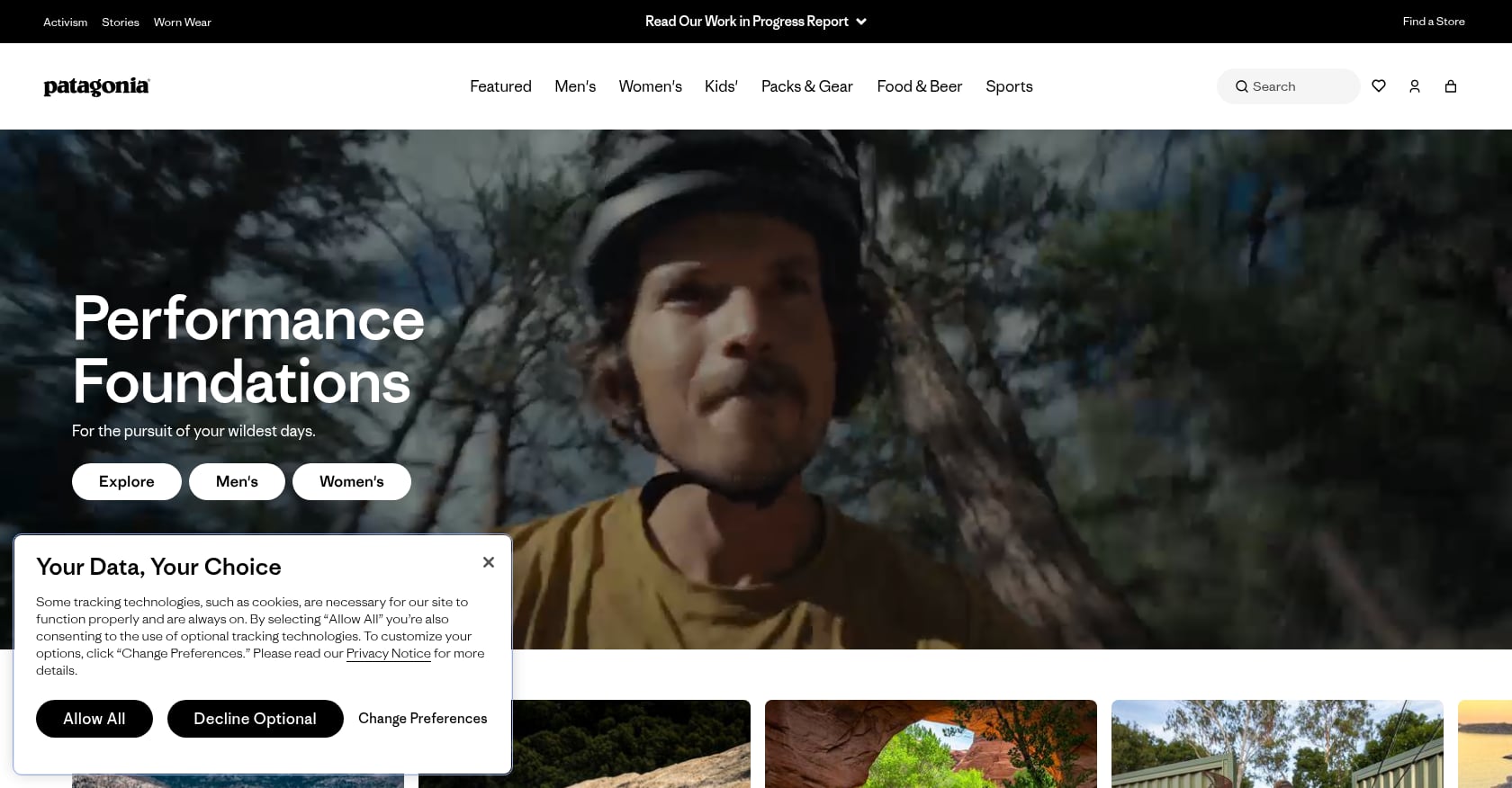
In 2011, Patagonia ran a full-page New York Times ad on Black Friday featuring one of its best-selling fleece jackets below the words “DON’T BUY THIS JACKET.” The ad asked consumers to consider the environmental cost of consumption before purchasing.
Why it worked: The campaign was a masterclass in two-sided messaging. Research shows that acknowledging trade-offs and imperfections actually reduces skepticism and increases behavioral intent. Patagonia didn’t claim perfection. It pointed to a genuine problem, including its own role in it, and then offered a solution.
Commercial result: Sales increased by approximately 30% in the nine months following the ad. The Worn Wear program generated approximately 120,000 sales of repurposed items. Patagonia grew from a niche climbing gear company to a billion-dollar brand, reaching $1 billion in revenue by 2017.
The campaign works because the messaging is backed by real operations: 1% for the Planet, Worn Wear repairs, Footprint Chronicles supply chain transparency. This is a textbook example of brand purpose in action, not just a campaign.
Key takeaway: Radical honesty builds trust. When your message aligns with genuine operational commitment, consumers reward you with loyalty and premium pricing.
2. IKEA: Buy Back and Resell, Green Friday, Live Lagom
Best for: Large-scale brands that want to remove the price barrier from sustainable choices.
IKEA has built sustainability marketing into its operating model rather than treating it as a campaign layer. The Buy Back and Resell program encourages customers to return used furniture for store credit. The “Green Friday” campaign reframes Black Friday around sustainable product choices. The Live Lagom initiative (Swedish for “just the right amount”) helps customers adopt more sustainable living habits.
Why it worked: IKEA uses behavioral nudges at scale. Plant-based meatballs are priced lower than meat versions. Sustainable products are placed along the path to the cafeteria. The sustainable choice doesn’t require sacrifice. It’s the easier, cheaper, and more visible option.
Commercial result: Revenue rose over 30% compared with a 2016 baseline while the climate footprint decreased by 24.3%. The 2023 Green Friday campaign reached 12 million people and boosted sales of sustainable products by 50%. IKEA has invested over €2.5 billion in wind and solar, now generating more renewable electricity than it consumes.
Key takeaway: Make the sustainable choice the default, not the premium option. Scale plus affordability plus behavioral nudges equals behavior change without requiring consumers to sacrifice convenience.
3. Adidas × Parley: Run for the Oceans

Best for: Brands that want to build community activation into a product pipeline.
In 2017, Adidas and Parley for the Oceans launched Run for the Oceans, a global running challenge. Participants tracked their runs via an app, and Adidas donated to Parley’s ocean cleanup and education programs based on distance covered.
Why it worked: The campaign turned an environmental cause into personal experience. Running creates emotional investment. That emotional investment drives product trial. And the product itself, the UltraBOOST Parley shoe with an upper knit from recycled ocean-bound plastic, substantiates the story. Each pair prevents approximately 11 plastic bottles from entering the ocean.
Commercial result: Over 3 million people have participated since launch. Adidas produced 6 million pairs of Parley shoes by 2018, with a goal of 11 million units the following year. This is a strong example of cause marketing campaigns that tie community engagement to measurable product outcomes.
Key takeaway: Experiential activation creates emotional investment, which drives product trial, which is then substantiated by a traceable supply-chain story. The loop reinforces itself.
4. Unilever: Sustainable Living Brands Portfolio Strategy
Best for: Enterprise companies looking for proof that sustainability drives portfolio-level growth.
Rather than running individual sustainability campaigns, Unilever embedded purpose into the DNA of specific brands across its portfolio. These “Sustainable Living Brands” include Dove (self-esteem), Domestos (sanitation), Lifebuoy (handwashing), and others where the social or environmental mission is inseparable from the product.
Why it worked: This is sustainability as business strategy, not as a marketing add-on. A Kantar study over a 12-year period showed brands with embedded purpose grew 175% faster than brands without it. The portfolio approach means sustainability isn’t dependent on one campaign’s success.
Commercial result: Between 2010 and 2020, Unilever’s Sustainable Living Brands grew 69% faster than the rest of the business and delivered 75% of the company’s growth.
Key takeaway: Sustainability marketing generates the biggest commercial returns when it’s a portfolio strategy, not a campaign tactic. The growth isn’t incidental. Purpose, when embedded in brand DNA, creates durable competitive advantage.
5. Dove: Real Beauty and the Self-Esteem Project
Best for: Brands focused on the social pillar of sustainability, proving you don’t need environmental claims to succeed.
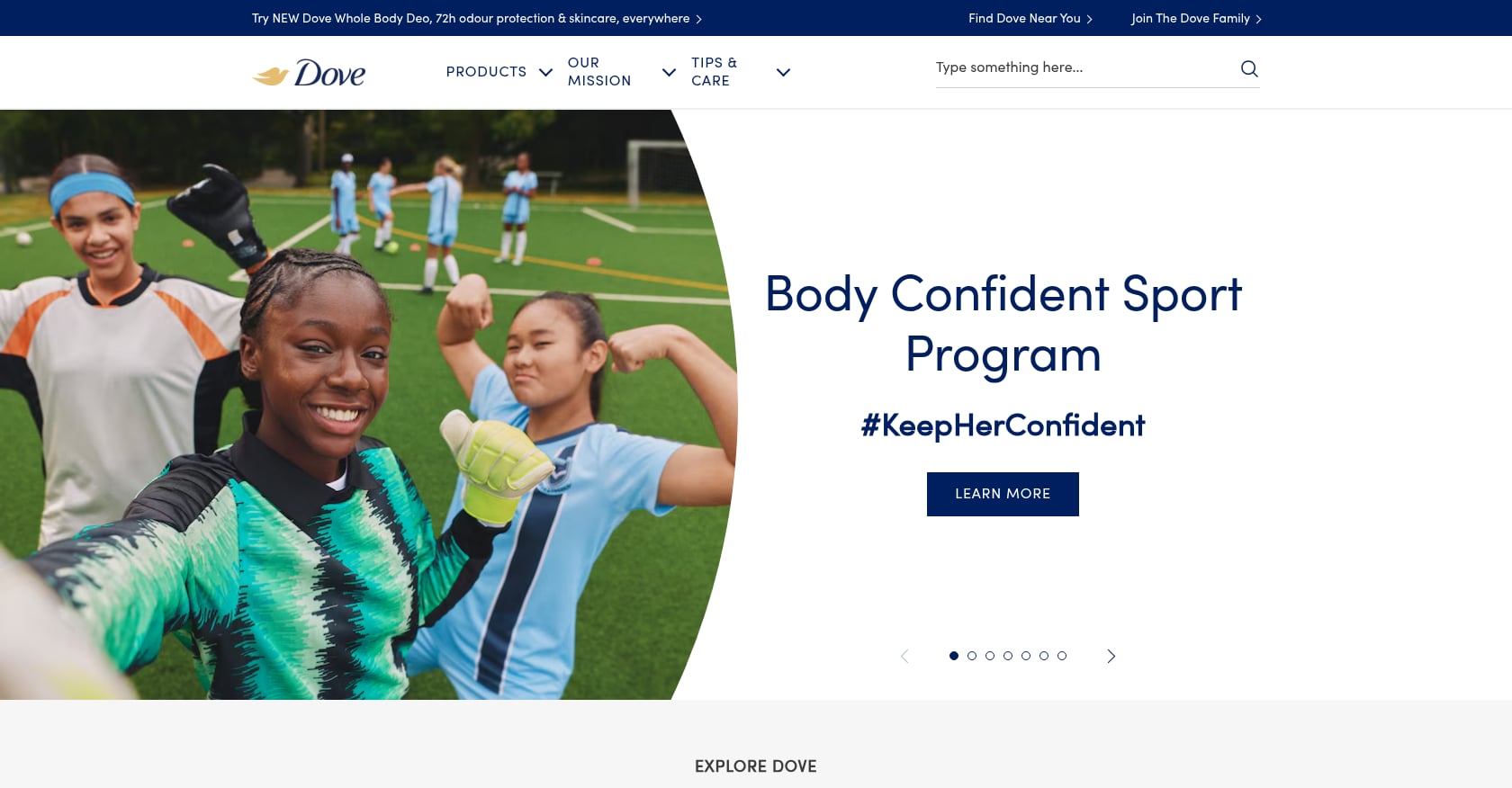
Dove’s Real Beauty campaign, launched in 2004, challenged beauty industry norms by featuring real women of different ages, sizes, and ethnicities. The Self-Esteem Project extended this into education, reaching over 35 million young people with body confidence programs.
Why it worked: Social sustainability marketing doesn’t require environmental claims. Dove centered its purpose on human dignity and equity. The consistency over two decades built credibility that no single campaign could achieve.
Commercial result: Dove became Unilever’s biggest brand. The longevity of the campaign itself is the proof point. Most campaigns last months. This one has lasted over 20 years and still drives brand preference.
For a deeper look at how purpose-driven marketing connects to commercial outcomes, Dove is the case study to study.
Key takeaway: Purpose can center on people, not planet, and still drive growth. The key is consistency and genuine action behind the message.
6. Nike: Move to Zero and Nike Forward
Best for: Brands that want to embed sustainability into product innovation rather than just communications.
Nike’s “Move to Zero” campaign communicates its commitment to zero carbon and zero waste. But the more interesting move is Nike Forward, a new material technology that reduces the brand’s carbon footprint by 75% compared to traditional knit materials. Rather than just messaging sustainability, Nike engineered it into the product.
Why it worked: When the sustainable product is also better (lighter, more comfortable, more innovative), the purchase decision gets easier. Consumers don’t have to choose between performance and planet. This eliminates a major friction point that kills sustainable product adoption.
Commercial result: Nike Forward represents a shift in how major sportswear brands approach sustainability: as a product innovation challenge, not a CSR checkbox. The 75% carbon footprint reduction is a specific, verifiable claim tied to a specific product, not a vague corporate commitment.
Key takeaway: Tie sustainability to product performance. When the sustainable option is genuinely better, marketing becomes easier and skepticism drops.
7. Rapanui: Social-Media-First Sustainability Content
Best for: DTC and smaller brands using content marketing as their primary growth channel.
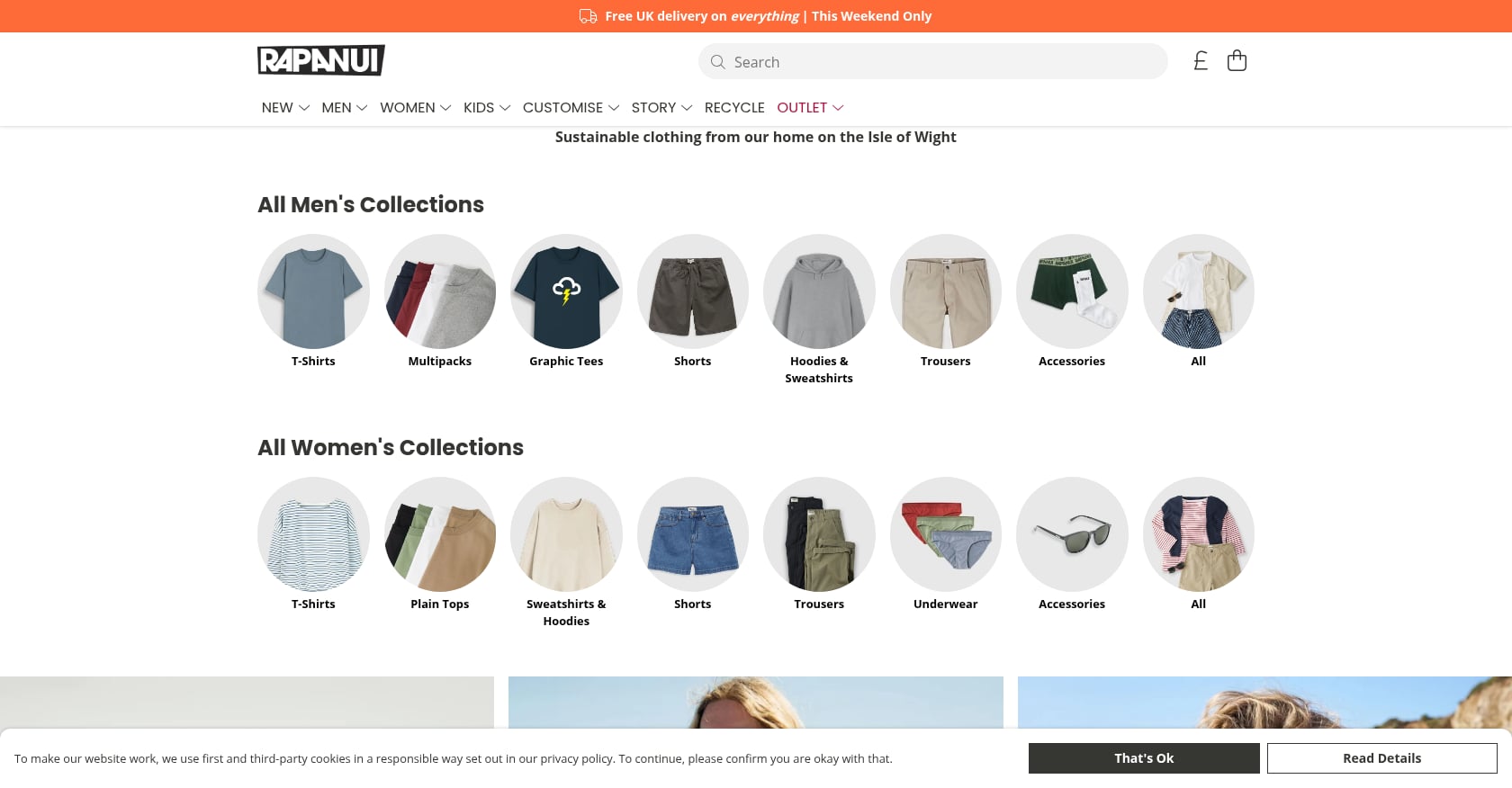
Rapanui, a UK-based clothing brand, makes products from certified organic cotton in factories running on renewable energy. What sets them apart is their approach to content. Rather than treating sustainability as a sidebar, they make it the core of their social media strategy, sharing supply chain transparency, factory conditions, and material sourcing stories.
Why it worked: The content is specific and verifiable. It’s not “we care about the planet” but “here’s the factory, here’s the energy source, here’s the cotton certification.” This specificity builds trust. And it performs: sustainability content regularly outperforms their standard product-based content by over 300% in reach and engagement.
Commercial result: A 300%+ outperformance in reach and engagement for sustainability content compared to product content. For a smaller brand without massive ad budgets, this kind of organic reach multiplier is transformative.
This approach to sustainability storytelling shows that authentic transparency is content strategy, not a distraction from it.
Key takeaway: Sustainability content isn’t a niche add-on. When it’s authentic and specific, it outperforms standard product content on social media.
8. B Corp Certification as a Marketing Signal
Best for: Any brand that wants third-party verification to cut through consumer skepticism.
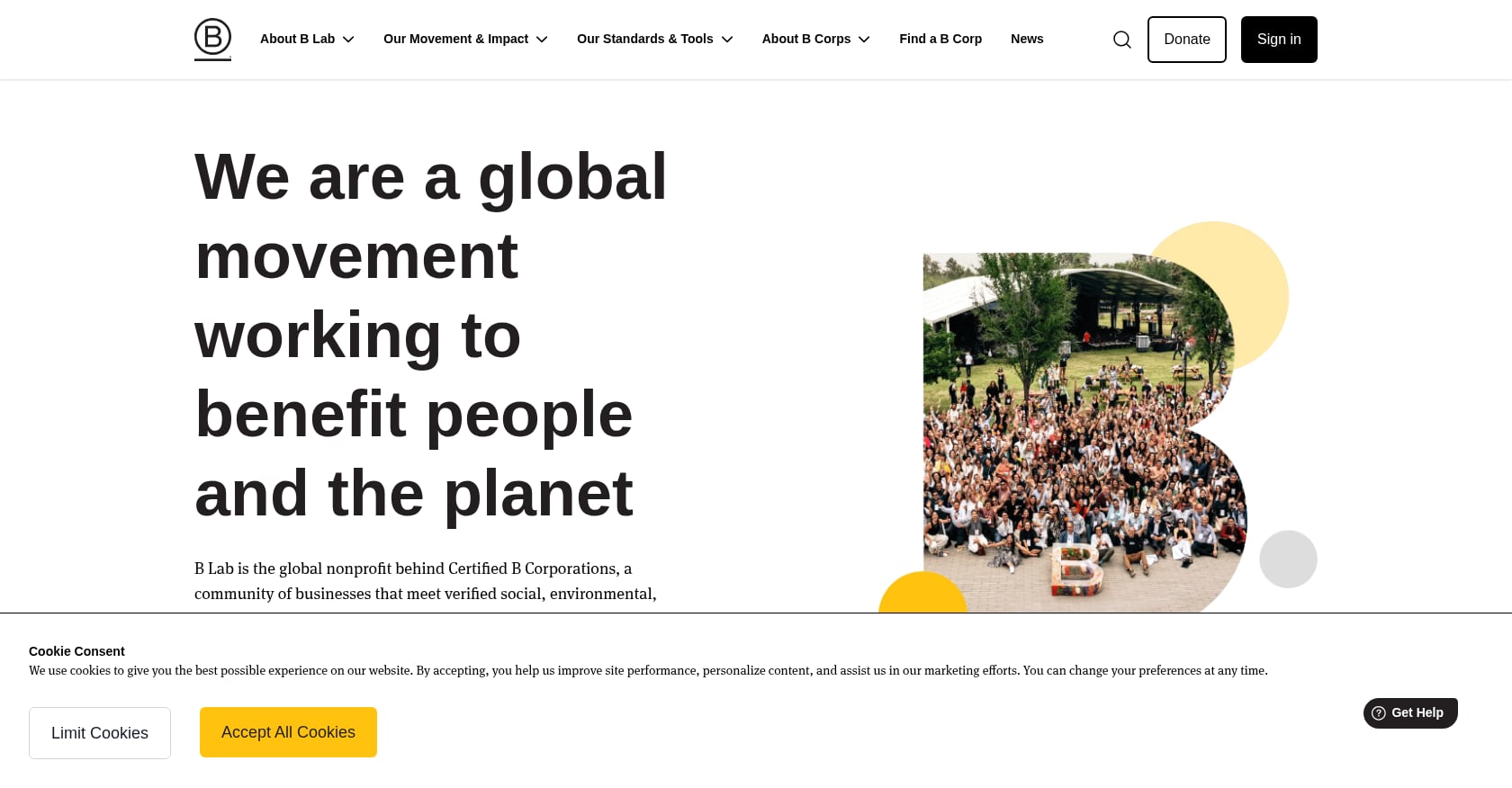
B Corp Certification verifies that a company meets high standards of social and environmental performance, accountability, and transparency. Certified organizations can place the B seal on products and marketing materials. Rather than asking consumers to evaluate dozens of individual claims, the seal does the cognitive work.
Why it works: Research confirms that transparent communication, credible third-party certifications, and long-term commitment to sustainability are the key factors distinguishing authentic sustainability from greenwashing. The certification reduces choice overload, one of the behavioral barriers that prevent consumers from acting on their sustainability preferences.
Commercial result: B Corp status functions as a trust shortcut. It signals verified commitment without requiring the consumer to read a sustainability report. For brands operating in crowded categories, this differentiation matters at the shelf and on the product page.
Key takeaway: Certification reduces cognitive burden. Instead of asking shoppers to evaluate your claims individually, a trusted third-party seal collapses the decision into one signal.
9. Dieux Skin: Advocacy-Led Social Media
Best for: DTC beauty and wellness brands blending activism with commerce.
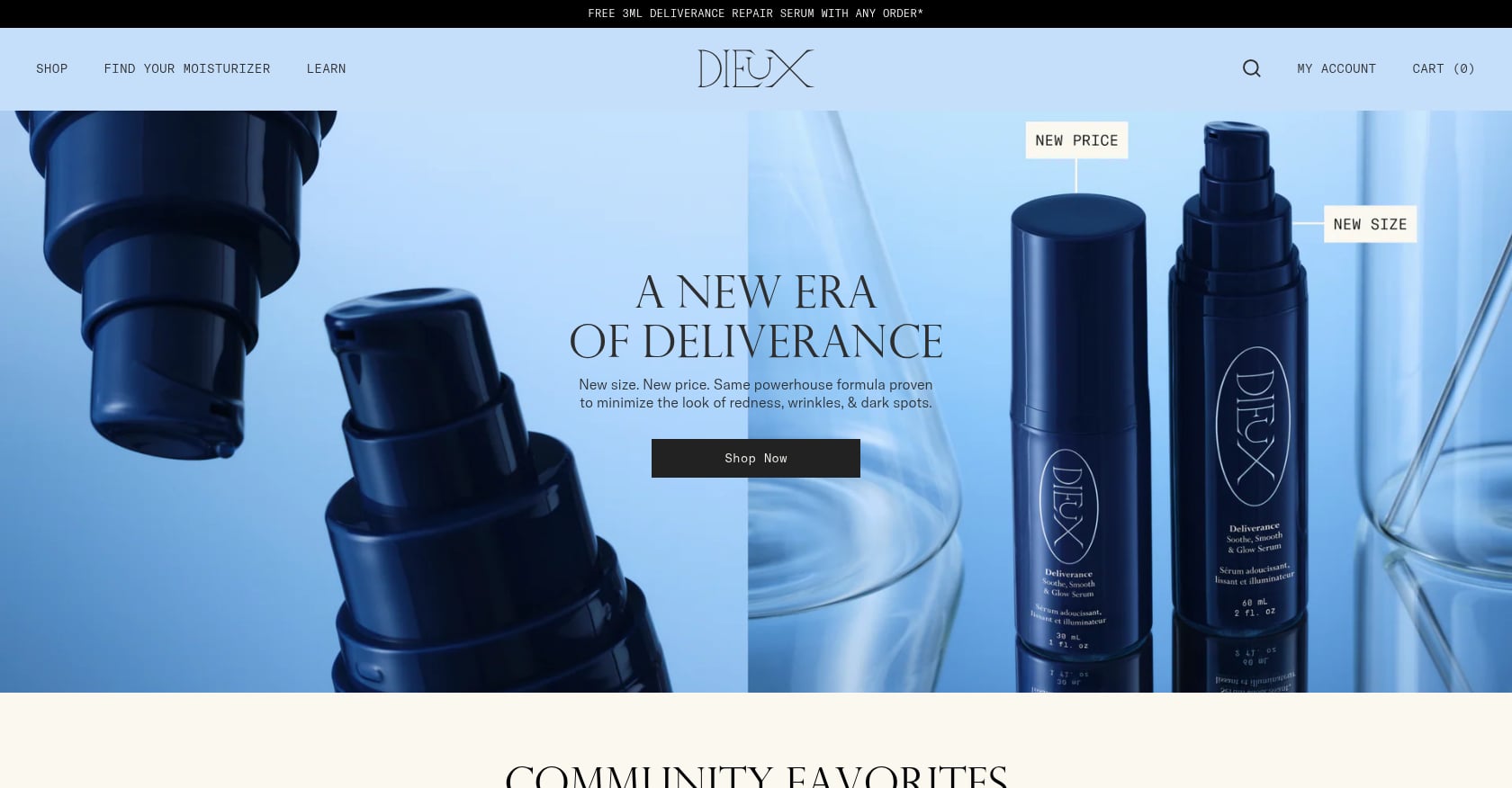
Dieux Skin, a skincare brand, doesn’t limit its social media to product shots and promotions. When a climate research center was shuttered in December 2025, the brand posted an Instagram carousel explaining the news and its implications. The post earned more than 1,700 likes and 160 comments, with many followers saying they were proud to support the brand.
Why it worked: Dieux had already earned the right to speak on these issues by building a foundation of genuine sustainable practices. The advocacy didn’t feel performative because it was consistent with the brand’s existing behavior. Consumers rewarded the authenticity.
Commercial result: High engagement on advocacy content translates to brand affinity, repeat purchases, and organic reach. In DTC, where customer acquisition costs are rising, this kind of earned engagement is economically significant.
Key takeaway: Advocacy earns engagement when the brand has already built a foundation of genuine practice. You have to do the work first. The speaking-up part is earned, not assumed.
10. Sabai Design: Circular Economy in Action
Best for: Furniture and home goods brands rethinking product lifecycle.
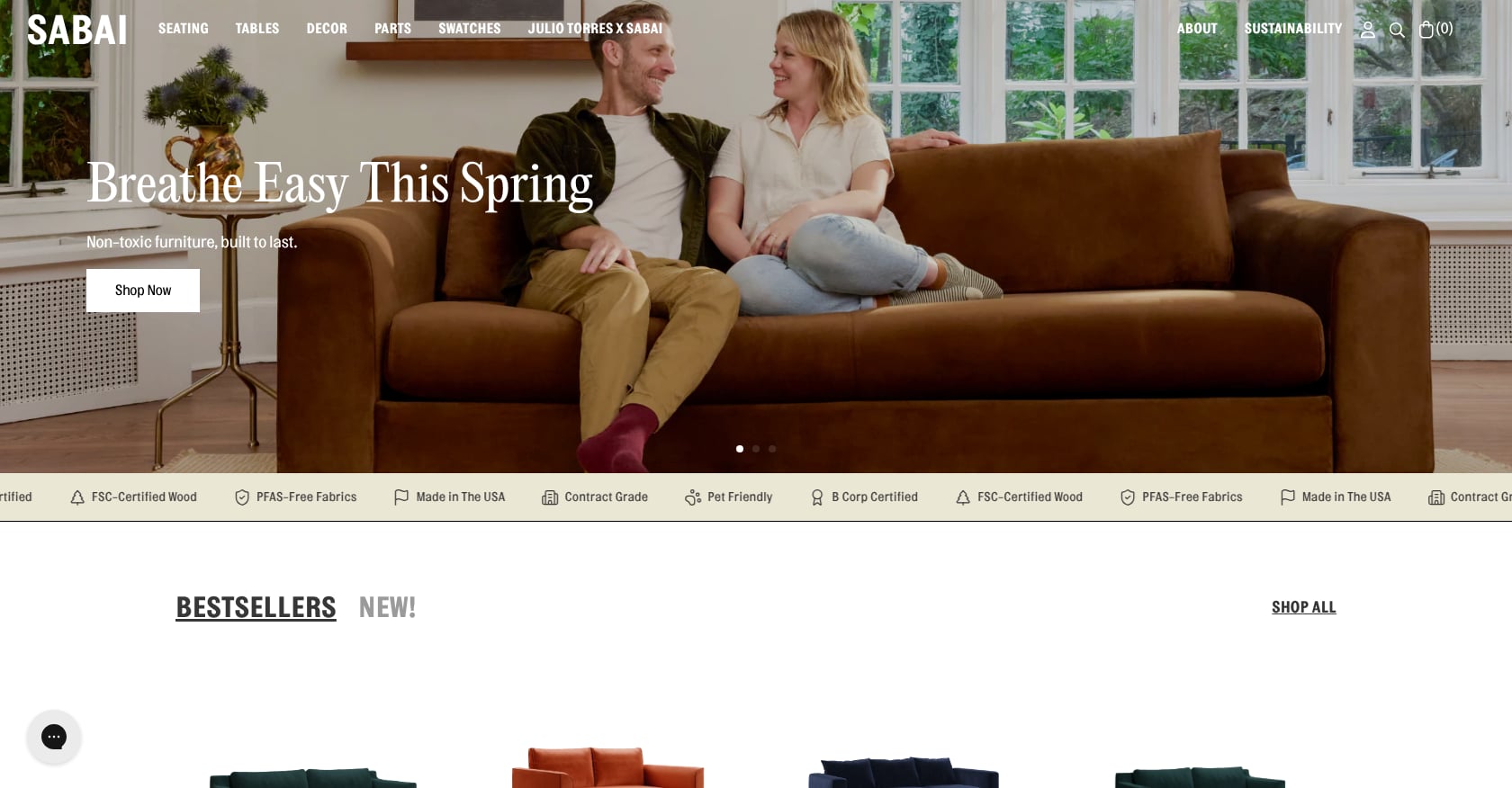
Sabai Design makes furniture with sustainable materials, provides replacement parts so products last longer, and runs a buyback program encouraging customers to recycle products at end of life. The business model itself is the marketing message.
Why it worked: Circularity marketing makes the most sense when the business model actually supports it. Sabai doesn’t just talk about reducing waste. It designs products for longevity, sells replacement cushion covers, and creates ongoing touchpoints through its buyback program.
Commercial result: The buyback and replacement parts model creates repeat engagement without requiring new product development. Each touchpoint reinforces the sustainability message and keeps customers in the ecosystem.
Key takeaway: Circularity creates ongoing customer relationships. When your business model is the sustainability story, every interaction becomes marketing.
11. Grove Collaborative: Sustainability-First DTC Retail
Best for: Mid-market brands building sustainability into the business model from day one.
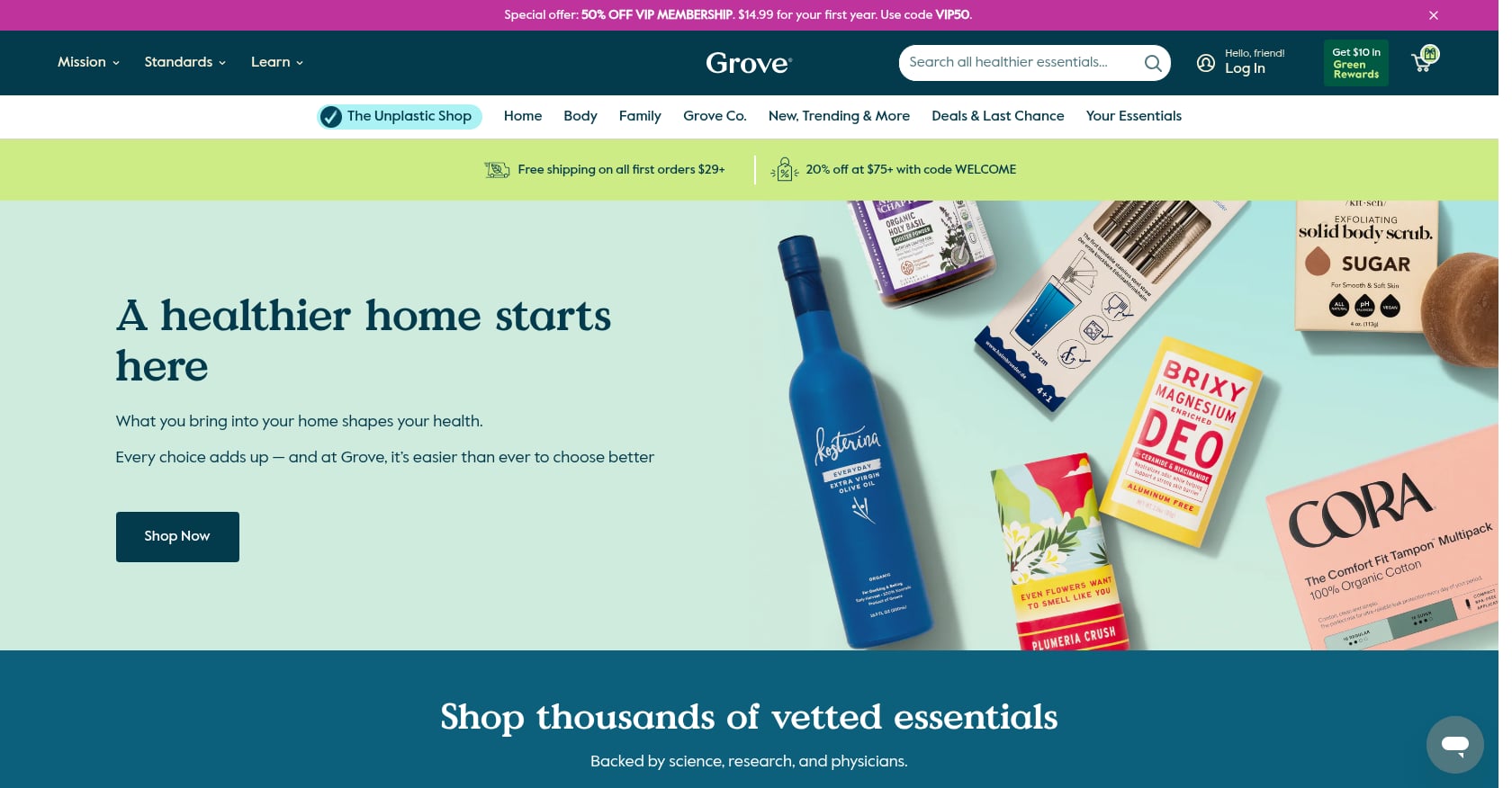
Grove Collaborative built its entire retail platform around sustainable household products, committing to being 100% plastic-free by 2025. The company became a certified B Corp and made sustainability the core value proposition rather than an afterthought.
Why it worked: Unlike legacy brands retrofitting sustainability onto existing operations, Grove designed the business around sustainability from the start. This makes every marketing claim more credible because the operations match the message. There’s no gap between promise and practice.
Commercial result: Grove grew into one of the largest DTC sustainable household goods platforms in the US, demonstrating that sustainability-first positioning can drive category growth, not just brand preference.
Key takeaway: Brands that build sustainability into their operating model from day one have a structural credibility advantage over those trying to bolt it on later.
12. Allbirds: Carbon Footprint Labeling
Best for: Brands using radical transparency as a competitive differentiator.
Allbirds puts a carbon footprint label on every product, similar to a nutrition label on food. The label shows the exact carbon cost of making, transporting, and eventually disposing of each item. It’s specific, verifiable, and honest.
Why it worked: The label works because it makes an abstract concept (carbon emissions) concrete and comparable. Consumers can see that one shoe costs 7.6 kg CO2e and another costs 12.5 kg CO2e. This transforms sustainability from a feeling into a fact, which is exactly what skeptical consumers need.
Commercial result: Allbirds has maintained premium pricing in a competitive footwear market, with consumers willing to pay more for products where the environmental cost is transparent. The labeling approach has influenced other brands to adopt similar transparency measures.
Key takeaway: Specificity defeats skepticism. When you quantify your environmental impact with precision, you build trust that vague claims never can.
Sustainability Marketing Statistics (2026)
This section can rank independently for statistics-related searches.
Statistic | Value |
|---|---|
Consumers considering sustainability when buying | 78% |
Gen Z consumers prioritizing sustainability | 88% |
Average willingness to pay more | 9.7% |
Products with ESG claims grow faster | +1.7 percentage points |
Consumers skeptical of green claims | 76% |
Misleading sustainability claims reviewed by CMA | 40% |
5 Patterns Behind Every Effective Sustainability Marketing Example
Looking across these 12 sustainability marketing examples, five patterns emerge. These aren’t abstract principles. They’re operational patterns that separate campaigns that drive results from campaigns that get called greenwashing.
Pattern 1: Operations before promotion. Every successful example on this list has operational proof behind the marketing claim. Patagonia runs Worn Wear repairs. IKEA invested €2.5 billion in renewables. Allbirds measures carbon per product. The rule is simple: if you can’t show the work, don’t make the claim.
Pattern 2: Remove friction from the sustainable choice. IKEA prices plant-based meatballs below meat. Nike Forward is lighter and more comfortable. Grove Collaborative delivers to your door. When sustainable equals easy and affordable, the intention-action gap shrinks.
Pattern 3: Third-party verification builds trust. B Corp certification, carbon labeling, supply chain traceability: these trust signals outperform self-reported claims every time. Given that 76% of consumers are skeptical of green claims, external verification isn’t optional. Learn more about how to avoid greenwashing and the role verification plays.
Pattern 4: Two-sided messaging outperforms perfection. Patagonia told you not to buy. Allbirds shows you the carbon cost, including the bad parts. Research confirms that acknowledging trade-offs reduces skepticism and increases behavioral intent. Brands that project perfection trigger suspicion.
Pattern 5: Connect sustainability to product innovation. Nike Forward, Adidas Parley, Allbirds’ materials science. When sustainability makes the product better, not just less bad, the purchase decision becomes easier for everyone.
Common Mistakes in Sustainability Marketing
Many campaigns fail because marketing moves faster than operational change.
Common mistakes include:
Using vague terms like "eco-friendly"
No measurable proof
Cherry-picking sustainability achievements
Ignoring supply chain impacts
Hiding negative environmental data
Making carbon-neutral claims without explanation
Treating sustainability as a one-time campaign
Copying competitors instead of creating genuine initiatives
Greenwashing: What Not to Do
No discussion of sustainability marketing examples is complete without counter-examples. Understanding what fails is as important as studying what works.
H&M’s Conscious Collection: A 2021 Changing Markets Foundation report found that 60% of fashion sustainability claims overall were misleading. H&M was the worst offender, with 96% of their claims not holding up to scrutiny. The lesson: slapping a “conscious” label on a fast-fashion business model without fundamentally changing production doesn’t work. Consumers and regulators are catching on.
Vague “eco-friendly” labeling: The UK Competition and Markets Authority found that 40% of sustainability claims are misleading. Terms like “eco-friendly,” “green,” and “natural” without specific, verifiable evidence are increasingly being flagged. Under new EU regulations, these vague claims will be illegal.
Paper straws as sustainability theater: When a brand’s most visible sustainability action is swapping straws while its core business model remains unchanged, consumers notice the disconnect. Symbolic gestures without systemic change often backfire.
The common thread? In each case, the marketing ran ahead of the operations. The claim was bigger than the commitment. And in an era of Reddit threads dissecting brand claims and regulators wielding fines of up to 10% of global turnover, that gap is increasingly dangerous.
How to Build Your Own Sustainability Marketing Strategy
These sustainability marketing examples point to a repeatable process, not a creative lightning strike. Here’s how to apply the patterns.
Step 1: Diagnose your intention-action gap. Before you build a campaign, understand why your target consumers say they care about sustainability but aren’t buying your product. Is it price? Convenience? Skepticism? Lack of awareness? Each barrier requires a different solution.
Step 2: Align operations before messaging. Audit your supply chain, materials, labor practices, and environmental impact. If you can’t substantiate a claim with specific data, don’t make it. The regulatory environment in 2026, with Digital Product Passports rolling out and the EU Green Claims Directive tightening, makes this non-negotiable.
Step 3: Use behavioral science to close the gap. Present bias, status quo bias, and choice overload are the cognitive shortcuts that prevent sustainable behavior. Design your product experience, pricing, and defaults to work with these biases, not against them. Make the sustainable choice the easy one.
Step 4: Measure and report impact transparently. Track commercial outcomes (sales lift, customer retention, price premium) alongside sustainability outcomes (carbon reduced, waste diverted, lives improved). Report both. For guidance on building this capability, see how to measure sustainability impact.
Step 5: Start with specificity, not scale. You don’t need to be Patagonia or IKEA. Rapanui and Dieux Skin show that specific, verifiable sustainability stories outperform vague corporate commitments, even at smaller scale.
If you want help identifying where your biggest commercial opportunities sit at the intersection of purpose and profit, start a conversation with the Grounded World team.
Frequently Asked Questions
What is sustainability marketing?
Sustainability marketing is the practice of promoting products, services, or brand values based on environmental, social, or economic sustainability commitments. It spans three pillars: planet (environmental impact), people (social responsibility), and profit (economic viability). The most effective sustainability marketing connects genuine operational commitments to consumer-facing communications.
What are the best sustainability marketing examples for small brands?
Rapanui, Dieux Skin, and Sabai Design demonstrate that small and DTC brands can execute sustainability marketing effectively. The key is specificity. Rather than making broad claims, these brands share verifiable details about their supply chains, materials, and practices. Rapanui’s sustainability content outperforms their product content by over 300%, showing that you don’t need a massive budget to win with this approach.
How do you avoid greenwashing in sustainability marketing?
Three rules: substantiate every claim with specific, verifiable data. Use third-party certifications (like B Corp) to build credibility. And acknowledge imperfections honestly, because research shows two-sided messaging actually increases consumer trust. The 2026 regulatory environment, including the EU Green Claims Directive and UK advertising standards enforcement, means vague claims carry real financial risk.
Does sustainability marketing actually increase sales?
Yes, when done authentically. McKinsey found that products with ESG-related claims see 1.7 percentage points more sales growth. Unilever’s Sustainable Living Brands grew 69% faster than the rest of the portfolio. Patagonia saw a 30% sales lift from its “Don’t Buy This Jacket” campaign. The commercial evidence is strong, but only for brands where operations match the message.
What is the intention-action gap in sustainability?
The intention-action gap describes the disconnect between what consumers say about sustainability (78% call it important) and what they actually do (far fewer pay a premium or change behavior). Intentions predict only about 27% of actual behavior. Barriers include cost, convenience, skepticism, and choice overload. Effective sustainability marketing uses behavioral science to close this gap.
How is regulation changing sustainability marketing in 2026?
The EU’s Corporate Sustainability Due Diligence Directive is entering enforcement. Digital Product Passports are launching in textiles and electronics, requiring brands to document environmental impact at the product level. The Green Claims Directive will require substantiation for any environmental claim. Companies making misleading claims face fines up to 10% of global turnover. Marketing teams need to work closely with operations and legal to ensure compliance.
What’s the difference between sustainability marketing and cause marketing?
Sustainability marketing embeds environmental, social, or economic commitments into the brand’s ongoing operations and messaging. Cause marketing typically involves a time-bound partnership between a brand and a cause, often tied to a specific campaign or donation. The most effective approaches combine both, as Adidas × Parley demonstrates, where the cause partnership feeds into an ongoing product line and community program.
Can B2B companies use sustainability marketing effectively?
Absolutely. While most visible sustainability marketing examples come from consumer brands, B2B companies increasingly use sustainability credentials in procurement decisions, RFP responses, and thought leadership. Third-party certifications, transparent impact reporting, and supply chain traceability are particularly valuable in B2B contexts where purchasing decisions involve multiple stakeholders and longer evaluation cycles.