 Gaia
GaiaTL;DR
The best social impact campaigns do more than generate impressions. They give people a clear action, match the brand’s real role in the world, and hold up when critics look closely. This list covers 15 campaigns, from the ALS Ice Bucket Challenge to recent Webby winners, evaluated across six dimensions: brand/cause fit, action design, behavior-change leverage, proof of impact, participation, and credibility under scrutiny. Each entry includes what worked, what to copy, what to avoid, and the tradeoffs most “best of” lists leave out.
Quick Answer: What Are the Best Social Impact Campaigns in 2026?
The best social impact campaigns combine four elements:
- A clear, visible action
- A natural connection between the brand and the cause
- Evidence of measurable impact
- Operational credibility beyond advertising
The strongest examples include:
Campaign | Best Lesson |
|---|---|
ALS Ice Bucket Challenge | Viral participation |
REI #OptOutside | Operational commitment |
Patagonia Don't Buy This Jacket | Sustainability messaging |
Dove Real Beauty | Long-term brand purpose |
IKEA ThisAbles | Product innovation |
Movember | Community rituals |
Brands that focus only on awareness often fail. The campaigns that generate the greatest impact create behavior change, encourage participation, and provide measurable proof of outcomes.
What Counts as a Social Impact Campaign?
Most articles about the best social impact campaigns treat everything under one label. That creates confusion. A social impact campaign is a coordinated effort, spanning marketing, product, partnerships, or advocacy, designed to raise awareness, shift behavior, mobilize participation, or create measurable benefit around a social or environmental issue.
But not all social impact campaigns work the same way. Cause marketing is usually a brand/nonprofit partnership tied to fundraising. CSR campaigns communicate corporate responsibility. Brand purpose campaigns connect a company’s role in the world to business strategy. Behavior-change campaigns aim to alter what people actually do. Social impact campaign is the umbrella term that covers all of these.
That distinction matters because the strongest campaigns on this list are not just ads with a cause attached. They changed what people donated to, bought, shared, talked about, or demanded from institutions. Edelman’s 2026 Trust and Brands report found that 88% of consumers now consider brand trust an important or critical purchase criterion, nearly equal to quality and value. And 41% say unpaid third-party commentary has the biggest impact on their willingness to trust a brand, compared with just 20% who cite what the brand says about itself.
That means the era of “just run a purpose ad” is over. The campaigns that work earn trust through proof, participation, and credibility, not polish.
Explore Grounded World’s approach to social impact campaigns
How We Evaluated the Best Social Impact Campaigns
Every “best of” list needs a rationale. Most articles just pick famous campaigns and describe them. This one uses a six-dimension scorecard to evaluate why each campaign belongs and where it falls short.
1. Brand/cause fit. Does the cause naturally connect to the brand, product, audience, or mission?
2. Action architecture. Is the action simple, visible, repeatable, and emotionally rewarding? Dump ice water, grow a moustache, skip Black Friday, pledge a birthday, wear a red nose.
3. Behavior-change leverage. Does the campaign reduce friction, shift a norm, change a habit, or create a new default?
4. Proof of impact. Is there credible evidence beyond impressions: funds raised, participants, health outcomes, product downloads, policy change, or measurable brand trust?
5. Participation and community. Does the campaign make people feel like contributors rather than spectators?
6. Credibility under scrutiny. Would the campaign still feel honest if critics examined the company’s operations, leadership, supply chain, and past behavior?
Brand strategist Sarah Robb has argued on LinkedIn that purpose statements tend to fail when they are not authentic, not coherent with brand strategy, and not committed to beyond a launch campaign. Research from X (formerly Twitter) supports a similar finding: excitement contributes 33% to purpose-campaign brand impact, brand fit 26%, resonance 24%, and ambition 17%.
A strong campaign needs all of these. A weak one leans on one and ignores the rest.
At-a-Glance Comparison Table
Campaign | Brand/Org | Archetype | Best for Learning | Key Proof Point | Main Tradeoff |
|---|---|---|---|---|---|
ALS Ice Bucket Challenge | ALS Association | Peer-to-peer viral challenge | Participation design | $115M raised | Cause overshadowed by the stunt |
REI #OptOutside | REI | Brand action / anti-consumption | Operational proof | 1.4M participants; 6.7B media impressions | Requires internal credibility |
Patagonia Don’t Buy This Jacket | Patagonia | Demarketing / sustainability | Category tension | Full-page NYT ad; product impact transparency | Easy to copy badly |
Always #LikeAGirl | Always | Norm reframing | Language and identity | 76M views; 81% support among women 16-24 | Gender framing can exclude |
Dove Real Beauty | Dove | Long-term purpose platform | Platform longevity | 20+ years; 100M+ young people reached (reported) | Parent-company hypocrisy criticism |
Nike Dream Crazy | Nike | Polarizing brand stand | Knowing your audience | 31% online sales spike | Activism claims invite operations scrutiny |
IKEA ThisAbles | IKEA Israel | Inclusive product innovation | Utility over messaging | 13 add-ons; 127 countries; 37% sales increase | Must be backed by real accessibility practice |
The Shotline | Change the Ref / MullenLowe | AI-enabled advocacy | Ethical use of AI | 2025 Webby Winner | Consent and AI ethics risk |
CALM The Last Photo | CALM / ITV | Stigma disruption | Reframing invisible risk | Major suicide prevention campaign | Sensitive subject requires duty of care |
Love Has No Labels | Ad Council | PSA / inclusion | Emotional reveal + UGC | Emmy-winning; active since 2015 | PSA fatigue and ideological resistance |
Movember | Movember Foundation | Identity-based annual challenge | Ritualized participation | 285K+ participants in 2024 | Needs ongoing fund-allocation trust |
Red Nose Day | Comic Relief / Walgreens | Mass participation fundraising | Humor + retail activation | $370M raised in U.S. since 2015 | Event fatigue and donation skepticism |
charity: water Birthday | charity: water | Peer-to-peer fundraising | Personal milestone conversion | 100% campaign model | Repeat participation can be hard |
State Street Fearless Girl | State Street Global Advisors | Symbolic earned-media stunt | Iconic visual PR | Cultural icon since 2017 | Corporate feminism backlash |
Never a Bother | California Dept. of Public Health | Youth mental health co-creation | Co-creation with youth | Youth Advisory Board; celebrity amplification | Mental health campaigns need service capacity |
The 15 Best Social Impact Campaigns
1. ALS Ice Bucket Challenge
Best for: Peer-to-peer participation design
Campaign type: Viral challenge with donation mechanic
Why it worked:
The ALS Ice Bucket Challenge is the clearest modern example of turning a simple physical action into mass participation. The ALS Association reports the challenge raised $115 million and became a catalyst for research breakthroughs.
Simple public action: dump ice water over your head.
Built-in nomination loop: tag three friends.
Video-first and social-native.
Low barrier to join, high visibility once you do.
Social pressure without heavy production requirements.
Proof of impact:
$115 million raised for the ALS Association.
Funding helped accelerate ALS research, including projects later linked to important scientific discoveries.
What to copy: Design the action first, then attach education and conversion loops. The nomination mechanic created an organic growth engine that no paid media budget could replicate.
What not to copy: Do not assume the viral format is the hard part. Practitioners on Reddit point out that the challenge is still remembered as a rare viral campaign with real-world results, but some question whether participants mostly remembered the stunt rather than the disease. Viral participation is not the same as durable understanding.
Tradeoffs:
The action can overshadow the cause.
Donation spikes create scrutiny over fund allocation.
Repeating the same format rarely works as well the second time.
2. REI #OptOutside
Best for: Brand action that proves the message
Campaign type: Operational brand decision as campaign
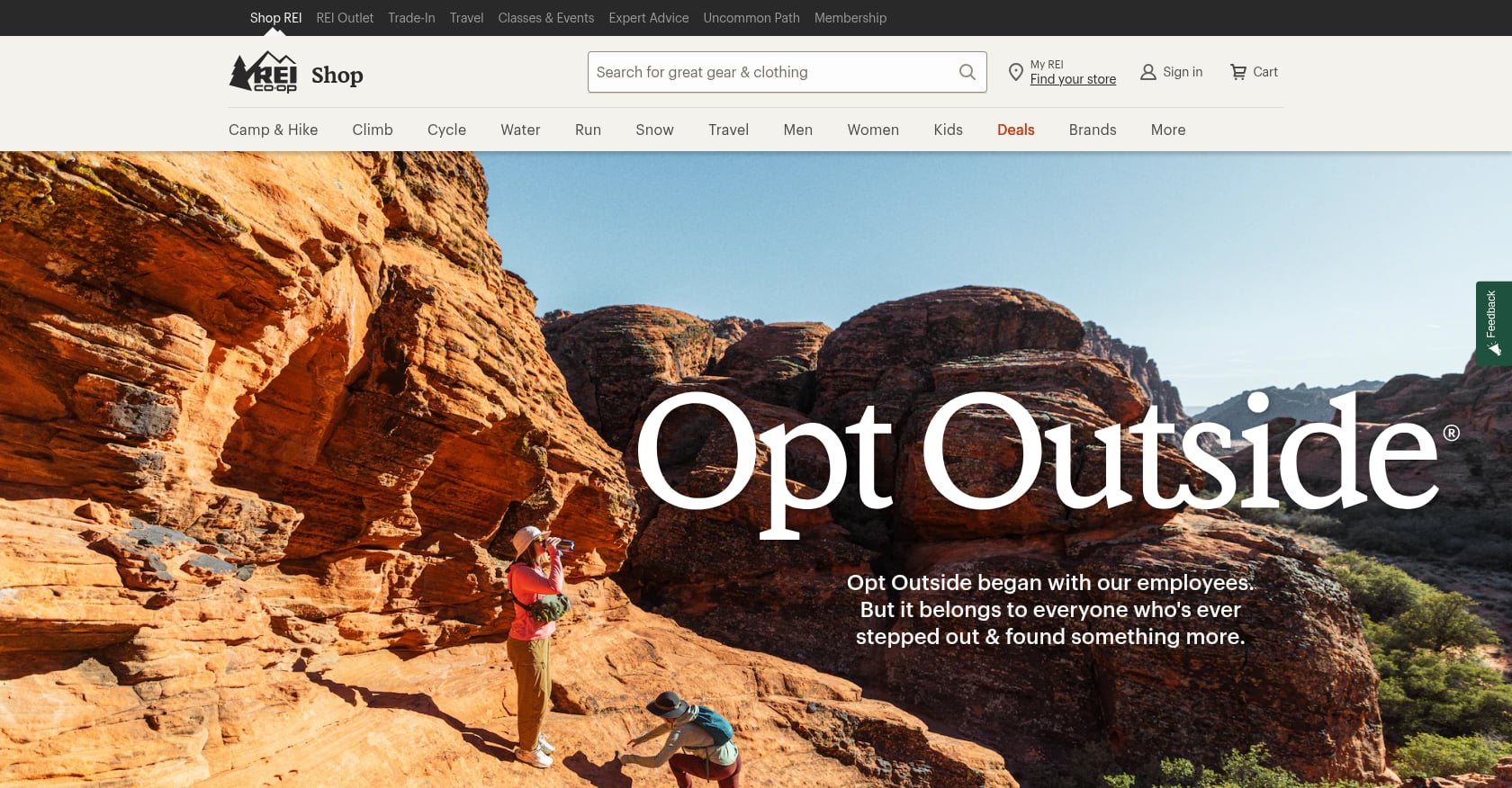
REI did not just run an ad about outdoor values. It closed its stores on Black Friday, gave employees the day off, and encouraged people to spend time outside instead of shopping. The campaign started in 2015 and grew into an annual movement.
The action contradicted category norms.
The company absorbed a real opportunity cost.
The message matched REI’s outdoor retail category perfectly.
It created a recurring annual ritual.
Proof of impact:
1.4 million people chose to spend Black Friday outside.
6.7 billion media impressions and 1.2 billion social impressions in its first year.
What to copy: The strongest social impact campaigns are operational, not just communicational. If the company changes a business practice, the campaign becomes more credible.
What not to copy: Reddit conversations around REI show why internal credibility matters. Some users praise the holiday closure, while others scrutinize broader labor and operational decisions. A campaign that asks consumers to believe in company values must hold up against employee and community experience.
Tradeoffs:
A brand action campaign exposes the whole business to scrutiny.
If employees feel the purpose claim is selective, it looks performative.
The campaign must evolve beyond a single-day stunt.
3. Patagonia Don’t Buy This Jacket
Best for: Sustainability demarketing
Campaign type: Anti-consumption advocacy
Patagonia’s Black Friday 2011 full-page New York Times ad told shoppers not to buy its jacket. The ad explained the environmental cost of making the garment, including greenhouse gas emissions, waste, and freshwater use, and linked to repair, reuse, and responsible consumption.
Counterintuitive headline that stopped readers cold.
Category tension: outdoor apparel brand telling people to buy less.
Clear sustainability education embedded in the creative.
Long-term support through repair programs, resale, and environmental advocacy.
Proof of impact:
The campaign became a reference point for sustainability marketing worldwide.
Patagonia continues to publish impact reporting and supports environmental action through its Action Works platform.
What to copy: Name the contradiction instead of pretending it does not exist. Patagonia acknowledged that even its own products have environmental costs.
What not to copy: Reddit users in entrepreneurship forums still reference the campaign as memorable and counterintuitive, but Patagonia communities also reveal a real tension: people admire anti-consumption messaging while still discussing sales, discounts, and desire for new products. Values do not automatically eliminate purchase desire. That is a useful behavior-change insight for any brand considering this approach.
Tradeoffs:
Easy to imitate badly as “anti-consumption theater.”
Can paradoxically increase sales while claiming to discourage consumption.
Requires proof across product design, repair, resale, and supply chain.
4. Always #LikeAGirl
Best for: Reframing a social norm
Campaign type: Cultural insight as brand campaign
Always #LikeAGirl transformed a common insult into an empowerment message. The campaign used a simple cultural insight: puberty is a moment when girls’ confidence drops and gendered language becomes more damaging.
It attacked a phrase, not a person.
Social experiment-style creative.
Memorable, shareable hashtag.
The issue tied directly to the brand’s audience and category.
Proof of impact:
76 million global YouTube views from 150 countries.
More than 1 million shares.
81% support among women ages 16-24 in reported brand research.
What to copy: Make a hidden social script visible and give people a better one.
What not to copy: A Reddit thread in an ftm community shows an important inclusion issue: some trans and nonbinary users felt alienated when #LikeAGirl appeared on menstrual product packaging. Gender-based empowerment campaigns need inclusive language and audience segmentation.
Tradeoffs:
Empowerment framing can exclude people if the category serves a broader audience than the message acknowledges.
The campaign can be criticized as commodifying feminism.
A hashtag is not enough; the brand must support the community after launch.
5. Dove Real Beauty
Best for: Long-term purpose platform
Campaign type: Multi-decade brand-purpose campaign
Dove’s Campaign for Real Beauty is one of the most durable brand-purpose platforms in marketing history. Dove says the campaign launched over 20 years ago and that the Dove Self-Esteem Project has reached millions of young people through body-confidence and self-esteem education.
Long-term platform, not a one-off ad.
Real people and body-image research at the foundation.
Education program attached to brand communications.
Continued evolution into newer issues such as digital distortion and AI-generated beauty standards.
Proof of impact:
20+ years of continuous campaigning.
Self-Esteem Project education resources reaching young people globally.
WARC describes the campaign as transforming Dove’s brand image and increasing sales.
What to copy: Long-term purpose platforms outperform one-off purpose ads. Dove’s staying power proves that sustained commitment builds brand equity in ways a single viral moment cannot.
What not to copy: Dove is also the clearest cautionary example. Critics have pointed to contradictions between Dove’s body-positive message and other Unilever brands historically associated with appearance-focused messaging. Academic commentary has described this as “genderwashing,” and practitioners on Reddit echo similar skepticism. Long-term platforms create a long-term accountability burden. This is why avoiding greenwashing and purpose-washing demands operational consistency, not just creative consistency.
Tradeoffs:
Parent-company behavior can undermine brand-level purpose.
Beauty brands face constant scrutiny because they profit from appearance norms.
The campaign must evolve as culture changes or risk feeling dated.
6. Nike Dream Crazy
Best for: Audience-aligned polarizing risk
Campaign type: Brand activism
Nike’s 2018 “Dream Crazy” campaign featuring Colin Kaepernick defined brand activism for a generation. Marketing Dive reported that Nike online sales grew 31% from Sunday through Tuesday over Labor Day weekend after the campaign launched, despite boycott threats and negative attention.
Took a clear stance through a polarizing figure.
Matched Nike’s long-running “Just Do It” brand idea.
Focused on sacrifice, ambition, and athlete identity.
Accepted audience division rather than chasing universal approval.
Proof of impact:
31% reported online sales spike after launch.
The short-term sales data suggested Nike’s core audience responded positively despite intense backlash.
What to copy: Taking a stand can work commercially when it is deeply connected to the brand and audience. Nike understood its core customer well enough to absorb the risk.
What not to copy: Reddit discussions show the split clearly: some users see the campaign as powerful social justice messaging; others call out Nike’s labor practices. The more moral the message, the more operational proof the brand needs. Short-term sales spikes do not prove long-term social impact.
Tradeoffs:
Polarizing campaigns can strengthen core loyalty and alienate others.
Activist positioning invites scrutiny of internal practices.
Commercial success and social impact are different outcomes that require different measurement.
7. IKEA ThisAbles

Best for: Inclusive product innovation
Campaign type: Accessibility utility as campaign
IKEA Israel’s ThisAbles campaign turned social impact into product utility. The campaign created 13 3D-printable add-ons that made existing IKEA products easier for people with disabilities to use. IKEA worked with Milbat and Access Israel and made the schematics downloadable for free.
Co-created with accessibility organizations and people with disabilities.
Solved practical product barriers.
Used open-source 3D printing.
Created utility, not just awareness.
Proof of impact:
More than 45,000 visitors from 127 countries and thousands of downloads.
WARC reports a 37% sales increase in products with add-ons and 33% revenue increase.
What to copy: The strongest social impact campaign may be a product improvement. Utility is more credible than messaging. The 3D-printing community tends to value practical, functional prints over novelty, which supports the campaign’s core insight.
What not to copy: Accessibility campaigns backfire when they are one-market stunts unsupported by broader accessibility practice. Open-source tools need clear instructions and ongoing support.
Tradeoffs:
Inclusion should not be a PR moment.
Must be backed by real accessibility practice across the organization.
One-off product interventions need follow-through.
8. The Shotline
Best for: Ethical AI-enabled advocacy
Campaign type: Technology-powered political advocacy
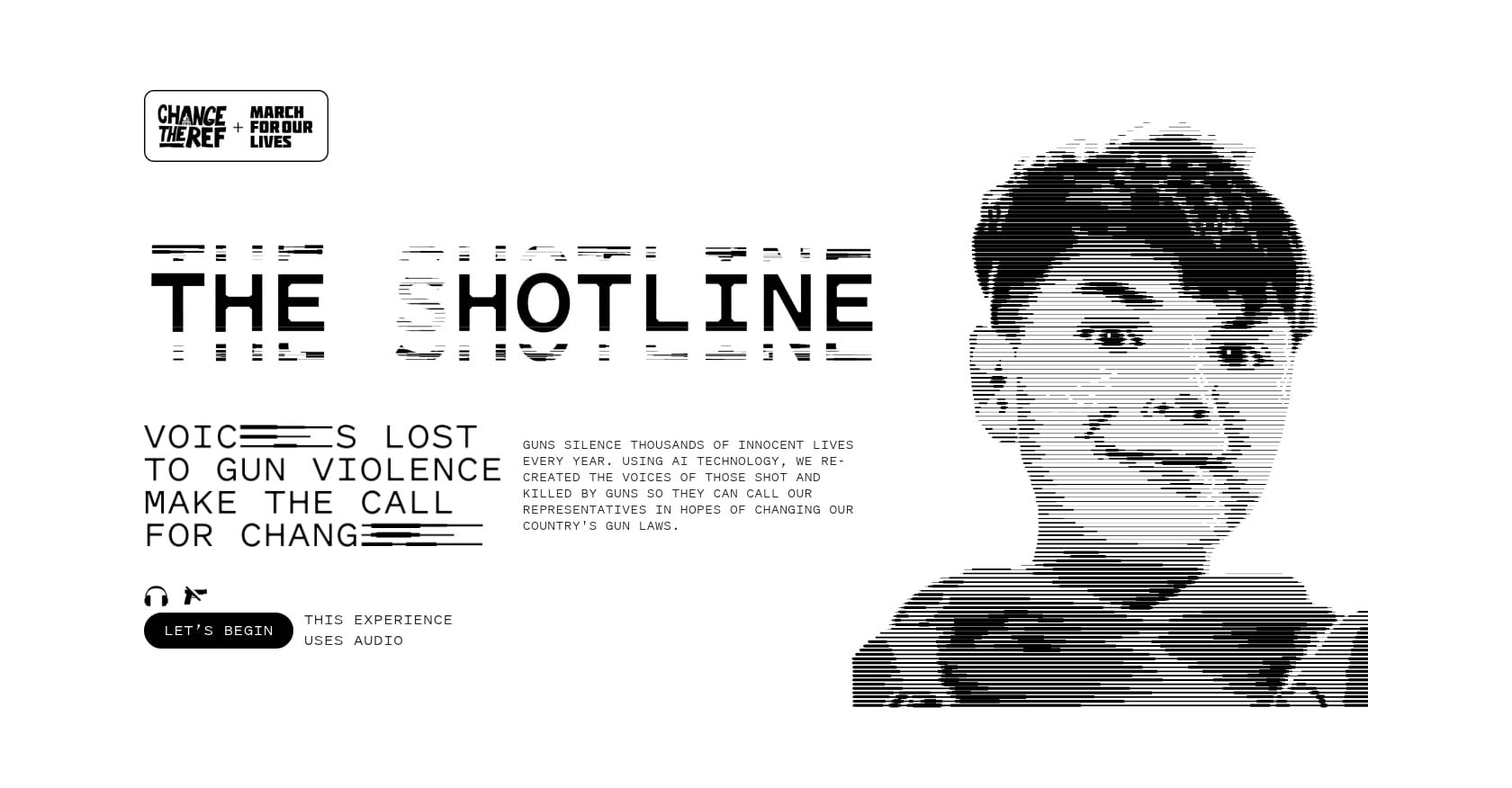
The Shotline won the 2025 Webby Award for Best Social Impact Campaign, created by Change the Ref and MullenLowe. The campaign uses new technology to make advocacy more emotionally immediate and connects a social issue to direct civic action.
Uses AI to create empathy and urgency that traditional media could not.
Connects a social issue to direct political or civic action.
Shows how technology can serve advocacy when built around consent and purpose.
Proof of impact:
2025 Webby Winner in Best Social Impact Campaign.
What to copy: When technology creates genuine empathy or enables an action that was previously impossible, it can elevate advocacy beyond traditional formats.
What not to copy: AI in grief, violence, or justice campaigns requires explicit consent and ethical guardrails. The emotional power of synthetic media can create trust risks if the process is not transparent. Campaign teams need a plan for press criticism, family concerns, and unintended consequences.
Tradeoffs:
Consent, grief, and AI ethics risk.
Tech novelty can overwhelm transparency and care.
Not every social issue benefits from an AI-powered experience.
9. CALM The Last Photo
Best for: Stigma disruption
Campaign type: Public health behavior-change campaign
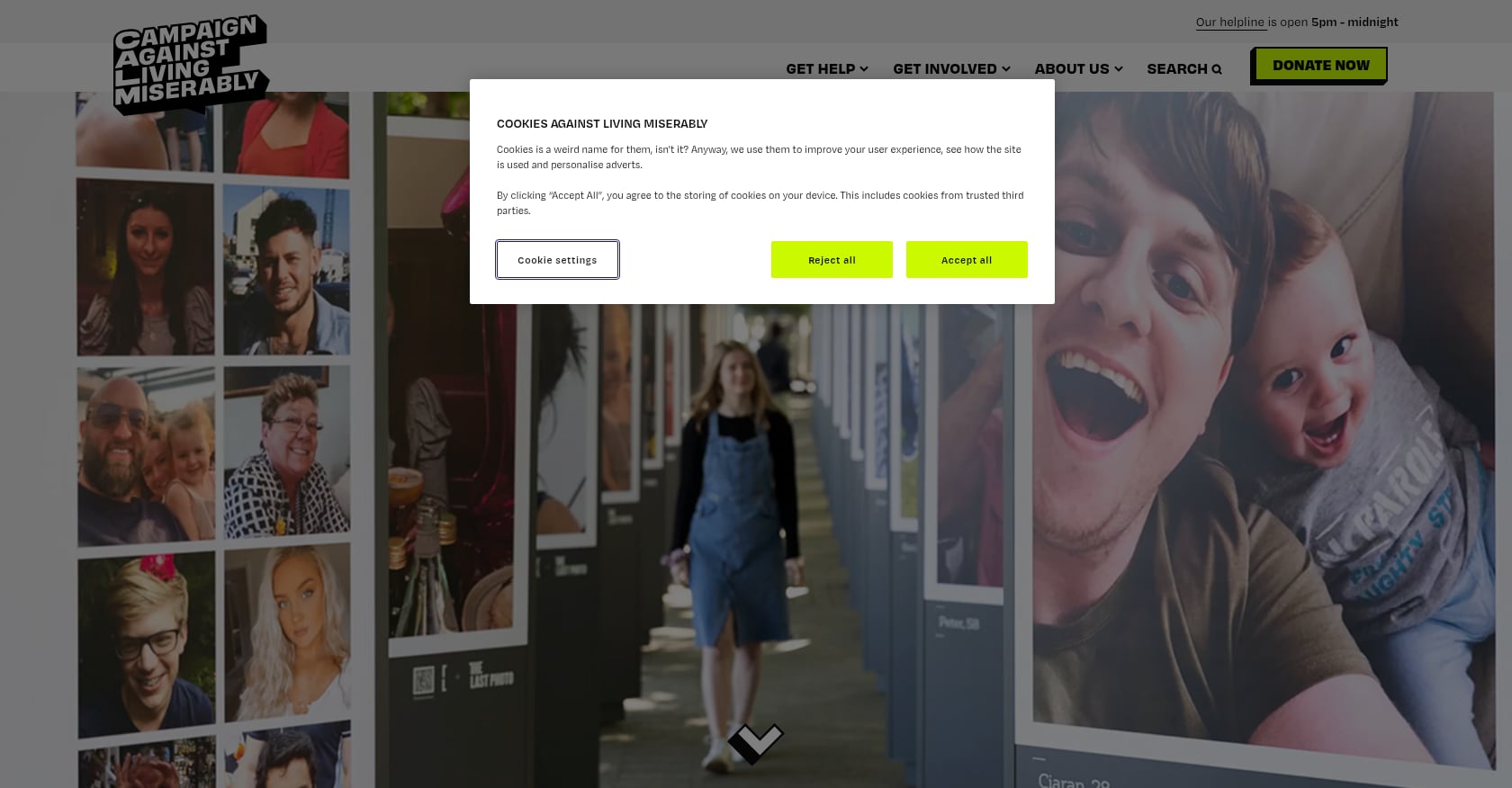
CALM’s The Last Photo campaign challenged a dangerous misconception: people at risk of suicide do not always look visibly distressed. CALM states that 125 people in the UK take their own lives each week and says the campaign aimed to equip people with tools to help, even when signs are hard to see.
Uses a visual contradiction to challenge assumptions.
Pairs emotional shock with prevention tools and resources.
Focuses on a misunderstood behavior rather than generic awareness.
Proof of impact:
WARC identifies The Last Photo as a major suicide prevention awareness campaign.
The campaign reframed how people think about suicide risk.
What to copy: Stigma campaigns work when they replace a false mental model with a clearer action: “you may not see the signs, so check in anyway.” This is purpose-driven storytelling at its most effective, because the narrative changes actual behavior.
What not to copy: Sensitive topics require support pathways, not just emotional content. Campaigns can cause harm if they dramatize an issue without directing people to help. Creative teams need specialist clinical review, safeguarding protocols, and helpline capacity behind the awareness.
Tradeoffs:
Bereaved family consent and clinical oversight are non-negotiable.
Emotional content without a next action is irresponsible.
Campaign teams must plan for trauma-informed moderation.
10. Ad Council Love Has No Labels
Best for: Inclusive PSA storytelling
Campaign type: Public service announcement / coalition campaign
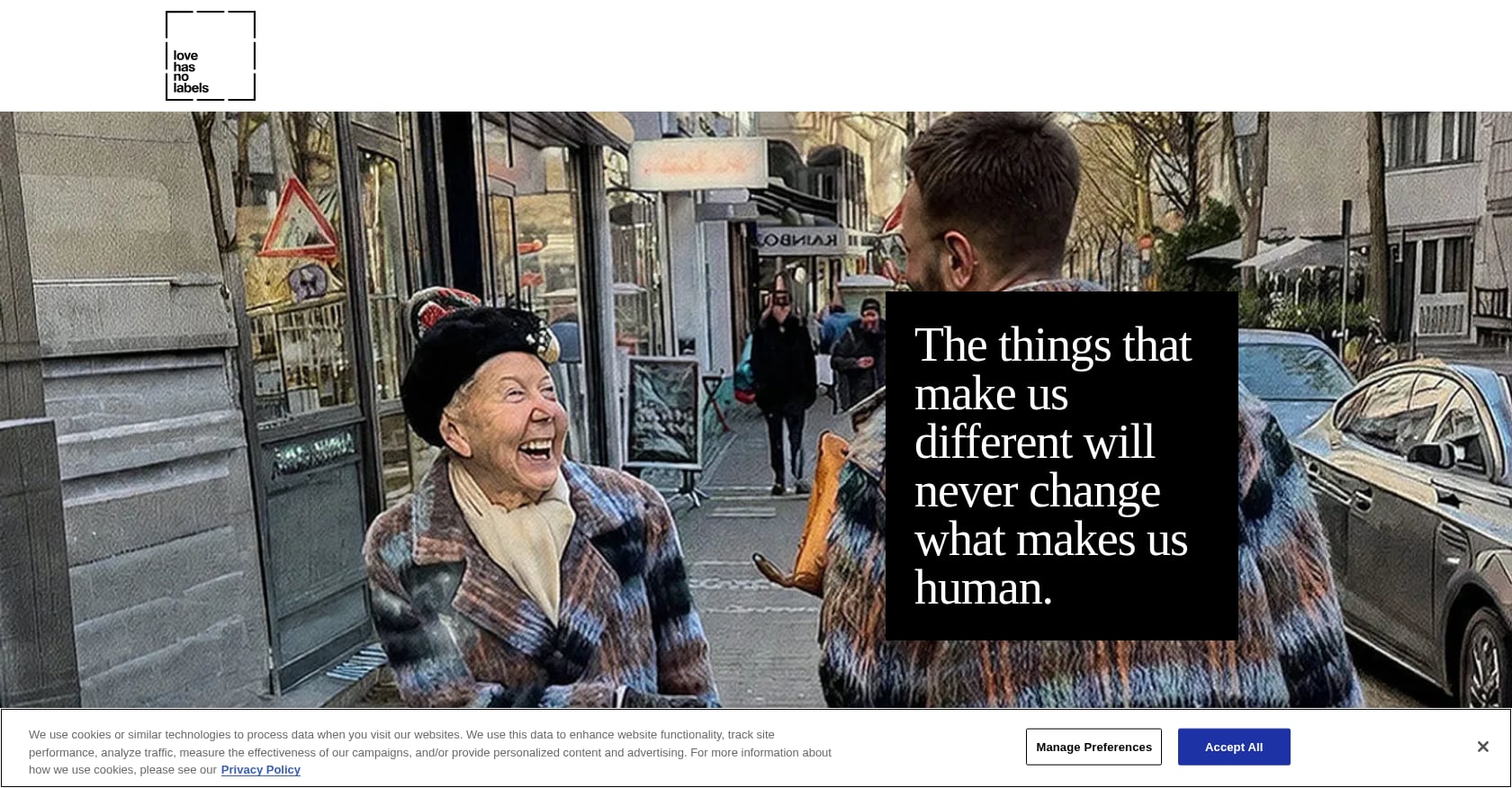
Love Has No Labels launched in 2015 and remains active. In 2026, the Ad Council described it as an Emmy Award-winning campaign and launched new creative focused on human connection across difference.
Uses emotional reveal storytelling.
Built around inclusion across race, religion, gender, sexual orientation, age, and ability.
Uses partnerships with civil rights and advocacy organizations.
Proof of impact:
Emmy Award-winning.
Active for over a decade with continued creative evolution.
What to copy: For broad social messages, emotional storytelling must be specific enough to feel human and repeated carefully enough not to become background noise.
What not to copy: Reddit threads show that PSA fatigue is real. Some users complain about repeated Ad Council spots and perceive certain PSAs as moral instruction. Even well-intended inclusion campaigns need strong creative rotation and audience understanding.
Tradeoffs:
Broad inclusion messaging can feel generic without specific stories.
PSA frequency produces fatigue.
Polarized audiences may reject the message before engaging.
11. Movember
Best for: Ritualized annual participation
Campaign type: Identity-based health challenge
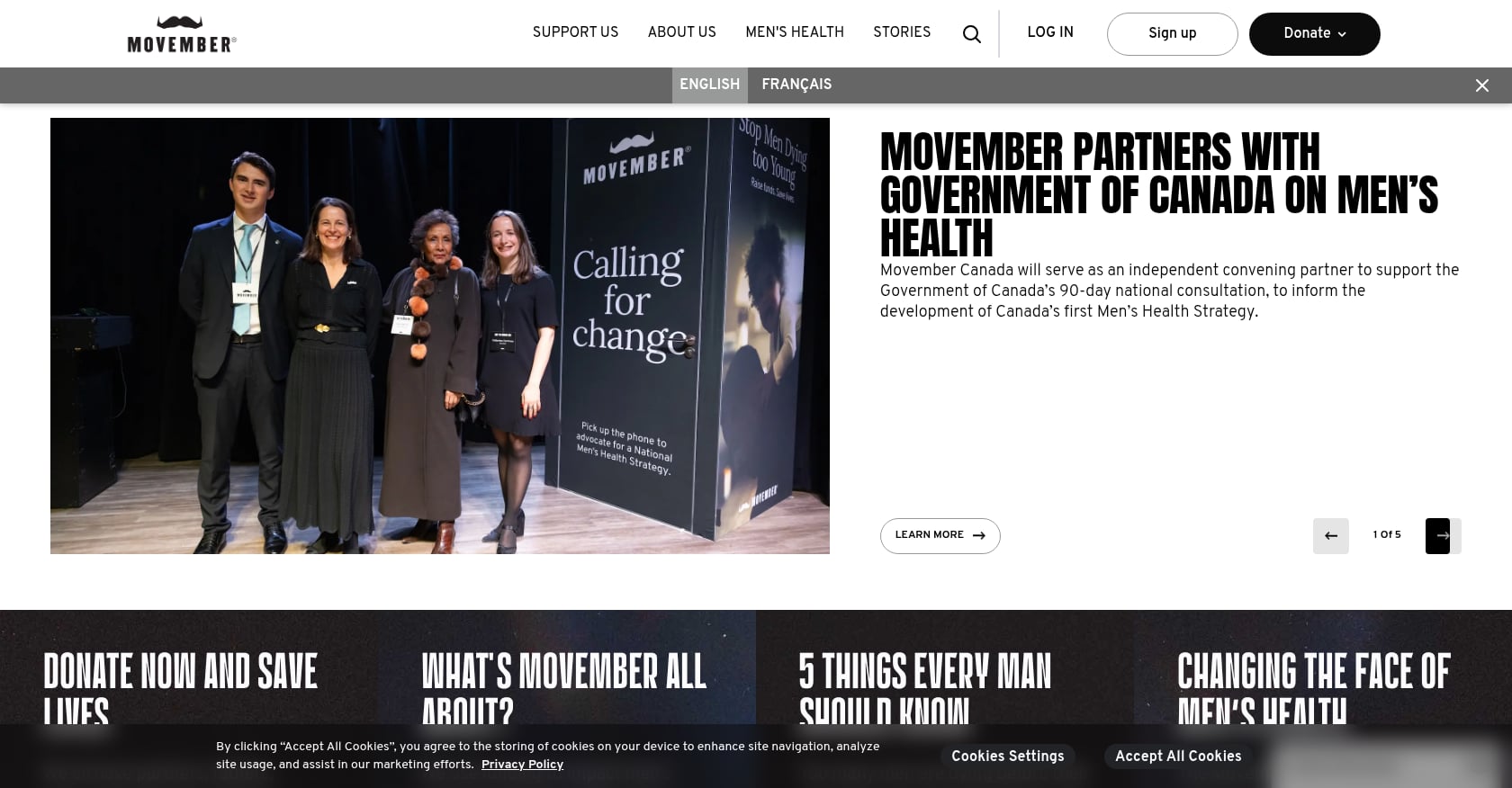
Movember turned men’s health into a visible annual ritual. In 2024, the foundation says more than 285,000 people took part, raising awareness and funds for men’s mental health, prostate cancer, and testicular cancer.
Annual ritual creates calendar-based participation.
Highly visible identity marker (the moustache).
Simple team fundraising mechanics.
Social permission to discuss stigmatized health topics.
Proof of impact:
285,000+ participants in 2024.
Movember publishes project report cards showing fund allocation and outcomes.
What to copy: Rituals create repeatable participation. Impact reporting keeps rituals from becoming empty traditions.
What not to copy: Reddit discussions reveal that some participants look for confirmation that matching gifts are real, while others question fund deployment. Recurring fundraising movements need transparent, accessible reporting to sustain trust over time.
Tradeoffs:
Annual campaigns can fatigue audiences.
Visible symbols can become the campaign instead of the cause.
Transparency matters more with each passing year.
12. Red Nose Day
Best for: Mass participation fundraising through humor
Campaign type: Retail and entertainment fundraising
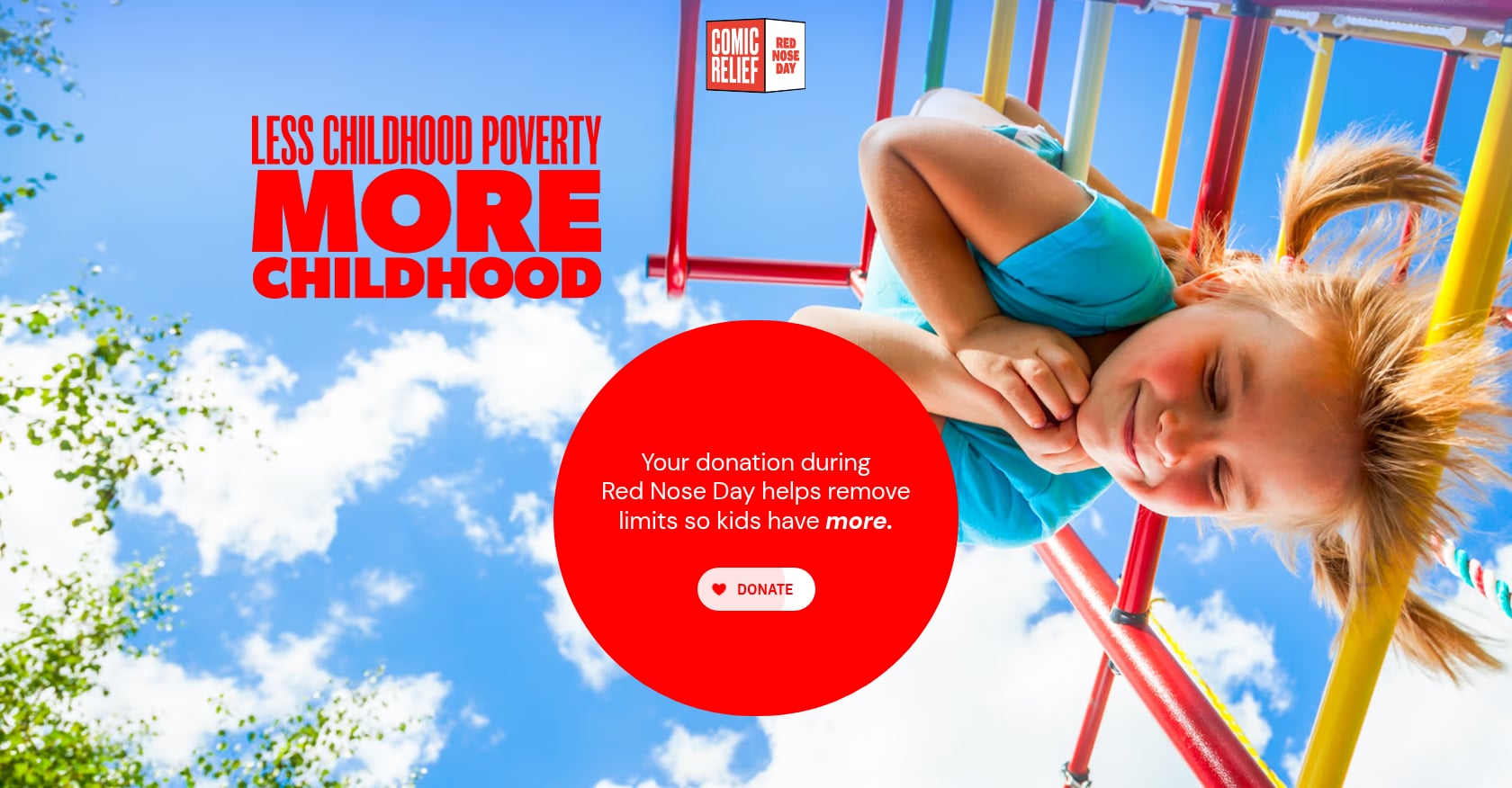
Red Nose Day uses comedy, celebrity participation, retail activation, and a simple visual symbol to raise funds for children facing poverty. AP reported in 2024 that Red Nose Day had raised $370 million in the U.S. since 2015.
Simple, recognizable symbol.
Retail checkout participation through Walgreens and partners.
TV and entertainment partnerships.
Humor makes a serious cause more approachable.
Proof of impact:
$370 million raised in the U.S. since 2015.
Multi-channel activation across retail, broadcast, and digital.
What to copy: Humor lowers the emotional barrier to giving. A strong brand activation strategy ties the retail moment to real outcomes.
What not to copy: Reddit shows two useful tensions: some employees and customers ask whether donations truly reach children, and UK users discuss Red Nose Day feeling less culturally prominent than it once did. Large recurring campaigns need transparent fund explanations and periodic creative reinvention.
Tradeoffs:
Event fatigue.
Checkout-donation skepticism.
Risk of simplifying poverty into a seasonal symbol.
13. charity: water Birthday Campaign
Best for: Personal milestone fundraising
Campaign type: Peer-to-peer fundraising
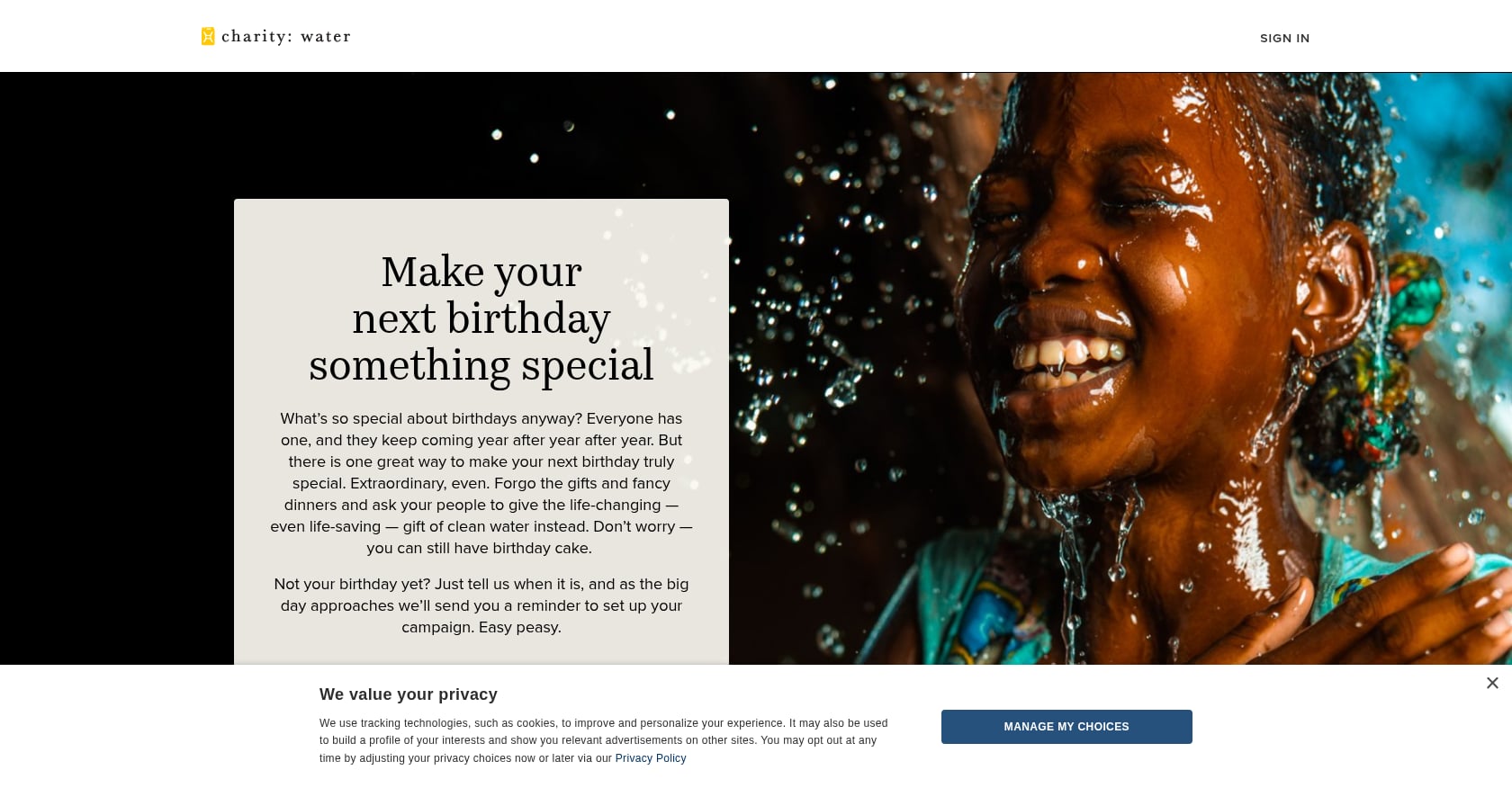
charity: water turned birthdays into peer-to-peer fundraising moments by asking supporters to give up gifts and ask friends to donate to clean water projects. The organization’s model emphasizes transparency, including the promise that 100% of money raised by specific campaigns goes to clean water projects.
Converts a personal milestone into a cause moment.
Uses the supporter’s own network.
Makes giving feel personal and trackable.
Reinforces proof through project reporting.
Proof of impact:
charity: water’s “Dollars to Projects” model explains fund allocation with proof shown after the emotional giving moment.
A Will and Jada Pinkett Smith birthday campaign raised more than $109,000.
What to copy: The best peer-to-peer fundraising campaigns turn identity events into impact events.
What not to copy: Peer-to-peer fundraising can be hard to repeat year after year. Donor motivation depends on personal trust in the fundraiser. Proof must arrive after the giving moment, which creates a trust gap that only strong reporting can close.
Tradeoffs:
Repeat participation can decline over time.
Depends on personal relationships, not brand equity.
The organization must deliver proof long after the emotional moment passes.
14. State Street Fearless Girl
Best for: Cautionary example of iconic earned media
Campaign type: Symbolic public art as brand campaign
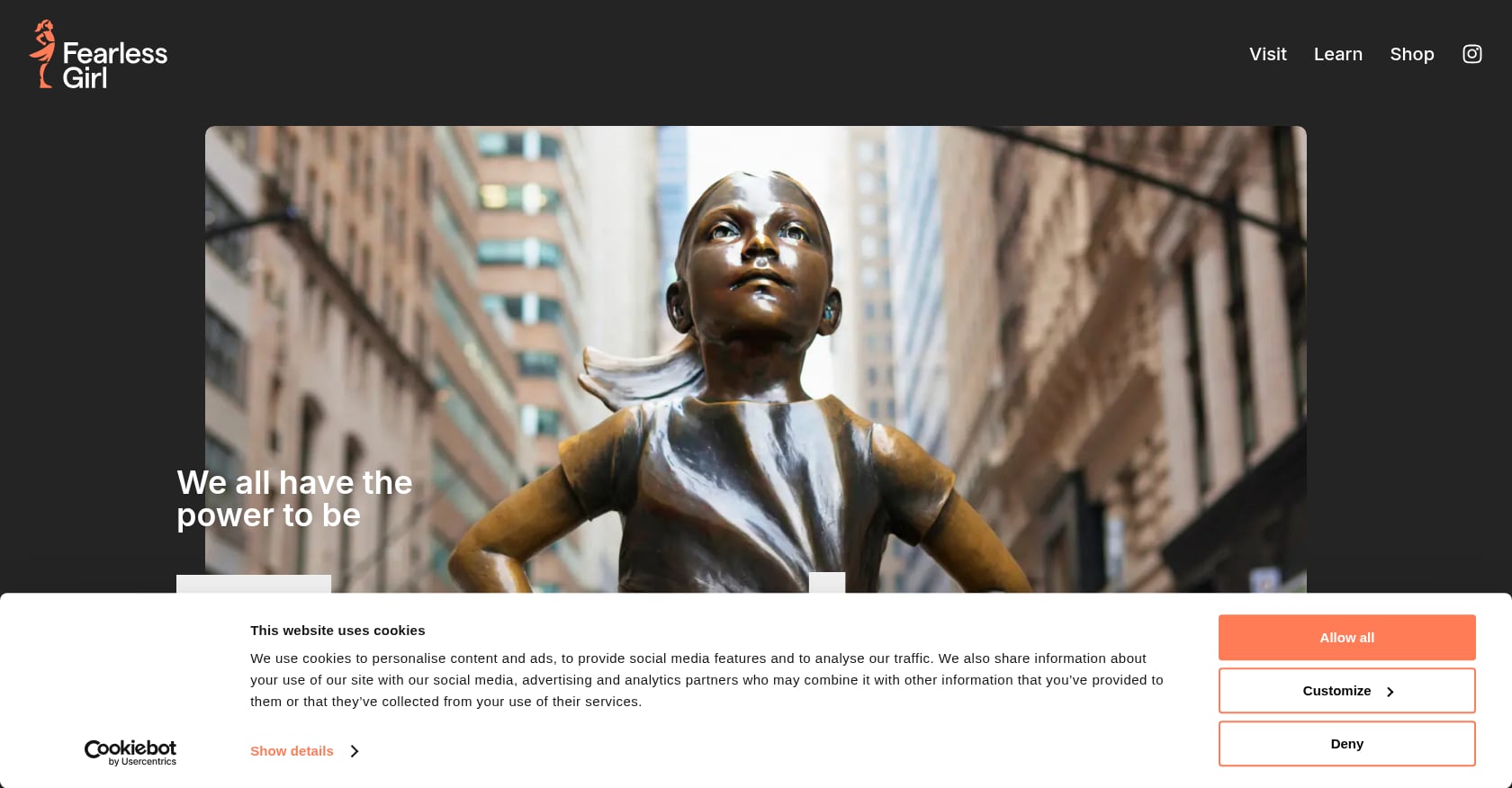
Fearless Girl became a cultural icon after being installed near Wall Street in 2017 to promote gender diversity in corporate leadership. State Street says the statue has been a cultural icon since 2017.
Powerful physical symbol.
Timed to International Women’s Day.
Highly photogenic, press-friendly, and shareable.
Connected to a gender-diverse index fund.
Proof of impact:
Instant cultural recognition and global press coverage.
Connected to a financial product promoting board diversity.
What to copy: Simple, timely symbols can generate enormous earned media when they tap into a cultural moment.
What not to copy: Time reported that State Street later paid a $5 million settlement over allegations related to underpaying women and Black employees. Reddit users frequently cite the contradiction between the statue’s feminist symbolism and the company’s own pay-equity controversy. If the campaign message is about justice, equity, or inclusion, audit your own house first.
Tradeoffs:
Symbols invite scrutiny.
Corporate feminism can feel hollow without internal proof.
A campaign can win awards and still create long-term credibility problems.
15. Never a Bother
Best for: Youth co-creation in public health
Campaign type: Youth mental health campaign
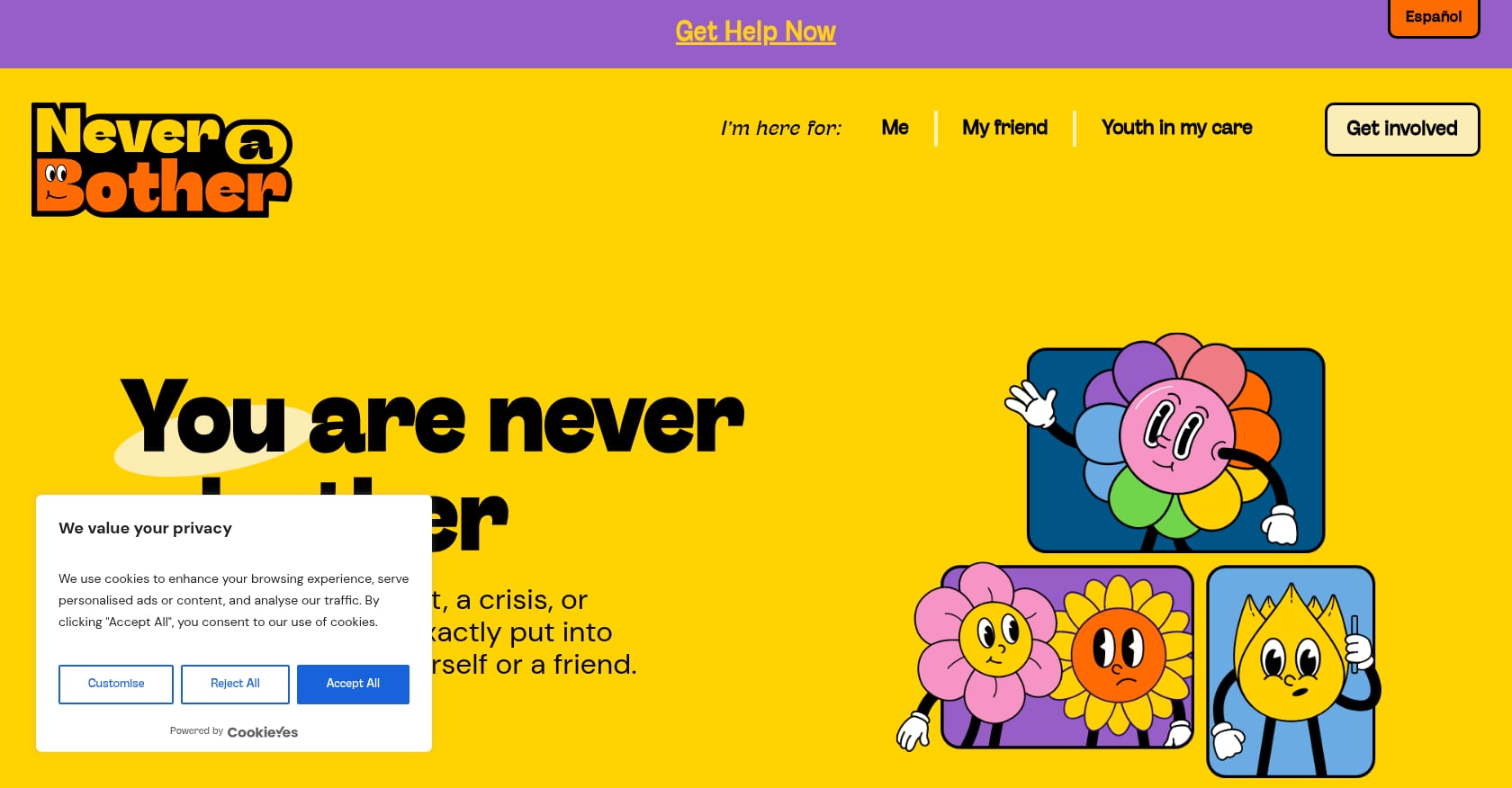
“Never a Bother” is a youth suicide prevention campaign from the California Department of Public Health. The campaign used a Youth Advisory Board of diverse co-creators, real human stories, a bright and friendly creative direction, and celebrity partners including Megan Thee Stallion.
Youth co-creation, not adult-written youth messaging.
Friendly design for a heavy topic.
Real stories from real people.
Clear support-seeking message.
Celebrity amplification without losing the public-health purpose.
Proof of impact:
Youth Advisory Board ensured culturally resonant content.
Campaign focused on reducing stigma and directing young people to support resources.
What to copy: For youth audiences, co-creation is not a nice-to-have. It is a credibility requirement.
What not to copy: Mental health campaigns must connect awareness to actual support services. If the campaign drives demand for help that does not exist, it can cause harm. Celebrity involvement should amplify, not replace, lived-experience insight.
Tradeoffs:
Youth campaigns fail when adults write for young people instead of co-creating with them.
Mental health awareness needs service capacity behind it.
Celebrity participation must feel earned, not bolted on.
What the Best Social Impact Campaigns Have in Common
After looking at all 15 campaigns, clear patterns emerge.
They ask for a clear action. ALS: pour and nominate. REI: go outside. Movember: grow a moustache. charity: water: pledge a birthday. Red Nose Day: buy, wear, share, donate.
They make participation visible. The action can be photographed, posted, worn, repeated, or shared. Visibility creates social proof and organic reach.
They match the brand’s real role. REI and outdoors. Patagonia and consumption. Always and gendered confidence. IKEA and accessible furniture. Dove and beauty standards. When the fit is natural, the campaign does not need to explain why the brand is involved.
They have proof beyond impressions. Funds raised, participants, product downloads, sales lift, program enrollments, or reported impact. Awareness alone is not enough. As one Reddit marketer put it, “you’re talking about it, so it worked” is a bad standard for measuring success.
They make people feel like agents, not audiences. The best campaigns say “do this with us,” not “watch our ad.”
They survive scrutiny because the action is real. The weaker campaigns on this list are those where the creative is stronger than the organization’s own credibility.
Practitioners on Reddit report that consumers can spot inorganic brand behavior quickly. If the campaign sounds like a brand trying to be your friend, it is already in trouble. The best social impact campaigns earn participation through genuine fit and proof, not by imitating activist language or youth culture.
How to Build a Social Impact Campaign Without Purpose-Washing
Studying great campaigns is the easy part. Building one that holds up under scrutiny is harder. Here are seven questions to pressure-test any social impact campaign before launch.
1. What real behavior do we want to change? If the answer is “raise awareness,” push further. Awareness of what? And then what should people do?
2. What audience barrier are we removing? Many people say they care about social or environmental issues but fail to act because of price, convenience, confusion, habit, or skepticism. A social impact campaign should not just increase concern. It should remove the next barrier to action. This is the intention-action gap, and closing it is where campaigns create real outcomes.
3. Why does our brand have permission to speak? Before entering a social issue, ask: Do we have category relevance? Do our products affect this issue? Do employees believe the message? Could critics easily expose a contradiction?
4. What proof can we show before launch? The FTC Green Guides require truthful and substantiated environmental claims. The UK’s ASA/CAP warns against unsupported absolute environmental claims. Any sustainability-linked social impact campaign should include evidence and claim review before creative production begins.
5. Who has lived experience and decision power in the process? Never a Bother’s Youth Advisory Board and IKEA ThisAbles’ accessibility co-creation show why centering the community, not the brand, creates more credible work.
6. What action can people take in under 60 seconds? If there is no clear, fast action, participation drops.
7. What will we measure after awareness? Separate commercial metrics from social impact metrics. Both matter, but conflating them weakens both.
Social Impact Campaign Planning Checklist
Before launching a campaign, confirm that each requirement is complete.
Campaign Element | Complete? |
|---|---|
Clear behavior-change objective | □ |
Documented audience insight | □ |
Verified brand-cause alignment | □ |
Community participation in campaign development | □ |
Third-party validation | □ |
Legal review of social or environmental claims | □ |
Operational proof supporting campaign messaging | □ |
Less than 60 seconds required for audience participation | □ |
Impact measurement framework | □ |
Post-launch reporting plan | □ |
Many campaigns fail because teams focus on creative development before validating operational credibility.
Social Impact Campaign Trends for 2026
Several trends are reshaping social impact campaigns in 2026.
AI Is Moving From Content Creation to Advocacy
Campaigns such as The Shotline demonstrate that AI can increase empathy, personalize storytelling, and improve civic participation.
The challenge is maintaining transparency, consent, and ethical oversight.
Community Co-Creation Is Becoming Standard Practice
Campaigns created for communities are increasingly being replaced by campaigns created with communities.
Examples include:
IKEA ThisAbles
Never a Bother
Organizations are shifting from audience targeting to participatory design.
Consumers Expect Operational Evidence
Purpose statements are no longer enough.
Consumers increasingly expect:
Supply-chain transparency
Public reporting
Third-party verification
Measurable outcomes
Trust Is Becoming the Primary Performance Metric
Historically, social impact campaigns measured awareness.
Today, organizations are increasingly measuring:
Trust
Credibility
Reputation
Community participation
Metrics That Matter for Social Impact Campaigns
One of the biggest gaps in “best social impact campaigns” articles is weak measurement guidance. Practitioners on Reddit recommend tracking branded search, direct traffic, share of voice, referral traffic, return visitors, surveys, and geographic lift where brand activity is concentrated. Here is a more complete framework.
Awareness: Reach, video completion, PR mentions, share of voice, search lift.
Engagement: Shares, comments, saves, UGC volume, hashtag quality (not just quantity).
Behavior: Sign-ups, donations, event attendance, pledges, product returns/reuse/repair, downloads, completed actions.
Commercial: Branded search, direct traffic, retail traffic, sales lift, purchase intent, category share, repeat purchase.
Trust: Brand trust scores, sentiment, employee advocacy, partner credibility, third-party coverage, community feedback.
Social impact outcomes: Funds distributed, people served, policy actions, health outcomes, education completion, emissions or waste reduction (where applicable), longitudinal outcomes.
Kantar’s 2024 data shows that top-rated sustainability brands in BrandZ grew 31% in 2021 compared with 23% for the top 100 brands. The commercial case for social impact is real, but only when measurement captures what actually changed, not just what got noticed.
Social Impact Campaign Lifecycle
The most successful campaigns follow a predictable lifecycle.
Phase | Objective | Metrics |
|---|---|---|
Research | Identify audience barriers | Surveys, interviews |
Strategy | Define behavior change | Message testing |
Development | Build campaign assets | Stakeholder approval |
Launch | Generate participation | Reach, engagement |
Optimization | Improve performance | Conversion rates |
Reporting | Demonstrate impact | Behavioral outcomes |
Many campaigns stop after the launch phase.
The strongest campaigns continue measuring outcomes for months or years.
Common Mistakes in Social Impact Campaigns
Confusing virality with impact. A Reddit marketer criticized the idea that any controversial campaign is successful just because people discuss it. High impressions do not automatically translate into meaningful participation or approval. Awareness is not impact. Outrage is not strategy.
Choosing a cause with weak brand fit. Research from X (formerly Twitter) shows brand fit accounts for 26% of purpose campaign brand impact. If the audience has to ask “why is this brand involved?”, the campaign has a fit problem.
Making claims without substantiation. Environmental and social claims need evidence. The FTC and ASA/CAP both require truthful, substantiated, non-misleading claims. A campaign that overpromises and under-delivers creates legal and reputational risk.
Ignoring internal credibility. Fearless Girl and Dove both show what happens when the message outpaces organizational behavior. If Reddit can identify the hypocrisy in 10 minutes, journalists, employees, and customers can too. Understanding how social impact agencies approach this problem can help teams avoid blind spots.
Centering the brand instead of the community. Never a Bother’s Youth Advisory Board and IKEA ThisAbles’ accessibility co-creation show why the community, not the brand, should be at the center of campaign development.
Leaving no next action. Every social impact campaign needs a donation, pledge, conversation, download, support resource, product behavior, or advocacy action. Without it, the campaign is a monologue.
Why Social Impact Campaigns Fail
Failure Pattern | Example |
|---|---|
Weak brand fit | Generic cause partnerships |
No action mechanism | Awareness-only campaigns |
No operational proof | Purpose-washing |
No measurement framework | Vanity metrics |
Community exclusion | Adult-designed youth campaigns |
Unsupported claims | Greenwashing |
Repetition without innovation | Campaign fatigue |
Campaign failure usually occurs because organizations treat social impact as a marketing exercise rather than an organizational commitment.
Campaign Archetypes: Which Pattern Fits Your Brand?
Not all social impact campaigns do the same job. Here are seven archetypes worth understanding.
The viral challenge (ALS, Movember): Works when the action is visible, repeatable, and tied to a clear donation mechanism. Fails when people remember the stunt but not the issue.
The brand sacrifice (REI, Patagonia): Works when the company gives something up or changes a practice. Fails when the sacrifice is symbolic but the business model stays the same.
The norm reframe (Always, Dove, CALM): Works when the campaign names a hidden belief and gives people a better one. Fails when the brand reframes culture while still profiting from the old norm.
The utility intervention (IKEA ThisAbles): Works when the campaign solves a real barrier. Fails when the utility is too small, hard to access, or abandoned after PR ends.
The mass fundraising ritual (Red Nose Day, charity: water): Works when the action fits a calendar moment or personal milestone. Fails when repetition creates fatigue without new proof.
The symbolic earned-media object (Fearless Girl): Works when the symbol is simple, timely, and press-friendly. Fails when the symbol outpaces organizational credibility.
The AI/technology advocacy experience (The Shotline): Works when technology creates empathy or action that traditional media could not. Fails when tech novelty overwhelms consent and transparency.
Understanding which archetype fits your brand and your audience’s expectations is the first step toward a credible campaign.
Which Social Impact Campaign Model Should You Choose?
Not every campaign model fits every organization.
Use this framework to identify the most appropriate campaign type.
If your goal is... | Use this campaign model | Example |
|---|---|---|
Increase donations | Viral challenge | ALS |
Build brand trust | Brand sacrifice | REI |
Change social norms | Norm reframing | Always |
Solve a practical problem | Utility intervention | IKEA |
Create recurring participation | Annual ritual | Movember |
Generate earned media | Symbolic activation | Fearless Girl |
Influence policy | Advocacy campaign | The Shotline |
Choosing the wrong campaign model often leads to low participation, weak credibility, and accusations of performative activism.
Build the Campaign People Believe
The best social impact campaigns are not the ones with the biggest hashtag. They are the ones where the cause, audience, brand behavior, and call to action all line up. The strongest campaigns make it easy for people to participate, prove real impact, and hold up under scrutiny.
If your team is trying to turn purpose into a campaign people will actually act on, the gap between intention and action is where the real work begins.
Talk to Grounded World about building your next social impact campaign
FAQ
What makes a social impact campaign successful?
A successful social impact campaign starts with a clear audience insight and credible brand fit. It offers a simple, visible action people can take. It measures real outcomes, not just impressions, and it holds up when critics examine the organization behind the message. Proof, participation, and credibility matter more than production value.
What is the difference between social impact campaigns and cause marketing?
Cause marketing is usually a business/nonprofit partnership tied to fundraising or awareness, like Red Nose Day’s retail checkout donations or TOMS’ buy-one-give-one model. Social impact campaigns are a broader category that can include behavior change, advocacy, product innovation, public health, sustainability messaging, or social norm change. Cause marketing is one type of social impact campaign, but not all social impact campaigns involve a fundraising mechanic.
Can social impact campaigns drive sales?
Yes, but sales should not be the only measure. Nike Dream Crazy showed a 31% online sales spike, and IKEA ThisAbles drove a 37% sales increase on products with accessibility add-ons. These examples show commercial lift can coexist with social messaging or utility, but credibility and brand fit are prerequisites, not bonuses.
How do you avoid greenwashing or purpose-washing?
Substantiate claims with evidence before launching. Qualify environmental language according to FTC Green Guides and ASA/CAP guidance. Involve credible partners. Show operational proof, not just creative. Report outcomes transparently. And pressure-test the message against your own operations, supply chain, and past behavior.
What is the best social impact campaign of all time?
There is no single answer because it depends on the job the campaign is doing. The ALS Ice Bucket Challenge may be the strongest peer-to-peer fundraising example. REI #OptOutside is one of the strongest brand-action examples. Dove Real Beauty is one of the most durable purpose platforms. IKEA ThisAbles is one of the strongest product-utility examples. The “best” depends on what you are trying to achieve.
How do you measure a social impact campaign?
Separate your metrics by goal. Track awareness through reach, search lift, and share of voice. Track engagement through shares, saves, and UGC quality. Track behavior through sign-ups, donations, pledges, and completed actions. Track commercial impact through branded search, sales lift, and purchase intent. Track trust through sentiment, third-party coverage, and community feedback. And track social impact outcomes through funds distributed, people served, or behavior changed over time.
Why do some social impact campaigns face backlash?
Backlash usually happens when there is a gap between the campaign message and the organization’s actual behavior. State Street’s Fearless Girl faced criticism after the company settled pay-equity allegations. Dove faces ongoing scrutiny over parent-company contradictions. Nike’s activist stance invites questions about labor practices. Backlash is not always failure, but hypocrisy is. The remedy is operational alignment before creative production.
Should small brands or nonprofits attempt social impact campaigns?
Absolutely. Many of the best social impact campaigns did not start with large budgets. The ALS Ice Bucket Challenge scaled through user-generated participation. charity: water’s birthday campaigns rely on individual supporters’ networks. The key factors, clear action, brand fit, credible proof, and community participation, are available at any scale. What matters is whether the campaign is genuine and whether the organization can deliver on its promise.