

 Gaia
TL;DR
Impact storytelling combines real human narratives with verified data to show what actually changed because of an organization’s work. It sits between a testimonial and a full impact report, pairing one person’s voice (used with permission) with measurable outcomes. When done well, it builds trust, drives donor retention, and connects sustainability investments to business results. When done poorly, it becomes purpose-washing.
Quick Summary: What is Impact Storytelling?
Impact storytelling is a strategic communication framework that pairs authentic human narratives with verified quantitative data to prove the tangible social or environmental changes caused by an organization’s actions. By combining qualitative beneficiary experiences with checkable evidence, it bridges the gap between raw ESG impact reports and traditional brand marketing.
What Is Impact Storytelling?
Impact storytelling is telling one person’s or one group’s experience of change in a way a reader can verify: a real voice, used with permission, placed beside the measured change it helps explain. It shows what a result felt like from the inside, without pretending to be the result itself.
Impact Storytelling at a Glance
Impact storytelling is the practice of combining real human experiences with verified data to show what changed because of an organization's work. It connects an individual's or community's experience with measurable social, environmental, or economic outcomes. Effective impact storytelling uses informed consent, transparent evidence, and clear limitations to help audiences understand results without exaggerating an organization's contribution.
A credible impact story answers four questions:
What changed? Identify the specific outcome.
Who experienced the change? Include an authentic, consent-based human perspective.
What evidence supports the result? Link to relevant data, research, or evaluation findings.
What are the limitations? Explain what the evidence does and does not establish.
That distinction matters. A testimonial says “this was great.” An impact report delivers the full dataset. An impact story does something different. It selects one clear sequence, connects a concrete action to a documented outcome, and states the assumptions and limits in language anyone can follow. The report remains the evidence source. The story points back to it.
For nonprofits, an impact story combines anecdotal and quantitative evidence to help readers understand changes that resulted directly and indirectly from a program. For purpose-driven brands, it means turning sustainability efforts into narratives that articulate environmental and social achievements in a way that resonates with specific audiences. For ESG teams, it connects strategy, data, and lived experience to define purpose, demonstrate accountability, and show how decisions generate value for people and planet.
The term cuts across sectors because the need is universal: organizations that do meaningful work often struggle to communicate that work in ways that move people to act. That gap between intention and action, between knowing something matters and actually doing something about it, is exactly where impact storytelling lives.
Explore brand purpose activation to see how narrative connects to commercial outcomes.
How Impact Storytelling Differs from Related Concepts
Impact storytelling, brand storytelling, impact reporting, CSR communications, and sustainability marketing often overlap, but each serves a different purpose. Understanding these differences helps organizations choose the right format for communicating results.
Concept | Primary Focus | Typical Output | Main Audience Question | Evidence Requirement |
|---|---|---|---|---|
Impact storytelling | Documented change explained through human experience | Case studies, written stories, videos, and data-supported narratives | What changed, for whom, and how do we know? | Verified outcomes, relevant context, and consent |
Brand storytelling | Brand identity, values, and purpose | Brand films, origin stories, and campaigns | Who are you, and what do you stand for? | Evidence for factual claims; narrative can be identity-led |
Impact reporting | Systematic measurement and disclosure of results | Impact reports, evaluation reports, and dashboards | What results were measured, and how? | Transparent methodology, metrics, and appropriate assurance |
CSR communications | Communicating corporate responsibility activities and progress | CSR updates, program pages, and stakeholder communications | What is the organization doing, and what progress has it made? | Evidence appropriate to each activity and claim |
Sustainability marketing | Communicating environmental or social product benefits | Product claims, campaigns, and packaging messages | What benefit does this product or service offer? | Substantiation appropriate to each specific claim |
The key distinction is that impact storytelling explains documented change through a human narrative, while impact reporting documents results systematically. A story can make evidence understandable, but it does not replace the underlying evaluation, reporting, or verification process.
Organizations can use these approaches together. For example, an impact report may document a program's results, an impact story may show how one participant experienced those results, and a brand campaign may communicate the organization's broader purpose.
Brands are increasingly treating CSR initiatives as long-term storytelling platforms rather than standalone corporate programs. The common thread is a shift from reporting activities to documenting impact, progress, and beneficiary experiences over time. For a deeper look at the reporting side, see our guide on impact reporting definitions.
Why Impact Storytelling Matters in 2026
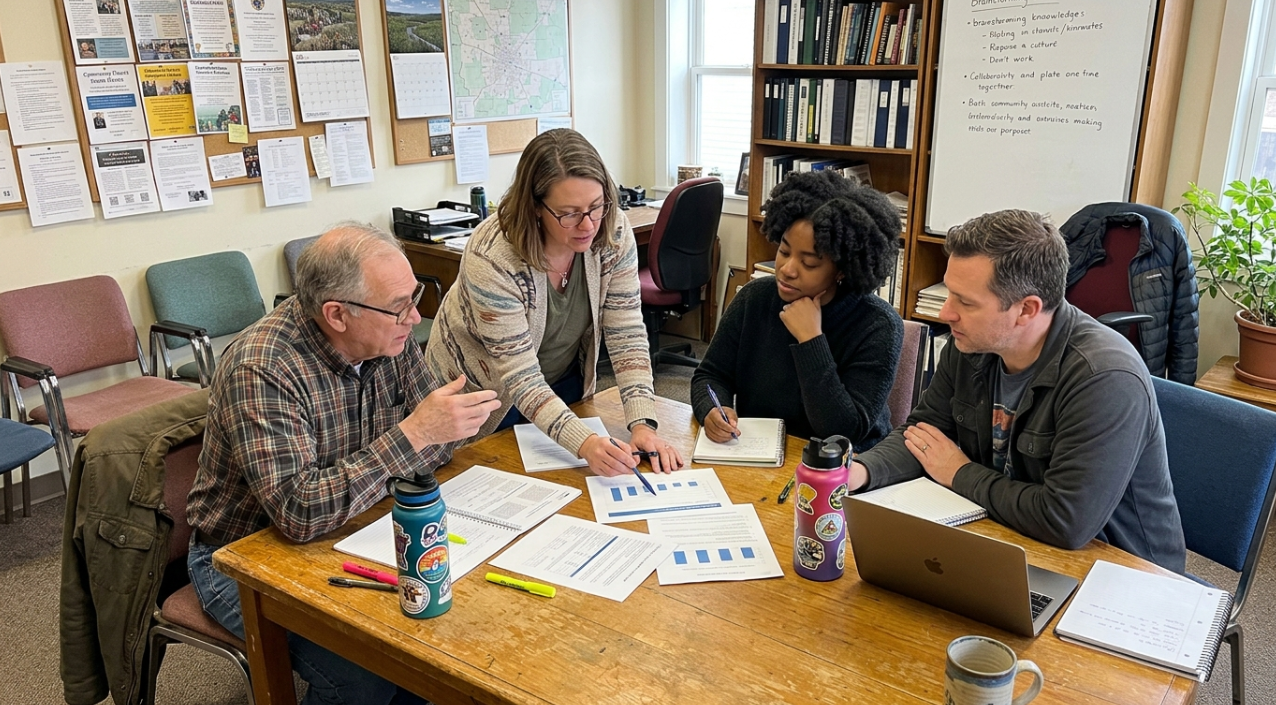
Impact storytelling matters because organizations must communicate more than good intentions. Donors, customers, employees, investors, and community members need to understand what an initiative achieved, who benefited, and what evidence supports the claims being made.
Three factors make credible impact storytelling particularly valuable.
1. Stakeholders need evidence they can evaluate
A statement such as “our program transformed lives” is difficult to assess without context. A stronger account identifies the program, defines the outcome, explains how the outcome was measured, and links to supporting evidence. A human story then helps readers understand what that result meant in practice.
2. Sustainability claims face greater scrutiny
Environmental and social claims can damage trust when the wording suggests more progress than the evidence supports. Impact storytelling should distinguish completed actions from future commitments, measured outcomes from estimates, and an organization's contribution from results caused by other factors.
3. Funders and decision-makers need both outcomes and context
A metric can show the scale of a program's results, but it may not explain the barriers participants faced or why an intervention mattered. A well-supported story adds that context while preserving the distinction between an individual's experience and the results observed across the wider program.
The practical lesson is simple: start with evidence, use storytelling to make the evidence meaningful, and give readers enough context to assess the conclusion for themselves.
Trust is the price of entry. According to the Edelman Trust Barometer, 81% of consumers need to trust a brand before they buy, and 63% would buy from a company they perceive as authentic. Stories grounded in verifiable evidence build that trust in ways that claims alone cannot. Research from Stanford’s Graduate School of Business found that people remember stories 22 times more than facts alone.
Greenwashing backlash is real and growing. Even when greenwashing is unintentional or relatively minor, it erodes stakeholder trust and damages reputation. Stakeholders do not easily overlook small discrepancies. As practitioners at CSI Global have noted, the issue arises when storytelling becomes a substitute for strategy. The solution is not less storytelling, but more honest storytelling. Organizations that need help navigating this should read our guide on avoiding greenwashing.
Funders and donors demand narrative evidence, not just numbers. Nonprofits that use storytelling retain 45% of donors, compared to just 27% for those that don’t. That gap is enormous. A Fortune report in 2025 noted that nonprofits are investing significantly more in storytelling for donor outreach, raising production values for videos and podcasts. One striking example: Brilliant Cities saw donations surge after a documentary episode debuted on YouTube, with one funder increasing his gift from $7,000 to $100,000.
The Sorenson Impact Center, writing in Forbes, framed this well: people often see data and storytelling as separate, but the impact measurement piece acts as a critical foundational layer to impact storytelling. Measurement is not downstream of storytelling. It is the prerequisite.
The Core Elements of Credible Impact Storytelling
Real voices, used with permission
The story belongs to the person who lived it. Their words should be central, not paraphrased into corporate language. This requires informed consent, editorial review by the subject, and a commitment to representing people with dignity rather than as helpless beneficiaries.
Practitioners at ForestNation have identified a common weakness: partners and communities become scenery, appearing as backdrops instead of participants with work, knowledge, and agency. The UNFCCC has similarly emphasized that impact storytelling approaches are most powerful when they elevate authentic local voices and empower communities to share their own perspectives.
Measured change paired with narrative
In today’s climate of scrutiny, blending hard data with human stories moves hearts, opens wallets, and builds real trust, but only when the mix is right. A SurveyCTO survey of 650+ users found the top benefits of data storytelling were improved stakeholder communication (64%), better decision-making (55%), and clearer insights (52%).
The data provides credibility. The narrative provides meaning. Neither works alone. Grounding stories in verified metrics, like specific tons of CO₂e avoided or dollars of income generated, ensures that narratives reflect real progress rather than aspiration.
Traceable evidence
A story is credible when the reader can distinguish three things: what this person said, what the wider group showed, and what anyone can reasonably say about cause. Mixing them is the most common way a good story loses trust. Every claim should trace back to a methodology page, a published report, or another checkable record.
Systems-level framing
A critical insight from narrative practitioners: impact storytelling often stops short of a systems-level approach. The most effective stories point not only to one person or community, but to how their story intersects with and challenges larger systems. Individual hero narratives feel good. Systems-level narratives create understanding that leads to lasting change.
For guidance on connecting stories to behavior change strategies, the right framing makes the difference between a story that inspires and one that actually shifts what people do.
The Impact Story Evidence Checklist
Before publishing an impact story, check that every important claim has a clear source and an appropriate level of certainty.
Story Element | What to Include | Example |
|---|---|---|
Human perspective | A real person's experience, shared with informed consent | A participant explains how job training changed their employment options |
Documented action | The specific intervention or decision | The organization provided six weeks of vocational training |
Outcome metric | A defined result with a timeframe and denominator | 73 of 100 participants obtained employment within six months |
Evidence source | The evaluation, dataset, or report supporting the claim | A published program evaluation with a stated measurement method |
Attribution | An accurate explanation of the organization's role | The program contributed to participants' employment outcomes |
Limitations | Relevant uncertainty, exclusions, or missing information | The evaluation did not establish that training alone caused every job placement |
Consent and dignity | Permission for the intended use and a fair representation of the subject | The participant approves the final quotation and intended publication use |
Use this checklist as an editorial control, not as a substitute for formal research, legal review, or an independent evaluation where those are required.
What Weakens an Impact Story

Not every story that mentions impact qualifies as impact storytelling. Several patterns reliably undermine credibility.
The company becomes the hero. When the brand takes center stage, the people doing the work, the participating community, and the reader all disappear behind corporate praise. Practitioners at Greenhouse Communications put it simply: the most powerful stories are the ones where your audience sees themselves as the hero.
Virtue language replaces action. Words like “responsible,” “positive,” or “better for nature” carry no useful detail on their own. They signal intention without documenting what actually happened. Specificity is what separates impact storytelling from marketing copy.
Cherry-picked data without context. Selecting only the most flattering numbers while ignoring mixed results or limitations destroys credibility the moment a skeptical reader investigates. Honest impact stories state what worked, what didn’t, and what remains uncertain.
Storytelling substitutes for strategy. As one climate communications agency noted, not all storytelling is storywashing, but the line blurs when narrative replaces genuine commitment. Critics across the sustainability space caution against purpose-washing, urging brands to ensure their communication reflects measurable impact and long-term commitment rather than serving primarily as a marketing tool.
Confusing Correlation With Causation
An outcome that occurs after a program is not automatically an outcome caused by that program. Participants may also benefit from other services, changes in local conditions, personal circumstances, or outside support.
For example, reporting that 73% of program participants found employment within six months describes an observed result. Claiming that the program caused 73% of participants to find jobs makes a stronger causal statement that requires appropriate evidence.
Use precise wording such as "participants achieved," "the program contributed to," or "the evaluation found an association" when those descriptions match the evidence. Reserve claims of proven causation for findings supported by a suitable evaluation design.
This distinction matters because an impact story should explain what the evidence shows, not convert a positive outcome into an unsupported claim of organizational success.
Impact Storytelling Examples
Impact storytelling looks different across nonprofits, purpose-driven brands, and ESG teams. The format can change, but the underlying method stays consistent: connect a human experience to documented results, explain the organization's contribution, and provide a way to verify the evidence.
1. Nonprofit Impact Storytelling Example
Scenario: A youth employment program
Imagine a nonprofit that provides vocational training and career support to young adults.
The story
When Maya joined a vocational training program, she had limited experience with formal job applications and interviews. During the program, she completed practical training, received help preparing her résumé, and practiced interviews with a career adviser.
After completing the program, Maya secured a job. She describes the experience as a turning point because she learned how to present her skills and approach employers with greater confidence.
Her experience illustrates one possible outcome of the program. It does not, on its own, establish how effective the program was for every participant.
The evidence
Suppose the program evaluation found that 73 of 100 participants obtained employment within six months of completing training. The published story should link to the evaluation, explain how employment was defined, and clarify whether the figure includes all participants or only those successfully contacted.
Why this works
The personal account makes the experience understandable, while the cohort data shows the broader results. The story remains credible because it does not suggest that one participant represents everyone or that training alone necessarily caused every employment outcome.
This is a hypothetical example. Maya and the figures are illustrative, not a claim about an actual organization.
2. Brand and Sustainability Impact Storytelling Example
Scenario: A company changes its packaging
A consumer goods company replaces part of its packaging with a different material. Instead of announcing that the change makes the company sustainable, it documents the decisions behind the change.
The story follows the packaging supplier through material testing, production adjustments, and quality checks. It explains the proportion of packaging affected, compares material use against a defined baseline, and reports the measured change in packaging weight.
The company also identifies trade-offs, such as whether the new material requires different disposal facilities or affects transport emissions.
Why this works
The narrative explains the operational decisions behind the result. The measurements establish the size of the change, while the limitations prevent a narrow packaging improvement from being presented as proof of overall environmental sustainability.
3. ESG Impact Storytelling Example
Scenario: An industrial company reduces energy use
An industrial company introduces equipment upgrades and operational changes at one facility. Its impact story combines an engineer's account of the decisions involved with energy-use data covering a defined reporting period.
The story identifies the facility, explains the baseline, reports the measured energy reduction, and links to the methodology used to calculate the result. If production levels changed during the same period, the company explains whether the figures were adjusted for production volume.
Why this works
The human account explains how the work happened. The energy data documents the observed change. Transparent reporting boundaries help readers understand what the result means and what it does not establish.
Across all three examples, the principle is the same: make the human experience meaningful without allowing it to substitute for evidence.
How to Create an Impact Story: The 5-Step Framework
A credible impact story begins with documented results, not a promotional message. Use this five-step process to turn evidence into a clear narrative while preserving accuracy, dignity, and transparency.
Step 1: Start With a Verified Outcome
Choose a result supported by program evaluations, operational records, environmental measurements, or another appropriate evidence source. Identify what was measured, when it was measured, and which population or activity the result covers.
For example, “73 of 100 participants obtained employment within six months” is more informative than “the program changed hundreds of lives,” provided the figures are supported by the evaluation.
Separate completed results from targets, estimates, and future commitments. Do not present a projected benefit as an achieved outcome.
Deliverable: One verified outcome, its measurement period, and a source document.
Step 2: Define the Audience and Desired Action
Decide who needs to understand the story and what they should be able to do after reading it.
Donors: Understand what their support helped make possible.
Customers: Evaluate the evidence behind a company's social or environmental claims.
Employees: Understand how organizational decisions affect people and communities.
Investors and business partners: Assess relevant outcomes, risks, and progress.
Community members: Understand what changed, what remains unresolved, and how they can participate.
Choose the level of detail according to the audience, but never remove material limitations simply to make the story more persuasive.
Deliverable: A defined audience, one communication objective, and one intended next step.
Step 3: Pair a Human Experience With the Evidence
Interview a participant, employee, community member, or other person directly connected to the documented outcome. Ask open-ended questions about their experience, the changes they noticed, the challenges they encountered, and what remains difficult.
Use their words accurately and preserve their agency. Do not assume that one person's experience represents everyone involved in a program.
Pair the account with a relevant program-level metric. If a participant describes gaining employment after training, for example, explain the cohort's employment results separately and identify the measurement period.
Deliverable: An approved personal account paired with one or two relevant, verified metrics.
Step 4: Explain Context, Contribution, and Limitations
Describe what the organization did, what other factors may have influenced the outcome, and what the available evidence can establish.
Use language that matches the strength of the evidence. An observed improvement after an intervention does not automatically prove that the intervention caused the improvement. Strong causal claims require an appropriate research or evaluation design.
Include relevant negative or mixed findings when omitting them would materially mislead the reader. Acknowledging limitations makes the account more transparent and helps readers understand the real scope of progress.
Deliverable: A concise explanation of the organization's contribution, important context, and evidence limitations.
Step 5: Link to the Supporting Evidence and Publish Responsibly
Link the story to the report, evaluation, methodology, or dataset supporting its key claims. Explain unfamiliar metrics and define any relevant baselines or reporting periods.
Before publication, confirm the accuracy of quotations, obtain the necessary permissions, review privacy risks, and check that the headline and visuals do not exaggerate the findings.
After publication, track how audiences engage with the story and whether it helps achieve the intended communication objective.
Deliverable: A reviewed story with traceable evidence, appropriate permissions, and a measurement plan.
The complete process follows one principle: evidence establishes what can be claimed; storytelling explains why the result matters.
How to Measure Impact Storytelling Effectiveness
Impact storytelling effectiveness should be measured at two levels: whether the underlying initiative achieved meaningful outcomes and whether the story helped its intended audience understand those outcomes or take a relevant action.
A story can attract attention without demonstrating social or environmental impact. Likewise, a successful program may have a valuable story that reaches very few people. Track these outcomes separately.
Impact Storytelling Metrics to Track
Objective | Suggested Metric | What It Tells You |
|---|---|---|
Reach | Relevant audience reach and qualified impressions | Whether the intended audience encountered the story |
Engagement | Meaningful reading time, video completion, or substantive interactions | Whether people engaged with the content |
Understanding | Survey responses or comprehension checks | Whether readers understood the outcome and supporting evidence |
Trust | Audience feedback on credibility and transparency | Whether readers consider the story believable and adequately supported |
Action | Donations, inquiries, registrations, or other defined conversions | Whether the story helped prompt the intended next step |
Evidence engagement | Clicks to evaluation reports or methodology pages | Whether readers explored the supporting evidence |
Program impact | Independently or appropriately measured social, environmental, or economic outcomes | Whether the underlying initiative achieved its stated objectives |
How to Build a Simple Measurement Plan
1. Establish a baseline. Record relevant audience, engagement, or conversion metrics before launching the story, where comparable baseline data is available.
2. Define a primary objective. Decide whether the story is intended to improve understanding, build trust, generate donations, or encourage another specific action.
3. Use consistent measurement periods. Compare similar channels, audiences, and time windows so that changes can be interpreted meaningfully.
4. Separate correlation from attribution. A rise in donations after publishing a story does not establish that the story caused the increase. Campaign tracking, comparison groups, experiments, or other suitable methods may help evaluate its contribution.
5. Review both communication results and program outcomes. Use audience metrics to improve the story, and use the appropriate evaluation process to assess the underlying initiative.
The goal is not to make every story prove a financial return. It is to understand whether the story communicated the evidence accurately and helped the intended audience make a better-informed decision.
Connecting Impact Storytelling to Business Outcomes
The business case is straightforward. 55% of consumers are more likely to buy from brands whose stories they love. Storytelling can increase conversion rates by around 30%. And 80% of consumers feel more positive about a brand after engaging with its story. These are not soft metrics.
Impact storytelling exists precisely because there is a gap between what people intend (support sustainability, donate to causes, choose responsible brands) and what they actually do. Closing that intention-action gap is where narrative meets commercial reality.
This is not a one-off campaign. The most effective organizations treat impact storytelling as a continuous cycle: measure, narrate, activate, measure again. Each story feeds the next round of evidence, which feeds the next story. That flywheel is what turns sustainability investments into sustained business results.
Start a conversation about turning your impact data into stories that drive action.
Key Takeaways for Credible Impact Storytelling
Data + Story: A testimonial offers emotion; an impact report provides raw data; an impact story bridges both.
Avoid Hero Fallacies: Position the community or individual as the hero, never the corporation or brand.
Traceability Matters: Always link claims directly back to audited ESG disclosures, annual reports, or external research.
Focus on Systems: Connect individual stories to broader systemic challenges to move beyond surface-level narratives.
Frequently Asked Questions About Impact Storytelling
What is impact storytelling?
Impact storytelling combines human experiences with verified data to explain what changed because of an organization's work. It connects an individual's or community's experience to measurable social, environmental, or economic outcomes while making the supporting evidence accessible.
What is the difference between impact storytelling and brand storytelling?
Brand storytelling communicates an organization's identity, values, and purpose. Impact storytelling focuses on documented change and connects human experiences to evidence of results. The two can overlap, but impact storytelling requires particular care in substantiating outcome claims.
What are the main elements of impact storytelling?
The main elements are an authentic human perspective, a documented action, relevant outcome metrics, traceable evidence, clear attribution, transparent limitations, and appropriate consent. Together, they make the narrative both understandable and verifiable.
How do you create an impact story?
Start with a verified outcome, identify the intended audience, collect a consent-based personal account, pair the account with relevant metrics, explain limitations, and link to the supporting evidence. Review the final story for factual accuracy, privacy, and fair representation before publishing.
What is an example of impact storytelling?
A nonprofit might describe how a participant experienced a vocational training program and pair that account with verified employment outcomes for the wider participant group. The personal experience adds context, while the program data helps readers evaluate the broader results.
How do you measure impact storytelling effectiveness?
Track metrics that match the story's objective, such as audience understanding, engagement, evidence-page visits, donations, or inquiries. Measure the underlying program's outcomes separately, and do not assume that a change occurring after publication was necessarily caused by the story.
How can organizations avoid greenwashing in impact storytelling?
Substantiate every material claim, define the scope of environmental or social results, disclose relevant limitations, and link to supporting evidence. Distinguish completed outcomes from targets and avoid implying that a narrow improvement proves overall sustainability.
Does impact storytelling require video?
No. Impact storytelling can take the form of written case studies, interviews, social media posts, reports, audio, or video. The format matters less than the accuracy of the claims, the quality of the evidence, and the ethical treatment of the people represented.
What data should an impact story include?
Include one or two metrics that directly support the story's main point. Define the population, measurement period, baseline where relevant, and data source. Add methodology and limitations when necessary to help readers interpret the result.
Can small organizations use impact storytelling?
Yes. Small organizations can create credible impact stories using interviews, program records, simple outcome measures, and transparent explanations of what is known and unknown. A large production budget is not required; evidence, consent, and clarity matter more.
How is social impact storytelling different from marketing?
Social impact storytelling emphasizes documented social change and the experiences of people affected by an initiative. Marketing may use stories to promote products or services. The approaches can overlap, but social impact claims still require appropriate evidence and honest representation.