
 Gaia
GaiaTL;DR
Seventy-three percent of consumers say they prefer sustainable brands, but only 16% actually buy sustainable products. The best purpose-driven marketing agencies exist to close that gap. This guide profiles 9 agencies with honest tradeoffs, B Impact Scores, pricing context, and a clear evaluation framework so you can shortlist the right partner for your brand, budget, and goals.
If you're choosing among the best purpose-driven marketing agencies, focus on firms that can connect sustainability or social impact initiatives to measurable business outcomes—not just awareness campaigns.
The strongest agencies typically offer:
- Proven behavior-change methodologies
- Third-party accountability such as B Corp certification
- Commercial case studies with revenue or conversion metrics
- Greenwashing compliance expertise
- Industry specialization
- Strategic and execution capabilities
Brands should evaluate agencies based on measurable outcomes, certifications, pricing transparency, and experience within their market rather than choosing solely on creative portfolios.
The Gap Between Good Intentions and Actual Purchases
Here’s the central tension in purpose-driven marketing: consumers overwhelmingly say they care about sustainability, social impact, and brand values, then most of them don’t follow through at the register. That 73%-to-16% gap between stated preference and actual purchasing behavior is the problem every agency on this list claims to solve. Few of them can actually explain how.
The market has shifted in other important ways. Edelman’s 2025 Trust Barometer revealed that purpose has evolved from “we” to “me.” As Richard Edelman put it, purpose now means “me, my job, my financial future, my family.” Consumers don’t want abstract manifestos. They want brands that make sustainability feel personally relevant, not preachy. The agencies worth hiring in 2026 understand this shift and build campaigns around it.
Meanwhile, the commercial case keeps strengthening. PwC’s 2026 Consumer Intelligence Series found that 79% of consumers are willing to pay a sustainability premium, with the average acceptable price increase climbing to 14.3% for verified eco-friendly products. And for the first time, according to Edelman, trust is equal to price and quality in brand purchase decisions.
The opportunity is enormous. But only if your agency can turn intention into action.
Get a complimentary 5C assessment to see where your brand stands before choosing an agency.
What Makes a Marketing Agency Genuinely “Purpose-Driven”?
Before the list, a necessary distinction. Most listicles conflate three different things:
Purpose-driven marketing is rooted in the DNA of a business. The company exists to solve a problem or advance a mission, and marketing expresses that authentically. It connects purpose to commercial outcomes.
Cause marketing involves partnering with a cause or issue for a campaign or initiative. It can be genuine, but it’s often time-bound and transactional. There’s overlap, but cause marketing and purpose-driven marketing aren’t the same thing.
CSR consulting focuses on corporate responsibility strategy, reporting, and compliance. It’s important work, but it’s not the same as consumer-facing marketing that drives purchase behavior.
Why does this matter? Because a lot of generalist agencies have bolted on a “purpose” offering without any real methodology behind it. Here are the red flags:
No B Corp certification or third-party accountability framework
Can’t discuss greenwashing compliance or regulatory requirements
No behavior-change methodology (just “storytelling”)
Portfolio is heavy on brand films, light on commercial outcomes
Can’t explain what the intention-action gap is, let alone how they diagnose and close it
Practitioners on forums discussing sustainability marketing frequently point out that “purpose without commercial proof is just a mission statement.” That’s a good filter to apply when evaluating any agency on this list or off it.
How We Selected These Agencies
Each agency was evaluated using the following criteria:
Purpose-driven specialization
Commercial results rather than awareness alone
Independent certifications (B Corp, Science Based Targets, 1% for the Planet)
Industry expertise
Geographic reach
Client portfolio
Buyer transparency
Public reputation
Sustainability leadership
Ability to connect purpose to measurable business outcomes
No agency paid for placement in this guide.
At-a-Glance Comparison Table
Agency | B Impact Score | Geography | Best For | Key Capability | Pricing Model | Entry Point |
|---|---|---|---|---|---|---|
Grounded World | 116 | Global (US-based) | Closing the intention-action gap for purpose-driven brands | Full-service: strategy through retail activation | Custom-scoped projects | Free 5C assessment |
Futerra | 102.3 | UK, US, Sweden, Mexico | Enterprise sustainability strategy and thought leadership | Global sustainability creative and strategy | Custom-scoped, high budget | Custom inquiry |
BBMG | 122.0 | NYC, San Francisco | Purpose-centered brand design and identity | Brand design and strategic creative | Custom-scoped | Custom inquiry |
thinkPARALLAX | Not published | North America | ESG reporting and sustainability communications | Compliance, reporting, disclosure | Custom-scoped | Custom inquiry |
Carol Cone ON PURPOSE | N/A | US (global network) | Strategic CSR consulting for enterprise brands | Purpose strategy, custom-built teams | Consultancy fees | Custom inquiry |
HelpGood | B Corp certified | US | Nonprofits and government social impact campaigns | Digital-first social impact marketing | $50,000+ minimum | Custom inquiry |
Republic of Everyone | Not published | Australia/APAC | APAC-focused sustainability and behavior change | Sustainability communications, behavior change | Custom-scoped | Custom inquiry |
Akepa | Not published | Remote-first (global) | SEO and content for mid-size purpose brands | Digital marketing, SEO, content | Custom-scoped | Custom inquiry |
Dandelion Branding | Not published | Netherlands/USA | Early-stage purpose-driven brands | Holistic brand strategy | Custom-scoped | Custom inquiry |
Which Purpose-Driven Marketing Agency Is Right for You?
If You Are... | Best Agency |
|---|---|
Enterprise global brand | Futerra |
Startup | Grounded World |
ESG reporting | thinkPARALLAX |
Nonprofit | HelpGood |
APAC company | Republic of Everyone |
Brand redesign | BBMG |
SEO/content | Akepa |
Early-stage brand | Dandelion Branding |
Now, the detailed profiles.
1. Grounded World
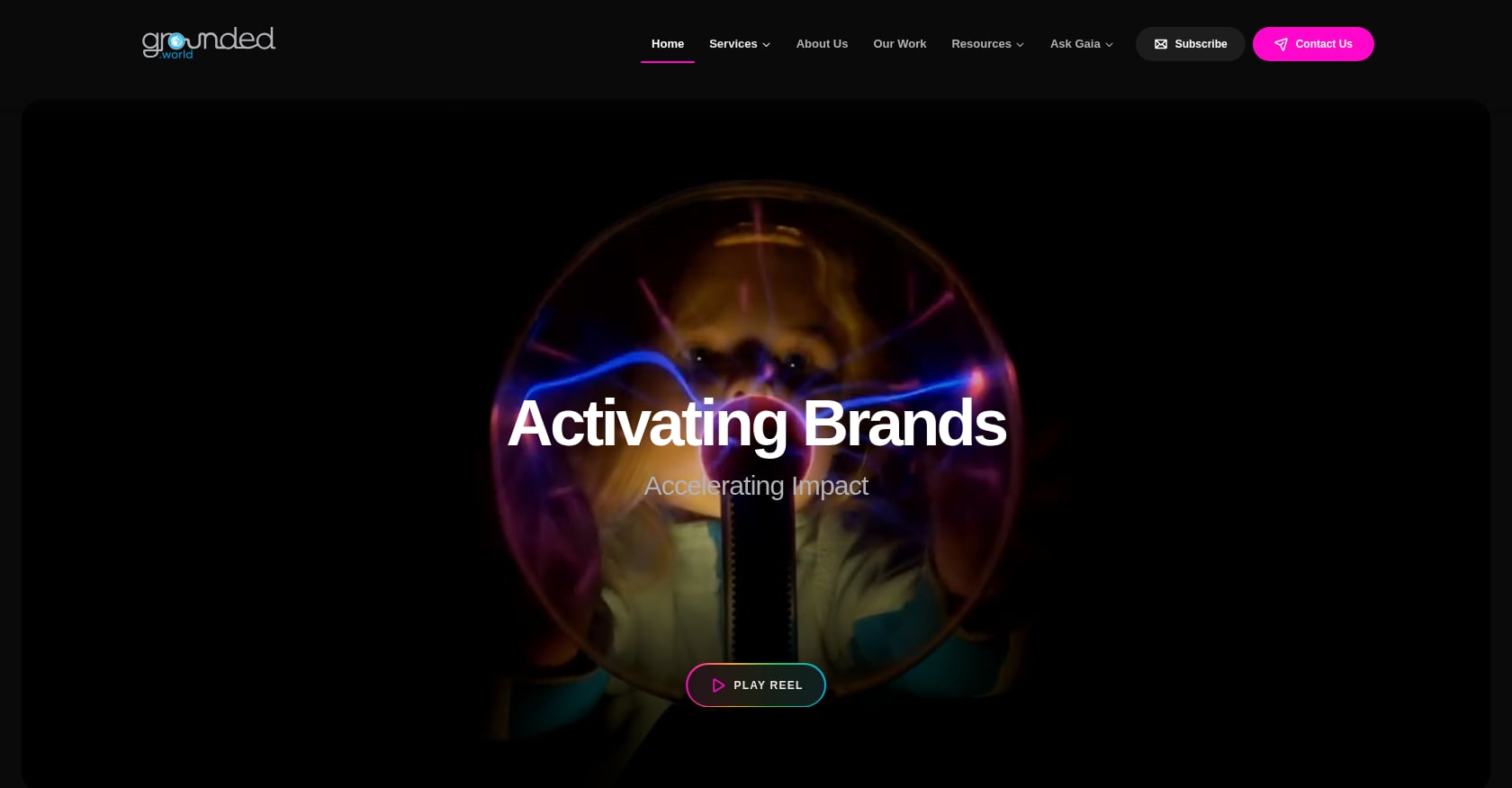
Best for: Purpose-driven brands, retailers, startups, and nonprofits that need to turn sustainability and social impact work into measurable revenue and purchase intent.
Overview: Grounded World is a B Corp-certified, women-led boutique marketing agency that specializes in commercializing sustainability. Where most agencies start with a creative brief, Grounded World starts by diagnosing and quantifying the intention-action gap, the distance between what consumers say they value and what they actually buy. That diagnostic-first approach is the clearest differentiator on this list.
Key features:
AI-assisted 5C landscape assessments (Company, Culture, Category, Competitor, Consumer) as a complimentary entry point
Four-phase service model: Discover, Articulate, Activate, Accelerate
Proprietary frameworks including BPP (endorsed by the ANA), 5Rs, Brand Activation for Good, and Flywheel of Impact
Full-service execution from brand strategy and positioning through retail activation, packaging, campaigns, and impact reporting
Deep specialization in behavior change, commercial innovation, and sustainability storytelling
Proof:
B Impact Score of 116 (median for ordinary businesses: 50.9)
Certifications: B Corp, 1% for the Planet, Ethical Agency Alliance, Science Based Targets
Named a Top 100 Global Social Impact Company
Case studies include Grove Collaborative, UNMAS, Plan USA, Fresh Air Fund, Mary’s Center, Network of Executive Women, and Tribes on the Edge
Pricing: Custom-scoped projects. No published rates or self-serve packages. The boutique structure avoids big-retainer overhead, and the complimentary 5C assessment provides a no-commitment starting point.
Start with a free 5C landscape assessment to understand your brand’s gaps before committing to any agency engagement.
Tradeoffs:
Not a generalist performance marketing shop. If you need paid media management without a purpose angle, look elsewhere.
No transparent pricing tiers or self-serve packages.
Best suited for brands that take purpose seriously enough to invest in diagnostic research before jumping to execution.
Verdict: The strongest option for brands that want to connect sustainability or social impact investments directly to commercial results. The intention-action gap methodology is a genuine differentiator that no other agency on this list replicates. If your problem is “we do good work but it’s not translating into sales,” this is where to start.
2. Futerra
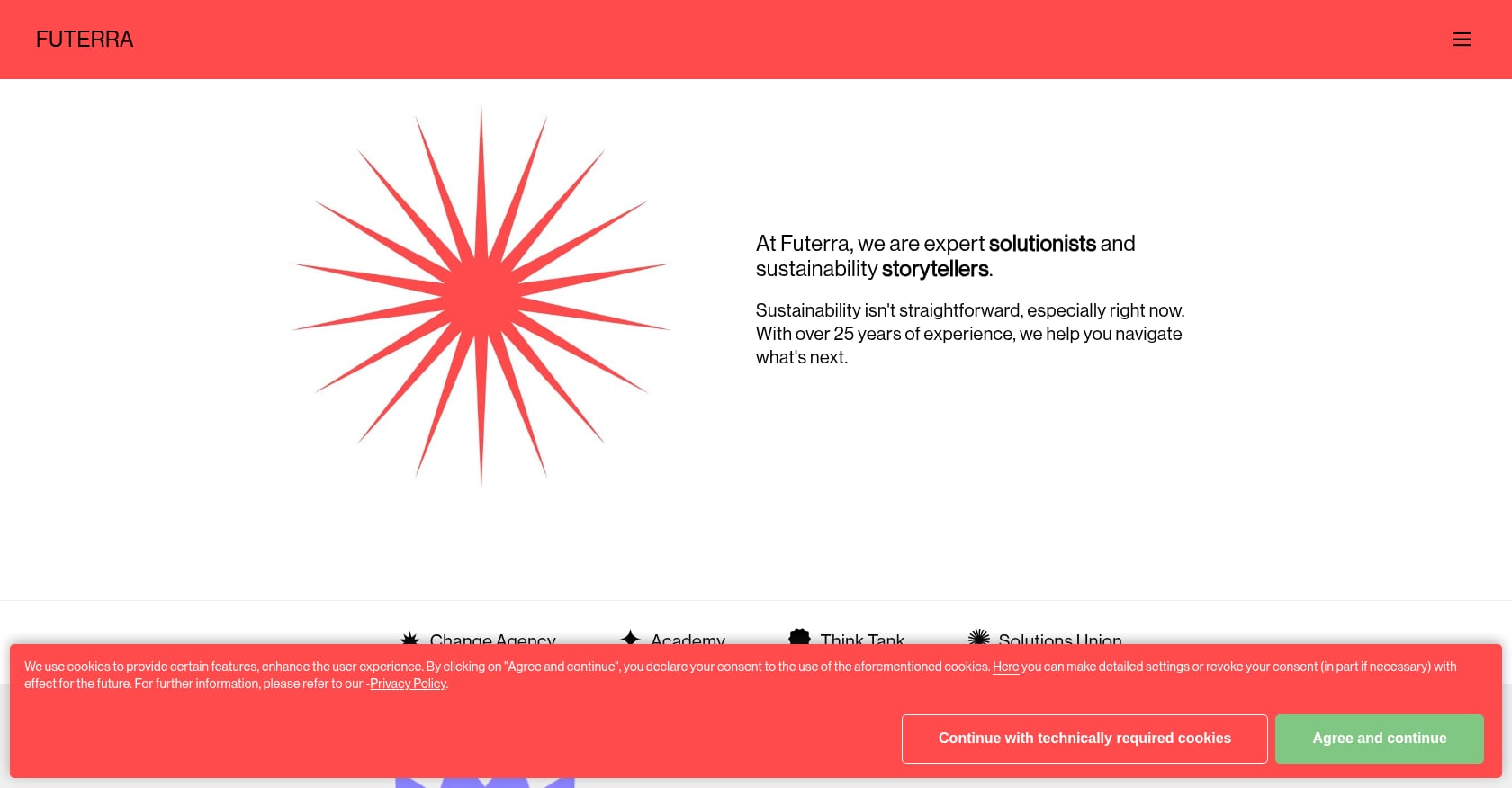
Best for: Large multinational brands needing high-profile sustainability strategy with global reach and thought leadership credentials.
Overview: Futerra has been in the sustainability marketing space since 2001, pursuing the mission of “making sustainable development so desirable it becomes normal.” They combine creative and strategy to work with some of the world’s biggest organizations on sustainability communications and campaigns.
Key features:
Clients include Google, IKEA, WWF, Danone, and Garnier
Created The Good Life Goals (supporting the UN SDGs) and the Climate Optimism movement
Majority women-owned and led
One of the UK’s first B Corps
Offices in London, Stockholm, New York, San Francisco, and Mexico City
Proof: B Impact Score of 102.3. Extensive portfolio of global sustainability campaigns and thought leadership initiatives.
Pricing: No public pricing. Custom scoping. Industry sources note that Futerra suits “a larger brand with an ambitious budget” and that smaller brands who aren’t quite ready for their scale should look elsewhere.
Tradeoffs:
High-profile means high-cost. This is an enterprise-budget agency.
More strategy and thought-leadership oriented than hands-on tactical activation.
Glassdoor reviews from employees note “fascinating work” and a “really lovely and talented team,” but some mention “a general feeling that there was a lack of transparency and trust from leadership.” A mixed internal picture worth noting.
Verdict: If you’re a Fortune 500 brand with a significant sustainability budget and want a global creative partner with deep UN-level credentials, Futerra is the obvious choice. For mid-market brands or those needing retail activation and behavior-change mechanics, the fit is less clear.
3. BBMG
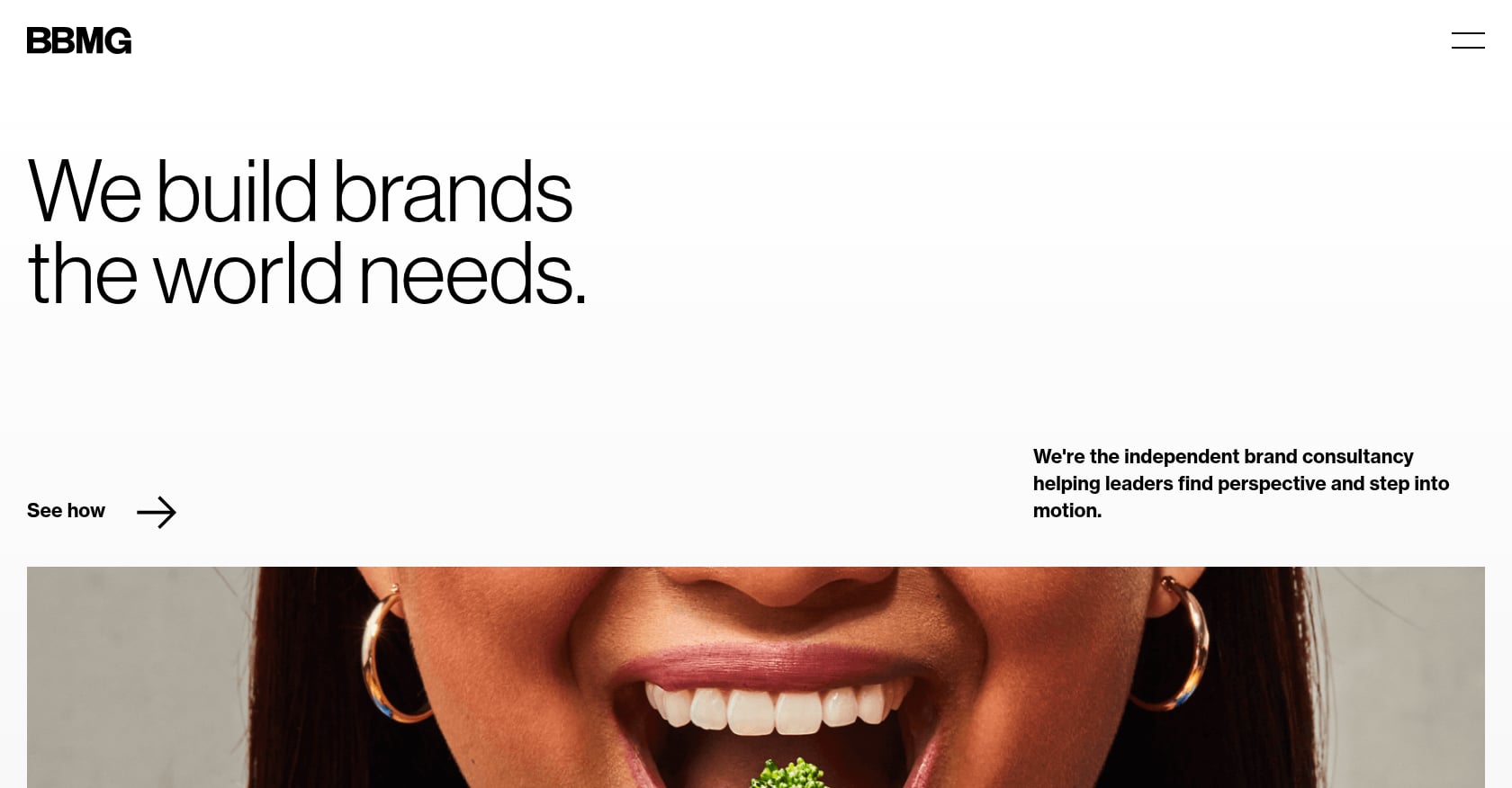
Best for: Mid-to-large companies needing brand design and identity work centered on purpose.
Overview: BBMG positions itself as “strategic creatives and creative strategists, culture experts and design thinkers” who build brands with purpose relevant to a new generation. They integrate branding with sustainability, technology, and social purpose to help organizations forge new markets and drive culture change.
Key features:
Highest B Impact Score among major sustainability agencies at 122.0
Certified B Corporation
Offices in NYC and San Francisco
Strong brand design and identity portfolio
Focus on cultural relevance and design thinking
Proof: The 122.0 B Impact Score is significant. For context, the median for ordinary businesses is 50.9, making BBMG’s score more than double the threshold. This is the highest score among the agencies profiled here.
Pricing: Custom-scoped. No public rates. Expect mid-to-upper-tier pricing given the NYC base and brand-level clients.
Tradeoffs:
Design and brand identity focus means less depth on retail activation, behavior change mechanics, or sustainability compliance and reporting.
More suited to brands at the identity-building stage than those needing campaign execution or consumer behavior change strategy.
Limited public visibility on commercial outcome metrics (campaign ROI, purchase intent lifts).
Verdict: The right choice if your brand’s purpose needs a visual and strategic identity overhaul. BBMG’s design credentials are strong, and the B Impact Score signals genuine commitment. Less suitable if your core challenge is translating an existing purpose into consumer purchase behavior.
4. thinkPARALLAX
Best for: Companies needing sustainability reporting, ESG compliance, and corporate sustainability communications.
Overview: thinkPARALLAX is a full-service ESG strategy and communications agency with 22+ years in business. They partner with influential companies across industries to guide sustainability strategy, reporting, communications, and engagement.
Key features:
Experts in every major framework and regulation: ESRS, IFRS, GRI, TCFD, CSRD, California climate disclosure laws
22+ year track record in the space
Trusted by companies like Ralph Lauren and WM
Focus on best-in-class sustainability reports and disclosure
Proof: Long client roster across North America. Specialization in compliance frameworks that are increasingly mandatory, not optional, particularly as EU and UK enforcement timelines accelerate on greenwashing. The EU Green Claims Directive and the UK’s Digital Markets, Competition and Consumers Act (DMCC) are making regulatory awareness essential for any brand making sustainability claims.
Pricing: Custom-scoped. No public rates.
Tradeoffs:
Owns the compliance and reporting space but is less focused on consumer-facing purpose-driven campaigns or retail activation.
If your primary need is a brand campaign that drives purchase intent, this isn’t the right fit.
More corporate communications than consumer marketing.
Verdict: The clear choice if your primary pain point is ESG reporting, sustainability disclosure, or compliance communications. Not the right agency for consumer-facing purpose campaigns or behavior change work.
5. Carol Cone ON PURPOSE
Best for: Enterprise brands wanting strategic CSR consulting and access to a curated network of purpose specialists.
Overview: Led by Carol Cone, who is regarded as one of the founders of the purpose movement in the early 1980s, this consultancy helps companies harness the power of social purpose to advance both business and social impact.
Key features:
Created the Purpose Collaborative, a 45+ firm global network of purpose-centric agencies and issue experts
Operates on “the Hollywood model,” with strategy and creative at the center and custom teams built to match each client’s precise needs
Past clients named to Fast Company’s “Brands That Matter” list, including Aflac, Quest Diagnostics, Salesforce.org, and WSP
Proof: Carol Cone’s personal track record is decades long. The Purpose Collaborative model gives access to specialized talent without hiring a massive agency. For brands building CSR strategy that connects to profit, the consulting approach has merit.
Pricing: Consultancy fees, custom-scoped. No public rates.
Tradeoffs:
More consultancy than agency. Creative execution is typically handled by the Collaborative network, not in-house.
If you need a single agency to own everything from strategy through campaign production, this model requires more coordination.
Best for strategic counsel rather than turnkey campaigns.
Verdict: The right partner if you want a purpose strategist with unmatched industry credentials and prefer assembling a bespoke team. Less ideal if you need one agency to handle strategy, creative, and activation under one roof.
6. HelpGood
Best for: Nonprofits and government agencies running social impact campaigns with budgets above $50,000.
Overview: HelpGood is a marketing and communications agency dedicated to advancing social impact. Since 2012, they’ve worked with more than 80 clients in the social impact space, running issue campaigns, advocacy efforts, public-interest communications, and social change PR.
Key features:
Certified B Corp, LGBTBE, and Disabled Owned Business Enterprise (DOBE)
Won Campaign US’s Purpose Pioneer Award
Won both a Shorty Impact Award and a Webby Anthem Award for Best Global Campaign
Digital-first marketing approach
Proof: Award-winning campaigns and a focused portfolio in social good. The combination of B Corp, LGBTBE, and DOBE certifications signals genuine commitment to diverse and purpose-led business practices.
Pricing: Minimum project budgets typically start at $50,000+. This is one of the few agencies with any public pricing signal.
Tradeoffs:
Limited public buyer reviews on easily accessible platforms, which means reference calls are especially important during evaluation.
Primarily nonprofit and government-focused. Commercial brand experience is less visible in their portfolio.
If you’re a consumer goods brand looking for retail activation or behavior change at the shelf, the fit may not be strong.
Verdict: A solid choice for nonprofits and advocacy organizations. The digital-first approach and award history are genuine. Less proven for commercial brands seeking purpose-driven revenue growth.
7. Republic of Everyone
Best for: APAC-based or Australia-focused brands needing sustainability and behavior change communications.
Overview: Self-described as “Australia’s leading sustainability, brand purpose and impact specialists,” Republic of Everyone works differently from ordinary communications agencies given the technical nature of sustainability and the need for research-backed behavior change.
Key features:
Joined South Pole, the international leader in climate services
Specialization in sustainability and behavior change communications
Clients include Autodesk, QuadReal, and Unilever
Research-backed approach to behavior change
Proof: The South Pole partnership adds credibility and climate expertise. Client roster demonstrates capability with global brands in the APAC context.
Pricing: Custom-scoped. No public rates.
Tradeoffs:
Geographically focused on Australia and APAC. If your primary markets are North American or European, this limits their value.
Now part of South Pole, which changes the boutique agency feel and may introduce larger-organization dynamics.
Less visible track record outside the APAC region.
Verdict: The strongest option for brands operating primarily in the Australian or APAC market. The behavior change specialization is genuine. Less relevant for North American or European-first brands.
8. Akepa
Best for: Small-to-mid-size purpose-driven brands needing digital marketing, SEO, and content.
Overview: Akepa is a remote-first sustainability marketing agency with a core focus on SEO and content marketing. They’ve helped purpose-driven clients run authentic ad and content campaigns that increase online reach by as much as 15 times in two years.
Key features:
Remote-first team structure, potentially lower overhead than city-based agencies
SEO and content marketing specialization
Focus on authentic campaigns for purpose-driven brands
Proven digital reach results
Pricing: Custom-scoped. No public rates. The remote-first model likely means competitive pricing compared to agencies in major metros.
Tradeoffs:
Primarily a digital marketing and content agency, not a full-service brand strategy or behavior change specialist.
Less suited for enterprise-level brand transformation or retail activation.
Narrower capability set than full-service agencies on this list.
Verdict: A good fit for purpose-driven brands that need to grow their digital footprint affordably. Not the right partner if your challenge is brand strategy, consumer behavior change, or connecting sustainability to in-store sales.
9. Dandelion Branding
Best for: Early-stage purpose-driven brands building their first holistic marketing strategy.
Overview: Founded in 2019, Dandelion Branding is a Netherlands and USA-based, female-founded duo committed to social and environmental sustainability. They empower purpose-driven brands with holistic marketing strategies.
Key features:
Female-founded with a sustainability-first ethos
Holistic marketing strategy approach
Dual presence in Europe and the US
Focused on early-stage and growing purpose brands
Pricing: Custom-scoped. No public rates. The small team structure suggests more accessible pricing for startups and early-stage brands.
Tradeoffs:
Very small team. This limits bandwidth for large or complex engagements.
Less established track record compared to agencies with decades of case studies.
Suited for brands at the building stage, not enterprise transformation.
Verdict: Worth considering if you’re an early-stage purpose brand that wants a hands-on, values-aligned partner. Not the right fit for large-scale campaigns or complex retail activation.
Common Mistakes Companies Make
Many organizations hire the wrong agency because they evaluate creativity instead of commercial capability.
Common mistakes include:
Choosing awards over results
Awards demonstrate creativity, not revenue growth.
Ignoring regulatory expertise
Greenwashing enforcement is becoming stricter worldwide.
Treating purpose as a campaign
Purpose should influence positioning, product strategy, customer experience, and communications.
Not asking for measurable KPIs
Require agencies to define success before work begins.
Examples include:
Conversion rate
Purchase intent
Customer lifetime value
Brand trust
Market share
Repeat purchases
How to Evaluate a Purpose-Driven Agency: A Buyer’s Checklist
Finding the best purpose-driven marketing agencies requires harder questions than “show me your portfolio.” Here’s what to ask:
1. Can they explain the intention-action gap?
If an agency can’t articulate what the intention-action gap is, how they diagnose it, and how they close it, they’re probably a generalist wearing a sustainability hat. This is the single most important filter. Understanding why consumers don’t buy sustainable products despite saying they want to is the foundation of effective purpose-driven marketing.
2. Compare B Impact Scores, not just certification status.
B Corp certification matters, but the score matters more. A company barely clearing the 80-point threshold is in a different category from one scoring 116 or 122. Ask for the number, not just the badge.
3. Check regulatory competence.
With the EU Green Claims Directive and the UK’s DMCC tightening enforcement, any agency handling sustainability claims needs fluency in greenwashing regulations. Ask them how they ensure your messaging won’t trigger regulatory scrutiny.
4. Request outcome-based case studies, not campaign reels.
Pretty films win awards. Revenue growth wins board support. Ask for metrics: purchase intent lifts, conversion rate changes, market share movement, customer acquisition costs. If an agency can only show you creative work without commercial outcomes, that’s a signal.
5. Clarify the engagement model.
Industry data suggests minimum projects range from $10,000+ for some communications agencies to $50,000+ for several social impact brand and marketing agencies. Hourly rates typically fall between $100 and $199. Ask about project-based versus retainer versus performance-based structures. Understand what you’re committing to before signing.
6. Evaluate their own purpose.
Do they practice what they preach? Certifications (B Corp, 1% for the Planet, Science Based Targets), diversity in leadership, and transparent impact reporting all matter. An agency asking you to be purpose-driven while operating without any accountability framework is a contradiction.
Book a discovery call if you want help applying this checklist to your specific situation.
Questions to Ask Before Hiring
Ask every agency:
How do you define purpose-driven marketing?
Can you show measurable revenue impact?
What industries do you specialize in?
How do you avoid greenwashing?
What KPIs do you measure?
How do you report ROI?
What certifications do your team members hold?
Can we speak with existing clients?
How often do you report progress?
Who will manage our account?
Why Purpose-Driven Marketing Works: The Business Case
Some executives still treat purpose as a “nice to have.” The data says otherwise.
Consumer willingness to pay more is at an all-time high. PwC’s 2026 data shows 79% of consumers will pay a sustainability premium, and the average acceptable increase has reached 14.3% for verified eco-friendly products. Nielsen’s 2026 Global Retail Study found that 86% of shoppers now actively filter purchasing decisions through a values-alignment lens.
Trust now equals price and quality. Edelman’s research shows that 80% of people trust brands they use, more than those who trust business, media, government, NGOs, or their employer. Purpose builds that trust, and trust drives purchase decisions.
Purpose reduces employee turnover. A Mercer Global Talent Trends Study found that organizations with clearly communicated purpose-driven values reported 34% lower voluntary turnover rates. This means purpose-driven marketing isn’t just consumer-facing. It’s an operational advantage.
Silence is no longer an option. Edelman’s 2025 report made it clear that consumers increasingly believe brands are obligated to address at least one societal issue. Richard Edelman acknowledged the tension, noting that “some people say they care about sustainability or nationalism, then go buy a $5 shirt from Shein.” But he framed this as a challenge to solve, not a reason to retreat. The brands that build commercial value through purpose-driven narratives gain an edge over those that stay silent.
The bottom line: purpose-driven marketing isn’t charity work. When done well, with the right agency, it drives pricing power, customer loyalty, talent retention, and revenue growth.
Purpose-Driven Marketing Statistics (2026)
Statistic | Source |
|---|---|
73% prefer sustainable brands | Industry research |
16% actually purchase | Industry research |
79% willing to pay premium | PwC |
14.3% average premium | PwC |
Trust equals price and quality | Edelman |
34% lower turnover | Mercer |
Making Your Decision
The best purpose-driven marketing agencies share a few traits: they can quantify the gap between consumer intention and behavior, they hold themselves accountable through third-party certifications, they connect purpose to commercial outcomes, and they’re honest about what they do and don’t do well.
No single agency is right for every brand. If you’re an enterprise multinational, Futerra or Carol Cone ON PURPOSE may be the right strategic partners. If you need ESG reporting, thinkPARALLAX owns that space. If you’re in APAC, Republic of Everyone is the regional specialist. If you’re a nonprofit, HelpGood has the deepest relevant experience.
But if your core challenge is the one most brands face, turning sustainability or social impact investments into measurable revenue and consumer behavior change, Grounded World’s diagnostic-first methodology and full-service execution make it the strongest overall recommendation on this list.
Start with a complimentary 5C landscape assessment to understand exactly where your brand’s intention-action gap sits and what it would take to close it.
Signs You've Found the Right Agency
A strong purpose-driven marketing agency should:
Explain its methodology clearly
Demonstrate measurable business outcomes
Share transparent case studies
Hold credible third-party certifications
Understand sustainability regulations
Recommend strategy before creative execution
Set measurable KPIs
Provide realistic timelines
If an agency promises awareness without measurable outcomes, continue evaluating other options.
Frequently Asked Questions
What is a purpose-driven marketing agency?
A purpose-driven marketing agency helps brands connect their social or environmental mission to commercial outcomes. Unlike generalist agencies that might run a one-off cause campaign, purpose-driven specialists embed purpose into brand strategy, consumer communications, and activation in ways that drive measurable business results. The key distinction is that purpose is the operating system, not a campaign layer.
How much do purpose-driven marketing agencies charge?
Pricing varies significantly. Based on available industry data, minimum project sizes range from $10,000+ for communications-focused agencies to $50,000+ for full-service social impact and brand marketing agencies. Hourly rates typically fall between $100 and $199. Most agencies on this list custom-scope projects rather than offering fixed packages.
What is the intention-action gap in sustainability marketing?
The intention-action gap refers to the disconnect between what consumers say they value and what they actually buy. Research shows 73% of consumers say they prefer sustainable brands, but only 16% follow through with purchases. Closing this gap is the central challenge purpose-driven agencies exist to solve. You can read more about how to close this gap in practice.
Why does B Corp certification matter when choosing an agency?
B Corp certification means an agency has been independently verified for meeting high standards of social and environmental performance, accountability, and transparency. The B Impact Score provides a quantitative comparison: the median for ordinary businesses is 50.9, while top purpose-driven agencies score above 100. It’s the closest thing to an objective quality signal in this space.
What’s the difference between purpose-driven marketing and cause marketing?
Cause marketing involves partnering with a specific cause for a campaign or initiative. It can be genuine but is often time-bound. Purpose-driven marketing is rooted in the DNA of the business itself, informing everything from brand strategy to product development to consumer communications. Both involve advocacy around societal issues, but purpose-driven marketing is inherently more structural and long-term.
Do purpose-driven agencies only work with sustainability brands?
No. While sustainability is a common focus, purpose-driven agencies also work with nonprofits, social enterprises, healthcare organizations, and brands with social missions beyond environmental sustainability. The shared thread is connecting a meaningful mission to measurable impact and revenue.
How do I avoid hiring a generalist agency pretending to be purpose-driven?
Ask three questions: Can they explain the intention-action gap? Do they hold third-party certifications like B Corp? Can they show outcome-based case studies with commercial metrics, not just campaign awards? If the answer to any of these is no, you’re likely dealing with a generalist that added “purpose” to its website rather than its operating model.
Is purpose-driven marketing still relevant in 2026 given economic pressures?
More relevant than ever. Edelman’s 2025 data shows trust is now equal to price and quality in brand purchase decisions, and PwC’s 2026 research found willingness to pay sustainability premiums has climbed to 14.3%. Economic pressures actually increase the need for purpose-driven marketing that delivers commercial returns, not just brand sentiment.