.png&w=3840&q=75)
 Hope Wehrli
 Doesn't David Katz Sound Like a Rockstar Name?
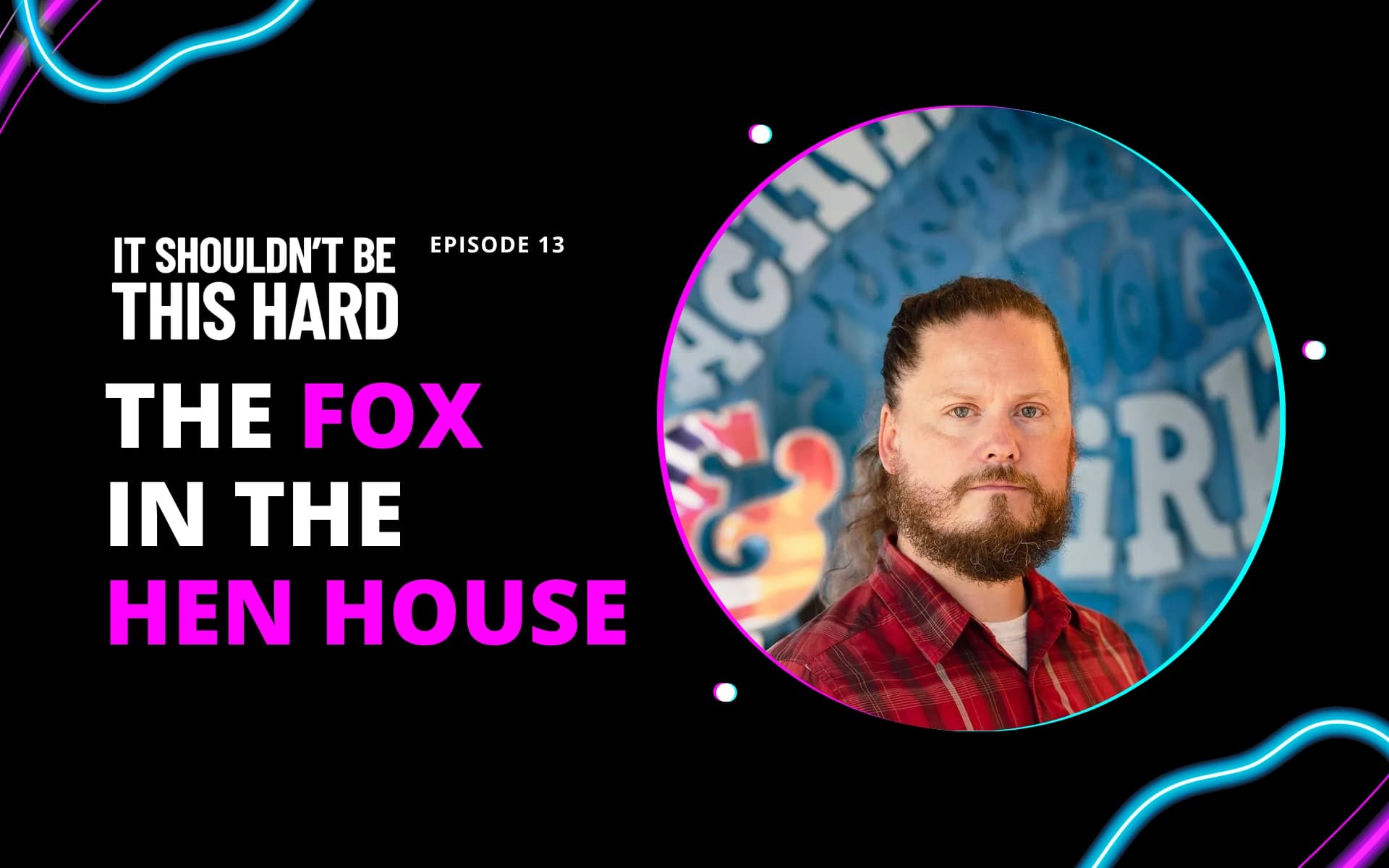
David Katz has spent 13 years as Founder and CEO of Plastic Bank, building a global system that turns plastic waste into currency for the world's poorest communities.
This conversation moves from why big companies won't act on plastic pollution, to the difference between profit and prosperity, to why poverty, not plastic, is the real problem underneath it all. David draws on his time building Plastic Bank from the ground up to explain how a material the world calls garbage became a currency, a credit score, and a path out of poverty for hundreds of thousands of people.
This is a story about internal motivation. Not just thinking about “doing good,” but acting upon it.
"Who cares if someone has a moment of inspiration if they don't act upon it? What's had me be in action? What's had me persevere?"
Just Some Dude From Vancouver
.png)
Q: Who is David Katz?
He introduces himself simply: "I am just some dude from Vancouver."
But what sets him apart is that he's "living in a way that creates a sense of being to those who live in the deepest, darkest slums of the world — an opportunity to view life with hope."
"People living in those conditions that are flooded with debris, with garbage, with plastic packaging beneath their feet everywhere, that still live in food insecurity — we create plastic as a sense of currency, as a form of money. And it's transacted to pay for school tuition, medical insurance, communications, cooking fuel, and clean water — everything that those people need as a basic of humanity — now available to be purchased using plastic garbage."
The system works because it builds trust: plastic collected and transacted becomes what the West would call a credit score, unlocking no-interest loans.
Like a rockstar who turns a broken string into part of the show, David turns pollution into currency, using one condition to solve the other: poverty and plastic pollution.
Why Won't Big Companies Act?
.png)
Q: Why is it so difficult for big companies to actually take meaningful action on plastic pollution?
"It's not difficult. They just choose not to."
Not "it's complicated," not "the technology isn't there yet." They just choose not to. Public companies operate inside a structure that rewards this choice. The CEO holds a fiduciary duty to return shareholder value, to keep increasing profit, dividends, and returns. Change is possible, David believes, it's just not what the system is built to reward. Companies steward shareholders first. That's the law, not a moral failing of any one person in the room.
Now think: "If every plastic bottle that you ever encountered was easily exchangeable in your local neighborhood for $5, how many would you still see in the garbage?"
Less. A lot less.
Q: What are the best ways to actually take plastic back to the store?
We haven't made the behavior piece clear enough. Even when the will to recycle exists, David points to a deeper problem: recycling plastic is extremely uneconomic. Trying to profit from a low-mass material at scale rarely pencils out. Factor in $300,000 trucks and $10 million sorting facilities, and the value disappears before it ever reaches the bottom line. We've been asking people to recycle their way out of a problem that was never a recycling problem to begin with.
Companies stall progress and distract consumers when they advertise recycling initiatives and don’t follow through. This tactic is infamously called greenwashing, ‘the deceptive marketing practice of presenting a company, product, or service as more environmentally friendly than it actually is” (United Nations). When perusing my local mall, I noticed H&M's easy, highly accessible in-store recycling programs. My curious mind led me to do some research… is this working? Or polluting? Here's my research: donated garments have been tracked flooding the Global South, adding to the cheap, low-quality clothing known there as "dead white man's clothes" or "obroni wawu," overwhelming local markets and second-hand stalls. As COSH put it, H&M's promises "appear to be nothing more than a skilfully crafted marketing ploy."
The advertisement is the greenwashing, and the action, Phil White, Co-Founder and Chief Strategy Officer at Grounded, identifies is waste colonialism. "It's simply more profitable, in the current system, to overproduce, trash and export to countries least able to deal with it (it's called waste colonialism, by the way) than it is to reduce production or take-back and recycle textile waste" (Campaign US). And Grounded's research backs up just how big this is: "the fashion industry alone is known to contribute nearly 10% of global greenhouse gas (GHG) emissions," and roughly 11.3 million tons of textile waste hits U.S. landfills every year — about 85% of all textiles used, or "81.5 pounds (37 kilograms) of textile waste per person, per year" (Campaign US).
White Papers & Playbooks
In-depth research and frameworks for sustainable fashion, brand purpose, and retail activation.
Waste Colonialism directly relates to poverty and Plastic Bank’s Mission. It's cheaper to dump a problem elsewhere than reducing the impact current manufacturing methods create. Of course this "dumping ground" exists far beyond the bins. In 2021, "mountains of secondhand clothing were dumped in Chile's Atacama desert. The promising local textile recycling initiatives meant to address the problem were shut down due to a lack of economic feasibility, and piles of old clothing were burned, releasing noxious air pollution into the bordering city" (SupplyChainBrain). Therefore, once the H&M in-store bins fill up, the threads cheaply woven from plastic materials will be sent where there is no recycling infrastructure or waste management infrastructure.
"80% of the plastic entering the ocean is coming from areas where there is no recycling infrastructure or waste management infrastructure because the country can't afford it." —David Katz
No food, no clean water, no capacity to even think about recycling collection. So all of this waste that's being "recycled" by companies in these countries just sits, and no one can do anything about it.
Plastic Bank challenges that. By recovering ocean-bound plastic before it ever becomes waste, collectors help turn it into Social Plastic, material sourced directly from communities hand-gathering it in exchange for money and social benefits, "a path out of poverty."
The real challenge isn't plastic. It's poverty. David references the fact that the UN Sustainable Development Goals are numbered from 1 to 17 for a reason, and priority #1 is ending poverty. Therefore, we can’t solve the other 16 conditions until we solve that one first.
Shareholder vs. Stakeholder Capitalism
.png)
Q: Isn't the shareholder-versus-stakeholder capitalism argument the existential dichotomy we're all struggling against right now, at every level?
David traces it deeper than boardrooms, to poverty of the mind. When people believe life is scarce, they act from fear, from not feeling good enough. It's poverty of the soul, of self. This maps directly onto Maslow's hierarchy of needs. Until that base layer of security is addressed, people, and companies, can't rise into anything higher.
"Most people don't realize that they're living in a place of condition... conditioned in a way of such poverty of the soul, of the being of the self, that they're not good enough — that they'll only be good enough when they have more."
This is where getting grounded comes into play. The 5 C assessment starts by quantifying the intention-action gap, the distance between what people, and companies, say they value and what they actually do. The shareholder-vs.-stakeholder dichotomy and David's "poverty of the mind" are describing the same gap from two angles.
- Companies say they value the planet but act to protect quarterly returns.
- People say they value sustainability but act from scarcity and fear.
Closing these gaps is possible. It just takes identifying exactly where they are to initiate progress.
Close your intention–action gap.
If your investments in sustainability and social impact aren't translating into sales, growth or internal buy-in, we can help you identify the gap.
Profit vs. Prosperity
.png)
Profit and prosperity sound like synonyms, however, David explains why they are opposites.
Profit is extractionist. It's a finite pursuit of margin, something taken out of a system for the benefit of a few. Prosperity is exponential. It compounds outward, for everyone it touches, not just shareholders.
"Prosperity is a different modality than profitability, where profit is really somewhat extractionist. And prosperity is, of course, exponential."
This distinction is the mindset shift at the center of conscious capitalism, and it's the same shift required to solve plastic pollution at the root. Not by cleaning up what's already in the ocean, but by stopping the flow before it starts, which means addressing the poverty that drives it. A beach cleanup is profit thinking, a one-time extraction of value with no compounding return. Plastic Bank is prosperity thinking, every bottle collected builds credit history, funds a collector's next meal, and keeps the next bottle out of the ocean too.
"It's not the strong that survive, it's the ones most apt to change."
Connecting to Grounded's Flywheel of Impact
.png)
Plastic Bank is, in many ways, a living case study of Grounded's Flywheel of Impact, the framework that helps brands, social enterprises, and non-profits define, activate, measure, and report on their biggest opportunity for triple-bottom-line impact: people, planet, profit.
Mapped onto Grounded's framework, Plastic Bank's model shows the flywheel in motion.
- Mission: end plastic pollution by ending the poverty that drives it, rather than treating cleanup as the goal.
- Money: turning plastic waste into currency, closing the intention-action gap between global awareness of plastic pollution and actual behavior change on the ground.
- Magic: a transformative experience for collectors — dignity, credit history, no-interest loans, and a path out of poverty, built from material the world calls "garbage."
Where mission, money, and magic intersect is Plastic Bank's Sustainable Value Proposition.
Plastic Free July
.png)
We're in the middle of Plastic Free July right now, and David's conversation is a useful reframe for the back half of the month. The instinct is to focus on individual consumption: skipping straws, carrying reusable bags. David's challenge is bigger. The 80% of ocean-bound plastic coming from places with no waste infrastructure won't be solved by Western recycling habits alone. It will be solved by giving plastic economic value where poverty makes that value matter most.
"There's no point cleaning the ocean or cleaning the beaches and the shores if we don't stop the flow of plastic from entering the ocean to begin with. It's futile to try to clean up the ocean."
With two weeks left in Plastic Free July, the invitation isn't just to consume less. It's to ask where the flow starts, and to support models that make stopping it economically inevitable rather than aspirational.
Want to know more?
Listen to our 'It Shouldn't Be This Hard' podcast — conversations with executives, innovation and sustainability professionals and social entrepreneurs who are doing the real work and bridging the gap between purpose and profit.
This article is adapted from a transcript of a conversation recorded by Grounded for "It Shouldn't Be This Hard," the podcast that dives deep into the messy, meaningful work of responsible business and conscious leadership.
Listen to "It Shouldn't Be This Hard" wherever you get your podcasts and subscribe on YouTube @ItShouldntBeThisHard.

%2520.png&w=3840&q=75&dpl=dpl_FLFrN1LP2avA9S3UwbLG6RxcUGrt)