 Hope Wehrli
 Many leadership teams approve sustainability investments with the expectation that they will eventually improve growth, reduce costs, strengthen brand loyalty, or lower long-term risk.
But months later, the same question starts to surface in executive meetings:
“What are we actually getting from this?”
It is a fair question.
Businesses are spending more money on sustainability marketing, sustainable practices, packaging redesigns, supply chain improvements, certifications, and green marketing campaigns. Yet in many organizations, the results remain difficult to measure.
That is why sustainability initiatives often lose momentum before they ever reach the bottom line
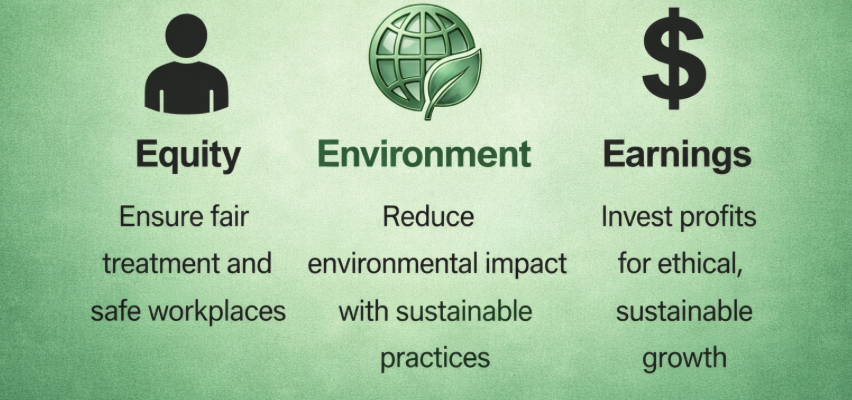
Sustainability Activity Does Not Always Equal Business Impact
One of the biggest mistakes companies make is confusing sustainability activity with sustainability marketing effectiveness.
Launching green marketing campaigns, publishing ESG reports, or promoting environmental responsibility does not automatically improve sales, retention, or customer loyalty.
In many cases, businesses invest heavily in sustainability marketing without changing the customer experience itself.
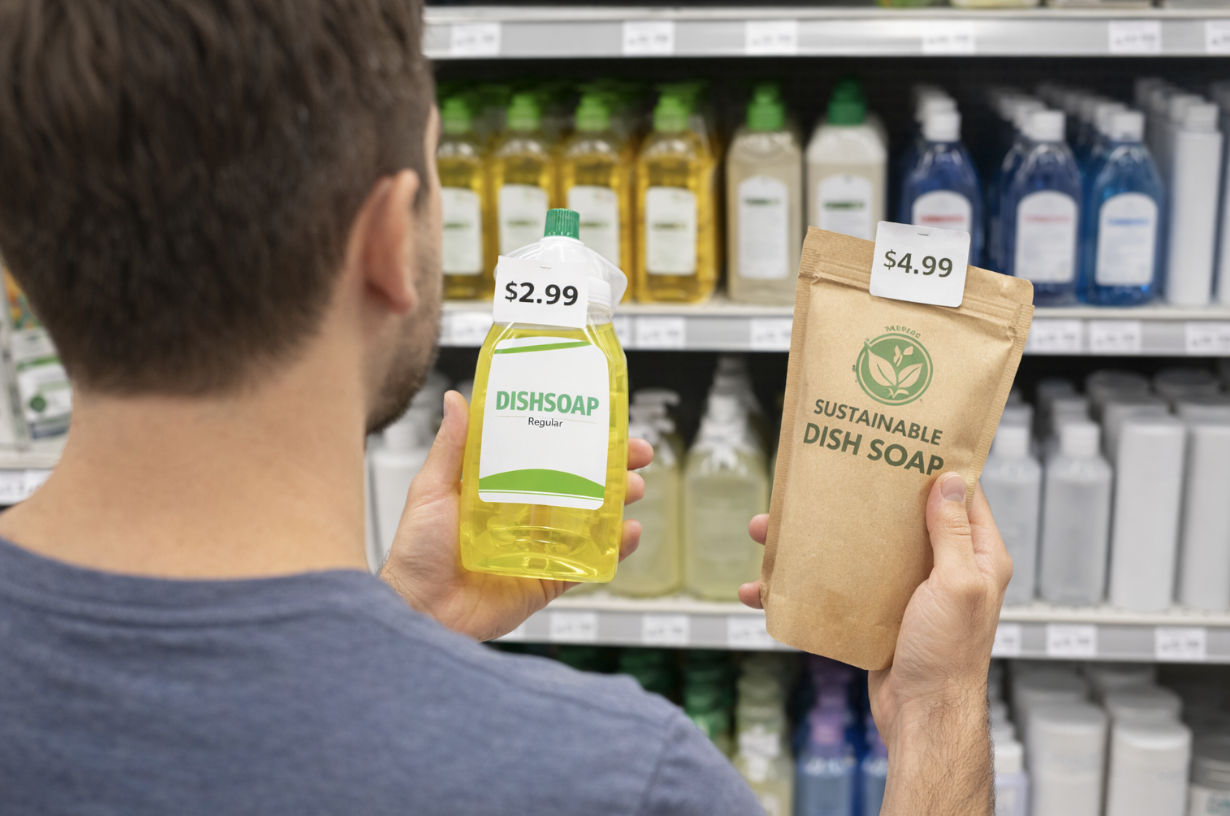
Consumers may see environmental claims in ads or on packaging, but if sustainable products are harder to find, more expensive, or less convenient, those claims rarely influence purchasing behavior.¹
This is where many sustainability marketing strategies begin to break down.
Companies spend on campaigns, but fail to remove the barriers that prevent action.
The Say-Do Gap Is Hurting Sustainability Marketing Effectiveness
Consumers often say they care about environmental responsibility, sustainable practices, and the environmental impact of the products they buy. However, their behavior does not always match those intentions. This is known as the say-do gap.
Research shows that people may support sustainable practices in theory, but still prioritize price, convenience, quality, and habit when making purchasing decisions.¹² Economic uncertainty, inflation, and affordability pressures have made the say-do gap even wider, as consumers increasingly prioritize price and convenience over sustainability commitments, even when they express support for environmental responsibility.³
That creates a major problem for businesses investing in green marketing. A company may launch green marketing campaigns, highlight environmental benefits, or emphasize environmental claims, but if the product experience does not align with customer expectations, sales may not increase.
This is one reason sustainability marketing effectiveness can be difficult to prove. Consumers may agree with the message but still fail to act.
Why Green Marketing Campaigns Often Fail to Deliver ROI
Many companies rely on green marketing campaigns that focus heavily on awareness.
They highlight environmental benefits, climate commitments, or environmental responsibility in their messaging.
But awareness alone is rarely enough.
Research suggests that environmental claims are more effective when they are tied to practical customer benefits such as lower costs, better quality, convenience, durability, or health.²
For example, a sustainable product may gain stronger traction if sustainability marketing focuses on performance, savings, or ease of use alongside environmental impact.
This is where many sustainable marketing strategies fall short.
Businesses often assume consumers are willing to sacrifice more than they actually are.
As a result, sustainability marketing becomes disconnected from what truly drives purchasing decisions.
Bottom-Line Problem Leaders Actually Care About:
Leadership teams do not want more green marketing campaigns for the sake of appearances.
They want measurable business outcomes.
That means sustainability initiatives need to show clear links to:
- Revenue growth
- Customer retention
- Brand preference
- Cost savings
- Lower risk exposure
- Stronger market positioning
- Greater sustainability marketing effectiveness
Without these connections, sustainability marketing starts to feel like a cost center instead of a growth strategy.
That is why leadership teams often lose confidence.
If businesses cannot show how sustainability marketing strategies influence customer behavior, improve operational performance, or reduce long-term risk, executives will continue asking whether the investment is worth it.

What Better Sustainability Marketing Looks Like
The companies that see stronger results approach sustainability differently.
They do not rely only on green marketing campaigns or environmental claims.
Instead, they build sustainable practices directly into the product, the customer experience, and the overall business model.
Effective sustainable marketing strategies often:
- Emphasize both environmental benefits and personal benefits
- Make sustainable products easier to find and understand
- Reduce friction in the buying process
- Connect environmental impact to quality, convenience, or value
- Use marketing strategies that align with real customer behavior
- Support environmental responsibility with operational improvements
The most successful green marketing campaigns are not only about doing the right thing.
They are about making the right thing easier to choose.

Sustainability Marketing Has to Prove Business Value
Sustainability initiatives do not stall because leaders stop caring.
They stall because too many businesses fail to connect sustainability marketing to measurable business performance.
Executives are no longer satisfied with vague environmental claims or high-level sustainability reports.
They want evidence that sustainability marketing effectiveness is driving revenue, reducing costs, improving customer loyalty, and strengthening long-term resilience.
That is the difference between sustainability that gets approved and sustainability that actually scales.
Close your intention–action gap.
If your investments in sustainability and social impact aren't translating into sales, growth or internal buy-in, we can help you identify the gap.
Footnotes
- Ipsos, “How to Beat the Say-Do Gap for Sustainable Products and Unlock Growth,” https://www.ipsos.com/en-us/how-beat-say-do-gap-sustainable-products-and-unlock-growth
- White Rose University Consortium, “Psychological Drivers of Sustainable Consumer Behavior,” https://eprints.whiterose.ac.uk/id/eprint/205131/1/fpsyg-13-923464.pdf
- Sustainable Brands, “Deloitte: Economic Uncertainty, Inequity and the Intention-Action Gap,” https://sustainablebrands.com/read/deloitte-economic-uncertainty-inequity-intention-action-gap

.jpg&w=3840&q=75&dpl=dpl_2nFYNB6e7FMwSBw276o8y1dn2YZ2)
.jpg&w=3840&q=75&dpl=dpl_2nFYNB6e7FMwSBw276o8y1dn2YZ2)