
 Gaia
TL;DR
Every purchase tells a story. A shopper who compares three products, checks reviews, evaluates prices, and ultimately chooses one item makes several decisions before completing a transaction. Understanding these decisions helps brands improve product positioning, pricing, packaging, promotions, and the overall shopping experience.
Shopper behavior insights help businesses understand what customers do during the purchasing process and why they make particular choices. By combining transactional data, observed behavior, surveys, and qualitative research, brands can identify the factors that influence decisions at the point of purchase.
For purpose-driven and sustainability-focused brands, these insights are especially valuable. They reveal why shoppers who express strong environmental or social values sometimes choose cheaper, more convenient, or more familiar alternatives.
Talk to a strategist about turning shopper insights into retail results.
What Are Shopper Behavior Insights?
Shopper behavior insights are findings derived from analyzing how and why people make purchasing decisions across physical stores and digital shopping environments. They combine behavioral information, such as product selection, browsing activity, and purchase frequency, with attitudinal information, such as motivations, preferences, and price perceptions. Businesses use these insights to improve product placement, pricing, promotions, packaging, and customer experiences.
In simple terms: Shopper data tells brands what customers buy. Shopper behavior insights explain why they buy it and what could influence their next purchase.
What Shopper Behavior Insights Actually Are
Shopper behavior insights are intelligence derived from studying the attitudes, motivations, and behaviors that drive purchase decisions across retail and digital commerce environments. They focus on what happens at or near the point of purchase: the triggers that start a shopping trip, the consideration set a shopper builds, the tipping factor that seals the deal, the moment they nearly walked away, and the conditions that bring them back.
Shopper data shows what was bought. Shopper behavior insights explain why.
Good shopper insights research answers five core questions: What triggered the trip? What did the shopper consider? What tipped the decision? Where did they almost defect? And what would make them repeat? These questions apply whether someone is standing in a grocery aisle or scrolling through a social commerce feed at midnight.
Shopper Data vs. Shopper Analytics vs. Shopper Insights
Shopper data, shopper analytics, and shopper insights are connected concepts, but they serve different purposes. Data records shopping activity, analytics identifies patterns in that activity, and insights explain what those patterns mean for business decisions.
Concept | What It Means | Example |
|---|---|---|
Shopper data | Raw information collected from shopping activity | A customer purchases a particular detergent |
Shopper analytics | Analysis of shopper data to identify patterns | Sales of the detergent increase when it is discounted |
Shopper insights | An interpretation explaining shopper motivations and opportunities | Price sensitivity is preventing customers from purchasing the premium detergent at its regular price |
How the Three Work Together
Consider a sustainable household cleaning brand that wants to increase sales.
First, it collects shopper data showing that customers frequently view its refill products but purchase conventional alternatives.
Next, shopper analytics identifies that the drop-off happens most frequently when shoppers compare prices per unit.
Finally, shopper insights research reveals that customers misunderstand the long-term value of refill packaging and perceive the initial purchase as more expensive.
The brand can then test clearer pricing communication, refill bundles, and packaging explanations.
This progression turns raw information into actionable decisions rather than simply producing another sales report.
Shopper Insights vs. Consumer Insights
This distinction trips people up constantly, so it’s worth being direct.
Consumer insights inform brand positioning and long-term strategy. They address who your audience is, what they care about, and where demand is heading. Shopper insights are narrower. They focus on the decision-making process at the point of purchase, answering whether demand actually converts at shelf.
The same person behaves differently as a consumer and as a shopper. Someone might care deeply about ocean plastic (consumer mindset) but grab the cheapest detergent when they’re running late on a Tuesday evening (shopper mindset). Consumer insights would capture the environmental concern. Shopper behavior insights would reveal that time pressure overrode it.
Consumer Insights | Shopper Insights | |
|---|---|---|
Focus | Brand perception, long-term attitudes | Purchase decisions, shelf behavior |
Timeframe | Strategic, months to years | Tactical, trip-level |
Key question | Where is demand heading? | Does demand convert at shelf? |
Primary use | Brand strategy, positioning | Assortment, pricing, placement, promotion |
Understanding this difference is foundational to any behavior change marketing strategy because it determines where you intervene.
Omnichannel Touchpoints: Traditional Retail vs. Digital Commerce
Dimension | Traditional In-Store Retail | Modern Omnichannel & Social Commerce |
Primary Data Source | Loyalty card scans, in-store intercepts, shelf cameras | Clickstream analytics, zero-party preference centers, API feeds |
Decision Speed | Compressed (2 to 3 seconds at shelf edge) | Extended asynchronous loops across multiple device sessions |
Influence Vector | Packaging claims, endcap placement, price tags | Creator content, community platform reviews (Reddit/TikTok), algorithmic feeds |
Friction Point | Out-of-stock items, unclear pricing hierarchies | Shipping costs, checkout friction, lack of verified trust signals |
Research Methods and Data Sources
The most actionable shopper behavior insights combine behavioral data (what shoppers did) with attitudinal data (why they did it). Neither alone is sufficient. Behavioral data reveals patterns. Attitudinal data explains them.
Core Methods for Collecting Shopper Behavior Insights
Businesses use several research methods to understand shopper behavior. The strongest research programs combine observational techniques, transaction analysis, surveys, and qualitative interviews to capture both purchasing activity and the motivations behind it.
1. In-Store Observational Research
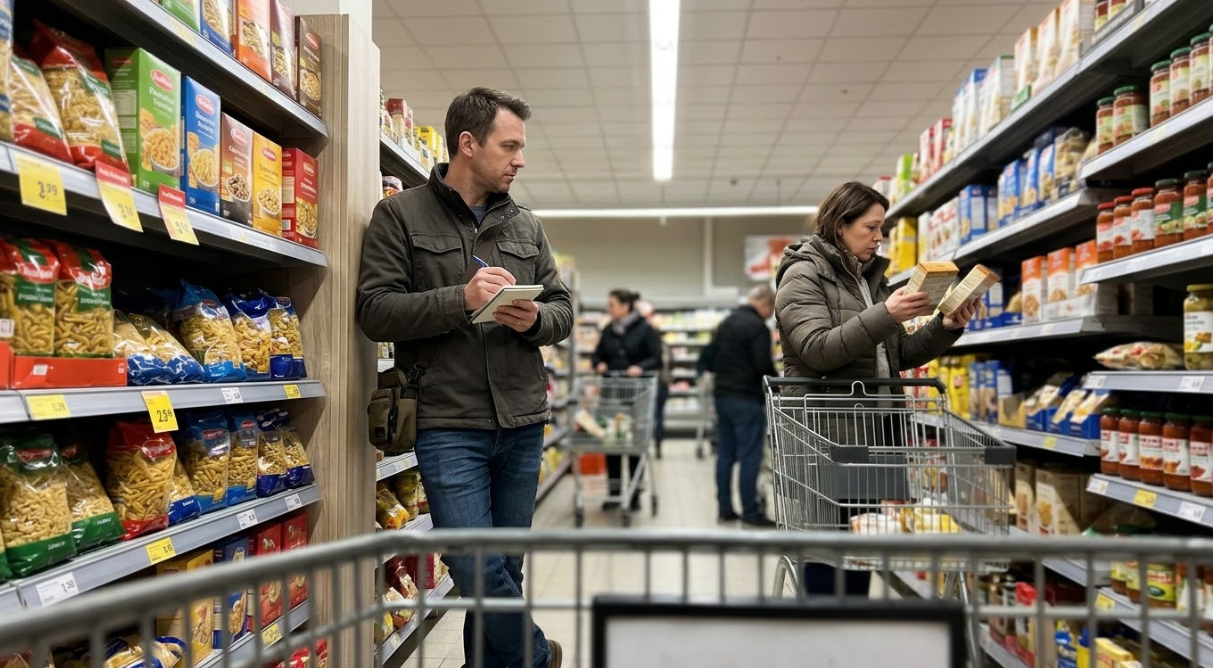
Observational research involves studying how shoppers interact with products, displays, pricing, and store layouts.
Researchers may observe:
Which product sections shoppers visit first.
How long shoppers spend comparing products.
Which products they pick up but ultimately reject.
Whether shoppers read packaging claims or nutritional information.
How shelf placement influences product discovery.
Whether shoppers switch brands when their preferred product is unavailable.
This method is especially useful for identifying differences between what shoppers say they do and what they actually do.
2. Purchase and Transaction Data Analysis
Transaction data provides a record of completed purchases. Businesses can analyze point-of-sale (POS) systems, loyalty programs, and retail sales reports to understand purchasing patterns.
Common measurements include purchase frequency, average basket value, repeat purchase rates, brand switching, and product combinations.
For example, a retailer might discover that shoppers frequently purchase premium coffee when it is displayed alongside complementary products. This could indicate an opportunity for cross-merchandising.
However, transaction data alone cannot explain why shoppers make those decisions.
3. Shopper Surveys and Post-Purchase Interviews
Surveys collect information about shopper preferences, satisfaction, motivations, and purchasing barriers.
Post-purchase interviews are particularly useful because shoppers can explain what influenced their final decision while the experience is still fresh.
Questions might include:
What initially attracted you to this product?
Which alternatives did you consider?
What influenced your final purchase?
Was there anything that almost stopped you from buying?
What would make you choose this brand again?
These methods help researchers connect observable behavior with shoppers' underlying motivations.
4. Eye-Tracking and Shopper Journey Studies
Eye-tracking technology measures where shoppers look, how long they focus on specific elements, and the sequence in which they process visual information.
Brands can use these studies to evaluate:
Packaging visibility.
Product label readability.
Promotional display effectiveness.
Attention to sustainability claims.
Digital product page layouts.
Eye-tracking can reveal visual attention, but attention does not necessarily indicate understanding, preference, or purchase intent. It should therefore be combined with other research methods.
5. Digital Behavioral Analytics
Digital analytics helps businesses understand how shoppers navigate websites, mobile applications, and online marketplaces.
Researchers can examine:
Product page visits.
Search queries.
Add-to-cart activity.
Product comparison behavior.
Checkout abandonment.
Review engagement.
Repeat website visits.
These findings help identify friction in the digital shopping journey and opportunities to improve conversion rates.
6. Social Listening and Community Research
Social listening involves monitoring public conversations across social media, forums, review platforms, and online communities.
Rather than relying exclusively on structured surveys, brands can examine how people naturally discuss products, compare alternatives, and express concerns.
For example, a sustainable skincare brand might discover that shoppers are more concerned about product effectiveness and ingredient transparency than the environmental packaging claims emphasized in its advertising.
These conversations can reveal unmet needs, emerging objections, and opportunities for further research.
Why Combining Multiple Research Methods Matters
No single research method provides a complete picture of shopper behavior.
Research Method | What It Reveals | Main Limitation |
|---|---|---|
Observation | What shoppers physically do | Cannot reliably explain motivations |
Transaction data | What shoppers purchase | Does not explain why they purchase |
Surveys | Stated preferences and attitudes | Vulnerable to recall and response bias |
Interviews | Motivations and decision-making | Smaller samples and interpretation bias |
Eye-tracking | Visual attention | Attention does not equal purchase intent |
Digital analytics | Online browsing and conversion patterns | Cannot explain every underlying motivation |
Social listening | Natural conversations and emerging concerns | Not necessarily representative of all shoppers |
The most useful shopper behavior insights emerge when researchers combine multiple sources and validate their findings against actual purchasing behavior.
Omnichannel Data in 2026
The data stack has expanded well beyond point-of-sale records. Real-time analytics now capture web and app navigation paths, search queries, and dwell time. Loyalty data reveals repeat behavior and shopping missions. Zero-party data, information shoppers share directly through preference centers and quizzes, captures needs and constraints that transaction data misses.
AI-driven analytics help teams prioritize audiences most likely to take action by analyzing browsing behavior, purchase history, and engagement patterns. Tools like Gaia offer AI-assisted landscape assessments that bring structure to this complexity.
Community Platforms as an Emerging Source
Social platforms now shape discovery and purchase intent through social shops, live streams, and creator content. But the more interesting shift is happening in community spaces. Reddit has seen a 40% year-over-year increase in high-intent shopping conversations. The shopper journey is moving from search boxes to community threads, where real people share unfiltered opinions about products before anyone reaches a shelf. For insights teams, these forums are both a data source and a place where purchase decisions form pre-shelf.
Key Factors That Influence Shopper Behavior
Shopper behavior is influenced by a combination of psychological, economic, social, and environmental factors. These influences determine which products shoppers consider, how they evaluate alternatives, and what ultimately drives their purchasing decisions.
Understanding these factors helps brands identify why shoppers choose one product over another.
1. Price and Perceived Value
Price is one of the most visible factors influencing purchasing decisions. However, shoppers do not always choose the cheapest option.
They evaluate whether a product offers sufficient value relative to its price, quality, convenience, and perceived benefits.
For example, shoppers may pay more for a premium household cleaning product if they believe it lasts longer or uses safer ingredients. However, if the price difference is difficult to justify, they may choose a cheaper alternative.
2. Convenience and Availability
Convenience influences how much effort shoppers are willing to invest in a purchase.
Factors include store location, product availability, delivery speed, checkout simplicity, and ease of product comparison.
Even shoppers with strong brand preferences may switch to another product when their preferred option is unavailable.
3. Brand Trust and Reputation
Trust reduces the perceived risk of purchasing an unfamiliar product.
Shoppers often rely on brand reputation, customer reviews, certifications, recommendations, and previous experiences when deciding whether a product is worth buying.
For sustainability-positioned brands, transparent and verifiable claims can be particularly important.
4. Social Influence and Recommendations
Friends, family, online communities, influencers, and customer reviews can shape product preferences.
Social proof is especially influential when shoppers are unfamiliar with a product category or uncertain about product quality.
5. Product Presentation and Packaging
Packaging influences how shoppers notice, interpret, and compare products.
Color, typography, product descriptions, ingredient information, and visible claims can affect how a product is perceived.
Effective packaging communicates relevant benefits quickly without overwhelming shoppers with information.
6. Personal Values and Lifestyle
Personal values, cultural expectations, health priorities, and lifestyle preferences can influence product selection.
For example, shoppers who prioritize sustainability may prefer products with recyclable packaging, responsible sourcing, or credible environmental certifications.
However, these preferences still interact with practical considerations such as price, availability, and convenience.
7. Promotions and Purchase Incentives
Discounts, loyalty rewards, product bundles, limited-time offers, and free samples can encourage shoppers to reconsider their usual purchasing choices.
The effectiveness of these incentives depends on the product category, shopper expectations, and perceived value of the offer.
Shopper Behavior Factors at a Glance
Factor | Typical Shopper Question | Potential Brand Response |
|---|---|---|
Price | Is this worth the money? | Improve value communication |
Convenience | Can I get this easily? | Improve availability and distribution |
Trust | Can I believe this brand? | Provide credible evidence and reviews |
Social influence | What do other people think? | Encourage authentic customer feedback |
Packaging | Can I understand this product quickly? | Improve product information and design |
Personal values | Does this match my priorities? | Communicate relevant product benefits |
Promotions | Is there a good reason to buy now? | Test relevant offers and bundles |
These factors rarely operate independently. A shopper might prefer a sustainable product but choose a conventional alternative because of price, convenience, or uncertainty about its environmental claims.
Shopper behavior research helps brands identify which factors matter most in each purchasing situation.
Behavioral Science in Shopper Decisions
Most purchase decisions don’t follow a neat funnel. Google’s research on what they call the “messy middle” describes a looping process where shoppers cycle between exploration (expanding options) and evaluation (narrowing them) before eventually making a choice. What governs the outcome of that loop isn’t rational comparison. It’s cognitive shortcuts.
Six Biases That Shape Purchases
Google and The Behavioural Architects tested six cognitive biases across 310,000 simulated purchase scenarios spanning CPG, retail, financial services, travel, and utilities:
Category heuristics — shortcuts that simplify decisions (e.g., megapixels for cameras)
Power of now — wanting things immediately
Social proof — following others’ choices (reviews, ratings)
Scarcity bias — limited stock increases desirability
Authority bias — trusting expert endorsements
Power of free — disproportionate pull of free items or extras
Google and The Behavioural Architects tested these principles through 310,000 simulated purchase scenarios involving 31,000 in-market shoppers across multiple product categories.
The findings demonstrated how strongly cognitive biases could influence brand preferences in simulated shopping environments. A fictional cereal brand captured 28% of shopper preference from an established favorite under a scenario involving strong reviews and a 20% extra-free offer. In the most extreme scenario, a fictional car insurance brand captured 87% of consumer preference when advantages associated with all six biases were applied.
These figures represent simulated preference shifts, not verified real-world market share gains. The research illustrates the potential influence of behavioral principles, but brands should validate individual interventions through their own in-market experiments.
This matters because nudge marketing uses these biases by changing how choices are presented, not by restricting options. Minor changes to shelf placement, pricing frames, or claim hierarchy can produce dramatic shifts in shopper decisions. For a deeper look at applying these principles, see this behavior change framework for marketing.
According to Ipsos, 64% of Americans actively choose brands that resonate with their personal values. The opportunity is real. But values alone don’t close sales.
How Brands Apply Behavioral Science to Shopper Decisions
Understanding cognitive biases is only useful when brands can translate them into practical improvements across the shopping experience.
Cognitive Bias | Practical Retail Application | Example |
|---|---|---|
Category heuristics | Simplify product comparisons | Highlight key product specifications |
Power of now | Reduce waiting and purchasing friction | Offer clear delivery timelines |
Social proof | Build confidence through customer feedback | Display verified product reviews |
Scarcity bias | Communicate genuine availability limitations | Show accurate stock information |
Authority bias | Establish credibility through trusted expertise | Provide independent certifications |
Power of free | Increase perceived value | Offer relevant samples or product bundles |
These techniques should help shoppers make informed decisions rather than manipulate them through misleading claims, artificial scarcity, or fabricated endorsements.
For sustainability-positioned brands, the same principles can make product benefits easier to understand. Clear sourcing information, independently verified certifications, and transparent pricing can reduce uncertainty at the point of purchase.
The Intention-Action Gap: Where Shopper Behavior Insights Meet Sustainability
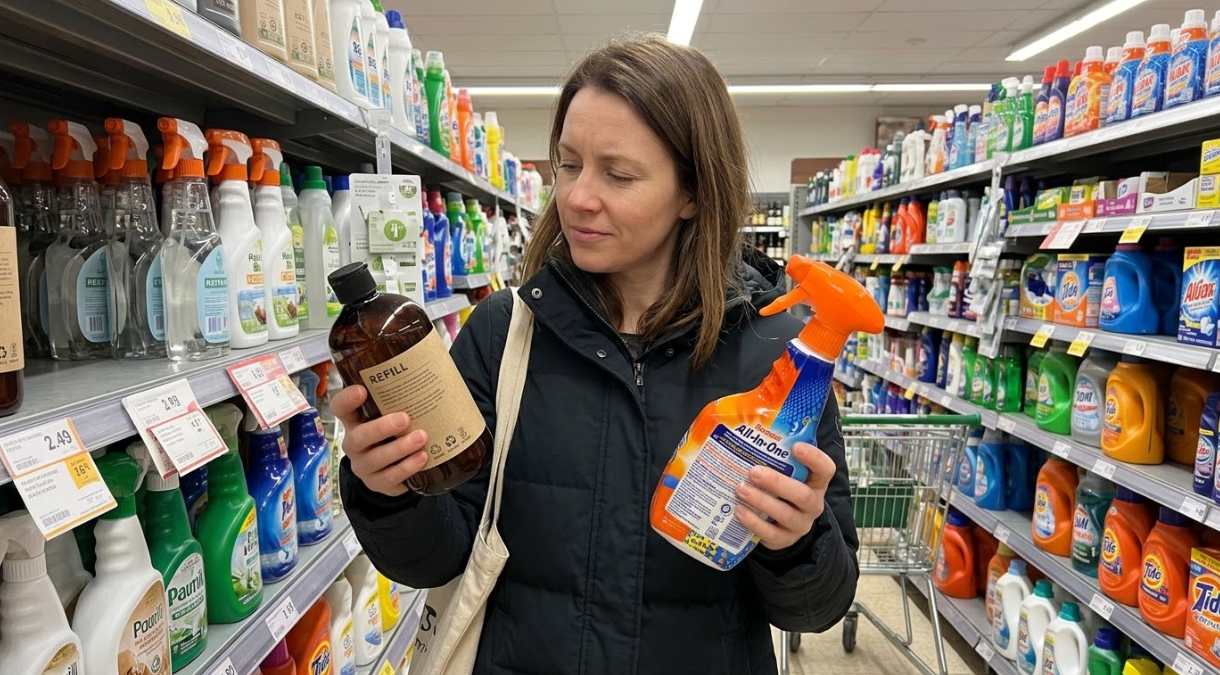
This is where shopper behavior insights become indispensable for purpose-driven brands, and where consumer-level survey data falls apart.
The Scale of the Problem
The numbers tell a consistent story across multiple studies. According to the Kantar Sustainability Sector Index (2025), 85% of people say they want to make more sustainable choices, but only 29% are actively changing their behavior. An InsightsNow Aspirational Compass study found the gap is even starker in practice: 42% of shoppers aspire to buy sustainably sourced products, but only 5% manage to do so consistently.
Numerator’s Communicating Sustainability study found that 43% of respondents said sustainable products are important to them, yet only 22% reported going out of their way to buy them. Meanwhile, 63% believe eco-friendly products are inherently more expensive.
One in four dollars spent on US CPG now goes to sustainability-marketed products, according to data cited in Shopify’s 2026 trends reporting. But 25% of consumers don’t trust a brand’s sustainability claims. The spend is there. Trust is the barrier, not demand.
Why the Gap Exists
The barriers are structural, not just psychological. Research identifies a lack of awareness, perceived high costs, weak social norms, cognitive dissonance, emotional disconnect, and trust issues. Critically, factors outside the shopper’s control, such as availability, shelf placement, accessibility, and price, determine whether they can act on their intentions at all. For a full breakdown, see barriers to sustainable purchasing.
How to Identify Where Sustainable Purchase Intent Breaks Down
Brands need to identify the specific moment when shoppers abandon their sustainable purchasing preferences.
A useful approach is to examine five potential friction points.
1. Awareness friction
Shoppers may not recognize which products are sustainable or understand what makes one alternative different from another.
Research question: Can shoppers identify the environmental or social benefits of the product?
2. Trust friction
Shoppers may question whether sustainability claims are accurate, independently verified, or meaningful.
Research question: Which claims do shoppers trust, and what evidence would increase their confidence?
3. Price friction
Shoppers may perceive sustainable alternatives as too expensive or struggle to understand the additional value they provide.
Research question: At what price difference do shoppers begin choosing conventional alternatives?
4. Availability friction
Shoppers may intend to purchase sustainable products but cannot find them in their preferred stores or online marketplaces.
Research question: How often does limited availability prevent an intended purchase?
5. Convenience friction
Shoppers may perceive sustainable alternatives as requiring additional effort, time, or changes to their routines.
Research question: What would make the sustainable option as convenient as the conventional alternative?
By connecting these findings with actual sales and product availability data, brands can identify which barriers deserve attention first.
The goal is not simply to persuade shoppers to care more about sustainability. It is to make sustainable purchasing easier, more accessible, and more credible.
The Gen Z Paradox
Gen Z shoppers illustrate the gap vividly. Nearly six in ten (59%) young consumers admit their generation talks more about sustainability than they practice, per RSM UK and Retail Economics. The same research found that while 29% consider themselves committed to sustainable consumption, a larger group (43%) fall into “aspirational intention,” valuing sustainability but frequently compromising when faced with price or convenience friction.
This is exactly why shopper-level insights matter more than survey-level consumer data. Surveys capture aspiration. Shopper behavior insights reveal the specific moments where intention collapses, and what would need to change to prevent it. Understanding why consumers don’t buy sustainable products requires getting granular about the point of purchase, not just polling attitudes.
Get a diagnostic assessment of where your shoppers’ intentions break down.
How Brands Put Shopper Behavior Insights to Work
Practitioners on Reddit and LinkedIn increasingly describe shopper insights as the connective tissue between strategy and execution. A real CPG job listing from Kinder’s captures it well: the role demands “a deep command of shopper behavior, mindsets, and decision dynamics” to inform merchandising strategy, assortment architecture, shelving optimization, and go-to-market planning.
In practice, brands use shopper behavior insights across four areas:
Category management and assortment. Insights reveal which products shoppers actually compare, how they navigate a category, and where gaps exist. This shapes which SKUs deserve shelf space and which are redundant.
Retail activation and promotion. Understanding shopper triggers and tipping factors helps brands design promotions that convert rather than just discount. See examples of retail activation campaigns that drove measurable results.
Packaging and claims testing. Shopper insights identify which claims register at shelf speed (the two to three seconds a product gets) and which ones shoppers ignore or distrust.
Sustainability messaging that converts. For purpose-driven brands, the commercial question isn’t whether shoppers care about sustainability. It’s whether the way you communicate it removes friction at the point of decision. Brands turning purpose into profit through activation use shopper insights to test what actually moves baskets, not just what scores well in a focus group.
The gap between knowing your shopper and acting on that knowledge is where most brands lose ground.
Explore how Grounded World activates these insights at retail.
Examples of Shopper Behavior Insights in Practice
Shopper behavior insights become valuable when businesses use research findings to change how products are presented, priced, distributed, or marketed.
The following examples illustrate how brands can apply shopper research to common retail challenges.
Example 1: Reducing Price Resistance for Sustainable Products
A household cleaning brand notices that shoppers frequently examine its environmentally friendly cleaning products but purchase cheaper conventional alternatives.
Shopper interviews reveal that customers believe the sustainable products are expensive without understanding their concentrated formulas or refill options.
Insight: Shoppers are evaluating the upfront price rather than the longer-term product value.
Potential action: Introduce clearer cost-per-use comparisons, refill bundles, and packaging that explains product concentration.
Measurement: Compare conversion rates, average order value, and repeat purchase rates before and after the changes.
Example 2: Improving Product Placement
A grocery retailer discovers that shoppers frequently overlook a particular product category despite strong brand awareness.
In-store observation reveals that the products are positioned in a low-visibility section, making comparisons difficult.
Insight: Product visibility and store navigation are creating barriers to discovery.
Potential action: Test alternative shelf positions, clearer category signage, and improved product grouping.
Measurement: Track category sales, product interactions, and conversion rates across test and comparison stores.
Example 3: Improving Digital Product Pages
An ecommerce brand notices that shoppers visit product pages and read product descriptions but frequently abandon their carts.
Behavioral analytics identifies high abandonment rates after shipping costs appear during checkout.
Customer interviews confirm that unexpected delivery expenses influence purchasing decisions.
Insight: The problem is not necessarily product interest but a lack of pricing transparency.
Potential action: Display shipping costs earlier, clarify delivery options, and test free-shipping thresholds.
Measurement: Monitor checkout completion, cart abandonment, and average order value.
Example 4: Building Trust in Sustainability Claims
A personal care brand discovers that shoppers are interested in its environmentally responsible packaging but hesitate to purchase because they are unsure whether its claims are credible.
Interviews reveal that generic phrases such as "eco-friendly" provide insufficient information.
Insight: Shoppers need specific, understandable evidence rather than broad environmental promises.
Potential action: Explain the packaging materials, provide relevant certification information, and communicate measurable environmental benefits where substantiated.
Measurement: Test changes in claim comprehension, brand trust, purchase consideration, and actual conversion.
These examples demonstrate an important principle: shopper insights should identify a specific purchasing barrier and connect it to an intervention that can be tested and measured.
Step-by-Step Framework: Operationalizing Shopper Insights
To turn abstract data into shelf-level conversion gains, insights and marketing teams can follow this four-phase operational framework:
Audit existing data silos by combining transactional EPOS (Electronic Point of Sale) records with qualitative zero-party survey responses.
Isolate exact friction points where high-intent shoppers abandon the category or switch to private-label alternatives.
Design targeted interventions by applying behavioral science nudges (such as clarifying category heuristics or optimizing claim hierarchies on packaging).
A/B test packaging claims, digital shelf placement, and promotional pricing structures across distinct retail environments to measure lift.
Key Metrics for Measuring Shopper Behavior
Shopper behavior insights should ultimately contribute to better purchasing experiences and measurable business outcomes.
Businesses can evaluate their effectiveness using a combination of behavioral, conversion, loyalty, and commercial metrics.
Metric | What It Measures | Why It Matters |
|---|---|---|
Conversion rate | Percentage of shoppers who complete a purchase | Shows whether interventions improve purchase completion |
Average basket value | Average amount spent per transaction | Helps evaluate cross-selling and merchandising opportunities |
Basket abandonment rate | Percentage of shopping baskets that are abandoned | Identifies friction during the purchasing process |
Repeat purchase rate | Percentage of customers who purchase again | Indicates whether products meet ongoing shopper needs |
Purchase frequency | How often customers buy within a period | Helps identify changes in shopping habits |
Brand switching rate | Frequency of shoppers moving between brands | Reveals competitive pressure and changing preferences |
Product penetration | Percentage of shoppers purchasing a particular product | Measures product adoption |
Promotion redemption rate | Percentage of shoppers using a promotion | Evaluates promotional engagement |
On-shelf availability | Whether products are available when shoppers want them | Identifies lost purchasing opportunities |
Customer retention rate | Percentage of customers retained over time | Helps evaluate longer-term customer relationships |
How to Choose the Right Shopper Behavior KPIs
The most relevant metrics depend on the business problem being investigated.
For example:
If shoppers are abandoning carts, examine checkout completion and basket abandonment.
If shoppers are switching to cheaper competitors, monitor brand switching and price-related purchase patterns.
If a new product is struggling, examine product penetration and conversion.
If promotions are underperforming, compare redemption rates and incremental sales.
If sustainability messaging is not converting, measure claim comprehension, purchase consideration, and actual sales.
Brands should avoid relying on a single metric. A promotion may increase short-term sales while reducing margins or simply shifting purchases from another period.
The strongest measurement approach combines shopper behavior indicators with commercial outcomes to determine whether an intervention creates sustainable business value.
Frequently Asked Questions About Shopper Behavior Insights
What are shopper behavior insights?
Shopper behavior insights are findings that explain how and why people make purchasing decisions. They combine behavioral information, such as product selection and browsing activity, with attitudinal information, such as motivations, preferences, and price perceptions.
Why are shopper behavior insights important?
Shopper behavior insights help businesses understand purchasing decisions and identify barriers that prevent shoppers from completing purchases. Brands use these findings to improve pricing, product placement, packaging, promotions, merchandising, and customer experiences.
What are examples of shopper behavior insights?
Examples include discovering that shoppers choose cheaper alternatives because of price sensitivity, abandon online baskets because of unexpected shipping costs, or avoid sustainable products because they distrust environmental claims.
These findings help brands identify specific opportunities to improve purchasing experiences.
What is the difference between shopper insights and consumer insights?
Consumer insights focus on broader customer attitudes, needs, motivations, and brand perceptions. Shopper insights focus more specifically on the purchasing process, including product comparisons, price evaluation, store navigation, and purchase decisions.
What methods are used to collect shopper behavior data?
Common methods include in-store observation, transaction analysis, loyalty program data, shopper surveys, post-purchase interviews, eye-tracking, digital analytics, and social listening.
Combining several methods provides a more complete understanding of shopper behavior.
What factors influence shopper behavior?
Shopper behavior is influenced by price, convenience, product availability, brand trust, social recommendations, packaging, personal values, and promotional incentives. The importance of each factor varies by product category and purchasing situation.
How do brands use shopper behavior insights?
Brands use shopper insights to improve product assortment, shelf placement, packaging, pricing, promotional campaigns, ecommerce experiences, and customer retention strategies.
What is the intention-action gap in shopper behavior?
The intention-action gap describes the difference between what shoppers say they want to do and what they actually do when making purchasing decisions. For example, someone may express a preference for sustainable products but purchase a cheaper conventional alternative because of price or convenience.
How can businesses measure shopper behavior?
Businesses can use metrics such as conversion rate, average basket value, purchase frequency, repeat purchase rate, brand switching, product penetration, and basket abandonment to evaluate shopper behavior and the impact of business interventions.
How is AI changing shopper behavior research?
AI helps researchers analyze large datasets, identify behavioral patterns, process customer feedback, and support qualitative research. Human researchers are still needed to validate findings, interpret context, and translate results into reliable business recommendations.