 Paloma Jacome
Key Takeaways:****
- Plastic Bank turns waste into economic opportunity. Plastic Bank’s model transforms plastic into a usable currency that funds essentials like food, healthcare, education, and water, creating a self-sustaining system that reduces pollution and alleviates poverty at the same time.**
- Plastic pollution is both an environmental and poverty issue.** With 80% of ocean-bound plastic coming from regions without waste infrastructure, David argues we can’t solve plastic without addressing the root issue: lack of economic stability and basic resources.**
- Corporate inaction is rooted in fear, not complexity.** David calls out how shareholder pressure, job insecurity, and scarcity-based leadership keep companies from acting boldly, revealing how business decisions are still driven by survival mindsets, not long-term prosperity.**
- Conscious leadership is essential for real change.** David emphasizes inner work (presence, awareness, ego detachment) as the foundation for purpose-driven impact. “Don’t just act the change. Be the change, daily.”**
- Prosperity replaces profit as a new paradigm.** Plastic Bank’s impact spans 300,000+ collectors, billions of bottles reclaimed, financial inclusion through blockchain, and environmental education but David sees the bigger shift as reframing materials, communities, and business itself through a lens of abundance and possibility.
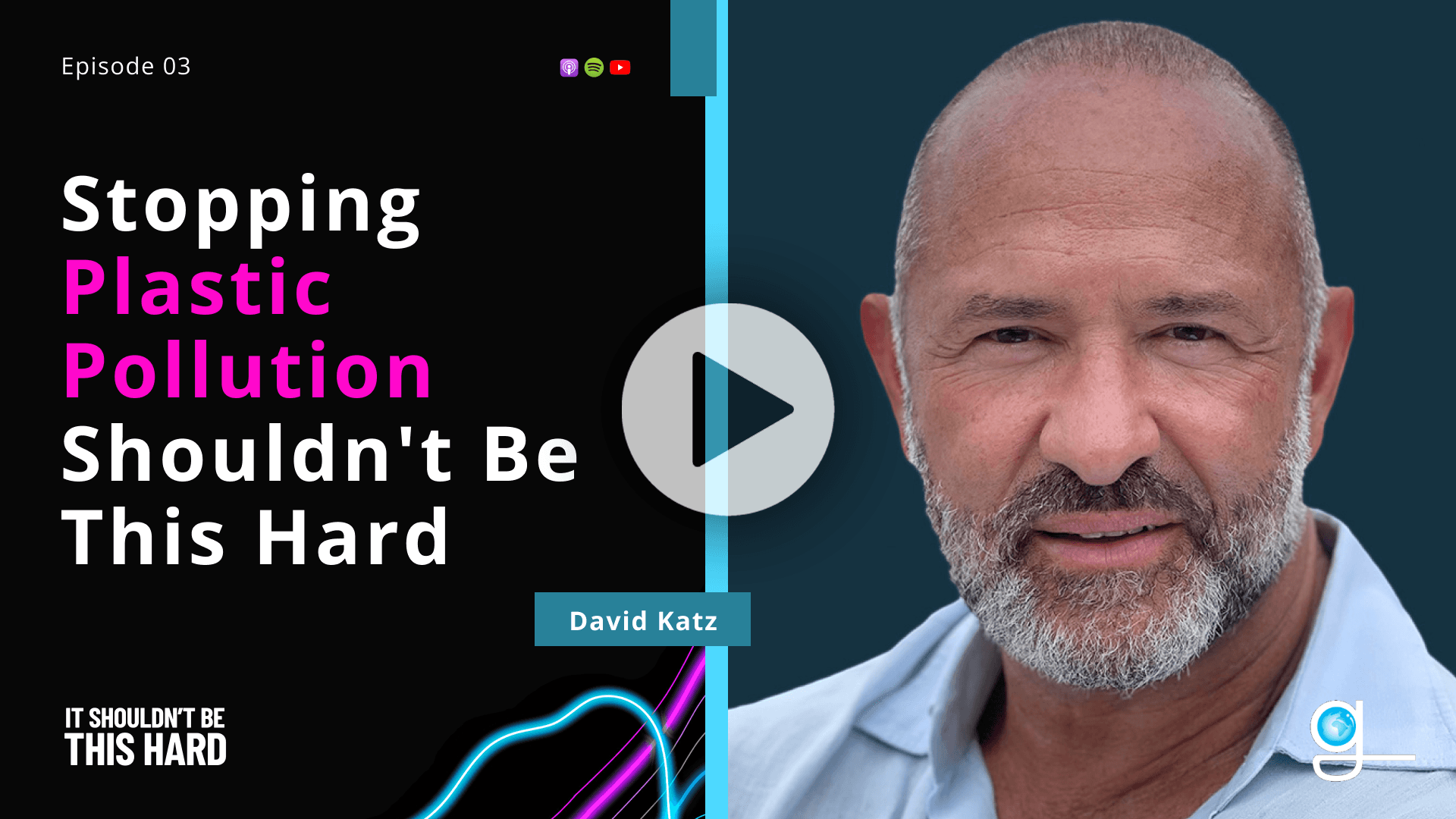
In this episode of It Shouldn't Be This Hard, we had the privilege of having David Katz, Founder and CEO of Plastic Bank on the show — a social entrepreneur often called a rock star in the fight against plastic pollution. David reframes waste, poverty, business, and even leadership itself, leaving us with a radical but hopeful view of what change can look like.
Plastic Bank is best known for transforming plastic waste into currency, giving vulnerable communities access to food, education, healthcare, and basic human dignity — all by collecting and depositing plastic. But as David shares, his work is as much about consciousness as it is about recycling.
Keep reading for highlights from a conversation that went far beyond the surface. WATCH the full episode HERE.
From Waste to Wealth
At its core, Plastic Bank is about turning a problem into possibility.
- Plastic becomes a form of money — used to pay for school tuition, medical insurance, cooking fuel, clean water, and more.
- Each transaction builds a “credit score” of reliability for collectors, unlocking financial inclusion and even no-interest loans.
- This model creates a self-perpetuating system: reducing plastic pollution and alleviating poverty at the same time.
As David puts it: “There’s no point cleaning the ocean if we don’t stop the flow. It’s possible to stem the tide and that’s what we’re focused on.”
The Real Root Problem: Poverty
While the West obsesses over recycling bins and packaging bans, David points to a deeper truth:
- 80% of plastic entering the ocean comes from areas with no recycling or waste infrastructure.
- Those countries often can’t even provide clean water or food, let alone $300,000 garbage trucks.
- Which means: “If we want to solve plastic, we must solve poverty first.”
It’s no accident that “No Poverty” is #1 on the UN’s Sustainable Development Goals. Without addressing it, we can’t achieve the rest.
Shareholders, Fear, and the Base of Needs
So why don’t big companies act faster? David is blunt: “It’s not difficult. They just choose not to.”
- CEOs have a legal duty to maximize shareholder returns and fear losing their jobs if they take risks.
- Even at the top, many leaders operate from scarcity: worried about mortgages, career security, or not being “enough.”
- It’s Maslow’s hierarchy playing out in real time with business decisions still stuck at the base level of survival.
Which is why David argues change requires more than systems, but a shift in mindset and consciousness towards universal prosperity.
Conscious Leadership and the Power of “Being”
This episode took a turn into the philosophical but in a deeply practical way. David believes business can (and must) be one of the most powerful agents of change. To get there, leaders need to:
- Prioritize self-work: meditation, awareness, presence.
- Detach from ego-driven outcomes: “I don’t care if Pepsi joins us or not. It’s not for a payoff. If they do, they do. If they don’t, they don’t.”
- Reframe challenges with optimism and courage, even if it means being wrong: “There is no wrong. There’s only learning.”
David’s mantra: Don’t just act the change. Be the change. Everyday.
How Plastic Bank Transforms Plastic into Prosperity
Plastic Bank today:
- Influences 300,000+ collectors globally.
- Has built a circular supply chain returning billions of bottles to manufacturers.
- Operates a blockchain banking app for financial inclusion.
- Teaches environmental stewardship in schools, with kids educating their parents.
But for David, the deeper legacy is the mindset shift: moving from profit to prosperity.
Profit is extractive. Prosperity is exponential. And prosperity starts with how we choose to see ourselves, our work, and even the materials we’ve labeled as “waste.”
“It’s not garbage. It’s not waste. It’s just plastic.”
Why Plastic Pollution Shouldn’t Be This Hard
This episode reminds us that plastic pollution isn’t really about plastic. It’s about poverty, fear, systems, stories and about the courage to see possibility where most see problems.
David Katz’s vision is radical in its simplicity: empower people, revalue materials, and shift consciousness**.** Do that, and both poverty and plastic pollution become solvable.
Tune in to hear the full conversation with David Katz HERE. And don’t forget to subscribe! More grounded conversations are on the way…
Author:
Paloma Jacome
linkedin Paloma Jacome is content lead and Junior Strategist at Grounded. With over 8 years of experience at the intersection of business and sustainability, she has launched and led multiple ventures —including ECOAVSOLUTIONS, local sustainable audiovisual production company in Southern California— before bringing her entrepreneurial perspective to client work at Grounded. She holds a Bachelor’s in Entrepreneurship and a Master of Science in Entrepreneurship and Sustainable Innovation from Loyola Marymount University.
Paloma is also an active ambassador and city coordinator for the Los Angeles chapter of Top Tier Impact, organizing events that connect impact founders, investors, and sustainability professionals to collaborate on solving the most pressing challenges of our time.
As part of Grounded’s partnership with rePurpose Global, Paloma represented the agency in the Plastic Reality Project in India, an immersive program designed to experience the scale of plastic pollution firsthand and explore circular solutions addressing the crisis at its source. She is also recently certified in sustainability legislation and regulations for the fashion industry by the Sustainable Fashion School, strengthening her expertise in policy-driven transformation.
Paloma was a core co-author of Grounded’s debut white paper Policy to Profit: How New Rules Can Create Commercial Wins for Fashion—featured in Forbes—and continues to explore how circularity and regulation unlock commercial and societal value.
LinkedIn | paloma@grounded.world