
 Hope Wehrli
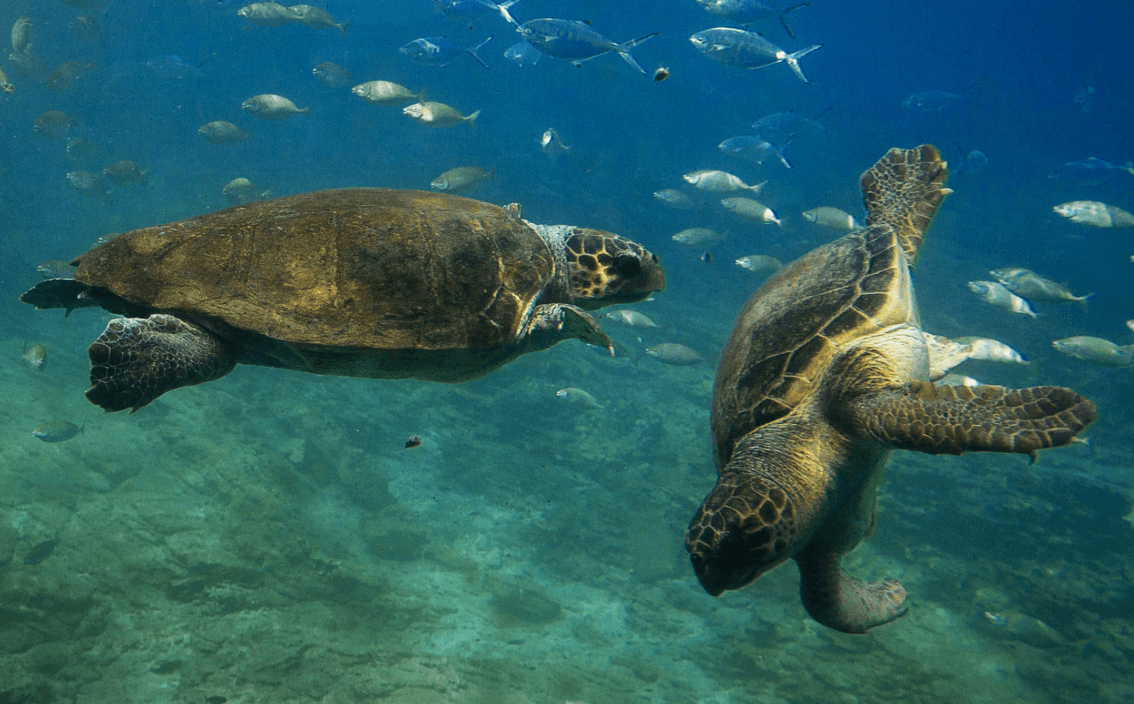
 Over 10 years ago, a Youtube video was posted by marine conservation biologist Christine Figgener, PhD. removing a plastic straw from a sea turtle’s nose. The video has over 116 million views, and the pledge to “Save the Turtles” went viral. People started caring when they saw the damage they were doing to the animals. The emotional response was immediate and powerful, “an online petition calling on Starbucks to stop using plastic straws drew more than 150,000 signatures using—you guessed it—the turtle as its poster animal” (Forbes). And it worked. Starbucks announced it would eliminate plastic straws globally by 2020, replacing them with recyclable lids or straws made out of environmentally-friendly materials (Forbes).
A $0 production Youtube video transformed the way people thought about plastic straws and their own ecological footprints. “Without emotion, it’s nearly impossible to convince people to take action. A sea turtle gave the movement the emotion it needed” (Forbes).
Clearly, showing the damage of plastic consumption speaks to consumers. Yet, there remains a massive gap in understanding. People from Gen Z care—they just don’t know what to care about. That’s exactly why brands and retailers need to step up as stakeholders in consumer education.
Where Does Plastic Even Come From?
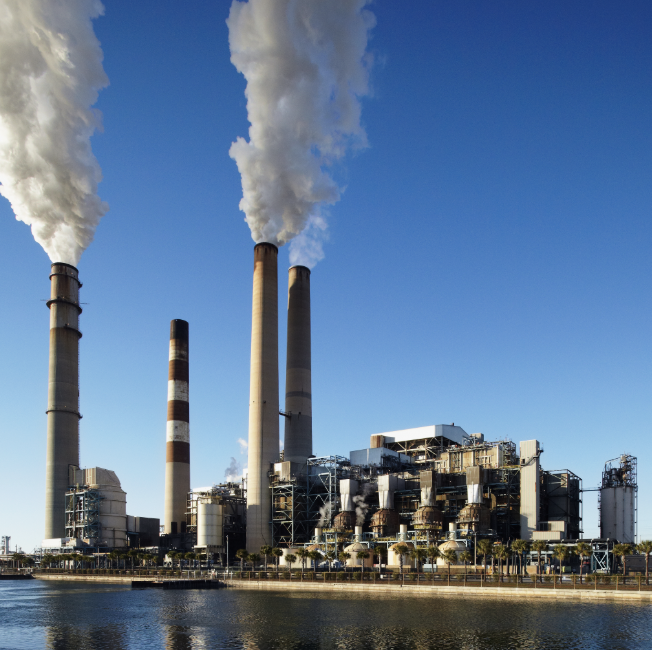
Beth Gardiner, author of “Plastic Inc.,” spoke with Neha Pathak at Yale Climate Connections on “how the industry has made plastic part of our daily lives—and what we can do about it.” What drove her to dig deeper: “The gap between the framing of ‘personal responsibility’ and what these corporations were doing—and the fact that we weren’t even talking about that—that chasm felt like: there’s a story there.”
That story starts with a basic question most of us can’t answer. “Even as an environmental journalist, I realized I couldn’t clearly explain where plastic actually comes from, beyond oil and gas,” Gardiner admits.
Why do we not know this? Why are we focusing on the end goal of being a plastic-free society without explaining where plastic comes from and why it’s bad? “Save the Turtles” demonstrated the urge to change habits when we see the true consequences. But seeing the image of the turtle suffering by the ocean never prompted the deeper question: why is that straw there in the first place, who made it, and from what?
The gap in sustainable education has made taking action more difficult. And for decades, that incomplete picture has served a very specific purpose of keeping the conversation in the recycling bin and far away from the oil well. A 2007 survey found “72% of Americans didn’t know plastic is made from oil” (RP news wires, Noria Corporation). Nearly two decades later, and that number has barely shifted. At the June 2026 Sustainable Brands conference, a Sol de Janeiro executive shared a shocking insight: UC Berkeley students didn’t know plastic came from fossil fuels. The most environmentally conscious generation we’ve ever seen—missing the most basic fact.
Educating consumers about the sources of plastic and increasing awareness is a gap that needs closing. “Many people aren’t aware that a material that is embedded in our daily life can have significant impacts not just on wildlife, but on the climate and on human health” (Llorenç Milà i Canals, Head of UNEP's Life Cycle Initiative). Being unaware limits the public pressure that drives systemic change. When consumers don’t know where plastic comes from, they can’t demand production stops. They can only expect the brands they buy from to do it for them.
Steps in the Right Direction
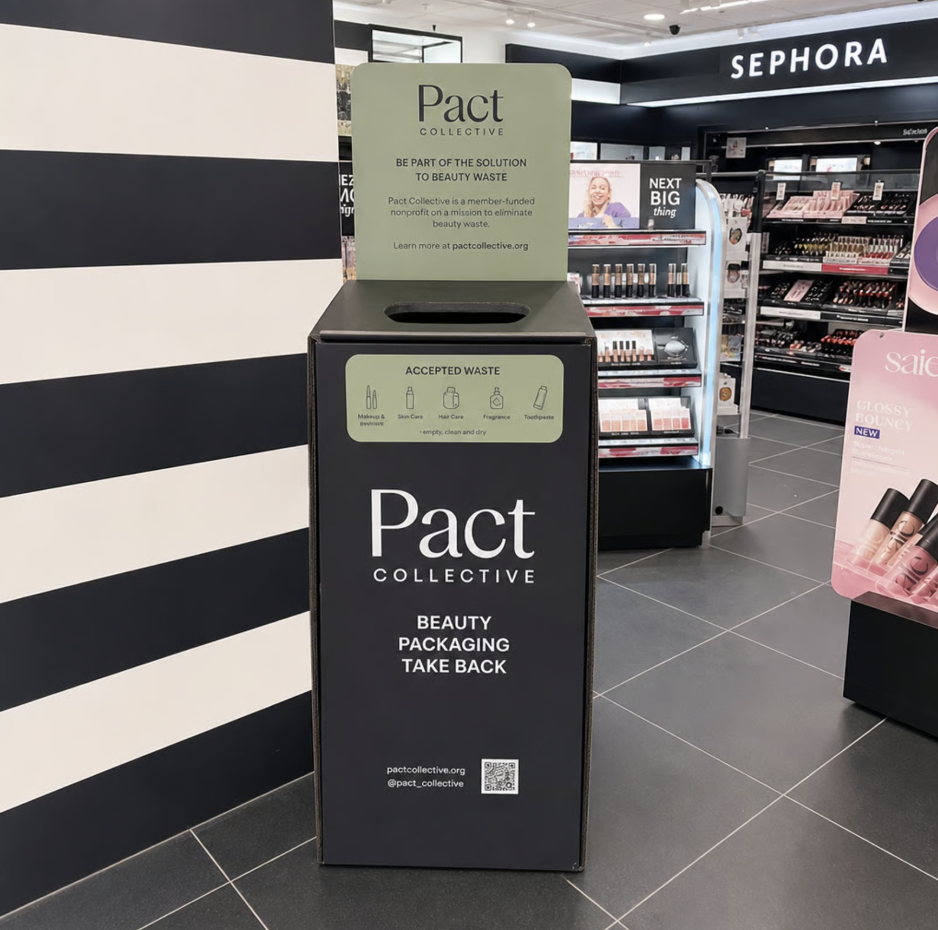
According to the Ellen MacArthur Foundation, “the beauty industry produces 120 billion units of packaging every year, most of which is not recyclable.” Still, most consumers don’t think twice - we shop for the product, the trend, or the influencer rec, with little education on what the packaging is made of, or what to do once it’s empty. Sephora is a retailer trying to close that gap, and the proof is visible in every store.
Sephora’s Beauty (Re)Purposed program, in partnership with Pact Collective, allows customers to bring in clean, empty packaging to all US and Canada stores and help close the loop on hard-to-recycle materials. Their Planet Aware seal guides brands toward higher standards across ingredient sourcing, responsible packaging, corporate commitments, and consumer transparency—with Novi Connect tracking brand compliance, ChemForward supplying the chemical safety science, and Change Chemistry advancing green chemistry innovation across the industry. Their Together for Tomorrow initiative provides sustainability education through dedicated sessions on sourcing, formulation, packaging, and consumer transparency. The goal: to build a more responsible beauty industry alongside consumers and brands.
These are steps in the right direction—and in an industry this wasteful, that counts. Pact Collective’s 2024 Impact Report found over 227,000 pounds of beauty packaging diverted from landfills through more than 3,300 drop-off bins across North America—a tangible measure of what in-store programs like Sephora’s can achieve.
In a 2024 Deloitte study, 79% of Gen Zs and 81% of Millennials believe businesses could and should do more to enable consumers to make more sustainable purchasing decisions. Sephora is not only responding to that expectation, they are building loyalty because of it. “Consumers expect clear recyclability instructions, certified material claims, and honest communication about environmental progress. Brands that provide this information build measurable loyalty; those that obscure it face growing scrutiny from both consumers and regulators” (LLRNCare).
It’s not only about what strides a brand is making, but also how they are presenting themselves. Marketing teams hold enormous power and shape how millions of consumers understand sustainability. Educating your marketing team and giving them the full story isn’t a criticism, it’s an opportunity. When the people crafting the message understand its purpose, the message gets better, more honest, more impactful. And consumers, especially the ones already showing up with high expectations, will feel the difference.
Going Back to Turtles
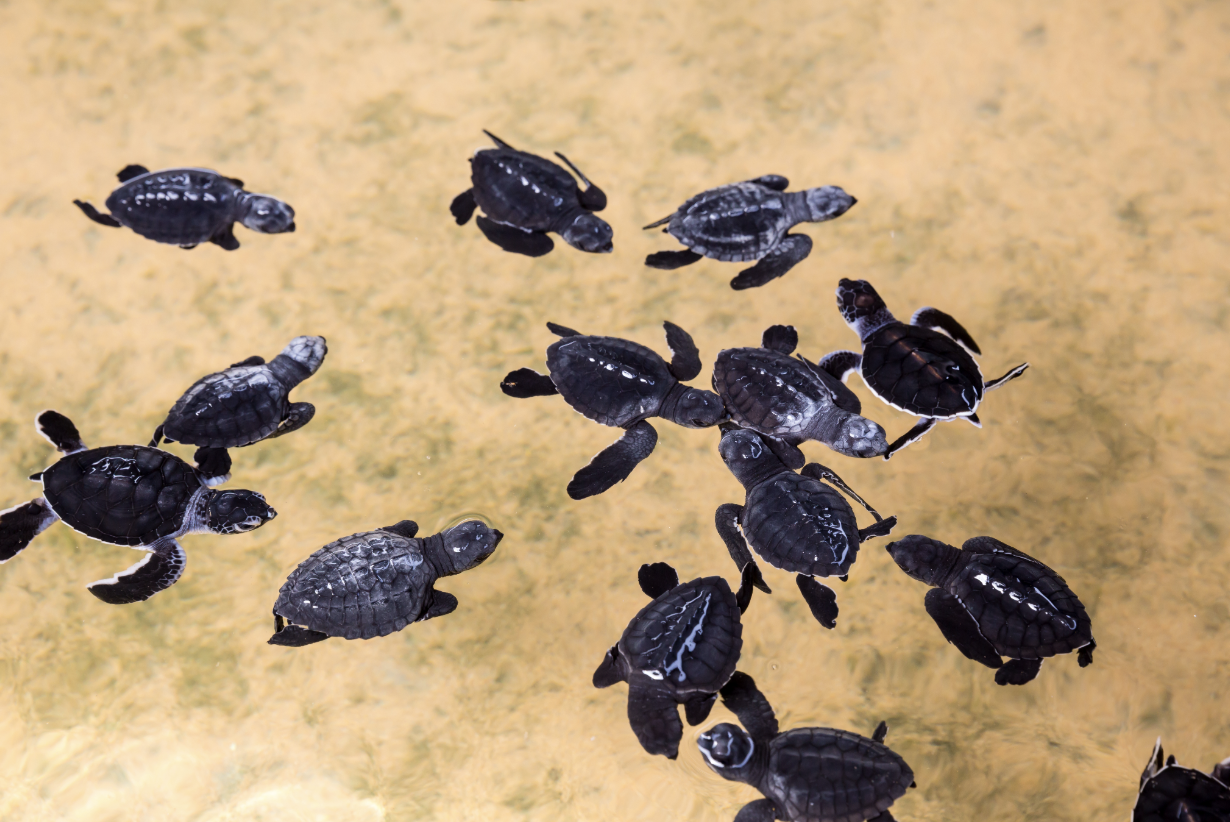
So we know that plastic straws harm turtles because we saw it. We intentionally thought about how to decrease plastic consumption by utilizing reusable materials. And we convinced large brands like Starbucks to do the same. But knowing where plastic ends up is only part of the story. “Plastic-freedom isn't simply about ditching straws or bags — it's about restoring a world where oceans, rivers, and soils are free from toxic plastic waste, and where future generations can live plastic-free in their own bodies and health” (Grounded).
We need to start explaining where plastic comes from, and it requires the same emotional response as the turtle video. Trusted brands like Sephora can help us do this through marketing that actually provokes us to start choosing the right products for our planet. The plastic straw will never be the same—it carries the weight of the sea turtle struggling to breathe. That image changed my behavior. The full story of plastic, from oil well to ocean, deserves to do the same. “It's an imperative for brands to restore and regenerate a world where rivers and oceans flow free of plastic, where future generations inherit waters as vibrant and pristine as they once were, and where we can breathe, eat, and drink without the silent threat of synthetic legacy pollution” (Grounded).
Plastic Free July
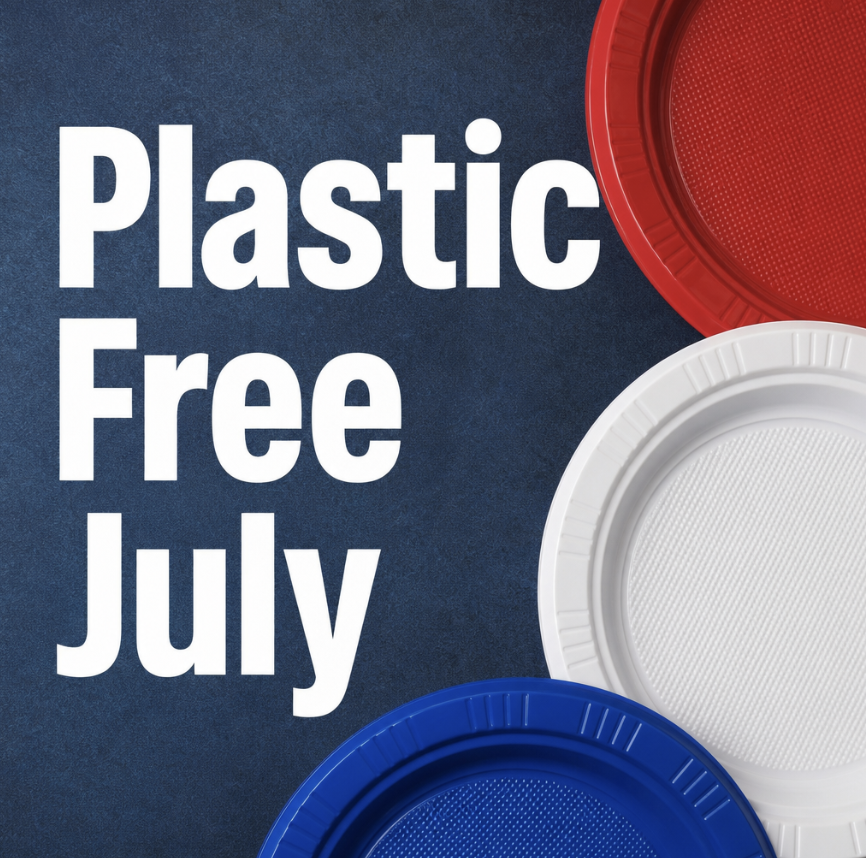
This July, challenge yourself.
- Remove the plastic contaminating your everyday routine.
- Acknowledge the plastic you never knew you used.
- Educate yourself and others on where plastic comes from.
- Invest in alternatives.
** “You'll never realize how much plastic you consume until you take the challenge to participate in Plastic-Free July” (Grounded).**
Do something without just listening to the brands you believe do it right. Find the ones who are transforming sustainability and creating an authentic brand-purpose. Identify the greenwashers…and give credit where credit is due, because eliminating plastic is hard.
Plastic Free July is a global initiative by the Plastic Free Foundation that has grown into one of the most credible plastic reduction movements in the world. This year they're going for a world record:** “The Most People Refusing Single-Use Plastic in One Day.”**
Take the pledge and be part of history.
Close your intention–action gap.
If your investments in sustainability and social impact aren't translating into sales, growth or internal buy-in, we can help you identify the gap.
Works Cited
Change Chemistry. "Member Directory: Sephora." Change Chemistry.
Deloitte. The Deloitte Global 2024 Gen Z and Millennial Survey. Deloitte, May 2024.
Ellen MacArthur Foundation. "Plastics and the Circular Economy." Ellen MacArthur Foundation.
Jacome, Paloma. "Plastic Free July & UNOC3 Insights." Grounded.
LLRNCare. "Sustainable Personal Care Packaging Trends Reshaping Beauty." LLRNCare.
Novi Connect. "Planet Aware at Sephora." Novi Connect.
Pact Collective. "2024 Impact Report." Pact Collective, 2025.
Plastic Free Foundation. Plastic Free July.
---. Take the Pledge.

%2520.png&w=3840&q=75&dpl=dpl_22FPXKdwyyGjEYwszT6ZTA4rkDRy)
%20.png&w=3840&q=75&dpl=dpl_22FPXKdwyyGjEYwszT6ZTA4rkDRy)