 Paloma Jacome
For the past 15 years every July, millions around the world commit to refusing single-use plastics in honor of Plastic-Free July, a global movement inspiring individuals and businesses alike. But in 2025, Plastic-Free July takes on new urgency. Just weeks ago, world leaders gathered at the United Nations Ocean Conference (UNOC3) to sound the alarm on the escalating plastic pollution crisis and the private sector was firmly in the spotlight.
As a Plastic-Free delegate, I had the privilege of attending UNOC3, witnessing firsthand the pleas and calls for action from the world’s most climate-vulnerable states, learning directly from global leaders about solutions already making an impact, and hearing new data and reports on the devastating, long-lasting effects of legacy plastic pollution on humanity and marine life.
For brands and executives, this Plastic-Free July 2025 comes as an unmistakable international call to action at a historic crossroads. With enough plastic already in our oceans to soon outweigh the mass of all fish, and microplastics now being detected in our own bodies (including in unborn children) world leaders came together at UNOC3 to unite over this escalating marine pollution crisis by pledging to accelerate negotiations for a strong, binding Global Plastics Treaty. This is a make-or-break moment demanding that businesses urgently rethink outdated models, reduce systemic risks, and embrace bold innovations to break free from plastic dependence once and for all.
Because plastic-freedom isn’t simply about ditching straws or bags, it’s about restoring a world where oceans, rivers, and soils are free from toxic plastic waste, and where future generations can live plastic-free in their own bodies and health. It’s an imperative for brands to restore and regenerate a world where rivers and oceans flow free of plastic, where future generations inherit waters as vibrant and pristine as they once were, and where we can breathe, eat, and drink without the silent threat of synthetic legacy pollution. The final alarm has been sounded and the time for incremental change is over.
The Plastic Pollution Crisis: A Health, Environmental, and Business Risk
Plastic pollution is overflowing out of control and the tap must be turned off for good. The world produces over 350 million tons of plastic annually (with exponential growth expected in the next few years), yet less than 10% is recycled. By September 5, 2025 (Plastic Overshoot Day) humanity will have generated more plastic waste than we can manage sustainably this year, leaving over 30% of plastics destined for littering oceans, land, and communities.
More alarming for brands: microplastics are no longer an ocean-only issue. Studies have detected them in human blood, lungs, breast milk, and even brains, raising concerns about a looming plastic-fueled health crisis. Meanwhile, plastic production’s carbon emissions rival those of the entire aviation industry, undermining climate goals.
Consumers, investors, and regulators are watching closely. A 2024 WWF/Ipsos poll found 85% of people globally support banning single-use plastics and 87% want overall plastic production reduced. Brand loyalty, compliance costs, and investor confidence are all at stake.
UNOC3: Sounding the Alarm on the Plastic Pollution Crisis and Global Call for a Plastic Free Ocean
The third United Nations Ocean Conference (UNOC3), held in Nice in June 2025, brought together 15,000+ participants including heads of state, scientists, NGOs, and business delegates to accelerate international action on ocean sustainability. Plastic pollution was high on UNOC3’s agenda. The conference concluded with the Nice Ocean Action Plan, a political declaration in which over 170 countries called for urgent measures to protect our ocean. Critically, UNOC3 became a platform to advance a Global Plastics Treaty. Representatives from more than 95 countries (including major plastic-producing and consuming nations) issued the “Nice Call for an Ambitious Plastics Treaty,” a joint declaration outlining what an actionable agreement should include:
- Cap and reduce plastic production: A global target to reduce the production and consumption of primary plastic polymers (especially virgin fossil-based plastics). This recognizes that we cannot recycle our way out of the crisis; we must turn off the tap by curbing how much new plastic is produced.
- Phase out problematic plastics: Legally binding obligations to phase out the most problematic plastic products and hazardous chemicals in plastics. This implies creating a global blacklist of single-use items and substances (like certain additives or PFAs) that are too damaging to remain in commerce.
- Design for circularity and safety: Mandates to improve the design of plastic products so they are reusable, recyclable, or compostable, and to ensure plastics cause minimal harm to the environment and human health. In practice, this could mean standards for packaging that eliminate hard-to-recycle plastics and toxic ingredients, aligning with circular economy principles.
- Dedicated financing mechanisms: A dedicated funding mechanism to support the Global Plastics Treaty’s implementation. Climate-vulnerable states (particularly in the Global South) will need financial assistance to build waste management systems, innovate alternatives, and transition industries. Potential tools include extended producer responsibility (EPR) frameworks, international financing, and plastic credits for verified waste reductions.
- Evolving commitments: A framework that is dynamic and can evolve over time. One that increases commitment ambitions and adjusts measures as technological innovations and science progress. An “effective and ambitious treaty” that isn’t static and acknowledges that solving plastic pollution will be a decades-long endeavor requiring management.
Importantly for businesses, the political tide is turning against the once unquestioned proliferation of single-use plastics. Companies should anticipate that within a couple of years, there may be new international laws on plastics establishing targets and restrictions that filter down into national regulations. For the private sector, UNOC3 underscored that business as usual is no longer acceptable… by anyone. The Nice Ocean Action Plan explicitly “encourages the active and meaningful involvement” of the private sector. There was recognition that industries must be partners in solutions, not just sources of problems. Throughout UNOC3, world leaders emphasized that after decades of neglecting the plastic pollution crisis, companies, governments, and civil society now face an unprecedented urgency to collaborate like never before to stop the flow of plastics into nature. For brand executives, the takeaway from UNOC3 is a warning and an invitation: more regulation is coming, and those who innovate early will lead, whereas those clinging to disposable plastic models risk both reputational and regulatory backlash.
Public Pressure and the Business Case for Going Plastic-Free
It’s not only regulators and environmentalists sounding the alarm, consumer and investor sentiment is rapidly shifting against plastic waste. Perhaps most relevant to brands, an overwhelming majority believe companies should be mandated to invest in reuse and refill systems for their products. In other words, the public increasingly expects businesses to provide plastic-free options and sustainable packaging and is even willing to back government intervention to make that happen. The writing on the wall is that plastic pollution is a mainstream concern, not an esoteric issue.
Opportunities abound for brands that lead on plastic-free innovation. This is a space finally ripe enough for product differentiation and new markets. Much as the tech sector saw a race to be the leader in clean energy usage, the consumer goods sector is now seeing a race to be the leader in plastic alternatives and circular models. There is a great competitive advantage in being able to market your product as truly sustainable and safe (“no microplastic pollution from our packaging”).
Additionally, optimizing packaging can save costs in the long run: lightweight, reusable, or bulk packaging can reduce material costs and logistics expenses (for example, concentrated refills vs. shipping lots of water in bulky plastic bottles). Forward-thinking companies also recognize that natural resources and raw materials are becoming constrained; a circular approach (with materials recycled or composted instead of continuously sourced from petrochemicals) offers more supply chain resilience.The key is to transition thoughtfully and innovatively, rather than resisting the inevitable shift.
Strategies for Brands to Invest in This Plastic Free July
Given the context above, urgent global calls to action, shifting public sentiment, and a landscape of new solutions, how can a brand concretely move toward a single-use plastic-free business model this Plastic-Free July and beyond? Here are several strategic steps and considerations for companies ready to fearlessly lead:
1. Establish a baseline and set ambitious goals: You can’t manage what you don’t measure. Perform a comprehensive plastic footprint audit of your operations and products. Identify where and how much plastic enters your value chain (packaging, components, supply shipments, etc.), and where it ends up (customer waste, industrial scrap, recycling, landfills). Many companies are surprised to discover hidden plastics in their products such as liners, coatings, labels. Once the baseline is clear, set public targets that transparently signal your ambition, for example, “eliminate all single-use plastic packaging by 2030” or “achieve 100% reusable or compostable packaging.” Ensure these goals align with or exceed any industry or regulatory targets (such as those likely coming in the global treaty). By declaring bold goals, you not only motivate internal teams but also invite accountability and build credibility across stakeholders.
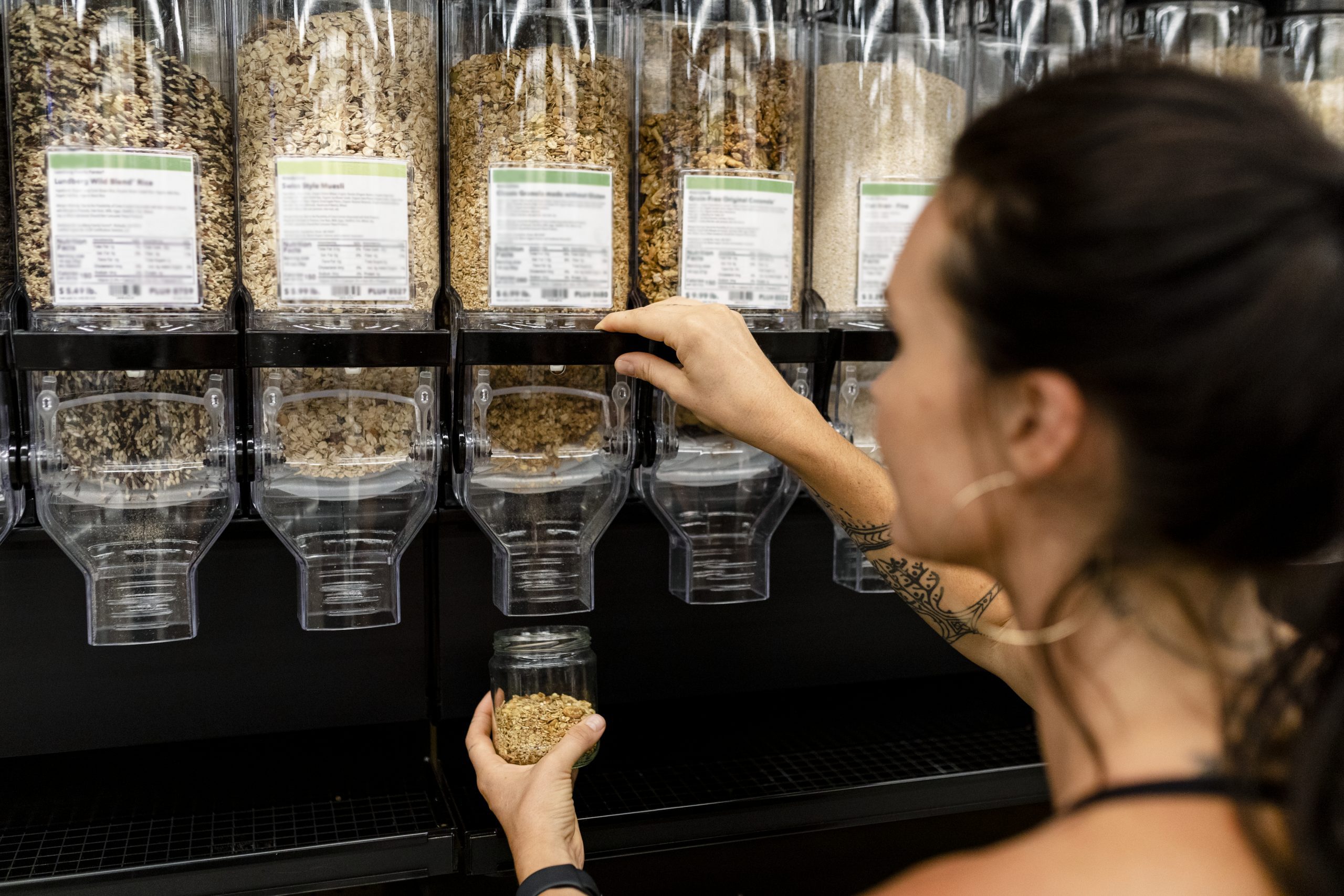
2. Prioritize elimination and substitution: Apply the “3Rs” (Reduce, Reuse, Recycle) in that order, with an added fourth: Rethink. Start with outright elimination of unnecessary plastics by banning the frivolous. Items like plastic straws, cutlery, stirrers, plastic wrap on pallets, secondary packaging that isn’t needed, can often be removed or replaced. Next, look at reuse opportunities: can you shift customers to refill pods, concentrate refills, or bulk purchasing? Can your packaging be something customers send back or return (cartridges, kegs, crates instead of single-use bottles)? For any remaining single-use plastics, aggressively seek substitutes. Could this be paper-based? Could it be bio-based plastic that biodegrades? If it must be conventional plastic due to functionality, can you use a higher percentage of recycled content (cutting demand for new plastic and supporting the recycling market)? Redesign product packaging with end-of-life in mind, modularize and simplify materials, for example, making an entire package out of one polymer type rather than a mix. This “design for recycling and reuse” is a core principle echoed by the UNOC3 Global Plastics Treaty draft.
3. Engage suppliers and partners: A huge part of a brand’s plastic footprint may lie upstream with suppliers or downstream with retailers. Engage your supply chain, such as raw material and packaging providers, about your plastic-free goals. You may need to collaborate on developing new solutions (asking a packaging supplier to offer a compostable film option). Likewise, work with retailers or distributors: if you reduce packaging or switch to new formats, ensure it fits their requirements. Some retailers are now pressuring brands by scoring products on sustainability, which includes packaging. Also, partner with waste management and recycling firms. If you put novel packaging on the market (such as a biodegradable plastic), coordinate with composting facilities or recyclers so they know how to handle it and so you can make truthful claims. Form partnerships with NGOs or social enterprises already doing the work for credibility and expertise, for example, organizations like rePurpose Global, which helps brands become plastic-neutral or even plastic-positive by funding impact projects that recover and properly recycle low-value plastics from the world’s ocean leakage hotspots.
4. Educate and involve consumers: If your brand is customer-facing, bring your audience along on the journey. Educate consumers on why you are phasing out plastics and how they can participate (such as returning packaging for reuse, or accepting minor changes like a different material or a deposit fee). Leverage marketing to highlight plastic-free features as a value-added attribute. During Plastic Free July, many companies run campaigns or challenges, this is a great time to launch new initiatives or products (for example, introducing a new plastic-free packaging line “in honor of Plastic Free July”). Make use of storytelling: share data on impact (“by using this refill, you save 5 plastic bottles from waste”), and be transparent about the journey, including the challenges you’re tackling. When consumers feel they are part of a collective effort, it builds brand affinity.
 ****
****
5. Advocate and collaborate on policy: Rather than fighting regulation, progressive companies are increasingly advocating for strong policies to level the playing field. Many businesses, for instance, supported the passage of anti-single-use plastic legislation in the EU and various U.S. states, recognizing that uniform rules create clarity and drive innovation. Consider joining coalitions that lobby for things like a robust global plastics treaty, improved recycling infrastructure, or standards on packaging. When major companies publicly support these measures, it gives policymakers confidence and can shape regulations that are practical and effective. Additionally, be prepared for reporting and transparency requirements. It’s likely that extended producer responsibility laws will make companies account for the amount and fate of their packaging. Embrace transparency now by publishing your plastic footprint and progress annually. As one recommendation from the Plastic Overshoot report put it, companies should shift from boasting “100% of our packaging is recyclable” to disclosing “X% of our plastics actually get recycled or are mismanaged”. Such honesty can be uncomfortable, but it builds trust and helps pinpoint where improvements are needed.
6. Monitor emerging science and adapt: Keep an eye on the rapidly evolving science of plastics and health. If evidence mounts that certain plastic types or additives pose direct health risks (as is happening with PFAS in food packaging and apparel), be ready to phase those out proactively. Nothing will damage a brand faster than being caught on the wrong side of a health issue. By monitoring scientific advisories from bodies like the World Health Organization or national health agencies and having a precautionary approach, you can stay ahead. This is also part of future-proofing: a material considered safe today might be restricted tomorrow.
Plastic-Free July Offers a Blueprint Brands Can’t Ignore
Plastic Free July is finally gaining the momentum it deserves after 15 years of raising awareness of the detriments of our dysfunctional relationship with single-use plastics. It’s a reminder that we are currently losing the fight against plastic pollution. The recent UN Ocean Conference amplified that message to the highest levels of government and industry: business-as-usual is on borrowed time. The companies that thrive in the coming years will likely be those that heed this call and transform their relationship with plastics overall. Having attended UNOC3 this year as a Plastic-Free delegate I can personally attest to the momentum from policymakers, scientists, and the public around a shared aspiration: a world where we no longer depend on disposable plastics, and where the oceans and communities are free from plastic debris and toxins.
For brands, aligning with this vision is essential to sustainability in every commercial capacity. Embracing sustainability in packaging and product design can ignite innovation, win customer loyalty, and ensure compliance with future (guaranteed) regulations. There will be challenges: costs, technical hurdles, the need to balance convenience with sustainability. But the cost of inaction,in environmental damage, in missed market opportunities, in eroded trust, is far greater. As one UN leader put it, our “throwaway culture” is fueling a triple planetary crisis (pollution, climate change, biodiversity loss). Turning that around will require systemic change and a regenerative mindset in business that values longevity, reuse, and stewardship. In practical terms, every brand should ask: “What’s our plastic exit strategy?” The answers will vary, but the common thread is moving from a linear model (take-make-waste) to a circular and regenerative one.
For individuals, that transformation might begin with a personal commitment, taking the Plastic-Free July pledge is a powerful way to start aligning intention with action. For businesses, the journey is more complex – activating purpose, driving sustainability, and closing the intention-action gap across entire value chains doesn’t happen overnight. But it can happen step by step, with clarity and accountability. That’s exactly how we work at grounded – helping brands turn mission into momentum, and purpose into measurable progress.
Make a creative impact.
See what making a creative impact looks like with some award-winning case studies from the Grounded team.