 Paloma Jacome
Key Takeaways:
- Convenience is seamless yet sustainability is invisible. Instacart makes grocery delivery effortless, but eco-conscious shopping is nearly impossible. Green products, labels, and filters are buried or missing, leaving sustainability out of the user experience.
- Retailer values disappear inside the platform. Whole Foods, Thrive Market, and other eco-forward retailers lose their sustainability identity once inside Instacart, making it impossible for shoppers to choose stores aligned with their values.
- System constraints overpower good intentions. Even when customers request less plastic, shoppers can’t comply: stores pre-bag items, plastic is the default, and gig workers are pressured to prioritize speed over sustainability.
- Delivery is optimized for speed, not the planet. No low-emission delivery windows, EV options, route insights, or carbon transparency. Users aren’t shown how their choices impact emissions and therefore can’t make informed ones.
- Simple nudges could unlock huge impact. When prompted, most users would choose reusable bags, bundled deliveries, or reduced packaging. The infrastructure exists… platforms just need to design sustainability into the default experience.
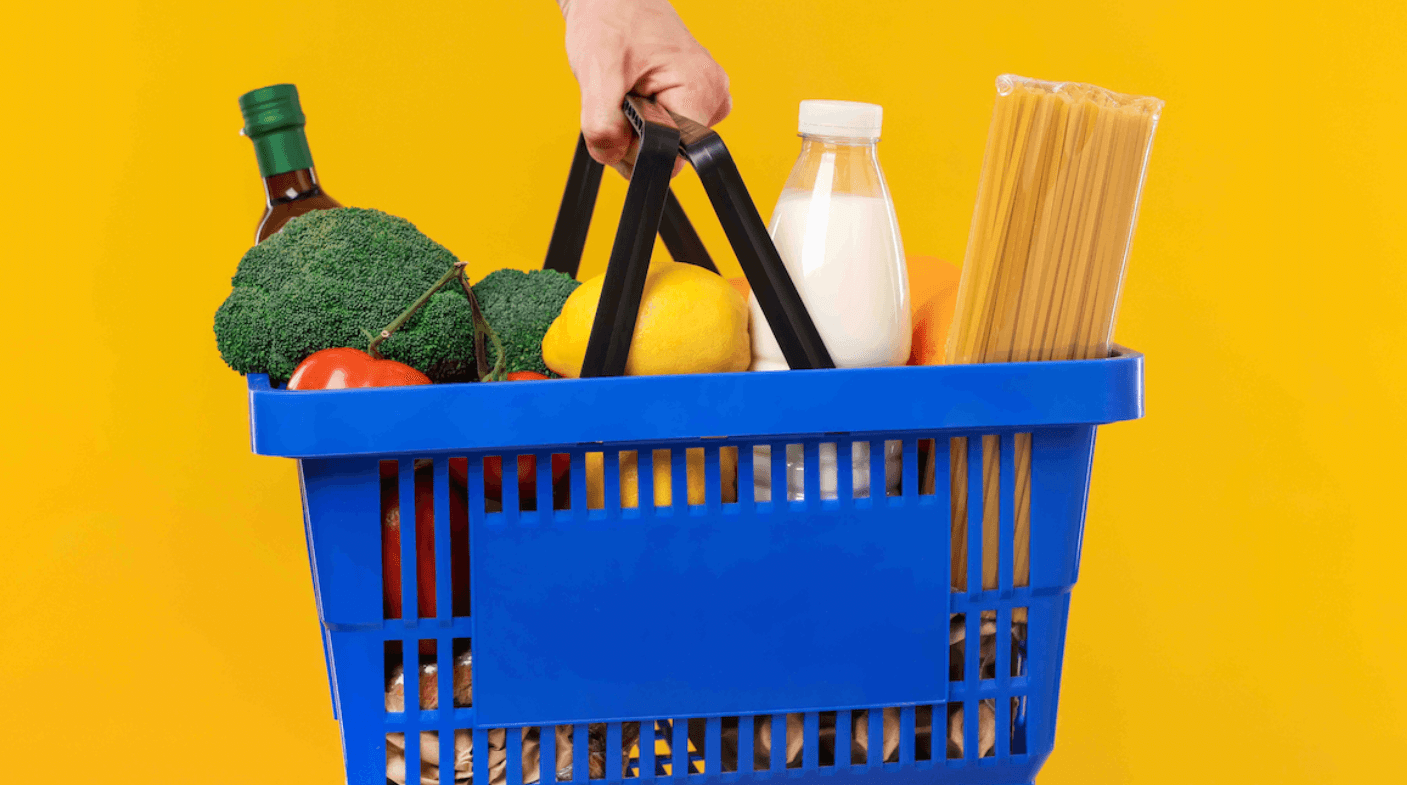
In the digital age, convenience has transformed from luxury to expectation. Platforms like Instacart, Amazon Fresh, and Uber Eats Grocery have redefined how we engage with daily necessities, especially food. With a few taps, groceries arrive at our doorsteps, eliminating the need for parking lots, shopping carts, or checkout lines. But with this shift in consumer behavior, an important question arises: Does convenience come at the cost of sustainability — or can it be used to promote it?
We explored that question through the lens of a sustainability audit focused on Instacart, one of the most widely used grocery delivery platforms in North America. While convenience is baked into the online shopping experience, sustainability remains largely invisible or inconsistently addressed. By tracing the entire journey — from product selection to delivery — and incorporating shopper (delivery worker) perspectives, this essay uncovers the current gaps and explores how digital grocery platforms might be reimagined to foster more eco-conscious behavior. This study conducted this summer — led by Grounded’s marketing intern, Hunter Smith — takes a closer look at Instacart through both the customer and shopper perspective.
The Current Ordering Experience
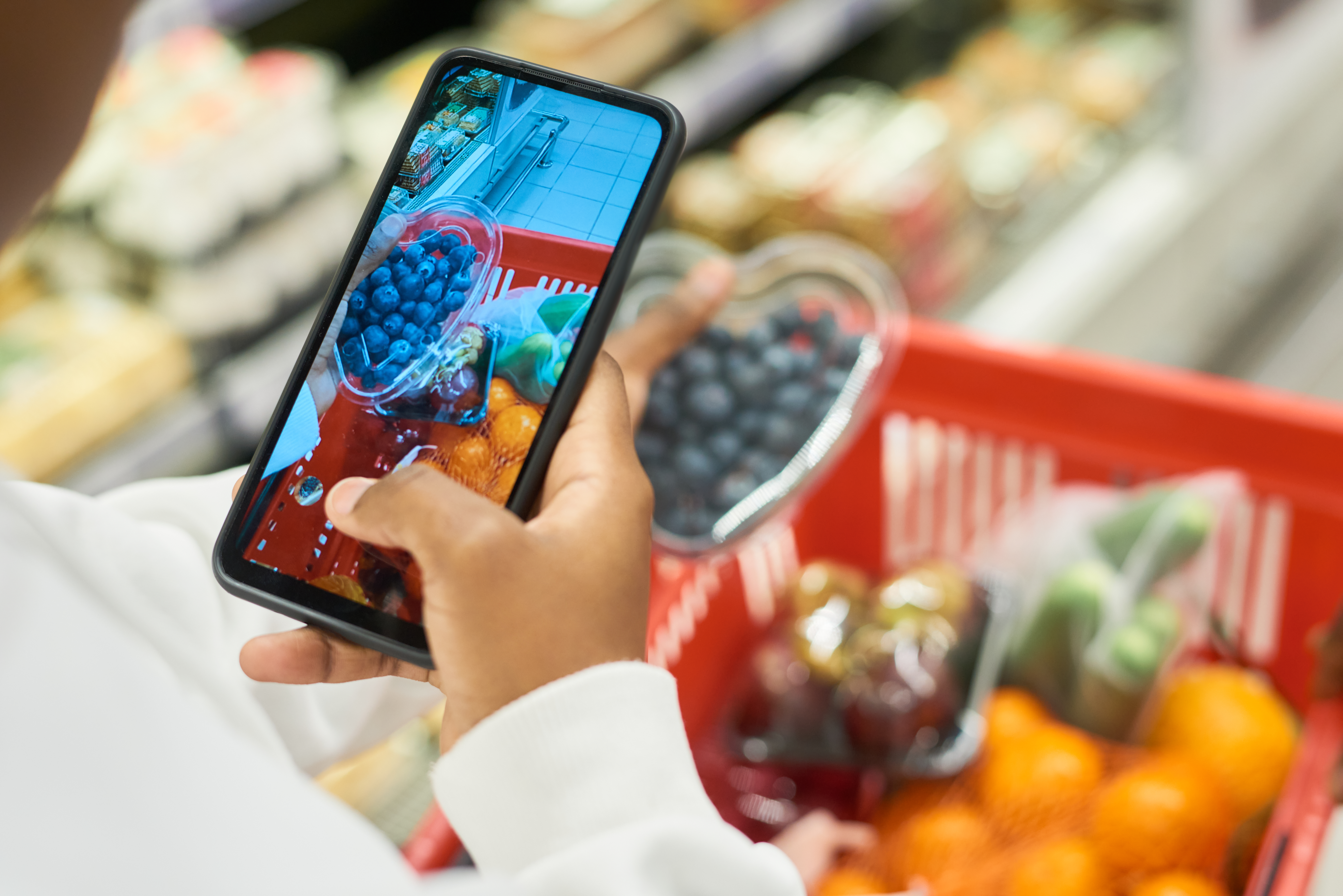
The Instacart interface is designed to reduce friction — and it succeeds. Popular items, recent orders, and personalized suggestions dominate the landing screen. However, for those looking to shop with sustainability in mind, the experience is less accommodating. There are no dedicated filters for environmentally relevant categories such as “organic,” “plastic-free,” “low-packaging,” or “climate-friendly.” While such products exist within the platform, they are difficult to discover unless the user knows exactly what to search for.
Unlike Thrive Market — which offers over 90 value-based filters like “woman-owned,” “carbon-neutral,” and “certified organic” — Instacart treats sustainability as hidden metadata. Even Amazon Fresh, to a limited extent, provides labeling like “Climate Pledge Friendly.” On Instacart, however, sustainable products are not featured, filtered, or promoted in any meaningful way.
This suggests a missed opportunity: if convenience is already assumed in the online format, platforms are uniquely positioned to nudge shoppers toward better choices — but Instacart currently does not.
The Invisible Influence of the Retailer Layer
Another overlooked aspect of the Instacart experience is the role of individual retailers. Instacart serves as a third-party aggregator, connecting users to stores like Whole Foods, Costco, or local grocers. However, within the app, there is no visible differentiation between retailers based on sustainability metrics.
For example, Whole Foods is known for offering organic and locally sourced items, while Thrive Market is certified B-Corp and carbon-neutral. Yet, within Instacart, these distinctions are erased. Retailers’ sustainability policies, packaging standards, or sourcing practices are not displayed or compared. The dominance of Instacart’s branding within the app essentially buries the sustainability initiatives of its retail partners.
From a design perspective, this again indicates a failure to empower consumer choice. Providing visibility into retailer values could encourage users to align purchases with their ethics, but the current experience renders this impossible.
Sustainability Messaging at the Product Level: A Missed Signal
At the product level, sustainability-related information is inconsistent, buried, or missing altogether. A shopper may find a small label stating that a product is “recyclable” or “organic,” but this information is often tucked into lengthy descriptions or displayed as hard-to-notice badges. There is no standardized or easily accessible system for communicating sustainability attributes such as:
- Certified organic
- Locally sourced
- B-Corp certified
- Recyclable or compostable packaging
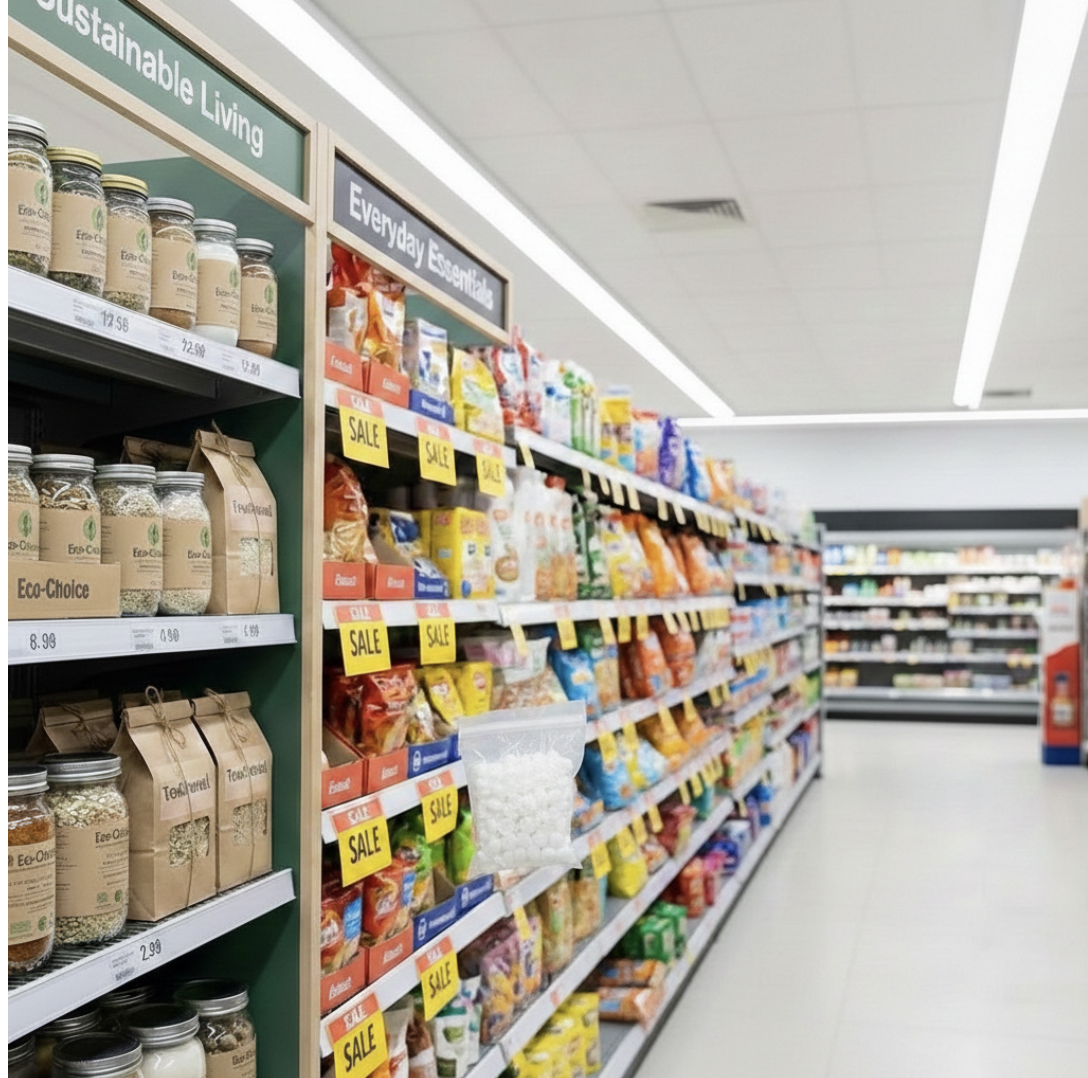
This lack of transparency becomes especially problematic when consumers are trying to reduce their environmental footprint but are unable to determine which products align with those goals. In-store shopping environments often use shelf tags, special signage, or branded eco-sections — online platforms could replicate these strategies digitally, but so far, they have not.
Order Fulfillment: When System Constraints Undermine Sustainability
The disconnect between consumer intention and system behavior becomes even more pronounced during order fulfillment. Instacart shoppers — the gig workers who pick and bag the groceries — operate under logistical pressures that often prevent sustainable practices. Interviews and reports from delivery workers highlight key limitations:
- Orders are frequently over-packaged, as stores require items to be bagged by category.
- Reusable bags are rarely used and, even when requested by customers, are not guaranteed.
- Shoppers have no ability to influence store-level decisions like pre-bagging or single-use packaging.
One delivery worker described their experience:
“Some customers leave notes like ‘use less plastic,’ but the store already pre-bags everything. I just follow instructions.”
This quote captures the tension between customer desire for sustainability and the rigid systems that govern how orders are fulfilled.
Delivery Logistics: Optimization Without Environmental Prioritization
From a logistical standpoint, Instacart’s delivery operations are optimized for speed and cost-efficiency, but not for sustainability. There is no customer-facing information about route efficiency, emissions, or low-carbon delivery options. Unlike Uber Eats, which in dense urban centers sometimes promotes bike or EV delivery, Instacart does not appear to offer — or highlight — any green delivery options.
There are no incentives to bundle orders, no prompts to choose low-emission time windows, and no visibility into how delivery choices impact carbon output. While Instacart may batch orders internally to improve efficiency, this optimization is not framed or presented to the user in a way that could foster environmental awareness.
Delivery Workers and the Absence of Eco Agency
Delivery workers — the final touchpoint in the grocery delivery journey — are offered no support, incentives, or training to promote sustainable behaviors. Based on feedback from forums (e.g., Reddit), interviews, and worker blogs, the following issues were identified:
- No training in sustainable practices (e.g., packing light, minimizing bag usage)
- No option to request or deliver in reusable containers
- No bonuses or tip incentives tied to eco-friendly delivery behavior
- No ability to communicate sustainability choices with customers
Some workers expressed a desire to “do better,” but the structure of their work — managed by the app, constrained by store policy, and driven by speed — makes it nearly impossible.
The Social Experiment: What Happens When You Just Ask?
To test whether platform nudges could influence consumer behavior, a conceptual experiment was conducted. Users were prompted with hypothetical messages during the ordering experience:
- “Would you like to reduce packaging? This order uses 4 plastic bags.”
- “This delivery can be scheduled with others nearby to lower emissions.”
- “Pay $0.25 more to receive your items in reusable bags.”
Initial responses indicated that when prompted, many users were willing to opt for the more sustainable option. Over 60% of participants said they would pay a small premium for reusable bag use. Many appreciated the idea of bundling orders to reduce environmental impact.
This finding aligns with behavioral research in sustainability: people don’t need to be lectured, they need to be reminded.
Recommendations: Designing for Better Defaults
To bridge the gap between sustainability and convenience, grocery delivery platforms must integrate eco-conscious choices into their core UX, logistics, and business models. Some actionable recommendations include:
- Introduce Sustainability Filters: Allow users to shop by eco-labels, reduce waste, or choose low-emission items.
- Highlight Green Retailers: Promote stores with verified environmental practices directly in the app.
- Add a “Minimal Packaging Mode” at Checkout: Let customers opt out of excess packaging and signal preferences to shoppers.
- 4. Score Orders on Environmental Impact: Provide feedback — e.g., “Your order avoided 3 plastic bags” or “Local produce reduced transport emissions.”
- Support and Incentivize Shoppers: Provide reusable bag reimbursement, eco-training, and bonuses for green delivery practices.
- Build Reuse Infrastructure: Explore returnable bags, packaging loops, and community-based bundling models.
- Gamify the Experience: Consider using ‘streaks’ and social proof (e.g. local leader boards) and reward shoppers for making better decisions.
Sustainability Isn’t Inconvenient, It’s Just Invisible
Instacart, and platforms like it, are marvels of modern logistics and digital design. They have solved the problem of convenience — but they have yet to solve the challenge of sustainability. As this audit reveals, environmental values are largely missing or obscured throughout the grocery delivery experience.
And yet, the potential is enormous. By rethinking how sustainability is embedded — not added as an afterthought — these platforms could redefine what “good” shopping looks like in the digital age. The infrastructure exists. The users are willing. The only thing missing is the will to redesign. As delivery becomes the default, platforms have a responsibility — and an opportunity — to make sustainability just as easy as clicking “Add to Cart.”
Many consumers want to make eco-conscious choices, but digital grocery platforms often make it difficult to act on those intentions. This disconnect — the intention-action gap — can unintentionally contribute to greenwashing if sustainable claims aren’t clear or actionable. To dive deeper, check out our Discover page for strategies and practical insights on how retailers can bridge the gap between consumer intent and action.
Close your intention–action gap.
If your investments in sustainability and social impact aren't translating into sales, growth or internal buy-in, we can help you identify the gap.
KEY FINDINGS
1. Ordering Experience (Customer-Facing)
- Limited visibility into sustainability during product selection.
- No clear sustainability filters (e.g., “organic,” “local,” “low packaging,” “climate-friendly”).
- Green products (like organic produce or plant-based foods) are available, but discoverability relies on keywords or specific brands.
- No sustainability incentives for consumers (e.g., discounts for bulk or low-waste purchases).
- Packaging callouts (e.g., recyclable, compostable) are inconsistent or buried in product descriptions.
2. Retailer Presence (Within the App)
- Instacart is a third-party service, so sustainable initiatives vary widely by retailer.
- Retailers like Whole Foods and Thrive Market have more eco-conscious product assortments, but this is not called out by Instacart.
- No clear labeling or sorting by retailer sustainability policies or certifications.
- Instacart branding remains dominant — retailer sustainability efforts can feel hidden or secondary.
3. Order Fulfillment (From Shopper Lens)
- Packaging is often dictated by the store — plastic bags remain prevalent.
- No options for reusable bags unless specified by the customer — and even then, often ignored.
- Shoppers are instructed to bag items individually by category to match in-store experiences, leading to overuse of bags.
- No EV usage requirements or sustainable delivery routing — although batching of orders may reduce emissions in some areas.
4. Shopper Experience (Order Deliverer)
- Little to no guidance or incentive to choose more sustainable packing or delivery practices.
- Reimbursement for reusable bags or eco materials isn’t offered.
- No training or modules on sustainability best practices for shoppers.
- EVs or bike delivery are not common and not promoted (unless in densely urban areas).
- Some frustration among environmentally-conscious shoppers who want to reduce waste but are limited by system and customer expectations.
Shopper POV
As an Instacart shopper, I’m constantly navigating a system that prioritizes speed and satisfaction over sustainability. I try to make eco-friendly choices when I can, but the app doesn’t support that — it doesn’t tell me whether a customer wants plastic or paper bags, and reusable bags are rare. Some customers leave notes asking for “as little packaging as possible,” but there’s no real system to accommodate that, and stores often pre-bag things before I even get there. The routing of deliveries feels random sometimes, which I know isn’t helping the planet. It’s frustrating because I know people use delivery for convenience — and that convenience could actually support better sustainability habits — but the app wasn’t built with any of that in mind.
Opportunities & Provocations to Explore
- What if Instacart had a “Sustainability Score” per order?
- Could delivery platforms offer carbon offset options or highlight bundled route savings?
- Should platforms allow customers to opt in/out of packaging?
- Could shoppers tip more for EV deliveries or bagless fulfillment?
- Could “green retailers” be promoted more aggressively in-app?
Make a creative impact.
See what making a creative impact looks like with some award-winning case studies from the Grounded team.
Author:
Paloma Jacome
Paloma Jacome is content lead and Junior Strategist at Grounded. With over 8 years of experience at the intersection of business and sustainability, she has launched and led multiple ventures —including ECOAVSOLUTIONS, local sustainable audiovisual production company in Southern California— before bringing her entrepreneurial perspective to client work at Grounded. She holds a Bachelor’s in Entrepreneurship and a Master of Science in Entrepreneurship and Sustainable Innovation from Loyola Marymount University.
Paloma is also an active ambassador and city coordinator for the Los Angeles chapter of Top Tier Impact, organizing events that connect impact founders, investors, and sustainability professionals to collaborate on solving the most pressing challenges of our time.
As part of grounded’s partnership with rePurpose Global, Paloma represented the agency in the Plastic Reality Project in India, an immersive program designed to experience the scale of plastic pollution firsthand and explore circular solutions addressing the crisis at its source. She is also recently certified in sustainability legislation and regulations for the fashion industry by the Sustainable Fashion School, strengthening her expertise in policy-driven transformation.
Paloma was a core co-author of Grounded’s debut white paper Mind the Gap: Policy to Profit in Fashion featured in Forbes—and continues to explore how circularity and regulation unlock commercial and societal value.
LinkedIn | paloma@grounded.world