 Phil White
In the quest for sustainable living, a significant challenge looms large—the gap between intention and action. Reports published by Globescan, Kantar, Nielsen and Mintel over the last few months offer a deep understanding of this divide, shedding light on the complexities and inspiring a blueprint for closing the intention-action gap.
- In its most recent report, GlobeScan uncovers a stark reality: while people increasingly experience the impacts of climate change, many feel paralyzed, believing there's nothing more they can do. The intentions are there, the awareness is growing, but the actions fall short of the scale we need. This intention-action gap is a critical hurdle in our journey towards sustainability.
- Kantar's insights delve into the economic dimensions of sustainable choices, revealing the trade-off dilemma faced by eco-conscious shoppers. The cost-of-living crisis has led many to forsake sustainable options for more economical ones, with products under the green banner often sitting in premium price tiers. This economic challenge exacerbates the intention-action gap.
- In its report, Nielsen IQ underlines the infancy of conscious consumerism, with a vast majority expressing the importance of sustainable living but struggling to translate intentions into actions. Barriers such as cost, lack of choice, and lack of expertise hinder progress. The intention-action gap persists, echoing the need for tangible solutions and retail activations that help people make better choices.
- Lastly Mintel points out that consumers express a desire for companies to lead the way in sustainability, reflecting intentions for a more eco-friendly future. However, the significant gap arises when examining actual behavioral changes. Economic pressures amplify this intention-action gap, with affordability being a key determinant in consumer choices.
What are the Implications for Businesses?
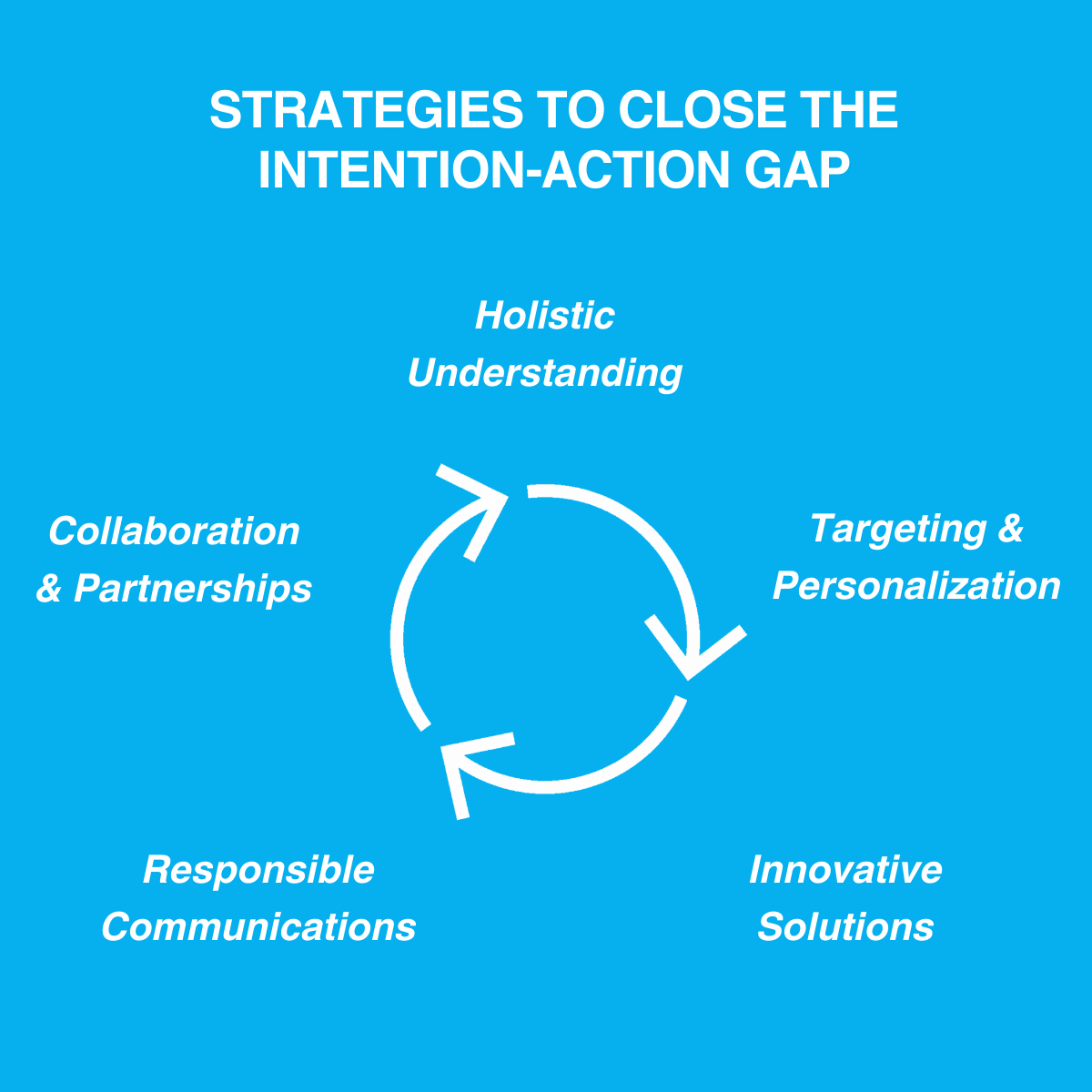
Here are** 5 key strategies** to overcome the barriers to sustainable living and close the intention-action gap:
- Holistic Understanding: Assess consumer needs, expectations, knowledge, and receptiveness. Address both cognitive and behavioral factors to bridge the intention-action gap comprehensively.
- Targeting & Personalization: Tailor approaches to engage diverse segments, particularly the younger generations, in closing the intention-action gap.
- Innovative Solutions: Rethink core products and services, innovating in terms of product design, accessibility, and affordability. Make sustainable purchase decisions easier.
- Responsible Communications: Communicate with credibility. Share stories that resonate with people in a compelling way. Avoid the perils of ‘greenwashing’ and ‘greenhushing'.
- Collaboration & Partnerships: Work hand-in-hand with your partners and suppliers in your value chain to make sustainable choices accessible to all. No one can win alone.
How Grounded can help?
At Grounded, we help brands, retailers and startups close the intention-action gap by articulating sustainability marketing strategies, creating behavior-changing ac
tivations at retail and facilitating innovation and collaboration across ecosystems. Find out more here.
Reports mentioned:
GlobeScan - Healthy & Sustainable Living report 2023 - October 2023
Kantar - Who Cares Who Does 2023 report - September 2023
Nielsen - The Green Divide report - September 2023
Mintel - Global Outlook on Sustainability 2023 report - June 2023