
 Gaia
GaiaTL;DR
The sustainability intention action gap describes the disconnect between what consumers say they want (sustainable products) and what they actually buy. Research shows 65% of people want to purchase green products, but only 26% follow through. The causes are psychological, structural, and trust-related. Brands that treat this as a design problem rather than a consumer education problem can unlock significant growth, since sustainability-marketed products are already growing 2.3 times faster than conventional ones.
If you’re a brand marketer or sustainability professional wondering why your audience claims to care deeply about the planet but doesn’t reach for your eco-friendly product at the shelf, you’re staring at one of the most studied and most stubborn problems in consumer behavior.
The sustainability intention action gap isn’t new. But it is widely misunderstood.
Explore how Grounded World helps brands diagnose this gap.
Direct Answer: What Is the Sustainability Intention Action Gap?
The sustainability intention action gap is the measurable difference between consumers expressing a desire to buy sustainable products and their actual purchasing behavior. It is the sustainability-specific case of the broader intention-action gap: the same say-do disconnect, but scoped to green products and purchase behavior rather than behavior in general.While around 65% of consumers say they prefer eco-friendly options, only about 26% consistently act on those intentions due to psychological habits, pricing barriers, lack of availability, and trust issues.
What Is the Sustainability Intention Action Gap?
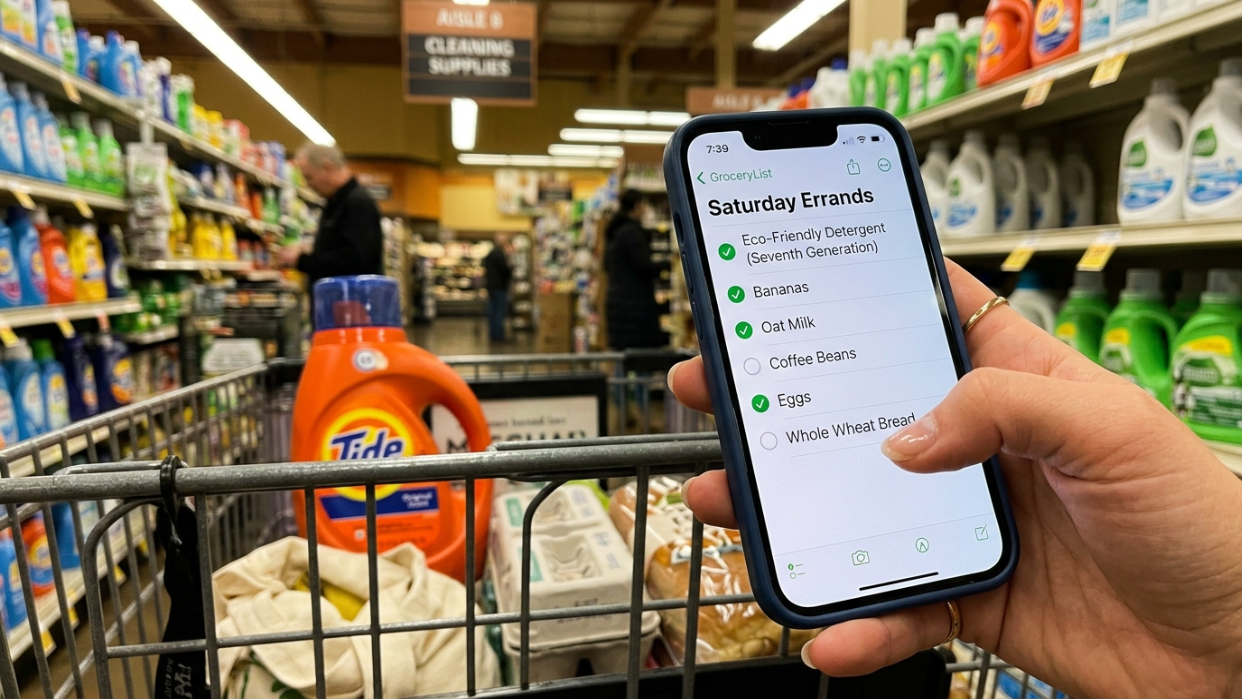
The sustainability intention action gap is the measurable difference between what consumers say they will do and what they actually do when it comes to sustainable purchasing and behavior. Someone might tell a survey researcher they plan to buy the recycled-plastic laundry detergent. Then they walk into the store, grab the cheapest option on autopilot, and leave.
This concept goes by several names. Ipsos and SKIM prefer “say-do gap.” Academic and environmental policy researchers call it the “value-action gap.” In psychology literature rooted in Ajzen’s Theory of Planned Behavior, you’ll find it as the “attitude-behavior gap.” They all describe the same phenomenon: intentions don’t reliably predict actions.
The critical insight is this: the challenge is not convincing consumers to care. It’s helping them act on the care they already feel.
Why the Intention Action Gap in Sustainability Matters
The numbers are stark
White, Hardisty, and Habib (2019) found that while 65% of respondents expressed interest in purchasing green products, only 26% actually did so. In Australia, one practitioner analysis found that 70% of consumers claim to actively shop for sustainable products, but only 16% of those expressing concern actually purchase them.
A meta-analysis by Bamberg and Möser confirmed this statistically: intentions to perform pro-environmental behavior accounted for just 27% of the variance in actual behavior. Webb and Sheeran (2006) went further, showing that even interventions that successfully changed intentions produced only small-to-medium changes in behavior.
The commercial cost is real
Brands that ignore the sustainability intention action gap miss growth. According to NYU Stern’s 2024 Sustainable Market Share Index, CPG products with sustainability attributes marketed on the package hold 23.8% market share, up from 21.2% the prior year. Those products grew 2.3 times faster than conventionally marketed products, with a five-year compound annual growth rate of 12.4% versus 5.4%.
Sustainability-marketed consumer packaged goods were responsible for nearly 45% of U.S. CPG growth over the last 13 years. If your brand isn’t converting stated intentions into purchases, someone else’s brand is. For a deeper look at why this disconnect hits revenue so hard, read more about why customers say they care but aren’t buying.
The environmental cost compounds
Intentions alone don’t reduce emissions, cut waste, or shift supply chains. Every unconverted intention is a missed unit of demand that could have signaled to retailers and manufacturers that sustainable options deserve more shelf space, investment, and innovation. The gap doesn’t just frustrate marketers. It slows systemic change.
What Causes the Sustainability Intention Action Gap?
The causes fall into three categories: psychological, structural, and trust-related. Most real-world situations involve all three operating simultaneously.
Psychological and cognitive barriers
The Decision Lab identifies three cognitive shortcuts that consistently derail good intentions: present bias, status quo bias, and choice overload. Present bias makes people prioritize immediate rewards (saving $2 now) over future benefits (a healthier planet later). Status quo bias keeps them reaching for the brand they’ve always bought. Choice overload paralyzes them when they face a wall of eco-labels and competing claims.
Practitioners on LinkedIn have expanded on this. Francois Hurtaud noted that humans tend to seek least-effort solutions: “When faced with sustainable options, we often do not have the luxury of time and mental energy. The cognitive, physical, and financial cost to green alternatives imposes quick shortcuts and overrides our best intentions.”
There’s also a measurement problem baked into the gap itself. The Behavioural Architects, in a webinar with the Marketing Society, raised the issue of social desirability bias: people overstate their sustainable intentions in surveys because they want to look good. Some portion of the stated 65% may never have truly intended to buy green in the first place.
Three other psychological factors deserve attention. People form intentions and then simply forget at the moment of action. The intended behavior competes with other goals (saving money, feeding kids quickly, getting out of the store). And past behavior, meaning habit, often predicts future behavior better than any stated intention. To understand why stated concern doesn’t translate into change, context matters as much as conviction.
Structural and economic barriers
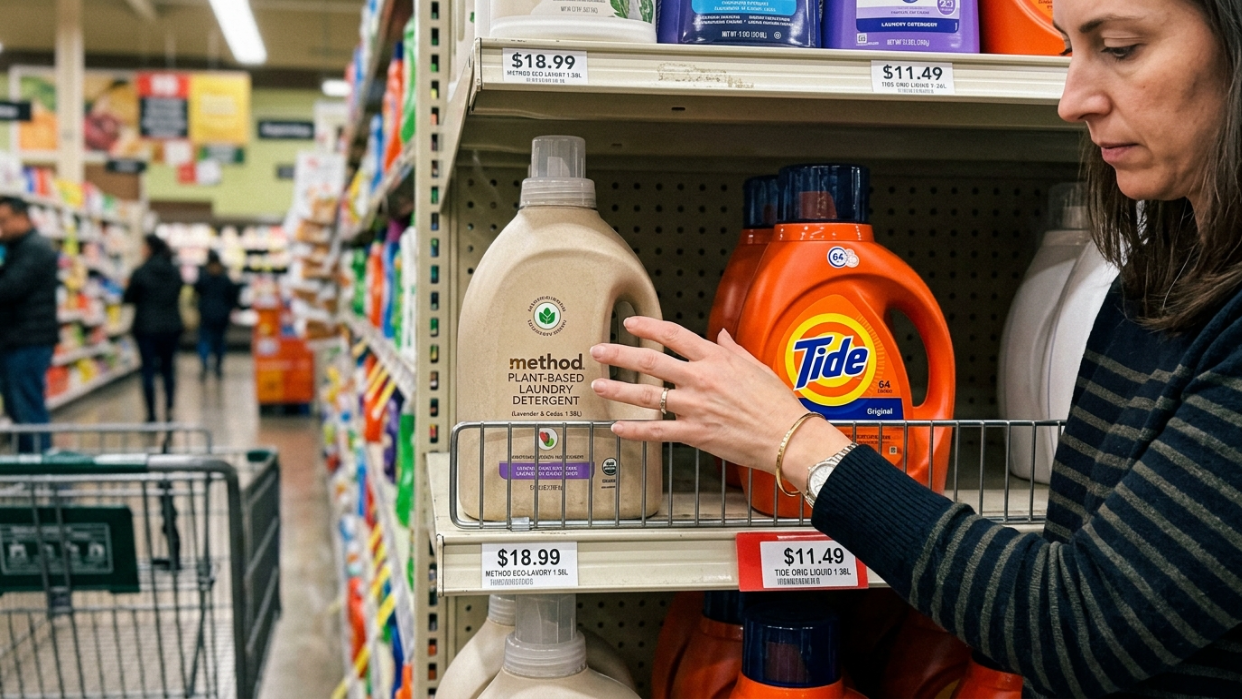
The cost-of-living crisis has pushed many consumers away from sustainable options that sit in premium price tiers. Deloitte found that the percentage of respondents saying they adopted more climate-friendly activities fell from 65% to 53% between September 2021 and March 2023. When household budgets tighten, the sustainability intention action gap widens.
Beyond price, consumers face a lack of availability and a lack of expertise. They don’t know which claims are credible, can’t find sustainable alternatives in their local store, and don’t have time to research options. These aren’t psychological failures. They’re infrastructure problems. As Ipsos survey data shows, the most frequently cited barriers were systemic and structural: unaffordable green products and insufficient support from governments, corporations, and NGOs.
Greenwashing and trust erosion
Here is where the gap gets worse over time if left unaddressed. Capgemini data shows that 52% of consumers now believe organizations are greenwashing their initiatives, up from 33% in 2023. When more than half of consumers suspect they’re being misled, even genuine sustainable products face a trust tax.
SKIM research warns that brands ignoring the say-do gap risk greenwashing accusations that damage reputation, decrease sales, erode loyalty, and destroy brand value. This creates a vicious cycle: consumer skepticism grows, which widens the gap, which makes sustainability investments look ineffective, which discourages brands from communicating their efforts. Learn how to avoid greenwashing while still telling an authentic sustainability story.
Why Consumers Don’t Act on Sustainability Intentions
Category | Core Barrier | Real-World Example | Impact on Behavior |
|---|---|---|---|
Psychological | Habit & status quo bias | Choosing familiar brand at shelf | Overrides intent instantly |
Cognitive | Choice overload | Too many eco-labels | Decision fatigue → default choice |
Economic | Higher price | Green product costs 10–30% more | Consumers downgrade option |
Structural | Poor availability | Sustainable option not stocked locally | Intent becomes irrelevant |
Trust | Greenwashing skepticism | “Eco-friendly” claims seen as marketing | Consumers ignore claims |
How to Measure the Sustainability Intention Action Gap
Most brands rely on survey data to gauge sustainable purchase intent. That’s a problem. The Theory of Planned Behavior, the dominant academic framework for predicting behavior from attitudes and intentions, accounts for only 27% of variance in self-reported behavior and 20% in objectively measured behavior, according to Armitage and Conner’s meta-analysis. The gap between intention prediction (39%) and behavior prediction (20-27%) is the intention-behavior gap expressed in statistical form.
Stated preference data tells you what people think they should do. It doesn’t tell you what they will do. Behavioral data, including purchase data, loyalty program analytics, A/B testing, and in-store observation, gives a far more accurate picture of real consumer choices.
Brands serious about closing the gap need to compare what consumers say in research with what they actually buy at the register. This requires integrating impact measurement with commercial data, not treating them as separate workstreams.
See how Gaia, an AI-assisted assessment tool, can help diagnose your brand’s intention action gap.
Intention vs Behavior Measurement Methods
Method | What It Measures | Accuracy | Limitation |
|---|---|---|---|
Surveys | Stated intent | Low | Social desirability bias |
Focus groups | Attitudes | Low–Medium | Not behavior-based |
Purchase data | Actual buying behavior | High | No motivation insight |
A/B testing | Real-world decision response | Very High | Requires infrastructure |
Loyalty analytics | Repeat behavior | High | Limited external context |
Common warning signs:
High survey intent but low sustainable SKU sales
Eco products underperforming despite strong awareness
Customers saying “I care about sustainability” but not converting
Sustainable products selling only during promotions
High abandonment at product comparison stage
How Brands Can Close the Sustainability Intention Action Gap
Make the sustainable option the default
This is the simplest and likely most effective approach. When the sustainable choice requires no extra decision-making, more people take it. Think opt-out rather than opt-in for carbon offsets, double-sided printing as the default, or plant-based options listed first on a menu. Defaults work because they align with status quo bias rather than fighting it.
Reduce friction, increase reward
Practitioners at Trellis frame it as an equation: consumers will consistently buy sustainable products when the perceived benefits exceed the effort involved. Brands can decrease the effort, increase the rewards, or both.
An Australian FMCG practitioner at Supergoods shared a candid case study that captures this perfectly: “We didn’t create another sustainable product. We closed the intention-action gap. Every barrier we eliminated was a friction point stopping people from acting on good intentions. We didn’t try to change what people wanted. We changed how they could get what they already wanted.” The lesson: reframe the problem from education to friction removal. For a practical playbook on removing barriers to sustainable purchasing, start with the friction points closest to the moment of purchase.
Lead with product performance, layer in sustainability
Your product still needs to deliver on the fundamentals: performance, value, and usability. Sustainability alone rarely wins at the shelf. The trick is integrating it seamlessly into an offer that’s already desirable. Nobody wants an inferior product with a better carbon footprint. They want a great product that also happens to be sustainable. This is where purpose-driven marketing meets commercial reality.
Use hope and pride, not guilt
Research consistently shows that people are more likely to engage in sustainable behavior when they derive positive feelings from doing so. When marketers use explicit guilt to promote sustainable products, it backfires. Guilt triggers defensiveness and avoidance. Hope, pride, and a sense of collective progress drive action. For guidance on crafting narratives that inspire rather than shame, explore approaches to brand storytelling that build commercial value.
Use social norms and peer visibility
People look to others when deciding how to act. Making sustainable choices visible (showing that neighbors are switching to renewable energy, that 80% of hotel guests reuse towels) creates social pressure that nudges behavior without lecturing.
Design for habits, not one-time decisions
Katherine White, Rishad Habib, and David Hardisty identify habit formation as a key psychological factor. One sustainable purchase isn’t enough. Brands need to design for repeat behavior. Context disruption (moving, starting a new job, having a baby) opens windows where old habits break and new ones can form. Targeting those moments with the right message and frictionless access matters enormously.
Use implementation intentions
Forming “if-then” plans is one of the most effective tools for reducing the intention-behavior gap. A meta-analysis of 94 studies found a medium-to-large improvement in goal attainment when people made specific plans: “If I’m in the cleaning aisle, then I’ll pick up the refillable option.” Brands can facilitate this through reminders, shopping lists, and prompts at the point of sale. Effective retail activation can serve as exactly this kind of prompt.
Fix the communication gap
This is the counter-narrative that changes everything. NYU Stern’s research, shared via Trellis, reveals a different say-do gap than most people assume: consumers are buying sustainable products, but companies aren’t advertising to them. Sustainability-marketed CPG products grew 4.9 times faster than conventional products at a 27% premium on average. The gap may be partly a brand communication failure, not solely a consumer psychology failure. Brands that speak clearly about their sustainability attributes to the shoppers already looking for them can capture outsized growth.
Common Misconceptions About the Sustainability Gap
“Consumers don’t really care.” The data says otherwise. Sustainability-marketed products hold 23.8% of U.S. CPG market share. In the UK, that figure is 36.8%. In Germany, 42.0%. Consumers are buying.
“More education will fix it.” Information alone rarely changes behavior. If awareness were the bottleneck, the gap would have closed years ago. Behavioral science is clear that knowledge is necessary but far from sufficient. The Behavioural Architects emphasize that context is “King and Queen,” and that local logistics and implementation realities often limit the effectiveness of any intervention, no matter how well-informed.
“It’s purely a consumer problem.” Forrester researchers caution against blaming the consumer. Before encouraging people to change their behaviors, brands must first fix the basics: offer genuinely sustainable goods and services, make them accessible, price them competitively, and communicate their benefits clearly. Consultants at What For Change firmly advocate that businesses should lead the way rather than waiting for customers to “vote with their feet.”
Talk to Grounded World about closing the gap for your brand.
Frequently Asked Questions
What is the sustainability intention action gap in simple terms?
It’s the difference between saying “I want to buy sustainable products” and actually buying them. Most consumers express strong environmental values but don’t consistently follow through at the point of purchase due to psychological, economic, and structural barriers.
Is the sustainability say-do gap different from the general intention-action gap?
Yes. The say-do gap, value-action gap, attitude-behavior gap, and green purchase gap all describe the same phenomenon. Different fields and researchers prefer different terms, but they refer to the same disconnect between stated intentions and actual behavior.
How big is the sustainability intention action gap?
The most cited figure comes from White et al. (2019): 65% of consumers want to buy green, but only 26% do. Meta-analyses confirm that intentions predict only about 27% of the variance in actual pro-environmental behavior.
What are the main causes of the sustainability intention action gap?
Three categories dominate. Psychological barriers include present bias, status quo bias, choice overload, and habit. Structural barriers include price premiums, limited availability, and confusing labels. Trust barriers stem from widespread greenwashing skepticism, with 52% of consumers now suspecting brands of overstating their sustainability credentials.
Can brands actually close the intention action gap?
Yes. Strategies with strong evidence include making sustainable options the default, reducing friction at the point of purchase, leading with product quality, using positive emotional framing, and implementing “if-then” planning prompts. The NYU Stern data showing sustainability-marketed products growing 2.3 times faster than conventional products proves that closing the gap delivers commercial results.
Is the intention action gap getting wider or narrower?
It depends on the market. Deloitte data shows self-reported sustainable behavior declining from 65% to 53% between 2021 and 2023, partly due to the cost-of-living crisis. But actual market share data for sustainability-marketed products continues to grow, suggesting the gap may be narrowing in practice even as it appears stable or widening in surveys.
Does educating consumers about sustainability close the gap?
Rarely on its own. Decades of research show that information and awareness campaigns are necessary but insufficient. Behavioral interventions that reduce effort, change defaults, and create social proof consistently outperform education-only approaches.
What is the Theory of Planned Behavior and how does it relate?
The Theory of Planned Behavior is the foundational academic framework for understanding the intention action gap. It proposes that attitudes, social norms, and perceived behavioral control shape intentions, which then shape behavior. The gap emerges because the theory accounts for only 20-27% of actual behavior variance, meaning most of what people do is driven by factors beyond conscious intention.