 Gaia
TL;DR
Retail brand activations turn ordinary shopping experiences into opportunities for product discovery, customer engagement, and sales. From interactive product demonstrations and pop-up stores to gamified promotions and immersive brand experiences, the best campaigns give shoppers a reason to engage with a product and take action.
But an activation does not have to be expensive or elaborate to work. A simple in-store demonstration can remove purchase hesitation, while a QR-code promotion can encourage shoppers to interact with a product they might otherwise overlook.
The most effective retail brand activation examples share one important characteristic: they connect a specific shopper need or purchasing barrier with an experience that makes buying easier.
This guide explores 10 retail brand activation examples from brands including Tide, Patagonia, IKEA, Nike, Sephora, and Reese's. Each example explains the activation strategy, the consumer behavior it targeted, its reported results, and the practical lessons marketers can apply to their own campaigns.
What Is a Retail Brand Activation? (Direct Answer)
A retail brand activation is a marketing campaign or interactive experience designed to engage shoppers with a brand or product in a retail environment and encourage a measurable action, such as trying a product, visiting a store, signing up for a promotion, or making a purchase.
Common retail brand activation formats include in-store demonstrations, product sampling, branded pop-up shops, interactive displays, experiential events, loyalty promotions, and QR-code campaigns.
Unlike traditional retail advertising, which primarily communicates a message, brand activation encourages shoppers to participate in an experience that connects the brand with a real purchasing decision.
The most effective retail brand activations combine three elements:
Engagement: Give shoppers a compelling reason to interact with the brand.
Relevance: Connect the experience to a specific product benefit, customer need, or purchase barrier.
Measurement: Track the impact through sales lift, product trials, redemption rates, customer acquisition, or repeat purchases.
The objective is not simply to attract attention. It is to turn attention into meaningful customer action.
What Is a Retail Brand Activation? (Direct Answer)
A retail brand activation is a targeted marketing event, interactive display, or immersive in-store experience designed to convert passive shoppers into active buyers at or near the point of purchase. Unlike top-of-funnel digital ads or general brand awareness campaigns, retail brand activations bridge the gap between consumer intent and immediate conversion by leveraging the physical presence of the product.
Core Takeaways for Marketers:
Immediate Conversion: Capitalizes on shoppers already inside the retail environment with intent to spend.
Barrier-First Design: Focuses on removing specific psychological or operational friction points (e.g., product confusion, trial risk, or boring environments).
Measurable Velocity: Drives an average category sales lift of 20% to 40% when tied to proper performance tracking.
10 Retail Brand Activation Examples at a Glance
Brand and Campaign | Activation Type | Main Objective | Reported Result | Best For |
|---|---|---|---|---|
Tide #TurnToCold | Integrated retail and brand campaign | Change perceptions about cold-water cleaning | 39% sales uplift for Tide Hygienic Clean | CPG brands |
Patagonia Worn Wear | Repair events and trade-in experiences | Encourage product reuse and customer loyalty | Extended product lifecycle and repair participation | Sustainable brands |
Lush Naked Stores | Package-free retail experience | Reduce packaging and encourage product discovery | Permanent package-free retail format | Purpose-led retailers |
Grove Collaborative at Target | In-store product education | Explain unfamiliar concentrated products | Verify the reported 25% sales increase before publication | DTC brands entering retail |
IKEA Sleepeasy | Immersive pop-up experience | Make sleep products more engaging | More than 5,000 visitors during the first weekend | Home and lifestyle retailers |
Nike RunTown | Community-focused experiential pop-up | Connect retail with running culture | Temporary multi-floor running experience | Sports and lifestyle brands |
Sephora SEPHORiA | Beauty festival and brand experiences | Encourage product discovery and interaction | More than 65 brand activations in 2025 | Beauty and multi-brand retailers |
H&M Nightclub Fitting Room | Experiential store design | Improve the fitting-room experience | Requires a verifiable campaign performance source | Fashion retailers |
Walker's Shortbread Interactive Vending | Gamified product sampling | Introduce shoppers to the brand and its products | Interactive quiz and complimentary sampling at Edinburgh Airport | Heritage and specialty brands |
Reese's Scream 7 | QR-based retail promotion | Connect in-store engagement with purchase | Thousands of entries and verified receipts | CPG and confectionery brands |
Results reflect different campaign measures and should not be interpreted as directly comparable sales benchmarks. Some examples report attendance or engagement rather than incremental revenue.
Why Most Retail Brand Activations Fall Flat
A retail brand activation can attract attention without generating additional sales. A crowded event, impressive display, or popular social media moment does not automatically mean shoppers are purchasing more products.
The difference between an effective activation and an expensive marketing spectacle is whether the experience changes shopper behavior.
Many retail campaigns fail because they focus on the creative concept before identifying the purchasing barrier they need to remove.
5 Common Reasons Retail Brand Activations Fail
1. The activation does not solve a real shopper problem.
A visually impressive display might attract attention, but shoppers still need a reason to interact with the product. Effective activations address a specific barrier, such as unfamiliar product benefits, uncertainty about quality, or lack of product availability.
2. The experience is disconnected from the purchase.
An entertaining event may generate engagement without encouraging transactions. Product demonstrations, sampling, promotional codes, and retailer-specific offers create a clearer connection between participation and purchase.
3. Employees are not properly trained.
Brand ambassadors and store employees influence how shoppers experience an activation. Inconsistent explanations, poor product knowledge, and unclear promotional instructions can weaken even a strong campaign concept.
4. The activation is difficult to participate in.
Complicated registration processes, slow-loading QR experiences, unclear instructions, and inconvenient event locations introduce friction. Participation should be simple and relevant to the shopping journey.
5. Performance is measured using attention instead of sales outcomes.
Foot traffic, social impressions, and event attendance are useful awareness indicators, but they do not establish incremental sales. Retailers should also measure conversion, product trials, basket size, redemption rates, and repeat purchases.
The Intention-Action Gap in Retail Marketing
The intention-action gap describes the difference between what consumers intend to do and what they actually do.
For example, a shopper may want to purchase a sustainable cleaning product but hesitate because they do not understand how concentrated formulas work. An educational display or live demonstration can reduce that uncertainty and make the purchase decision easier.
This is why the strongest retail activations begin with a shopper barrier rather than a creative concept.
Before developing a campaign, ask three questions:
What is preventing the shopper from purchasing?
What experience would make the decision easier?
What measurable action should happen after participation?
When these questions guide campaign development, retail activation becomes more than an awareness exercise. It becomes a strategy for influencing purchasing behavior.
Considering a partner to build your next activation? Explore brand activation services built around measurable retail outcomes.
At-a-Glance Comparison
Brand & Campaign | Type | Consumer Barrier | Key Result | Best For | Budget |
|---|---|---|---|---|---|
Tide #TurnToCold | In-store demo + retail partnership | “Cold water won’t clean properly” | 39% sales lift | CPG + retailer co-activation | Medium |
Patagonia Worn Wear | Trade-in pop-ups + repair events | No convenient sustainable option | Deepened loyalty, extended product lifecycle | Sustainability-led brands | Medium |
Lush Naked Stores | Zero-packaging store format | Package-free feels risky | Store format became permanent campaign | Brands with operational commitments | High |
Grove Collaborative at Target | In-store educational displays | Shoppers don’t understand concentrates | 25% sales lift on concentrates | DTC-to-retail transition | Low-Medium |
IKEA Sleepeasy | Overnight in-store event | Mattress buying feels impersonal | 5,000+ visitors first weekend | Community-driven retailers | Medium |
Nike RunTown | Two-floor pop-up experience | Running culture disconnected from product | 8,000 sq ft community space | Athletic/lifestyle brands | High |
Sephora SEPHORiA | Festival-format consumer event | Brand overload in beauty category | 65+ brand activations, 40+ founders on-site | Beauty and multi-brand retail | High |
H&M Nightclub Fitting Room | In-store experience redesign | Fitting rooms kill purchase momentum | Changed emotional state at decision point | Apparel retailers | Low-Medium |
Walker’s Shortbread | Gamified airport vending | Zero brand awareness at point of trial | Brand education embedded in free sample | Heritage/specialty brands | Low |
Reese’s Scream 7 Spin & Win | In-aisle QR activation | Confectionery impulse needs a trigger | Receipt-verified purchase + engagement | CPG in-aisle activation | Low |
Purpose-Driven Retail Activations
Purpose-led brands saw their valuation surge by 175% over the past 12 years, and 86% of US consumers say they’re more likely to trust brands that lead with purpose. These four examples show how purpose becomes the activation mechanic, not just a message on the endcap.
1. Tide #TurnToCold
Best for: CPG brands co-activating with a major retailer.
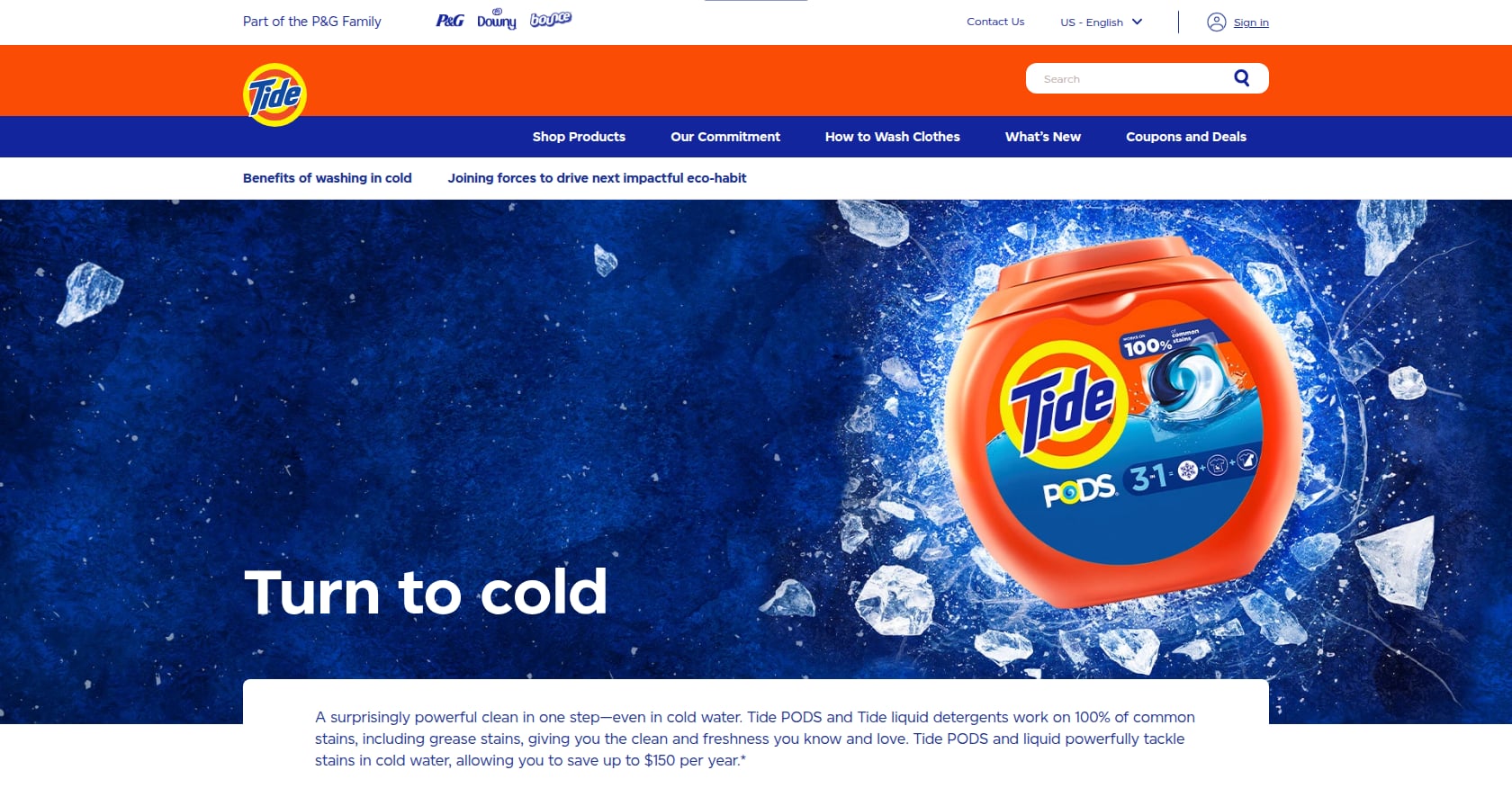
Tide partnered with Walmart to tackle a specific belief: that cold water doesn’t clean as well as hot. The activation combined in-store demos with a sustainability savings message, linking environmental benefit directly to the shopper’s #1 purchase driver (value).
Barrier: Skepticism about cold-water cleaning performance
Result: 39% sales lift
What to steal: Tie your sustainability message to the category’s primary purchase driver. Purpose without utility doesn’t convert.
For more examples of purpose-driven campaigns that drove profit, see our deeper analysis.
2. Patagonia Worn Wear
Best for: Brands with circular economy commitments.
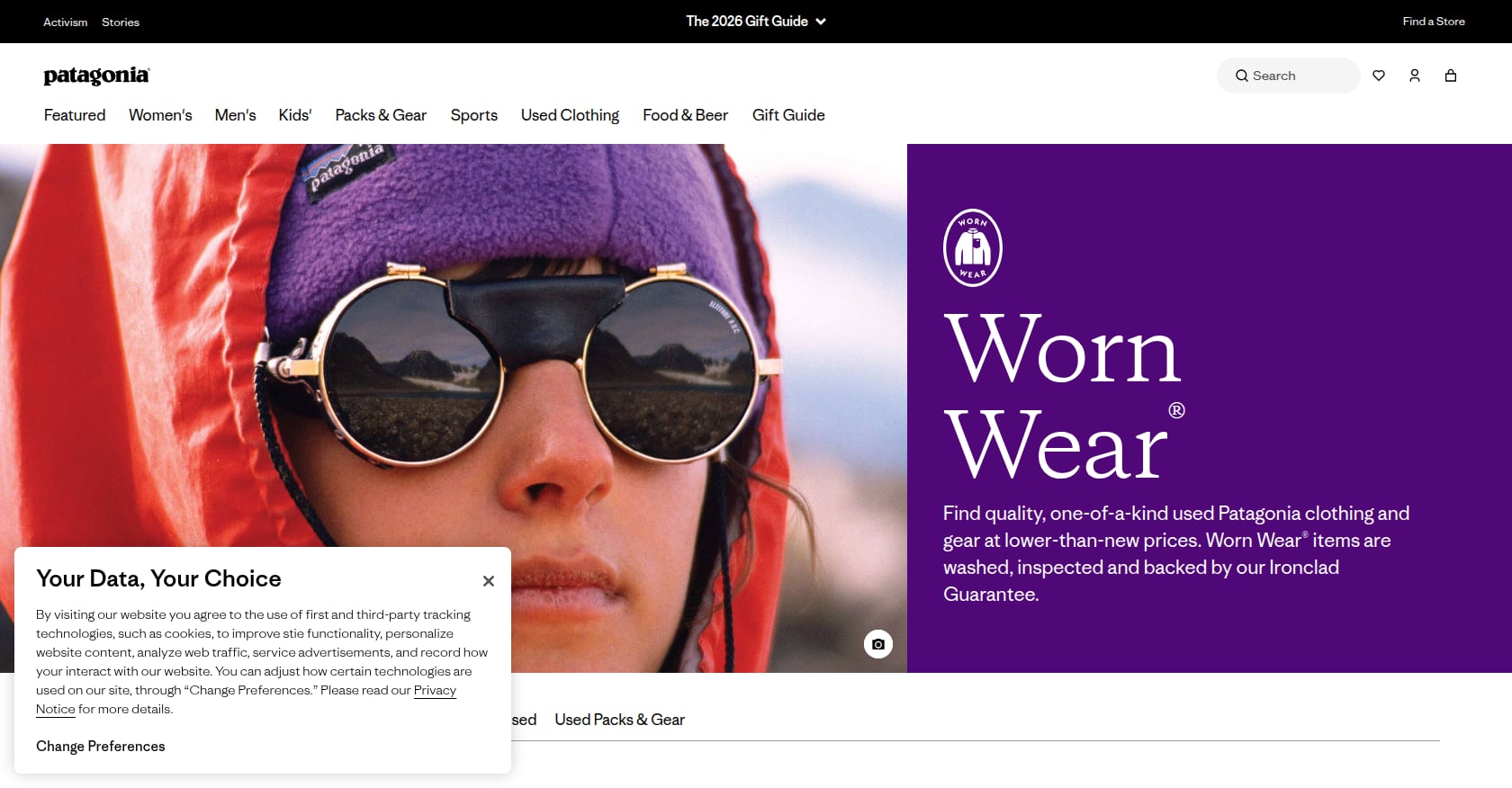
Patagonia’s Worn Wear program runs trade-in pop-ups and in-store repair events. The activation addresses a well-documented gap: consumers want to act sustainably but see no convenient way to do it. Research shows that of 81 self-declared green consumers, 30% struggled to translate concern into purchasing decisions.
Barrier: Sustainability intention without a convenient action
Result: Reinforced brand identity, deepened customer loyalty, extended product lifecycle
What to steal: Make sustainability the service, not just the message. Convenience closes the gap.
3. Lush Naked Stores
Best for: Brands whose operations are their activism.
Lush turned an operational commitment (eliminating packaging) into a retail experience. The store format is the campaign. Package-free products feel risky to try, so the stores use demonstration, texture, and scent as the activation tools.
Barrier: Package-free products feel unfamiliar and risky
Result: Permanent retail format that generates ongoing media and foot traffic
What to steal: When your operations are your activism, the activation never stops. You don’t need a campaign end date.
4. Grove Collaborative at Target
Best for: DTC brands entering traditional retail.
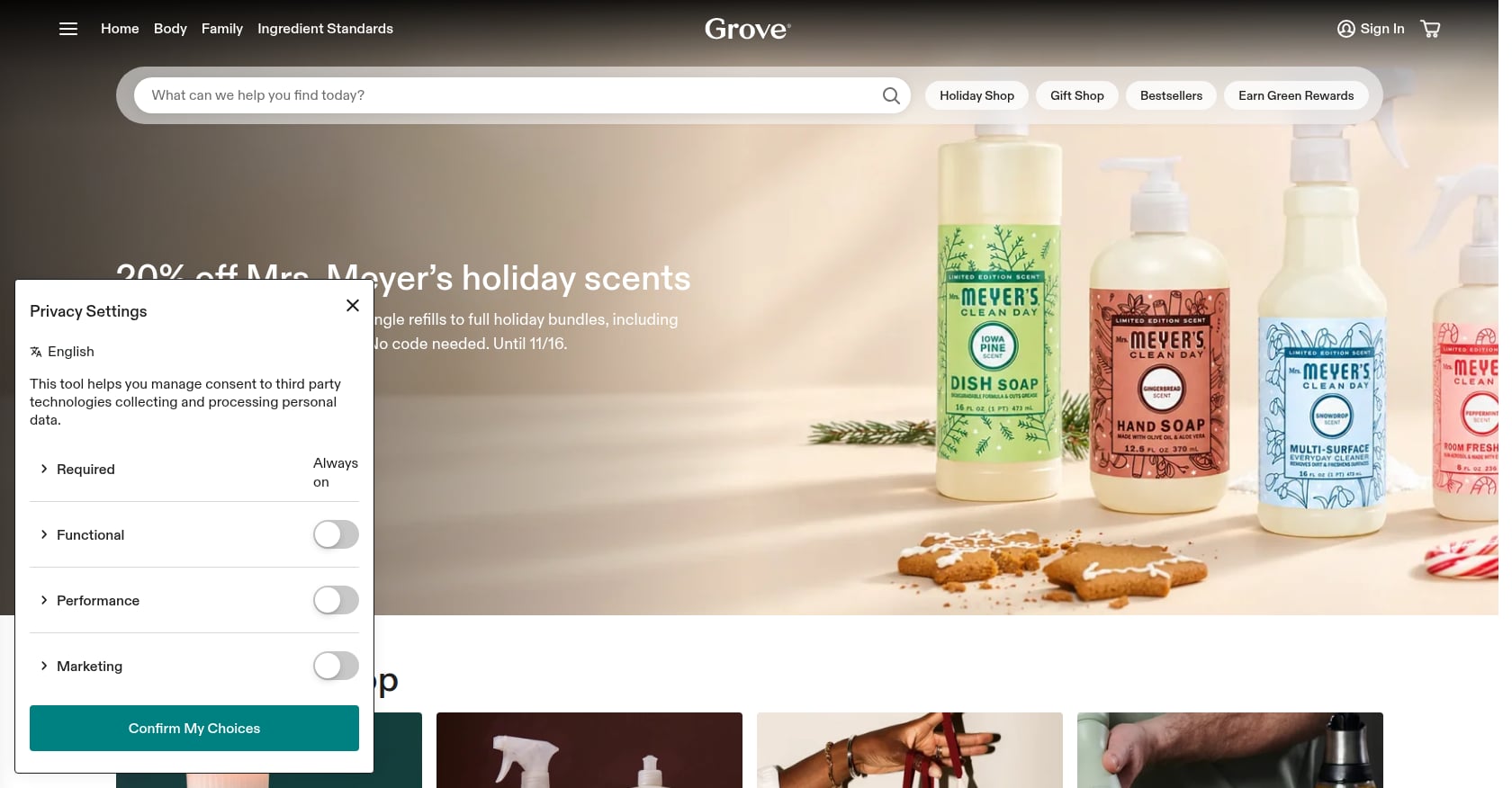
Grove Collaborative used in-store educational displays to explain concentrated and sustainable cleaning products to Target shoppers. The activation was pure education: what concentrates are, why they work, how to use them.
Barrier: Shoppers don’t understand unfamiliar sustainable product formats
Result: 25% sales increase on concentrates after packaging refresh aligned with educational messaging
What to steal: For unfamiliar sustainable products, education is the activation. Don’t assume the shelf can explain itself.
Experiential and Pop-Up Retail Activations
Pop-up shops have helped retailers improve market visibility by 51% and increase sales by nearly 50%. These activations work because they transform shopping from a transaction into a memory.
1. IKEA Sleepeasy
Best for: Retailers wanting to build community around a category.
IKEA’s 2025 Sleepeasy event let customers spend the night in-store. It started from a Facebook group request, meaning fans essentially designed the activation. The first weekend drew more than 5,000 visitors.
Barrier: Mattress buying feels impersonal and low-engagement
Result: 5,000+ visitors in one weekend, massive social coverage
What to steal: Let your community design the activation. Customer-originated ideas carry built-in demand.
2. Nike RunTown
Best for: Athletic and lifestyle brands building subculture loyalty. Nike launched its temporary RunTown pop-up hub on Regent Street in London, creating a multi-floor experiential space dedicated entirely to running culture while its primary flagship underwent redesign. It featured product testing tracks, runner recovery zones, and community programming.
Barrier: Running community felt disconnected from traditional retail environments
Result: Maintained high-value brand presence and community connection during flagship renovations
What to steal: Organize temporary retail spaces around how active subcultures live and train, not just traditional product displays.
Looking for more experiential activation approaches? We break down the strategy behind the spectacle.
3. Sephora SEPHORiA
Best for: Multi-brand retailers in beauty, food, or lifestyle.
The 2025 edition of SEPHORiA featured 65+ brand activations (up from 50 the prior year) and 40+ brand founders teaching masterclasses. It’s a festival-format event where the sheer density of experiences overcomes the paradox of choice in beauty.
Barrier: Brand overload makes it hard to discover and commit
Result: Growing year-over-year attendance, direct founder-to-consumer connection
What to steal: Founder access creates trust at scale. Put the people behind the brand in front of the customer.
4. H&M Nightclub Fitting Room
Best for: Apparel retailers looking to fix a broken touchpoint.
H&M redesigned fitting rooms with nightclub-inspired lighting and music. This sounds gimmicky until you realize that the fitting room is the highest-stakes moment in the apparel purchase journey. If the customer feels bad in the fitting room, nothing else matters.
Barrier: Fitting rooms create negative emotional states that kill conversion
Result: Changed the emotional context at the exact decision point
What to steal: Audit the worst touchpoint in your customer journey and make it the best one.
Gamified and Digital-Physical Retail Activations
Not every activation needs a six-figure budget. At SXSW, brand activations have reportedly cost $500,000 to $1.5 million for just a few days. These two examples prove that QR codes and simple game mechanics can deliver outsized engagement for a fraction of that cost.
1. Walker’s Shortbread “Free Shortbread Finger”
Best for: Heritage or specialty brands building awareness at trial.
Walker’s placed gamified vending machines in airports. Customers answered questions about Walker’s history to unlock a free sample. The genius: brand education was embedded in the game mechanic itself.
Barrier: Zero brand knowledge at the point of trial
Result: Created memorability and brand education in a single interaction
What to steal: Make the consumer earn the sample through brand engagement. Free without friction teaches nothing.
2. Reese’s Scream 7 Spin and Win
Best for: CPG brands activating in the aisle with minimal infrastructure.
Bastion ran a Scream 7-themed spin-and-win for Reese’s in confectionery aisles. Shoppers scanned QR codes on shelf wobblers, spun a digital wheel, then uploaded a receipt to verify purchase.
Barrier: Confectionery impulse needs a trigger beyond packaging
Result: Receipt-verified purchases tied directly to activation engagement
What to steal: QR-based activations create measurable, low-cost in-aisle engagement that ties directly to purchase verification.
What the Best Retail Brand Activation Examples Have in Common
After studying these 10 retail brand activation examples, five patterns emerge:
They start with the barrier, not the creative. Every successful activation identified a specific consumer obstacle and built the experience to remove it.
They’re measurable from day one. Track store-level sales lift, conversion among engaged shoppers, 90-day repeat visits, and basket attach rate.
Purpose adds emotional weight. Purpose-driven retail activations consistently outperform generic ones because 86% of consumers trust purpose-led brands more.
Staff training matters more than spectacle. Practitioners note that trained brand ambassadors drive 3-4x more conversions than generic promo staff. As one industry veteran put it: “We are not creating brand theater.” The internal sell-in should frame activations as retail velocity drivers.
They plan for before, during, and after. The strongest programs include pre-activation (social teasers, retailer alignment), the experience itself, and post-activation (retargeting, content repurposing, measurement). Most brands only plan the middle phase.
Best-in-class programs return 3-6x their cost within 12 months when measured against baseline category sales. That return depends on execution discipline, not budget size.
Need help building a retail activation strategy grounded in purpose and measurable outcomes? Start with a conversation.
How to Plan a Successful Retail Brand Activation in 7 Steps
A successful retail brand activation starts with a clear business objective, a defined shopper audience, and an experience that encourages measurable action. The following seven steps provide a practical framework for planning an activation campaign.
Step 1. Define the Campaign Objective
Start by identifying what the activation needs to achieve.
Common objectives include:
Increase sales of a specific product.
Introduce a new product to retail customers.
Encourage product trials and sampling.
Increase store visits and foot traffic.
Improve brand awareness.
Generate customer registrations or loyalty sign-ups.
Increase repeat purchases.
Choose one primary objective and use secondary objectives to support it.
Step 2. Identify the Shopper Barrier
Understand why shoppers might ignore, hesitate over, or reject the product.
For example:
Shopper Barrier | Potential Activation |
|---|---|
Does not understand the product | Educational product demonstration |
Unsure about product quality | Free product sampling |
Unfamiliar with the brand | Interactive brand experience |
Hesitant about price | Limited-time promotion |
Cannot visualize product usage | Live demonstration or augmented reality |
Needs a reason to visit the store | Community event or pop-up experience |
The activation should directly address the barrier rather than simply create visual attention.
Step 3. Choose the Right Retail Environment
Consider where your target audience is most likely to encounter the product.
Possible environments include:
Supermarkets and grocery stores.
Shopping malls.
Department stores.
Specialty retail outlets.
Airport retail locations.
Temporary pop-up spaces.
Brand-owned flagship stores.
Consider foot traffic, product placement, retailer approval, available space, and customer demographics before selecting a location.
Step 4. Develop the Activation Experience
Design the experience around one clear shopper action.
Examples include scanning a QR code, testing a product, participating in a challenge, attending a demonstration, or redeeming a promotional offer.
Keep participation simple. Shoppers should understand what to do, why they should participate, and what happens next.
Step 5. Coordinate Retailers and Activation Staff
Retail execution requires coordination between the brand, retailer, production team, and on-site staff.
Before launch, establish:
Store approval and campaign permissions.
Product availability and inventory requirements.
Display installation and maintenance.
Staff training and promotional instructions.
Health, safety, and accessibility requirements.
Promotional terms and conditions.
Reporting responsibilities.
A strong creative concept can still fail if the retail execution is inconsistent.
Step 6. Launch and Monitor Performance
Monitor campaign performance throughout the activation period.
Track participation, product trials, promotional redemptions, stock availability, and sales performance.
If shoppers are not participating, investigate whether the problem involves location, messaging, staff execution, or the activation mechanics.
Step 7. Evaluate Results and Optimize
Compare the campaign's performance against a baseline or appropriate control group.
Identify which stores, audiences, experiences, and promotional mechanics generated the strongest outcomes.
Use these findings to improve future activations rather than treating every campaign as a standalone event.
Key takeaway: The best retail brand activations are designed around a measurable customer action. Define the objective, identify the purchasing barrier, select the right experience, and measure the result from the beginning.
The Retail Brand Activation ROI Framework: How to Measure Success
Too many brands treat retail activations as sunk brand-awareness costs. To secure recurring budget from retail partners, you must measure performance across a structured framework.
Metric Category | What to Track | Benchmark Target |
Short-Term Sales Lift | Store-level category sales compared to control stores during the activation window. | 20% – 40% lift |
Engagement Conversion | Percentage of foot-traffic or event participants who complete a transaction. | 15% – 25% conversion |
Basket Attach Rate | Increase in complementary items added to cart alongside the activated product. | 10% – 15% increase |
Long-Term Retention | 90-day repeat purchase rate or loyalty program sign-ups originating from the footprint. | 25+ retention bump |
Frequently Asked Questions About Retail Brand Activations
What is a retail brand activation?
A retail brand activation is a marketing experience designed to encourage shoppers to interact with a brand or product in a retail environment. Common examples include product demonstrations, sampling events, interactive displays, pop-up stores, and gamified promotions. The goal is to turn customer engagement into measurable actions such as product trials, purchases, and loyalty sign-ups.
What are some examples of retail brand activations?
Common retail brand activation examples include in-store product demonstrations, free sampling, branded pop-up shops, interactive QR-code campaigns, gamified promotions, product launches, and community events. Brands such as Tide, Patagonia, IKEA, Nike, and Sephora have used different activation formats to create product discovery and customer engagement experiences.
What are the different types of retail brand activations?
The main types include in-store demonstrations, product sampling, experiential retail events, pop-up shops, interactive digital displays, gamified promotions, community events, and purpose-driven campaigns. The right format depends on the campaign objective, product category, target audience, and retail environment.
How much does a retail brand activation cost?
Retail brand activation costs depend on the campaign's scale, duration, location, staffing, production requirements, technology, and promotional materials. A QR-code promotion or in-store product demonstration generally requires less infrastructure than a large experiential event or multi-location pop-up campaign. Brands should calculate the total campaign cost before evaluating potential ROI.
What makes a retail brand activation successful?
A successful retail brand activation addresses a specific shopper need, provides a relevant experience, connects participation with a measurable business objective, and maintains consistent execution. Sales lift, conversion rate, product trials, and incremental profit are useful indicators of performance.
How do you measure the success of a retail brand activation?
Measure performance using sales lift, shopper conversion, product trial rate, promotional redemption, average basket value, and repeat purchases. Compare results with a historical baseline or control group where possible. To calculate ROI, compare incremental profit against the total activation cost.
Can small businesses run retail brand activations?
Yes. Small businesses can use affordable activation formats such as product sampling, demonstrations, QR-code promotions, interactive displays, local events, and limited-time offers. A successful activation does not require a large production budget. It requires a clear objective and an experience that gives customers a reason to participate.
What is the difference between retail marketing and retail brand activation?
Retail marketing includes the broader strategies retailers and brands use to promote products, increase sales, and attract customers. Retail brand activation is a more specific approach that encourages shoppers to actively interact with a brand through experiences, demonstrations, sampling, events, and other participatory activities.
Ready to build a retail brand activation that closes the gap between intention and action? Book a discovery call and start with a complimentary 5C landscape assessment.