

 Gaia
GaiaTL;DR
The best cause marketing campaigns share a common thread: they bridge the gap between what consumers say they care about and what they actually buy. This article breaks down 9 campaigns that generated measurable commercial results (not just warm feelings), analyzes 2 high-profile failures, and provides a framework for building campaigns that convert purpose into profit. Every example includes hard numbers, honest critique, and a transferable lesson.
Quick Answer
The best cause marketing campaigns combine a credible brand-cause fit with a simple consumer action, measurable social impact, and a clear business benefit. Standout examples include Patagonia’s “Don’t Buy This Jacket,” Dove Real Beauty, American Express’s Statue of Liberty campaign, TOMS One for One, Warby Parker’s Buy a Pair, Give a Pair, and (RED). The strongest campaigns turn an existing brand behavior into meaningful participation rather than simply attaching a cause to an advertisement.
Why this works: it answers the query in approximately 70 words, includes the primary entity “cause marketing campaigns,” names several recognizable examples, and establishes the criteria used to judge them.
At-a-Glance Comparison
Cause Marketing Campaigns at a Glance
Campaign | Brand | Cause | Campaign Model | Measurable Result | Main Lesson |
|---|---|---|---|---|---|
Don’t Buy This Jacket | Patagonia | Environment | Anti-consumption | 30% sales increase reported after campaign | Authenticity makes unconventional messaging credible |
Real Beauty | Dove | Body image | Brand platform | Revenue grew substantially during the campaign era | Long-term consistency compounds brand value |
Social Mission | Ben & Jerry’s | Social justice | Product + activism | Long-running purpose positioning | Make the cause part of the product |
Statue of Liberty | American Express | Heritage | Transaction-based donation | 45% increase in card applications | Reduce participation friction |
One for One | TOMS | Poverty | Buy-one-give-one | 95M+ shoes donated | Simple models can scale, but must evolve |
Red Nose Day | Walgreens | Child poverty | Retail activation | $190M raised in first five years | Make participation visible and easy |
(RED) | Multiple brands | HIV/AIDS | Licensing partnership | $700M+ raised | Partnerships can scale impact |
Buy a Pair, Give a Pair | Warby Parker | Vision access | Product-linked giving | 15M+ pairs distributed | Build impact into the operating model |
Barbie with T1D | Mattel | Representation | Inclusive product | Significant earned media and community response | Product design itself can communicate purpose |
How we selected these examples: We prioritized campaigns with a recognizable cause, documented brand participation, measurable impact or commercial results, longevity, and a lesson that other marketers can apply. Because campaign metrics are reported differently across brands, the figures above should not be interpreted as directly comparable ROI measurements.
What Cause Marketing Actually Is (And Isn’t)
Cause marketing is a partnership between a for-profit brand and a cause (often a nonprofit) where both sides benefit commercially and socially. It is not philanthropy, which expects nothing in return. It’s not sponsorship, which buys logo placement. And it’s not CSR, which is an internal business practice rather than a consumer-facing campaign.
American Express coined the term in 1983 during its Statue of Liberty restoration campaign. Since then, the industry has grown from $1.11 billion in 2005 to $1.85 billion by 2014, and the trajectory has only steepened. For a deeper breakdown of how cause marketing differs from adjacent strategies, that explainer covers the mechanics in detail.
The critical distinction today: consumers don’t just want brands to donate money. They want brands to mean it. According to Edelman’s 2025 Trust Barometer, 81% of consumers say they need to trust a brand before buying from it. Among those who do trust a brand, 90% buy from it and 87% pay more.
That trust gap is exactly where cause marketing lives or dies.
Explore Grounded World’s 5C assessment to identify where your brand-cause fit stands today.
Cause Marketing vs. CSR vs. Philanthropy vs. Sponsorship
Strategy | Primary Purpose | Consumer-Facing? | Commercial Return Expected? | Example |
|---|---|---|---|---|
Cause marketing | Connect a purchase or brand action to a cause | Yes | Yes | American Express + Statue of Liberty |
CSR | Improve how a company operates and impacts society | Usually not primarily | Indirectly | Sustainable sourcing |
Philanthropy | Provide resources to support a cause | Not necessarily | No | Corporate donation |
Sponsorship | Fund or support an event, organization, or property | Yes | Usually | Brand sponsoring a charity event |
The simplest distinction: CSR describes how a company behaves, philanthropy describes what it gives, sponsorship describes what it supports, and cause marketing connects a social cause to consumer-facing marketing and commercial activity.
The 9 Best Cause Marketing Campaigns That Delivered Real Results
1. Patagonia, “Don’t Buy This Jacket”
Best for: Brands with genuine operational sustainability commitments looking for the authenticity benchmark.
On Black Friday 2011, Patagonia ran a full-page ad in The New York Times telling people not to buy their jacket. Below the image, they listed the environmental cost: 36 gallons of water, 20 pounds of carbon dioxide, and two-thirds of its weight in waste. The message was simple. Think before you buy.
Hard results:
30% sales increase following the campaign
Revenue reached $1 billion annually by 2017
In 2022, founder Yvon Chouinard transferred company ownership to a trust directing approximately $100 million in annual profits toward fighting climate change
Why it worked: The campaign didn’t appear out of nowhere. Patagonia had launched its Common Threads Recycling Program in 2005, six years before the ad ran. The anti-consumerism message was credible because the company had already been living it operationally. Academic research supports this: perceived fit between the product and the cause positively influences both campaign credibility and brand attitude.
This is also a textbook example of low-guilt messaging. Research from the University of Southampton found that low-intensity guilt-arousing messages strengthen consumer identification with a brand, while high-intensity guilt triggers inferences of negative motives. Patagonia’s ad nudged. It didn’t shame.
What you can learn: Anti-consumerism messaging can drive sales, but only if your operations back it up. Without years of genuine commitment, this campaign would have been mocked. For more on how brand purpose examples like Patagonia anchor long-term strategy, that guide is worth exploring.
Limitation: This playbook requires real operational investment in sustainability. Most brands can’t (or won’t) make that commitment, which means copying the tactic without the foundation invites accusations of hypocrisy.
2. Dove, Real Beauty
Best for: Brands seeking a long-game purpose play that transforms category positioning over decades.
In 2004, Dove commissioned research showing only 2% of women worldwide described themselves as beautiful. The gap between how the beauty industry portrayed women and how real women experienced themselves was enormous. Dove’s response became one of the most commercially successful campaigns in advertising history, and it’s still running two decades later.
Hard results:
Sales surged from $2.5 billion to over $4 billion within a decade
The Real Beauty Sketches video hit 50 million views in 12 days
The Dove Self-Esteem Project has reached over 82 million young people worldwide
Dove’s 2024 “The Code” (anti-AI beauty pledge) generated 500 million organic views, 4 billion impressions, 94% positive sentiment, and a Brand Impact score of 95 out of 100
Why it worked: Real Beauty has outlasted almost every campaign built in the same decade because Dove keeps finding new, current-events-relevant proof for the same 2004 insight. When AI-generated beauty imagery emerged as a concern, Dove was already positioned to respond with “The Code.” The campaign demonstrates how purpose-driven storytelling builds compounding brand value over time.
What you can learn: A single powerful insight, refreshed consistently over years, is worth more than a dozen one-off campaigns. The best cause marketing isn’t a campaign at all. It’s a brand commitment that generates campaigns.
Limitation: Dove’s parent company Unilever also owns brands with narrow beauty ideals (Fair & Lovely, since rebranded). The dissonance between corporate portfolio and brand messaging is a real vulnerability that critics regularly surface. Practitioners on Reddit and marketing forums frequently point out this contradiction when discussing whether Dove’s activism is genuine or selective.
3. Ben & Jerry’s, Social Mission Flavors
Best for: Brands willing to make activism an always-on product strategy, not a seasonal campaign.
Ben & Jerry’s doesn’t use social issues to sell ice cream. The ice cream is the vehicle for the message. The company launched Empower Mint during the 2016 election year to amplify voter rights. As the American Marketing Association noted, “They see the ice cream as a vehicle that can shed light on these bigger social issues.”
Hard results:
B Corp certified since 2012 (the first wholly owned subsidiary to achieve this)
7.5% of annual pre-tax profits directed to community organizations since 1985
Maintains premium pricing despite (or because of) its activist positioning
Why it worked: Every pint is a mini-billboard for a cause. The naming convention creates built-in media coverage and social sharing. And critically, Ben & Jerry’s doesn’t retreat when positions become politically uncomfortable. Tara Furiani, CEO of Not the HR Lady, put it directly in Forbes: “Ben & Jerry’s doesn’t do performative activism. Every campaign, every message, and every pint sold is a testament to their unwavering commitment to social justice.”
What you can learn: When purpose is woven into the product itself, marketing becomes almost effortless. The product generates the story.
Limitation: Taking strong political stances polarizes. Ben & Jerry’s has faced boycott calls from both sides of the political spectrum. This is the inherent tradeoff of activist branding: deeper loyalty from your core audience, louder rejection from everyone else.
4. American Express, Statue of Liberty Restoration
Best for: Understanding the origins of cause marketing and why simplicity still wins.
In 1983, American Express donated one cent to the Statue of Liberty restoration every time someone used their charge card. For each new card application, a dollar went to the cause. Over four months, this raised $1.75 million for the restoration.
Hard results:
Card applications grew by 45%
Transaction activity jumped 28%
New card members increased 17%
Why it worked: The campaign had everything: a defined cause with a clear price tag, a tight time frame (four months), a patriotic emotional trigger, and frictionless participation. You didn’t have to do anything extra. Just use your card.
What you can learn: Reduce friction to zero. The best cause marketing campaigns don’t ask consumers to change their behavior. They attach purpose to behavior that’s already happening.
Limitation: This was a one-off transactional model. No sustained narrative, no community building, no long-term brand transformation. It generated a spike, not a shift. Modern consumers expect more continuity.
5. TOMS, One for One

Best for: Understanding how a groundbreaking model must evolve or die.
When Blake Mycoskie founded TOMS in 2006, the pitch was irresistible: buy a pair of shoes, and TOMS donates a pair to a child in need. By 2019, the company had given away more than 95 million pairs of shoes across 80+ countries. At its peak, TOMS was valued at over $600 million.
Hard results:
95 million pairs donated
$600 million+ peak valuation
Built an entirely new category of “buy one, give one” business models
Why it stumbled: Critics argued the donation model didn’t address systemic poverty and may have undermined local economies. The critique gained traction among development economists and eventually consumers. In December 2019, creditors took control of the company from Bain Capital amid bankruptcy rumors and several years of sales declines.
TOMS responded by shifting to a “1/3 of profits to grassroots good” model, decoupling giving from the one-for-one mechanic. This was the right move, but it came late.
What you can learn: Simple cause mechanics create powerful initial traction, but consumer sophistication grows. Models need to evolve before criticism forces the change. The progression from transactional donation to systemic impact funding is a pattern every cause marketer should study.
Limitation: The TOMS story is a reminder that good intentions without structural rigor can produce dependency rather than development. The brand’s commercial collapse proved that cause marketing models carry real business risk when they fail to adapt.
6. Red Nose Day + Walgreens
Best for: Retail brands looking for a point-of-sale cause activation model.
Red Nose Day, the annual Comic Relief fundraiser, partnered with Walgreens as its official U.S. Red Nose distributor starting in 2015. The mechanic is straightforward: buy a red nose at Walgreens, all proceeds go to Comic Relief. Wear the nose. Share the photo.
Hard results:
$190 million raised, impacting 16 million children worldwide over five years
Why it worked: The physical red nose creates visible social proof. People wearing them in public generates organic awareness without any ad spend. The annual cadence builds tradition and anticipation. And retail placement makes participation as easy as adding an item to your checkout basket. For brands thinking about retail activation as a cause marketing vehicle, this is the template.
What you can learn: A physical, shareable artifact attached to a cause creates a participation loop that digital-only campaigns struggle to replicate.
Limitation: Heavy reliance on a single retail partner and broadcast TV for awareness. Both are declining channels. The campaign will need to find new distribution and media strategies to sustain growth.
7. Product (RED)
Best for: Brands that want to participate in cause marketing through licensing rather than building a campaign from scratch.
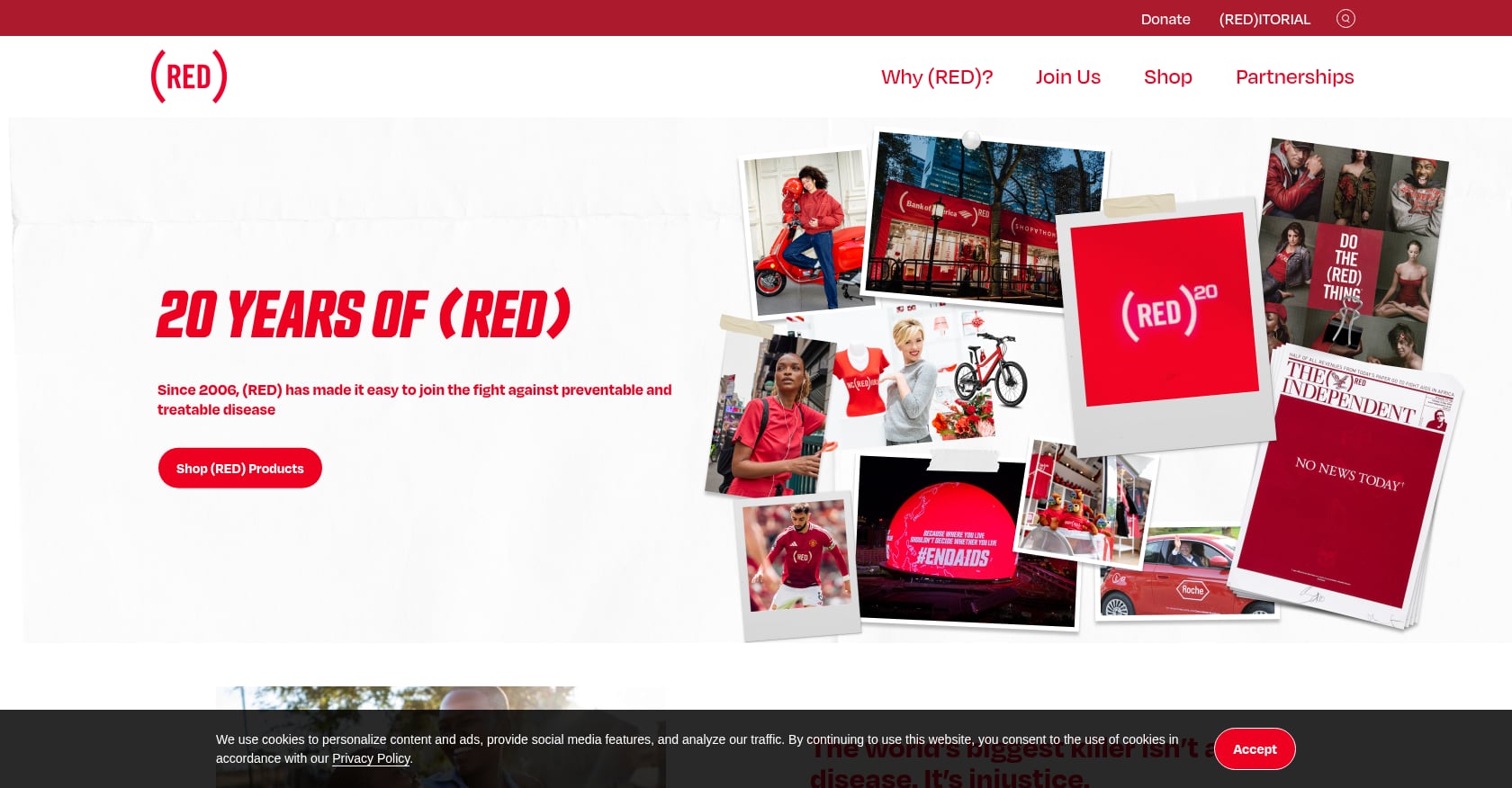
Founded by Bono and Bobby Shriver in 2006, (RED) created a cross-brand licensing model where companies like Apple, Gap, and Nike produce (RED)-branded products with a portion of profits going to the Global Fund to fight AIDS, tuberculosis, and malaria.
Hard results:
Over $700 million raised for the Global Fund
Partnerships with some of the world’s largest consumer brands
Created a repeatable model that scales across categories
Why it worked: (RED) solved a real problem for brands: they wanted to participate in cause marketing but didn’t want to build nonprofit partnerships from scratch. The licensing model provided a turnkey solution with built-in credibility and a massive brand ecosystem.
What you can learn: Cause marketing doesn’t require building everything in-house. Strategic partnerships can scale impact faster than any single brand acting alone. For guidance on building strategic partnerships for impact, that resource outlines the practical framework.
Limitation: The middleman model means individual brand connections to the cause are shallow. Consumers know Apple makes a (RED) iPhone, but few could explain what the Global Fund actually does. Brand differentiation is limited when everyone uses the same platform.
8. Warby Parker, Buy a Pair, Give a Pair
Best for: Brands that want to learn from TOMS’ trajectory and adapt the give model proactively.
Warby Parker launched in 2010 with a similar one-for-one model: for every pair of glasses sold, a pair is distributed to someone in need. But Warby Parker adapted earlier and more thoughtfully than TOMS. Rather than donating finished glasses directly, they partnered with organizations like VisionSpring to train local entrepreneurs in developing countries to sell affordable glasses, creating jobs rather than dependency.
Hard results:
Over 15 million pairs of glasses distributed
Successful IPO in 2021 (valued at approximately $6 billion)
Maintained the give model without the same criticism that sank TOMS
Why it worked: By channeling distribution through local entrepreneurs, Warby Parker addressed the systemic criticism that plagued TOMS before that criticism became a brand liability. The model created economic value in the communities it served, not just product distribution.
What you can learn: Anticipate the criticism. If your cause marketing model has a structural weakness, fix it before your audience notices. Warby Parker’s proactive evolution is the counterpoint to TOMS’ reactive pivot.
Limitation: The give-a-pair model is still secondary to Warby Parker’s core value proposition (affordable, stylish glasses). It’s unclear how much the cause component actually drives purchase decisions versus the product quality and price point.
9. Mattel + Breakthrough T1D, Barbie with Type-1 Diabetes
Best for: Brands exploring inclusive product design as a new form of cause marketing.
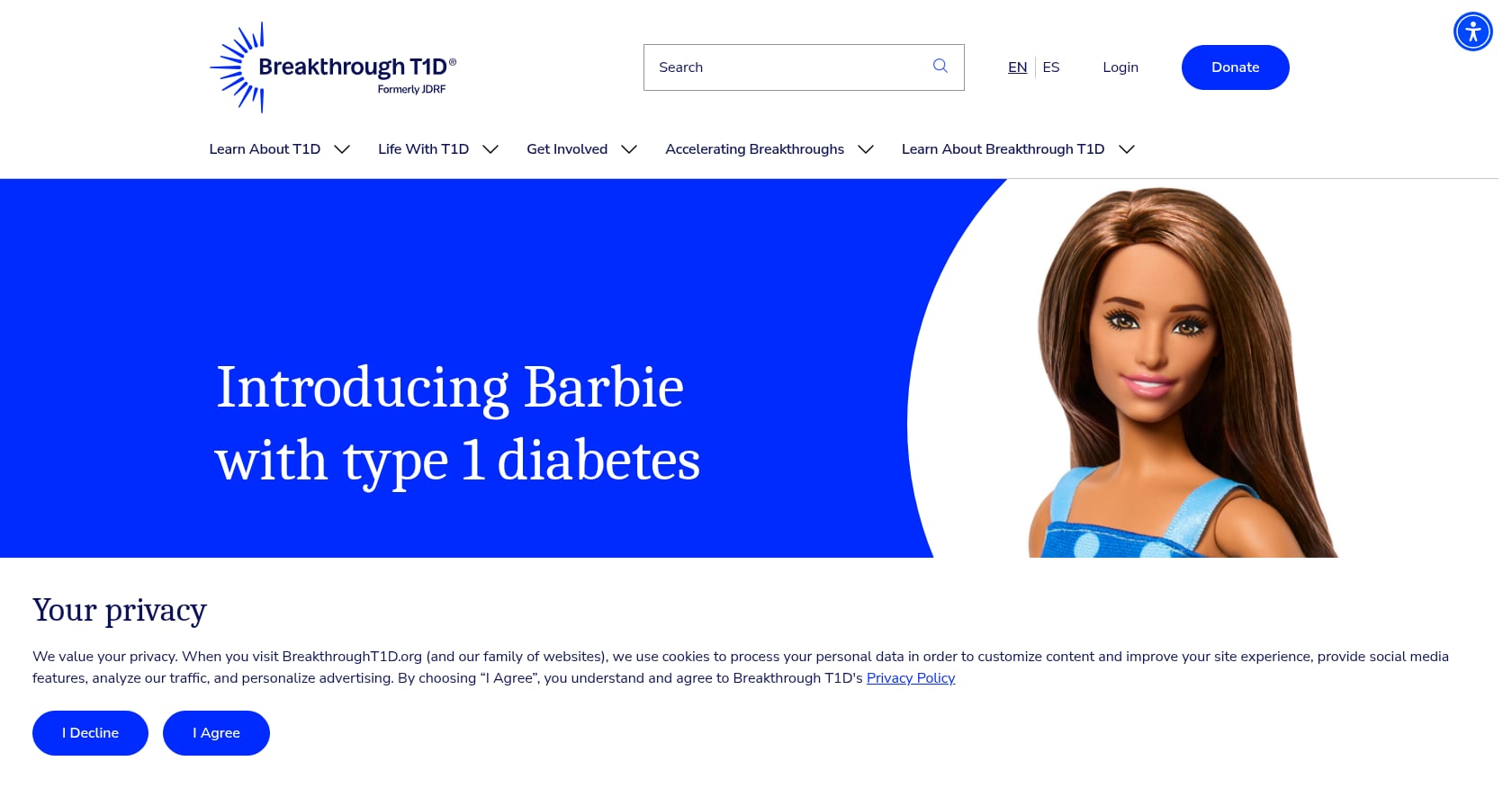
In 2025, Mattel partnered with Breakthrough T1D to create Barbie’s first doll with Type-1 diabetes, complete with an insulin pump and continuous glucose monitor. The campaign represents a growing trend: the product itself is the cause statement.
Hard results:
Significant media coverage across parenting, health, and marketing outlets
Strong positive response from the T1D community, with parents sharing stories of children feeling represented for the first time
Why it worked: Instead of donating money or running awareness ads, Mattel embedded representation directly into one of the most iconic products in the world. The doll doesn’t need a separate campaign to communicate its purpose. Its existence is the message.
What you can learn: Cause marketing is evolving beyond transactions and messaging into product design itself. Representation is a form of activism that sits naturally on the shelf.
Limitation: Still too early to measure long-term commercial impact. The risk with representation-focused products is that they can be perceived as tokenistic if they’re one-off additions rather than part of a sustained commitment to inclusive design.
6 Types of Cause Marketing Campaigns
The examples above represent several different cause marketing models. Understanding the model is more useful than copying the creative execution.
Campaign Type | How It Works | Example |
|---|---|---|
Transaction-based giving | A purchase triggers a donation | American Express |
Buy-one-give-one | Each product purchased funds or provides another product | TOMS |
Product activism | The product itself communicates or funds the cause | Ben & Jerry’s |
Brand platform | A brand builds a long-term identity around a social issue | Dove |
Retail activation | Consumers participate at the point of purchase | Red Nose Day |
Licensing/partnership | Multiple brands participate through a shared cause platform | (RED) |
Inclusive product design | Representation becomes part of the product | Barbie with T1D |
Which model is best? There is no universally best cause marketing model. Transactional campaigns are usually easiest to explain and measure, while brand platforms and product-based activism can create stronger long-term differentiation. The right model depends on the brand's existing credibility, customer behavior, resources, and ability to demonstrate measurable impact.
Cause Marketing Campaigns That Backfired
Listing only successes would paint an incomplete picture. The most instructive lessons often come from failures, and understanding what went wrong is essential for avoiding greenwashing and performative activism.
1. Pepsi, Kendall Jenner “Live for Now” Ad
In 2017, Pepsi released an ad showing Kendall Jenner leaving a photoshoot to join a protest march, then handing a police officer a can of Pepsi to resolve the tension. The backlash was immediate and overwhelming. Pepsi pulled the ad within 24 hours and issued a public apology.
What went wrong: The ad made solving complex societal problems look as easy as opening a soda. Pepsi had no history or credibility in the social justice space, which made the message feel hollow and opportunistic. The target audience saw through the superficial attempt instantly.
The failure maps directly onto academic research about brand-cause fit. When consumers perceive a disconnect between what a brand sells and the cause it claims to support, credibility collapses. Pepsi sells sugary drinks. Police brutality and protest movements have nothing to do with that product. The fit was nonexistent.
The real lesson: Most marketing failures don’t start with bad intent. They start with a gap between what the brand promised and what the audience experienced. This is the intention-action gap playing out in reverse: the brand’s stated intention (solidarity with protesters) was contradicted by the audience’s actual experience of the ad (trivialization of their struggle).
2. Dove, Body Wash Facebook Ad (2017)
Even Dove, the gold standard for cause marketing, stumbled badly. In 2017, Dove posted a Facebook ad showing a Black woman removing her shirt to reveal a white woman underneath, evoking historical racist soap advertising tropes. The ad was pulled quickly, and Dove apologized.
What went wrong: The ad was likely created with inclusive intent but was executed without sufficient cultural review. It proved that even brands with twenty years of purpose-driven credibility can produce tone-deaf content when creative processes lack diverse perspectives.
The real lesson: Purpose is not a shield. A strong track record buys some goodwill, but it doesn’t make you immune to criticism. Every piece of creative still needs rigorous scrutiny, especially when the brand has built its identity on a specific social value.
How to Choose the Right Cause for Your Brand
Before launching a cause marketing campaign, score potential causes against five questions:
Question | Strong Fit | Weak Fit |
|---|---|---|
Does the cause connect naturally to the product? | Clear connection | No obvious connection |
Does the brand have existing credibility? | Existing actions or expertise | No prior involvement |
Does the audience care? | Strong audience overlap | Little relevance |
Can the brand contribute meaningfully? | Money, products, expertise, distribution | Mostly advertising |
Can the commitment continue? | Multi-year potential | One-off campaign |
A simple rule: If you cannot explain in one sentence why your brand has a legitimate reason to support the cause, the campaign probably needs more strategic work.
What Makes the Best Cause Marketing Campaigns Actually Work?
After analyzing these 11 campaigns, a clear pattern emerges. The campaigns that generated both social impact and commercial returns share six characteristics. Those that failed violated one or more of them.
1. Brand-cause fit is non-negotiable. Academic research consistently shows that perceived fit between the product and the cause influences campaign credibility and brand attitude. Patagonia talking about environmental impact makes sense. Pepsi talking about police brutality does not. Before selecting a cause, ask: would our customers find this connection logical?
2. Operational authenticity beats messaging. Consumers can tell the difference between a brand that runs a cause campaign and a brand that operates as a cause-driven business. Patagonia, Ben & Jerry’s, and Warby Parker all built operational commitments before they built campaigns. Purpose without operational backing is just advertising. For brands building behavior change campaigns, the operational foundation matters even more.
3. Low-guilt, high-agency messaging wins. The University of Southampton research is clear: low-intensity guilt-arousing messages strengthen consumer identification with the brand, while high-intensity guilt triggers inferences of negative motives. Patagonia’s “Don’t Buy This Jacket” nudged consumers to think. It didn’t shame them for buying. Dove invited women to see themselves differently. It didn’t guilt them for wearing makeup.
4. Transparency and measurable impact reporting are table stakes. Brands integrating live dashboards and transparent donation tracking have seen 40% increases in repeat participation, according to recent engagement data. Consumers in 2025 expect to see where the money went, what changed, and how it was measured.
5. Long-term commitment outperforms one-off stunts. American Express’s Statue of Liberty campaign generated a spike. Dove’s Real Beauty generated a transformation. The campaigns that build lasting brand equity run for years, not quarters. They evolve with culture while staying anchored to a core insight.
6. Close the intention-action gap. 84% of consumers say cause marketing makes a brand more attractive. 51% say it makes them more likely to buy. But “more likely” and “actually buying” are different things. The best campaigns reduce friction between caring and purchasing. They make the socially responsible choice the easy choice.
Start with a 5C assessment to identify where your brand sits on each of these dimensions.
How to Measure Cause Marketing ROI
This is where most articles on the best cause marketing campaigns stop. They show you inspiring examples and leave you to figure out the business case alone. That’s a problem, because proving ROI is the single biggest barrier to brand marketing investment, according to a 2025 EMARKETER and StackAdapt report. And C-suite support for brand building is declining: only 69% of CMOs say their CEO and CFO believe in long-term brand value, down from 80% in 2024.
You need a dual-track measurement approach.
Social impact KPIs:
Funds raised or donated
People reached or served
Awareness metrics (unprompted brand-cause association)
Sentiment analysis (positive/negative/neutral)
Business KPIs:
Sales lift during and after campaign
Customer acquisition cost changes
Customer lifetime value increases
Brand perception shifts (tracked through brand tracking studies)
Repeat purchase rates among cause-aware segments
Well-executed cause marketing campaigns typically generate 3 to 5x ROI through a combination of these factors. But you have to measure both tracks simultaneously. A campaign that raises $10 million for charity but doesn’t move the commercial needle will lose internal support. A campaign that boosts sales but can’t demonstrate real social impact will lose consumer trust.
The tension between purpose in marketing campaigns and commercial accountability is real, but the best practitioners treat it as a productive tension rather than a contradiction.
Where Cause Marketing Is Headed
Three trends will shape the best cause marketing campaigns over the next two years.
First, transparency will become the primary differentiator. Vague claims about “giving back” are no longer enough. Consumers and regulators alike are scrutinizing environmental and social claims with increasing rigor. Greenwashing strategies are eroding consumer trust across industries, and customers with high environmental beliefs are particularly skeptical, translating that skepticism into brand avoidance.
Second, cause marketing is moving from transactions to product design. The Mattel/Breakthrough T1D partnership signals this shift. Instead of donating money per purchase, brands are embedding social values directly into what they make. This is cause marketing that doesn’t require a separate campaign to communicate. The product tells the story.
Third, trust has become a binary switch. Edelman’s 2024 Trust Barometer found that trust in institutions is now a “buy or boycott” factor for 71% of global consumers. There is no neutral ground. Brands are either trusted or they’re not, and cause marketing is one of the most visible arenas where that trust is tested.
For brands navigating this shift, the question isn’t whether to invest in cause marketing. It’s whether to invest in it authentically or not at all. 89% of Americans aged 13 to 25 would switch to a brand associated with a good cause. 72% of consumers actively look for companies that share their values. The commercial case is clear. The execution is what separates winners from cautionary tales.
Get in touch to build a cause marketing strategy grounded in both purpose and commercial reality.
FAQ
What is cause marketing?
Cause marketing is a commercial partnership between a for-profit brand and a social or environmental cause where both parties benefit. The brand gains trust, loyalty, and sales. The cause gains funding, awareness, and reach. It differs from philanthropy (no expected return), sponsorship (logo placement), and CSR (internal business practices). American Express coined the term in 1983 during its Statue of Liberty restoration campaign.
What are the best cause marketing campaigns of all time?
The most commercially successful cause marketing campaigns include Patagonia’s “Don’t Buy This Jacket” (30% sales increase), Dove’s Real Beauty (revenue doubled from $2.5B to $4B+), Ben & Jerry’s social mission flavors (sustained premium pricing through activism), and American Express’s Statue of Liberty restoration (45% increase in card applications). Each campaign demonstrates a different model, from anti-consumerism to product-as-activism to transactional donation.
How do you measure cause marketing ROI?
Measure on two parallel tracks. Social impact KPIs include funds raised, people reached, and sentiment analysis. Business KPIs include sales lift, customer acquisition cost, customer lifetime value, and brand perception shifts. Well-executed campaigns typically generate 3 to 5x ROI across these combined metrics. The key is tracking both simultaneously, because internal stakeholders need commercial proof while consumers need impact proof.
Why do some cause marketing campaigns fail?
Most cause marketing failures stem from one of three problems: poor brand-cause fit (Pepsi and protest movements), performative commitment without operational backing, or high-guilt messaging that triggers consumer skepticism. Academic research shows that when consumers perceive a disconnect between the product and the cause, credibility collapses. Even strong purpose brands like Dove have stumbled when creative execution contradicts their stated values.
Is cause marketing still effective in 2025?
Yes, but the bar is higher. 78% of consumers believe cause marketing is effective marketing, and 67% say they trust brands more when they support causes. However, greenwashing concerns and rising consumer skepticism mean that transparency, measurable impact, and genuine operational commitment are now prerequisites. Brands using live dashboards and transparent reporting have seen 40% increases in repeat participation compared to those making vague claims.
What is the difference between cause marketing and CSR?
CSR (Corporate Social Responsibility) refers to a company’s internal practices and policies around social and environmental responsibility. Cause marketing is a consumer-facing strategy that ties commercial activity (purchases, engagement) to a specific cause or nonprofit partnership. CSR is about how you operate. Cause marketing is about how you communicate and activate that commitment with your customers.
How do you choose the right cause for your brand?
Start with brand-cause fit. Research consistently shows that the perceived connection between your product and the cause directly influences campaign credibility. A cleaning brand supporting ocean cleanup makes intuitive sense. A soda brand claiming solidarity with protest movements does not. Beyond fit, evaluate whether your company has operational credibility on the issue, whether the cause resonates with your specific customer base, and whether you can commit to it long-term rather than as a one-off stunt.
Can small brands do cause marketing effectively?
Absolutely. Cause marketing doesn’t require a massive budget. TOMS started as a small startup. Warby Parker was a direct-to-consumer newcomer. The key factors, brand-cause fit, authenticity, and transparent reporting, are about commitment rather than spending. Small brands often have an advantage because their stories feel more personal and their motivations more genuine. The most important thing is choosing a cause that connects naturally to what you sell and demonstrating measurable impact over time.