
 Hope Wehrli
 In reality, the issue is usually not the strategy itself. It is the inability to scale.
Businesses launch sustainability initiatives, test pilot programs, introduce sustainable packaging, and announce new climate commitments. But after the initial excitement fades, these programs often remain limited to a small region, one product line, or a single team.
The result is an execution gap.
Companies know there is growing consumer demand for sustainable products and sustainable solutions. They know climate change is influencing purchasing decisions. They know sustainable consumer behaviour is becoming more important.
Yet many organizations still struggle to turn those insights into long-term growth.
Pilot Programs Are Not the Same as Business Transformation
One of the biggest reasons sustainability initiatives fail is that businesses confuse launching with scaling.
A pilot program may show promising results, but that does not mean it is ready for broader rollout.
A company may test sustainable packaging in one region, introduce a limited line of sustainable products, or trial a recycling initiative in select stores. But when it comes time to expand, businesses often run into operational barriers.
These barriers can include:
- Higher production costs
- Supply chain limitations
- Inconsistent messaging
- Lack of employee training
- Weak cross-functional ownership
- Poor visibility of sustainable products
- Limited understanding of consumer behaviour
Without a plan to address these challenges, sustainability initiatives remain isolated.
Consumer Intent Does Not Automatically Become Consumer Action
Consumers increasingly say they care about climate change, sustainable practices, and sustainable consumption.¹
However, consumer behaviour does not always reflect those intentions.
Many consumers want to support sustainable products, but still choose lower-cost or more convenient alternatives. This is the intention-action gap.
Research shows that sustainable consumer behaviour is often limited by practical concerns such as affordability, convenience, trust, and accessibility.³
Consumers may support sustainable choices in theory, but if sustainable solutions are difficult to find, poorly explained, or more expensive, adoption slows.
That is why companies cannot rely on awareness campaigns alone.
They need to design sustainable choices so they fit naturally into everyday consumer behaviour.

Why Scaling Sustainability Requires More Than Marketing
Many businesses treat sustainability as a communications exercise.
They create campaigns around climate change, highlight sustainable packaging, or promote sustainable practices in advertising.
While these efforts can raise awareness, they do not solve the deeper problem.
For sustainability initiatives to scale, they need support across the entire business.
That includes:
- Procurement teams sourcing sustainable materials
- Operations teams adjusting processes
- Finance teams supporting long-term investment
- Product teams prioritizing sustainable solutions
- Marketing teams reinforcing sustainable behaviours
- Leadership teams measuring progress against business goals
Without this level of integration, businesses struggle to keep sustainability initiatives moving beyond the pilot stage.
Younger Consumers Are Raising Expectations
Consumer behaviour is shifting quickly, especially among younger generations.
Many younger consumers are more aware of climate change and more likely to seek out sustainable products, sustainable packaging, and sustainable consumption habits.²
They increasingly expect companies to provide sustainable solutions that are easy to access and simple to understand.¹²
However, even consumers who value sustainability still face barriers.
If sustainable products are not visible, affordable, or convenient, they are less likely to become part of regular purchasing behaviour.
This means businesses need to focus not only on what they sell, but on how they make sustainable choices easier.
The Companies That Scale Best Remove Friction
Businesses that successfully scale sustainability initiatives do not expect consumers to change overnight.
Instead, they reduce friction.
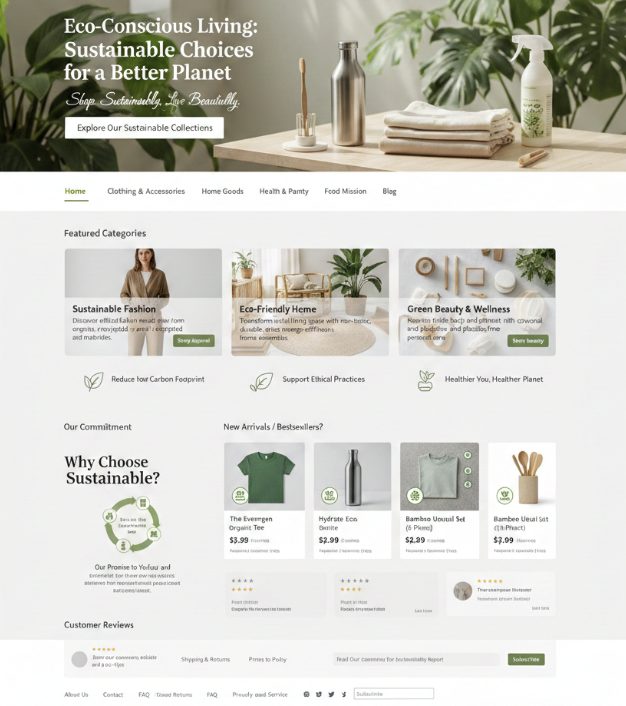
They make sustainable products easier to find. They simplify messaging. They improve access. They lower the cost difference between traditional and sustainable products.
They also use consumer psychology to reinforce sustainable behaviours.
This can include:
Loyalty rewards for sustainable purchases
Product labels that clearly explain benefits
Default sustainable packaging options
Easier product comparisons
Stronger in-store placement of sustainable products
These tactics help turn growing consumer demand into long-term sustainable consumer behaviour.
Closing the Scale Gap
Most businesses do not need more sustainability initiatives.
They need a better process for scaling the initiatives they already have.
That means building sustainable practices into operations, supply chains, pricing, packaging, and customer experience.
It also means recognizing that consumer behaviour changes slowly unless businesses make sustainable choices easier, cheaper, and more convenient.
Companies that close this execution gap are more likely to respond to growing consumer demand, improve customer loyalty, strengthen resilience to climate change, and build long-term value through sustainable consumption.
Close your intention–action gap.
If your investments in sustainability and social impact aren't translating into sales, growth or internal buy-in, we can help you identify the gap.
Footnotes
- World Economic Forum, “Consumers’ Sustainability Choices on World Consumer Rights Day,” https://www.weforum.org/stories/2026/03/consumers-sustainability-choices-world-consumer-rights-day/
- United Nations Development Programme, “Youth and Responsible Consumption Issue Brief,” https://www.undp.org/sites/g/files/zskgke326/files/2023-11/undp_rbap_youth-and-responsible-consumption_issue-brief_2023.pdf
- Ipsos, “How to Beat the Say-Do Gap for Sustainable Products and Unlock Growth,” https://www.ipsos.com/en-us/how-beat-say-do-gap-sustainable-products-and-unlock-growth

.jpg&w=3840&q=75&dpl=dpl_9gmcg7kF2iURayF6Cu83WGH1D1nz)
.jpg&w=3840&q=75&dpl=dpl_9gmcg7kF2iURayF6Cu83WGH1D1nz)