

 Hope Wehrli
 Why Sustainability Strategies Fail After Leadership Sign-Off (and What It’s Costing You)
Many companies invest heavily in sustainability strategy, yet struggle to see meaningful business results after leadership approval. Executives sign off on ambitious goals, publish ESG commitments, and launch new sustainability initiatives, but the outcomes often fall short of expectations.
The problem is not always the quality of the strategy itself. In many cases, sustainability sits outside core business decisions, making it difficult to connect sustainability efforts to revenue growth, operational improvements, or long-term business value.
Without integration into pricing, procurement, product development, operations, and marketing, sustainability initiatives remain separate from the decisions that drive sustainability ROI.
The Intention-Action Gap in Business
One of the biggest barriers to sustainability ROI is the intention-action gap. Consumers, employees, and leaders often say they care about sustainability, but those intentions do not always translate into behavior.¹
Research shows that many consumers express interest in sustainable practices and environmentally responsible products, yet continue to prioritize cost, convenience, and familiarity when making purchases.¹ Businesses face a similar challenge internally. Leadership teams may support sustainability strategy, but if incentives, budgets, and performance metrics do not align with those priorities, sustainability efforts stall.
This gap between intention and execution makes it difficult to generate measurable ROI of sustainability investments. Companies may launch sustainability initiatives, but if teams are still rewarded only for reducing short-term costs or increasing quarterly revenue, sustainability remains secondary.
Why Sustainability Sits Outside Core Business Decisions
In many organizations, sustainability strategy is managed by a separate department instead of being integrated across the business.
Marketing teams focus on awareness. Procurement teams focus on cost reduction. Operations teams focus on efficiency. Finance teams focus on margins and financial performance. Sustainability teams are often expected to influence all of these areas without direct authority.
As a result, sustainability efforts become disconnected from everyday business decisions.
This creates several common challenges:
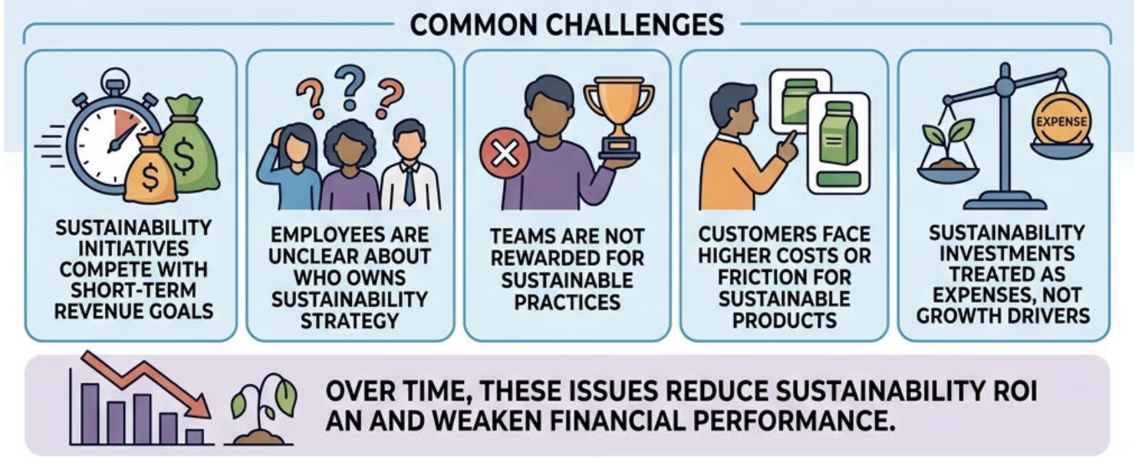
The Business Cost of Poor Sustainability Execution
When sustainability remains separate from core business operations, companies lose more than momentum.
They lose opportunities to improve financial performance, strengthen customer loyalty, reduce operating costs, and support stronger risk management.
The World Economic Forum’s Global Risks Report 2024 found that environmental risks continue to rank among the most serious long-term threats facing businesses and economies.² Companies that fail to align sustainability strategy with operations may face rising regulatory pressure, supply chain disruptions, reputational damage, and increased costs over time.
At the same time, businesses that successfully integrate sustainable practices into their products, messaging, and customer experience often see stronger engagement and better sustainability ROI.³
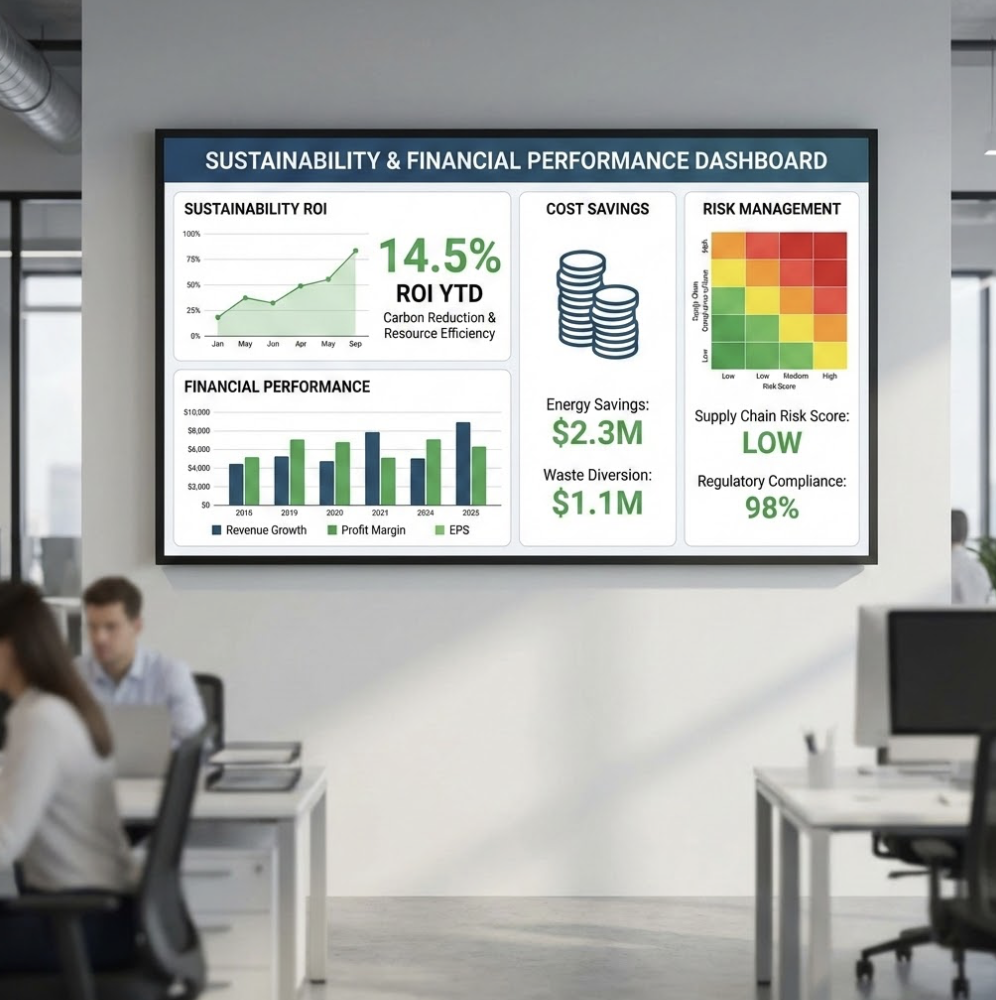
What Successful Companies Do Differently
The companies generating the strongest ROI of sustainability investments do not treat sustainability as a side initiative.
Instead, they embed sustainable practices into their business models.
Successful companies:
Make sustainability part of product development and innovation
Connect sustainability strategy to customer experience
Align sustainability initiatives with procurement and operations
Build sustainability metrics into employee goals and incentives
Measure both sustainability ROI and financial performance
Use sustainability investments to strengthen resilience and risk management
Several brands have shown that sustainability can support both growth and profitability when it is integrated into the broader business strategy. Companies with successful green campaigns often make sustainable products easier to understand, easier to access, and easier to choose.³
Closing the Gap Between Strategy and Action
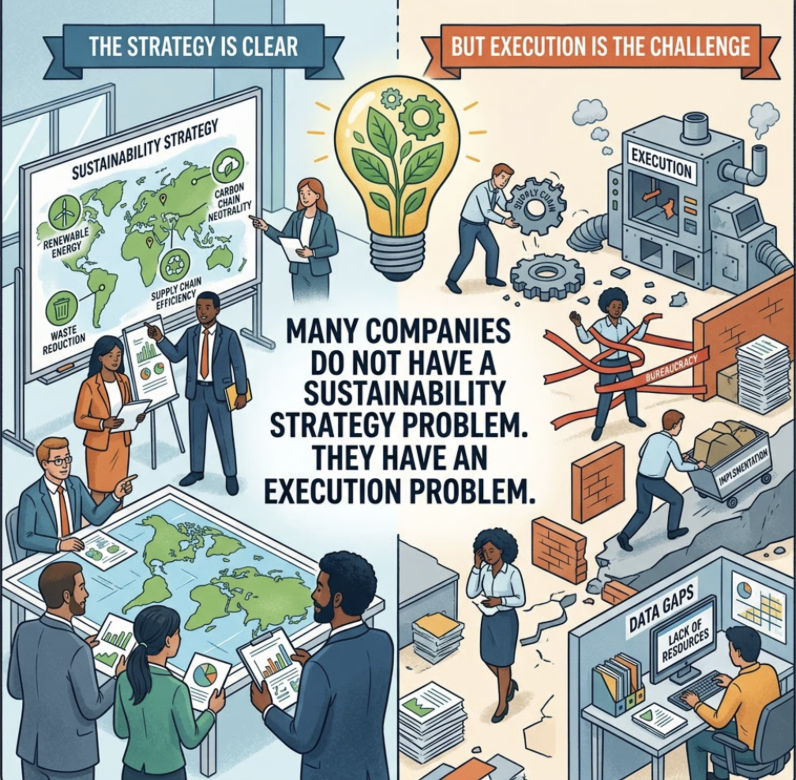
Many companies do not have a sustainability strategy problem. They have an execution problem.
Leadership approval is only the first step. Long-term success depends on whether sustainability strategy is connected to the decisions employees make every day.
To improve sustainability ROI, companies need to move sustainability efforts beyond reporting and into operations, pricing, marketing, procurement, and customer experience.
When sustainability becomes part of the business instead of a separate function, organizations are more likely to improve financial performance, strengthen risk management, and generate stronger returns from sustainability investments.
Close your intention–action gap.
If your investments in sustainability and social impact aren't translating into sales, growth or internal buy-in, we can help you identify the gap.
Footnotes
- The Decision Lab, “Overcoming the Intention-Action Gap in Sustainable Consumption,” https://thedecisionlab.com/big-problems/overcoming-the-intention-action-gap-in-sustainable-consumption
- World Economic Forum, “Global Risks Report 2024,” https://www.weforum.org/reports/global-risks-report-2024/
- The Business Vision Magazine, “Sustainable Marketing: Case Studies of Successful Green Campaigns,” https://thebusinessvisionmagazine.com/sustainable-marketing-case-studies-of-successful-green-campaigns/