

 Andrew Yates
How to Use (or Avoid) Sustainability Buzzwords
Is your new bottle made of 100% recycled plastic? Has your travel company announced a commitment to be carbon neutral? Are you reading about other brands' progress, and wondering about all of these sustainability buzzwords? If you're in marketing, you know it's important to choose your words carefully. To be successful at telling your brand's story, you need to make sure your audience understands it, cares about it, believes it and is motivated by it. AND, especially important for sustainability marketing, you need to make sure the words you choose are accurate and not misleading. Consider all of this on top of limited packaging space or a :06 ad spot—and sustainability communications can be complicated.
Today's Sustainability Jargon
Sustainability buzzwords are everywhere today.
Carbon offsetting, for instance, refers to initiatives aimed at reducing greenhouse gas emissions through the purchase of verified carbon credits. Using them in the right place at the right time can be an effective way to gain consumer trust, but it can also backfire if they are used incorrectly. All marketers should get familiar with the FTC Green Guides (which is getting updated in 2023—so stay alert.) Beyond that, what are some of the most common sustainability buzzwords, what do they mean, and what are some watchouts?

Sustainability Terms and Their Definitions
Environmental Buzzwords
- Sustainable: This is a broad term that is rooted in the idea that you can provide goods and services today while also focusing on preserving resources for the future. It can refer to environmental or social impact (think about the 17 UN Sustainable Development Goals!). However, out of context, the average person might define this as being “long-lasting” versus “good for the planet”—so be careful about how you use it. Above all, if you do use this term, make sure you provide plenty of backup data and information to support this claim.
- Circular: The circular economy is an antidote to the traditional “take-make-waste” linear economy. Instead, it provides a framework to eliminate waste, circulate products and materials, and regenerate nature. Circular products are those that operate within the circular economy model—i.e., products made without virgin resources and designed with the end of their life in mind. Applying circular economy principles, such as recycling and reusing materials, can significantly reduce waste streams and environmental impact.
- Zero Waste: Zero waste is a set of principles focused on waste prevention—meaning sending zero waste to the landfills, incinerators, or the natural environment. It focuses on the many stages of waste prevention—starting with reducing use, as well as reusing, repairing, repurposing, and recycling.
- **Carbon footprint :**A carbon footprint is the total amount of greenhouse gases, especially carbon dioxide, released into the atmosphere by human activities. It reflects environmental concerns related to energy use, transportation, manufacturing, and waste. Choosing biodegradable materials and recyclable materials can help reduce a person’s or product’s carbon footprint. Taking these steps is essential for becoming carbon neutral and promoting long-terms sustainability.
- Carbon Offsets: Carbon offsets are a tool used to balance out a person's or organization's carbon footprint by investing in projects that reduce greenhouse gas emissions. These projects often support renewable energy, reforestation, or energy efficiency efforts that contribute to a more sustainable environment. As one of the key sustainability buzzwords, carbon offsets help individuals and businesses move toward becoming carbon neutral. By purchasing carbon offsets, people take responsibility for their emissions while supporting the global shift to low-carbon solutions.
- Carbon Neutral: This means a product or company is removing the same amount of carbon dioxide it's emitting into the atmosphere. In a sense carbon neutrality is the carbon equivalent to maintaining the status quo. If your brand or company is considering this claim, be prepared to have significant documentation to support it. Increasingly, certification agencies and stakeholders expect companies to reduce emissions as much as possible (through innovation, alternative energy sources, etc.) before purchasing carbon offsets or credits.
- Carbon Sequestration: This is the process of capturing and storing carbon dioxide from the atmosphere, typically through natural methods like planting trees and innovative farming practices. It is crucial in combating climate change by reducing atmospheric carbon levels and includes techniques such as forest conservation and soil management.
- Regenerative: This refers to systems or practices that go beyond sustainability to actively restore and improve ecosystems, often by enhancing soil health, biodiversity, and natural cycles.
- Renewable: Refers to resources or energy sources that can naturally replenish themselves over time, such as solar, wind, and hydro power. Highlighting renewable inputs supports the circular economy by reducing dependence on finite materials.
- Decarbonization: Refers to the process of reducing carbon dioxide emissions, often through transitioning to renewable energy, improving energy efficiency, or adopting low-carbon technologies. Decarbonization is a critical step in addressing climate change and aligning with circular economy principles.
- Low Waste: This term focuses on minimizing waste generation by reducing, reusing, or recycling materials to limit landfill contributions. Brands aiming for low waste often emphasize efficient packaging design and reusable options, while also incorporating every day recycled product like food scraps and coffee grounds being used as natural sources for compost. Many low waste initiatives are powered by renewable natural resources such as energy from solar panels or the wind power from windmills. These efforts not only benefit the present but also aim to protect the planet for future generations.
- Plastic-Free: Refers to products that are completely free of plastic materials, offering alternatives that eliminate reliance on plastic altogether. This term is popular with consumers looking to reduce plastic pollution and microplastic contamination.
- Organic Materials: In the context of bioplastics, organic materials are derived from biomass such as plant or animal sources and can be transformed into plastic through microbial processes. This highlights the renewable aspect of bioplastics compared to traditional petroleum-based plastics.
- Plastic Neutral: A commitment to offset plastic use by recovering and recycling an equivalent amount of plastic from the environment, ensuring no net increase in plastic waste.
- Recyclable Materials: These include items such as paper, glass, and certain plastics that can be processed and used again. However, many recyclable items often end up in landfills despite being labeled recyclable, urging a greater focus on waste reduction instead of solely relying on recycling.
- Next-Gen Materials: These are innovative alternatives to conventional materials, such as bio-based textiles, lab-grown leather, or plant-derived fibers designed to reduce environmental impact.
- EPR (Extended Producer Responsibility): This policy-driven term refers to holding manufacturers accountable for the end-of-life impacts of their purchased energy products, encouraging better design, recycling, and waste reduction.
- Carbon Negative: This means removing more carbon dioxide from the atmosphere than is emitted, creating a net-positive impact on the environment.
- Deforestation: Refers to the clearing of forests, often for agricultural, industrial, or urban purposes, and is a major driver of climate change and biodiversity loss. Using this term highlights the need to protect natural ecosystems.
- Biodiversity: The variety of life on Earth, including ecosystems, species, and genetic diversity. Emphasizing biodiversity underscores the importance of preserving ecological balance and combating species extinction.
- Biodegradable Materials: Biodegradable materials are substances made from natural sources that can break down safely and quickly in the environment without leaving harmful residues. They are increasingly used in efforts to support carbon neutral goals by reducing net emissions associated with waste and production. In response to the climate crisis, many companies are shifting their business model to include biodegradable alternatives, especially in high-impact sectors like the fashion industry. Products made with these materials often carry a green label, signaling their eco-friendly design and non toxic components. By adopting biodegradable materials, industries can help mitigate long-term environmental damage.
- Sustainability Due Diligence: A process through which companies identify, prevent, and mitigate potential environmental and social risks in their supply chains, ensuring responsible business practices. This process often includes goals such as becoming carbon neutral and accounting for indirect emissions throughout the value chain. It plays a key role in corporate reporting, especially when aligning with standards set by an international organization. The most commonly used framework for sustainability due diligence integrates financial information with environmental and social performance. By doing so, companies can better manage risk and demonstrate transparency to stakeholders.
- Net-positive: This term goes beyond sustainability efforts to describe situations where a company or product's environmental or social impact actually contributes positively to the world, rather than simply aiming to reduce harm. A net-positive approach means that the benefits produced—such as restoring ecosystems, enhancing social welfare, or regenerating resources—exceed the negative impacts. Brands pursuing net-positive goals are striving for outcomes that create value for both people and the planet, fostering a lasting, regenerative effect.
- Carbon Equivalency: A way to measure and compare the impact of different greenhouse gases by expressing them in terms of the amount of CO2 that would create the same effect on global warming. This includes not only carbon dioxide but also gases like nitrous oxide, understanding carbon equivalency is essential in sustainable business practices, where environmental externalities are aligned with financial data and social responsibility.
- HFCs (Hydrofluorocarbons): Greenhouse gases commonly used in refrigeration and air conditioning. They have a high global warming potential, making their reduction crucial for climate change mitigation.
- PFAS (Per- and Polyfluoroalkyl Substances): A group of synthetic chemicals used in manufacturing that are harmful to the environment and human health, often referred to as “forever chemicals” because they don't break down easily.
- Fair Trade/Ethical Trade: Standards ensuring fair wages, safe working conditions, and environmental sustainability in global supply chains. These terms reflect a commitment to social and economic equity and are frequently highlighted in triple bottom line assessments.
- Responsible: A general term emphasizing a company's accountability for its environmental, social, and governance (ESG) impacts. Integrated reporting often supports this accountability by unifying sustainability metrics with traditional financial disclosures.
- Materiality/Double Materiality: In sustainability, materiality refers to identifying issues that are significant to both a company's financial performance and its broader social and environmental impacts. Double materiality takes into account how a company impacts the world and how those changes affect the company's bottom line.
- Greenwashing: The practice of conveying a false impression or providing misleading information about how a company's products or practices are environmentally friendly. It erodes consumer trust and should be avoided at all costs.
- Greenhushing: A phenomenon where companies under-communicate their sustainability efforts to avoid scrutiny or accusations of greenwashing. While well-intentioned, it can limit transparency and consumer engagement.
- Underconsumption vs. Overconsumption: Underconsumption encourages consumers to buy less and make more mindful purchasing decisions as a way to reduce environmental impact. This aligns with broader movements toward minimalism and conscious consumption. In contrast, Overconsumption refers to the excessive use of resources or goods, leading to waste and environmental degradation. Addressing overconsumption is critical in promoting circular economy practices and reducing carbon footprints.
Commonly Confused Sustainability Buzzwords
Recyclable Materials vs. Recycled Materials:
Recyclable means that an item can be returned, processed, and transformed into a new raw material instead of entering the waste stream. The FTC Green Guides states that recycling must be available to at least 60% of consumers where the product is sold in order to be considered recyclable. Unfortunately, lots of packaging is not recyclable because of mixed materials, colorant, poor design, etc.
Recycled means that a used item has been returned, processed, and transformed into a new raw material, instead of entering the waste stream. Packaging made from recycled content gives new life to old materials. Notably, something can be recyclable but not made from recycled content. AND something can be made from recycled content, but not recyclable. Ideally packaging is both recyclable and made from recycled content—but make sure you have your facts straight!
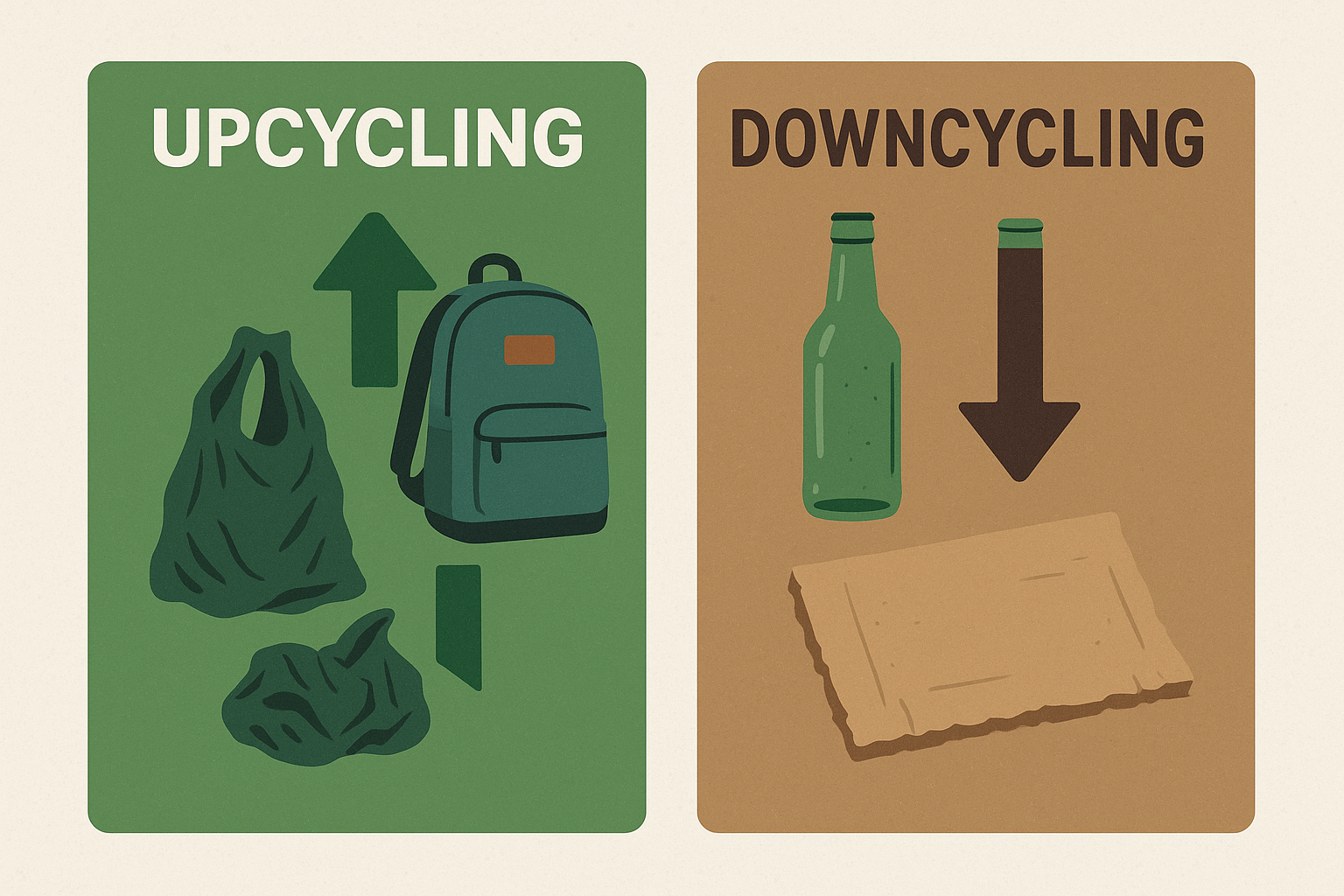
Upcycled vs. Downcycled:
Upcycling transforms waste materials into products of higher value or quality. Downcycling, on the other hand, repurposes materials into lower-value items, often as an interim step before disposal.
Compostable vs. Biodegradable:
These two terms often sound like the holy grail to consumers, but both require specific conditions—and likely will not happen if an item ends up accidentally in the landfill. Compostable items break down into natural elements within a specific timeframe under composting conditions. According to the US Composting Council, a compostable product is “any product with non toxic components specifically manufactured to break down in a compost system at the end of its useful life.” But it is often unclear to consumers what kind of composting is required (home vs industrial), and how long it will take for an item to break down (some products still might take hundreds of years!) Adding “Compostable” to a label without any other direction is misleading. While biodegradable items degrade naturally but without a guaranteed timeline or specific conditions. Anything that is compostable is biodegradable. However, something that is biodegradable might not be compostable.

Do consumers really understand these environmental buzzwords?
A good rule of thumb for all marketers is that the average consumer spends a lot less time thinking about your brand than you do. They will glance, scan, and move on. And we know that many people hear ESG jargon without ever researching what it means. So, terms are conflated, specifics are generalized. Make sure you really put your “consumer hat” on when you're writing, consider some quick testing for comprehension, and don't assume everyone will get it!
Shelton Group recently published The Buzz on Buzzwords, an update to research conducted seven years earlier, which dives into what Americans think when brands use sustainability buzzwords. Generally, they found that Americans* claim* to understand many key sustainability terms LESS than they did seven years ago; however, when probed, they actually know *more *about the terms than previously reported. This conflict is likely due to increased skepticism—while Americans might know more about recyclability or carbon footprints, they aren't seeing the change they've been promised.
Here's what they heard when they asked Americans about the some of the same sustainability terms mentioned in this post:
Term Do they understand It? Do they find it meaningful?
Recyclable 71% 65%
Recycled/ Recycled Content 61% 57%
Compostable 58% 56%
Biodegradable 57% 57%
Low Carbon Footprint 48% 48%
The Risks of Greenwashing
Greenwashing is a marketing strategy where companies make false or misleading claims about their environmental practices. This can be damaging not only to the environment but also to consumers, as it erodes trust in companies that are genuinely committed to sustainability. Greenwashing can also divert attention from real environmental issues, hindering efforts to address them effectively.
Common examples of greenwashing include:
- Making exaggerated claims about the environmental benefits of a product or service.
- Using misleading or vague language to describe environmental practices.
- Creating a “green” image through marketing and branding without making significant changes to actual practices.
- Focusing on a single environmental issue while ignoring others.
The risks of greenwashing are significant:
- It erodes consumer trust in companies that are genuinely committed to sustainability.
- It distracts from real environmental issues and hinders efforts to address them.
- It creates a false sense of security among consumers, who may believe they are supporting environmentally friendly companies when they are not.
- It undermines the credibility of environmental certifications and labels.
To avoid greenwashing, companies should be transparent about their environmental practices and make accurate claims about their products and services. Consumers should also be aware of the risks of greenwashing and do their research before supporting companies that claim to be environmentally friendly.
Environmental Impact
The environmental impact of human ventures is a significant concern, as it can have far-reaching consequences for the health of the planet and its inhabitants. One of the most pressing environmental impacts is carbon emissions, which contribute to climate change and global warming. Understanding and mitigating these impacts is crucial for a sustainable future.
Carbon Emissions and Greenhouse Gas Emissions
Carbon emissions and greenhouse gas emissions are two of the most significant environmental externalities of human activities. Carbon emissions primarily come from the burning of fossil fuels, such as coal, oil, and gas, and are a major contributor to climate change. Greenhouse gas emissions, which include carbon dioxide, methane, and other gases, trap heat in the atmosphere and contribute to global warming.
The main sources of carbon emissions and greenhouse gas emissions are:
- Fossil fuel combustion
- Land use changes, such as deforestation and agriculture
- Industrial processes, such as cement production and steel manufacturing
- Waste management, including the decomposition of organic waste in landfills
Reducing carbon emissions and greenhouse gas emissions is critical to mitigating climate change and protecting the environment. This can be achieved through a range of strategies, including:
- Transitioning to renewable energy sources, such as solar and wind power
- Improving energy efficiency in buildings and industry
- Electrifying transportation and promoting the use of electric vehicles
- Implementing carbon capture and storage technologies
- Adopting sustainable land use practices, such as reforestation and agroforestry
By focusing on these strategies, we can significantly reduce our carbon footprint and mitigate the environmental impacts of our activities.
Sustainable Business Practices
Sustainable business practices are essential for reducing environmental impacts and promoting a more sustainable future. One key aspect of sustainable business practices is corporate social responsibility (CSR).
Corporate Social Responsibility (CSR) and Sustainable Business
Corporate social responsibility (CSR) refers to a company's commitment to operating in a way that is socially and environmentally responsible. This can include a range of practices, such as:
- Reducing environmental impacts through sustainable operations and supply chain management
- Promoting social justice and human rights through fair labor practices and community engagement
- Supporting local communities through philanthropy and volunteerism
- Encouraging transparency and accountability through reporting and stakeholder engagement
Sustainable business practices can bring a range of benefits, including:
- Improved brand reputation and customer loyalty
- Increased efficiency and cost savings through sustainable operations
- Access to new markets and customers through sustainable products and services
- Improved risk management and compliance with environmental and social regulations
To implement sustainable business practices, companies can take a range of steps, including:
- Conducting a sustainability assessment to identify areas for improvement
- Developing a sustainability strategy and setting goals and targets
- Implementing sustainable practices throughout the organization and supply chain
- Reporting on progress and engaging with stakeholders to promote transparency and accountability
By adopting sustainable business practices, companies can reduce their environmental impacts and contribute to a more sustainable future.
Do consumers care about sustainability buzzwords, and are they motivated to take action?
Yes. Consumers do care about sustainability and are increasingly rewarding brands that take action and tell their story. NYU Stern and IRI created the Sustainable Market Share Index, which reviews consumer purchasing across 36 CPG categories and in 2022 demonstrated that products marketed as “sustainable” grew 2.7x faster than conventionally marketed products.
This is good news for brands that are taking initiative to positively impact the planet and society. But there is plenty of opportunity for all brands to make communications more impactful. Remember:
- Know your audience! What do they understand, what do they care about? Speaking to an industry audience is very different from the general population.
- Know your context. How deep you go in your story depends on when and where you are presenting it. Is it in a grocery aisle, on packaging? You might only have a few seconds to grab a shopper's attention—so keep it short & visual. You can and should go deeper on your website—if a consumer has landed there, they are looking for more.
- Tell a story and make it emotive. Don't just tell your consumers *what *you're doing—make sure they know why you're doing it too.
- Most importantly, be truthful. Be careful not to simplify or romance your real story to the point that you actually mislead the consumer. Know the FTC Green Guides and follow them.
Final Thoughts on Sustainability Buzzwords
The future is bright for purpose-led brands that have identified the sweet spot between knowing what their brand uniquely offers, what consumers really want, and what the world needs. But remember, to capture value, brands need to share this story with the world. And that means understanding and knowing when to use (or not use) these common sustainability buzzwords. So, when you're on this journey, tell your story, make it good, and choose your words wisely.

%2520.png&w=3840&q=75&dpl=dpl_9gmcg7kF2iURayF6Cu83WGH1D1nz)
%20.png&w=3840&q=75&dpl=dpl_9gmcg7kF2iURayF6Cu83WGH1D1nz)