
 Gaia
GaiaTL;DR
The best sustainability storytelling examples share three traits: specificity (real numbers, named people, concrete places), humility (admitting what’s not yet solved), and integration (sustainability woven into the brand rather than bolted on). This article breaks down 7 categories of effective sustainability storytelling, explains why each approach works, flags greenwashing risks, and includes a framework you can apply to your own brand. We cover both global names like Patagonia and smaller brands like Bite Toothpaste and Poppy Barley, because not every company has a billion-dollar budget.
Quick Answer
Sustainability storytelling is the practice of using real people, measurable environmental or social impact, and transparent reporting to explain how a company creates positive change. The strongest sustainability storytelling examples avoid vague environmental claims and instead use verified data, authentic customer or employee stories, third-party certifications, and honest discussions about ongoing challenges. Companies like Patagonia, Everlane, Adidas, and Bite succeed because they prioritize evidence over marketing claims, making sustainability part of their business rather than a standalone campaign.
Key Takeaways
Authentic sustainability stories always include proof.
Numbers outperform generic environmental claims.
Customers trust progress more than perfection.
Third-party certifications increase credibility.
Human stories are more memorable than corporate messaging.
Transparency reduces accusations of greenwashing.
Sustainability should support the overall brand story, not exist separately.
The Sustainability Storytelling Paradox
Consumers say they want sustainability. Brands talk about it constantly. Yet the gap between stated intentions and actual purchasing behavior remains stubbornly wide.
According to DHL’s 2025 E-Commerce Trends Report, 47% of shoppers say they’re willing to change their habits to shop more responsibly. A Nielsen study found that 73% of consumers say they’re ready to change shopping habits to reduce environmental impact. But willingness and action are different things. Sustainable product market share doesn’t come close to matching those survey numbers.
This is the intention-action gap, and it’s the central challenge of sustainability communications. Today’s brand and sustainability leaders walk a fine line: expected to say something meaningful but not self-congratulatory, to lead with purpose but back it up with data, to share bold progress while staying humble.
The sustainability storytelling examples below closed that gap. They moved audiences from passive agreement to genuine action. Each section explains what the brand did, why the storytelling worked, and where the greenwashing risks hide.
Explore how purpose-driven narratives build commercial value →
What Makes Sustainability Storytelling Effective?
Not every sustainability campaign builds trust. The strongest examples share a common structure that combines factual evidence with emotional connection. Rather than making broad claims about helping the planet, successful brands explain exactly what they changed, why it matters, and how customers become part of the solution.
Effective sustainability storytelling typically includes:
measurable environmental impact
named employees or suppliers
verified certifications
customer participation
honest discussion of challenges
consistent messaging across every marketing channel
Brands that consistently include these elements are more likely to build long-term trust than companies relying on emotional advertising alone.
At-a-Glance: Sustainability Storytelling Examples Compared
Brand | Storytelling Tactic | Key Proof Point | What Makes It Authentic |
|---|---|---|---|
Patagonia | Radical transparency | “Nothing we do is sustainable” (2025 Impact Report) | Admits imperfection publicly |
Poppy Barley / Lucy & Yak | Supply chain humanization | Names individual makers | Human faces replace abstract claims |
Bite / Pela Case | Impact quantification | 75,000 lbs plastic diverted (Bite, 2022) | Specific, verifiable numbers |
Adidas / ThredUp | Community activation | Run for the Oceans participation model | Consumer becomes co-creator of impact |
Oatly / Mud Jeans | Visual and creative storytelling | Award-winning sustainability reports | Makes data entertaining |
Seventh Generation / Who Gives a Crap | Certification-led credibility | B Corp, EPA, ISO certifications; 50% profit donation | Third-party validation |
Everlane | Radical price transparency | Full cost breakdowns per product | Turns pricing into a trust signal |
1. Patagonia: Radical Transparency
Best for: Brands with genuine environmental impact data who can afford to be brutally honest.
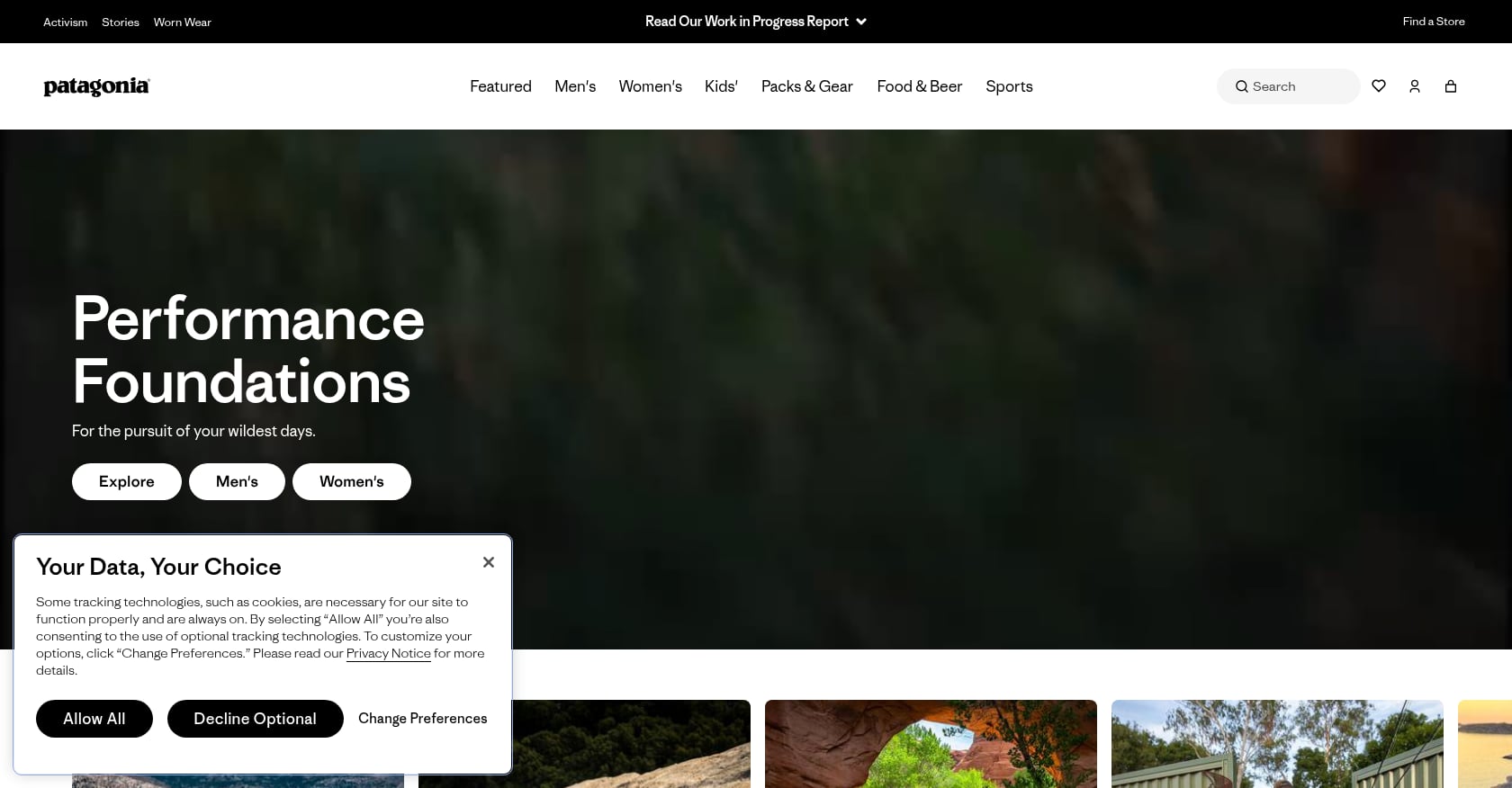
Beth Thoren, Patagonia’s Environmental Action Director, has said the company doesn’t use the word “sustainable” because they’re still part of the problem. Their famous anti-Black Friday ad told people not to buy a jacket unless they truly needed it, and they openly shared the environmental footprint of creating it.
More recently, Patagonia’s 2025 Impact Report continues this tradition, full of transparency about failings and once again declaring “nothing that we do is sustainable.” This isn’t false modesty. It’s a strategic communication choice that disarms the skepticism most consumers carry toward corporate sustainability claims.
Why it works: Radical honesty builds more trust than claimed perfection. When a company admits its shortcomings before critics can point them out, it shifts the conversation from “are they lying?” to “they’re trying.” Practitioners on Reddit frequently cite Patagonia as the gold standard precisely because the brand refuses to sugarcoat its environmental record.
Watch out for: This approach only works if you actually have substantive impact data to share. Transparency without meaningful action is exposure, not storytelling. If your brand hasn’t done the hard work, copying Patagonia’s tone without its substance will backfire spectacularly.
For more on what separates authentic brand purpose from performative messaging, the distinction matters more than most brands realize.
2. Poppy Barley and Lucy & Yak: Supply Chain Humanization
Best for: Brands with direct relationships to makers, artisans, or factory workers.
Poppy Barley carries storytelling into Instagram and Substack content. One post reveals skilled makers by name, José and Maria Antonia in León, Mexico, framing every purchase as a direct investment in these artisans’ craft and livelihood. This isn’t “ethical sourcing” as a buzzword. It’s a named person with a face and a story.
Lucy & Yak takes it further by making storytelling interactive. Customers can leave a digital “Thank You” note on a maker’s profile. The brand includes details about garment workers across Instagram Story Highlights, supplemented with user-generated content that reinforces the connection between buyer and maker.
Why it works: Abstract supply chain concepts become emotionally concrete when you attach real names. “We source ethically” is forgettable. “José made your boots” is not. The specificity creates a sense of personal relationship that generic sustainability messaging can never achieve.
Watch out for: Performative humanization, showing workers in carefully staged photos without actually improving their conditions, is a real risk. If you name makers but don’t pay them fairly, the story collapses the moment anyone investigates. One YouTube creator who reviews sustainable fashion brands made this point sharply: brands that show factory faces but won’t disclose factory wages are telling half a story.
3. Bite Toothpaste and Pela Case: Impact Quantification
Best for: Product-based brands that can measure environmental impact per unit sold.
Vague claims about “caring for the planet” don’t land anymore. The toothpaste tablet brand Bite published a detailed impact report spelling out exactly how much plastic it has kept out of landfills: 75,000 pounds in 2022 alone. That number is specific enough to verify and concrete enough to visualize.
Pela has helped customers prevent the equivalent of over 100 million plastic bags from entering waste streams, a fact it weaves into brand storytelling across its website, including an impact counter front and center on its homepage. The counter isn’t decoration. It’s a real-time proof point.
Why it works: When you can point to a specific number of pounds diverted from landfills or a percentage drop in carbon emissions, that’s something customers can verify. It’s proof, not PR. Numbers create accountability, and accountability creates trust. These are sustainability storytelling examples that treat the audience as intelligent adults rather than people who need to be emotionally manipulated into caring.
Watch out for: Cherry-picked metrics can be just as misleading as vague language. If you highlight plastic diverted but ignore the carbon footprint of your shipping, you’re telling a selectively true story. The best quantified storytelling addresses trade-offs honestly.
Understanding what to measure and how to communicate it is its own discipline. Impact measurement done well becomes the foundation of every credible sustainability story.
4. Adidas and ThredUp: Community Activation
Best for: Brands that can turn consumers into active participants rather than passive audiences.
Adidas’ “Run for the Oceans” campaign turned consumers into co-creators of impact. Every kilometer run triggered a plastic cleanup pledge. The campaign combined physical activity, community participation, and ocean conservation into a single narrative where the customer was the protagonist, not the brand.
ThredUp takes a different approach to community activation, encouraging involvement through online swapping events and partnerships with local eco-initiatives. Their “Swap for a Better Future” campaign invites customers to donate unused clothing, promoting sustainable fashion while building brand loyalty through shared purpose.
Why it works: The story becomes about the customer, not just the brand. When someone runs 5K and knows that run translated into tangible ocean cleanup, they’ve invested something personal. That investment creates a bond no billboard can replicate. This is community engagement strategy at its most effective: the brand provides the infrastructure, and the community provides the meaning.
Watch out for: Activation campaigns that demand consumer effort without delivering proportional impact breed cynicism. If running a marathon triggers a $2 donation, the math doesn’t feel right. The activation needs to match the ask.
5. Oatly and Mud Jeans: Visual and Creative Storytelling
Best for: Brands willing to break the mold on how sustainability content looks and feels.
While data and technical reports provide the foundation for sustainability strategies, they often fail to engage audiences effectively. Mud Jeans solved this by making sustainability reports that are genuinely entertaining and visually appealing, with infographics, thoughtful typography, and a design sensibility that treats the annual report as a creative brief rather than a compliance exercise.
Oatly’s Instagram is another example of making sustainability content marketing entertaining. Their tone is irreverent, self-aware, and occasionally absurd, which stands out in a feed dominated by earnest corporate sustainability posts that all look and sound the same.
Why it works: Sustainability fatigue is real. With so much sustainability messaging competing for attention, audiences get picky about what they engage with. Creative execution, humor, beautiful design, surprising formats, earns attention that worthy-but-boring content never will. The best sustainability storytelling examples succeed not because the underlying facts are more impressive, but because the packaging makes people actually want to read them.
Watch out for: Creativity without substance is just advertising. If the design is stunning but the underlying data is thin or misleading, you’ve built a beautiful shell around nothing. The creative must serve the content, not disguise its absence.
6. Seventh Generation and Who Gives a Crap: Certification-Led Credibility
Best for: Brands that have invested in third-party validation and want to make it a storytelling asset.
Seventh Generation prominently displays certifications for environmentally responsible products, including ISO and EPA certifications. Incorporating recognized labels like Fair Trade, B Corp, or USDA Organic communicates authenticity that resonates with consumers who prioritize ethical consumption. These aren’t internal claims. They’re externally verified proof points.
Who Gives a Crap donates 50% of its profits to building toilets in underserved communities. Their storytelling doesn’t just claim purpose, it’s embedded in the business model itself. The name, the packaging, the donation structure, everything points in the same direction.
Why it works: Third-party validation removes the “trust me” problem that plagues most sustainability communications. When a B Corp certification or Fair Trade label sits next to your claims, you’ve shifted the burden of proof from your marketing department to an independent authority. IBM and the National Retail Federation found that 70% of consumers choose brands that practice sustainability, but choosing requires trust, and certifications lower the trust barrier.
Watch out for: Certification stacking (displaying every badge you can find) without explaining what each one means creates visual noise, not credibility. Pick the certifications most relevant to your audience and explain what they actually require. A B Corp logo means nothing to someone who doesn’t know what B Corp is.
See how to avoid greenwashing when communicating certifications and sustainability claims.
7. Everlane: Radical Price Transparency
Best for: DTC and retail brands where pricing is a core customer concern.
Everlane’s “Radical Transparency” model provides consumers with complete visibility into pricing structures and production processes. For each product, they break down material costs, labor costs, transport costs, and their own markup. They show photos of the actual factories where products are made.
Why it works: Pricing is usually a conversion barrier. Everlane turned it into a trust-building storytelling asset. When customers can see that a $50 t-shirt costs $15 to make and the rest goes to specific line items they can evaluate, the brand-consumer relationship changes. It’s no longer “do I trust this price?” but “I understand exactly what I’m paying for.”
Watch out for: Price transparency creates an implicit promise that you’re charging fairly. If your markups are significantly higher than competitors without clear justification, transparency becomes a liability. And if your factory conditions don’t match the photos, every transparency claim amplifies the eventual backlash. Everlane itself faced criticism when reports emerged of workplace culture issues, proving that radical transparency in one area doesn’t inoculate you from scrutiny in others.
The Progress-Over-Perfection Framework
Beyond individual sustainability storytelling examples, there’s a pattern worth naming. The most effective sustainability communicators share a framework that can be summarized as progress over perfection.
Three traits the best sustainability stories share:
Specificity. Numbers, names, places. Not “we reduced emissions” but “we cut Scope 1 emissions by 12% across our three European facilities.” Not “ethical supply chain” but “José and Maria Antonia in León, Mexico.”
Humility. Admitting what’s not yet solved. Patagonia saying “nothing we do is sustainable” is the most extreme version, but even modest acknowledgments of ongoing challenges build trust.
Integration. Sustainability woven into the brand’s DNA, not bolted on as a separate campaign. Who Gives a Crap doesn’t have a sustainability initiative. The entire business is the initiative.
Credibility is the currency. You earn trust by making sure what you say matches what you’re actually doing. Your story needs to reflect your current reality, not your best-case scenario. Goals must be paired with real progress and systems that signal genuine intent. The gap between “what we say” and “what we’ve done” is exactly where skepticism grows.
Brands can no longer treat sustainability as an add-on or a separate component of messaging. It must be woven into the story, the mission, and the values so deeply that removing it would make the brand unrecognizable. That’s the difference between purpose-driven marketing and purpose as decoration.
The Regulatory Context Most Brands Are Ignoring
Here’s something almost no sustainability storytelling guide mentions: the legal environment has changed dramatically.
In 2025, the UK’s Competition and Markets Authority (CMA) gained significantly stronger powers to tackle greenwashing, including the ability to impose direct fines without going to court. The EU Green Claims Directive continues to reshape what brands can and cannot say about environmental performance. These aren’t theoretical risks.
This regulatory shift means that sustainability storytelling examples from even a few years ago may no longer represent best practice. Claims that were acceptable in 2022 could trigger enforcement action in 2026. “Eco-friendly” without specifics, “carbon neutral” without verified offsets, “sustainable” without defined criteria: all of these are now in the danger zone.
The smartest brands are treating regulatory compliance as a storytelling advantage. If you can make a claim because you’ve done the work to back it up, that’s a competitive moat. If your competitors can’t make the same claim because they haven’t done the work, your honesty becomes a differentiator.
What to Avoid: The Greenwashing Danger Zone
Bad sustainability storytelling follows predictable patterns:
Vague language. “Eco-friendly” and “natural” without specifics. What does “eco-friendly” actually mean? If you can’t define it precisely, don’t use it.
Nature imagery as a substitute for substance. It is better to use images showing employees actively taking part in sustainable practices, using solar panels, or packaging products in recyclable materials, instead of simply displaying photos of green grass or animals in nature. The forest backdrop on your packaging is not a sustainability strategy.
Hidden trade-offs. Highlighting one sustainable attribute while ignoring larger environmental costs. A “recyclable” product that requires virgin plastic to manufacture is telling a selectively true story.
Irrelevant claims. Boasting about something that’s legally required anyway, or taking credit for the absence of something your industry never used in the first place.
Greenwashing doesn’t just damage credibility. In the current regulatory environment, it carries financial and legal risk. The brands that get sustainability storytelling right treat honesty as a non-negotiable starting point, not a nice-to-have.
For a deeper look at specific greenwashing tactics and how to avoid greenwashing in your own communications, the distinctions matter.
From Stories to Systems
Strong sustainability storytelling isn’t a campaign. It’s an operating system. The brands featured here didn’t succeed because they hired great copywriters (though some did). They succeeded because storytelling was built into their supply chains, product design, reporting structures, and customer experiences.
The real challenge isn’t finding stories to tell. Most brands doing meaningful sustainability work have more stories than they know what to do with. The challenge is closing the gap between what consumers say they want and what they actually do, between awareness and action, between intention and purchase.
That gap is where commercial opportunity lives. And closing it requires more than better messaging. It requires understanding why sustainability messaging doesn’t always lead to change and building strategies that address the real barriers.
If your sustainability commitments aren’t translating into stories that drive commercial outcomes, that’s exactly what a sustainability storytelling partner helps solve.
Frequently Asked Questions
What is sustainability storytelling?
Sustainability storytelling is the practice of communicating a brand’s environmental and social impact through narrative rather than data dumps. It uses specificity, emotional resonance, and transparency to make abstract sustainability work feel concrete and credible to customers, investors, and other stakeholders. The best sustainability storytelling examples combine real numbers with human stories and honest acknowledgments of ongoing challenges.
What makes a sustainability story authentic rather than greenwashing?
Three things separate authentic storytelling from greenwashing: verifiable claims backed by data, honest acknowledgment of areas where progress is incomplete, and consistency between what the brand says and what it actually does. Third-party certifications (B Corp, Fair Trade, ISO) add credibility. Vague language, irrelevant claims, and nature imagery without substance are red flags.
Do sustainability storytelling examples only work for big brands?
No. Some of the most effective sustainability storytelling examples come from smaller brands. Bite Toothpaste, Pela Case, Poppy Barley, and Who Gives a Crap are all relatively small companies that punch well above their weight in sustainability communications. Smaller brands often have an advantage because their stories are more personal and their supply chains are more traceable.
How do you measure whether sustainability storytelling is working?
Look at both engagement metrics (shares, time on page, sentiment in comments) and commercial metrics (conversion rates, repeat purchase rates, customer acquisition cost for purpose-driven campaigns). The most meaningful measure is whether storytelling closes the intention-action gap: are people who engage with your sustainability content actually buying your product and staying loyal?
How has regulation changed sustainability storytelling in 2025?
Significantly. The UK’s CMA gained stronger enforcement powers against misleading green claims, and the EU Green Claims Directive continues to tighten rules on what environmental claims brands can make. This means vague or unsubstantiated sustainability language carries real legal and financial risk. Brands need to ensure every claim in their storytelling can be verified and documented.
Can sustainability storytelling overcome consumer fatigue?
Yes, but only through creative execution and genuine substance. Audiences are tired of generic sustainability messaging. The brands that break through (Oatly with humor, Mud Jeans with beautiful design, Adidas with participatory campaigns) succeed because they respect the audience’s intelligence and offer something worth paying attention to, not just another earnest corporate statement.
What’s the most common mistake brands make with sustainability storytelling?
Treating it as a separate marketing initiative rather than integrating it into the brand’s core identity. When sustainability messaging lives in a standalone report or a once-a-year campaign, it feels performative. The strongest examples, Patagonia, Who Gives a Crap, Everlane, make sustainability inseparable from the brand itself. Remove the purpose, and the brand ceases to make sense.