 Gaia
GaiaTLDR: Sustainable behavior change is the process of helping people adopt and repeat actions that reduce environmental harm or improve social outcomes. It goes beyond awareness campaigns by addressing real barriers, including price, convenience, trust, habit, and unclear impact, that stop good intentions from becoming repeated action. The most effective programs treat behavior change as a design problem, not just a messaging problem. Brands that close the intention action gap create both measurable impact and commercial value.
Sustainable behavior change means helping people, customers, employees, or communities adopt actions that reduce environmental harm, improve social outcomes, or support responsible consumption, and continue those actions over time.
In sustainability marketing, the concept is more specific. It means moving people from “I care” to measurable actions: choosing lower impact products, wasting less, reusing or repairing items, recycling correctly, eating differently, conserving energy, or supporting more responsible brands. The goal is not a moment of awareness. The goal is repeated, observable action.
The phrase carries a useful double meaning. “Sustainable” refers to behaviors that benefit people and planet. It also means change that lasts, behavior that persists beyond a single campaign or news cycle. The strongest programs aim for both.
Grounded World helps brands turn sustainability intentions into commercial outcomes. Explore Grounded World’s AI assessment to start diagnosing the gap between what your customers say and what they do.
Sustainable Behavior Change: The Quick Answer
Sustainable behavior change happens when people repeatedly choose a lower impact action because barriers have been removed and the alternative fits naturally into their lives.
For most brands, behavior change succeeds when five conditions are met:
- The sustainable option costs the same or delivers clear value.
- Product performance matches or exceeds alternatives.
- The action is convenient and easy to repeat.
- Consumers trust the sustainability claim.
- The impact feels relevant and meaningful.
Brands that focus only on awareness campaigns often fail because awareness does not automatically create action. Sustainable behavior change occurs when systems, incentives, messaging, product design, and customer experience work together to make the preferred behavior the easiest choice.
Sustainable Behavior Change Framework
| Factor | Consumer Question | Brand Response |
|---|---|---|
| Price | Is it worth it? | Demonstrate value and savings |
| Performance | Does it work? | Lead with product benefits |
| Convenience | Is it easy? | Reduce effort and friction |
| Trust | Can I believe this? | Use proof and transparency |
| Meaning | Does it matter? | Show tangible impact |
What Does Sustainable Behavior Change Mean?
Three words, three components.
Behavior is an observable action, not an attitude or belief. Saying “I care about the ocean” is not a behavior. Choosing a refillable bottle, and choosing it again next month, is.
Sustainable means the behavior produces a genuine environmental or social benefit: less waste, lower emissions, reduced resource use, better working conditions, or stronger communities.
Change means a shift from a current pattern to something measurably better.
Academic research defines sustainable consumer behavior as actions that reduce adverse environmental impacts and resource use across the lifecycle of a product, service, or behavior. The same body of work explains why this kind of change is hard: it often involves perceived trade offs between personal benefit and collective good, delayed rewards, abstract outcomes, and the challenge of replacing automatic habits with deliberate choices.
Target behaviors span a wide range: choosing durable goods, reducing food waste, eating more plants, conserving energy, using refill or return systems, repairing instead of replacing, and recycling correctly. Sustainable Brands’ “SB Nine” research identifies specific categories like going circular, thinking durable, and being energy smart as the consumer behaviours with the most climate impact.
Why Sustainable Behavior Change Matters for Brands
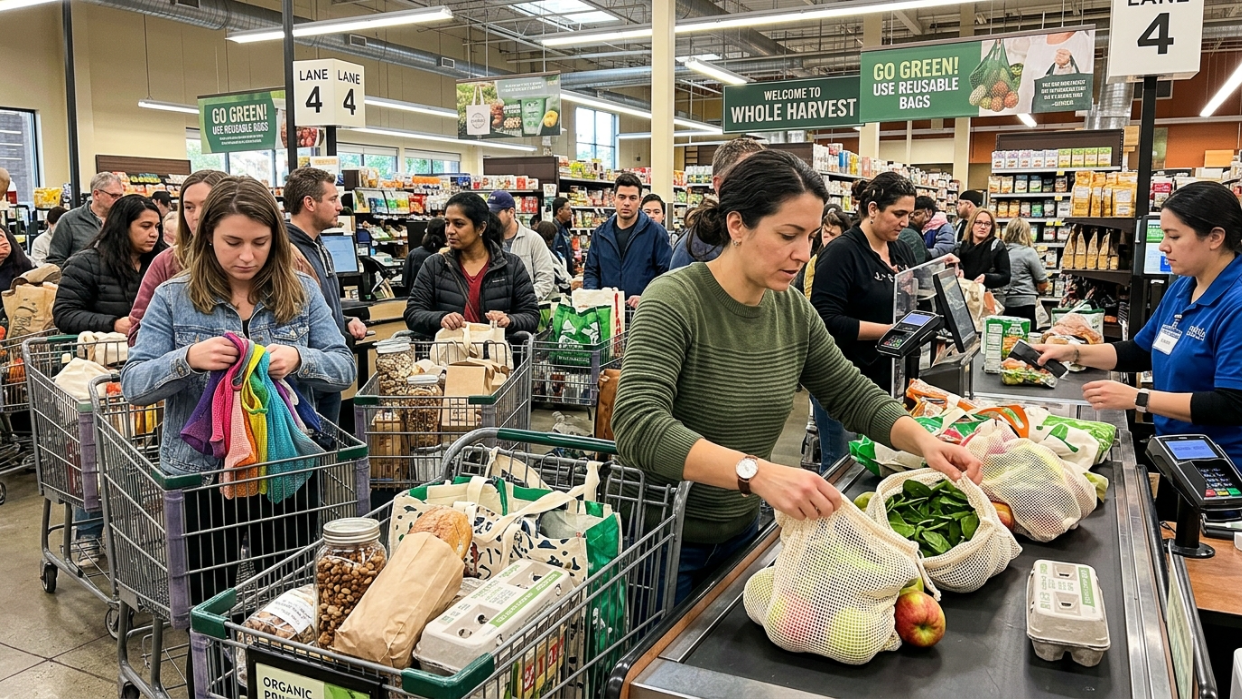
Consumer interest in sustainability is genuine, but it does not automatically convert into action.
PwC’s 2024 global survey of over 20,000 consumers found that 80% claimed willingness to pay more for sustainably produced goods, with an average stated premium of 9.7%. PwC warned, however, that stated willingness may not translate into actual spending under cost of living pressure.
Deloitte’s 2025 sustainable consumption research found that 47% had recently purchased a sustainable product, with cost remaining the most notable factor.
The market is responding. NYU Stern and Circana data shows sustainability marketed CPG products reached 25.4% of dollar share in 2025 and grew at a five year compound annual growth rate of 10.9%, compared with 2.2% for conventional products. But a pricing gap persists: consumers say they will pay about 9% more, while the average premium on sustainability marketed products sits at 27%.
The commercial opportunity is real. So is the friction. Sustainable behavior change matters because purpose only creates business value when it becomes action: trial, purchase, repeat, reuse, or advocacy. For a deeper look at why stated concern so often fails to convert, see why consumers do not buy sustainable products.
The Business Case for Sustainable Behavior Change
Many sustainability initiatives focus on awareness metrics such as impressions, reach, engagement, and sentiment. While useful, these indicators rarely translate directly into business outcomes.
Behavior change initiatives influence metrics that affect profitability:
| Business Outcome | Behavior Metric |
|---|---|
| Revenue Growth | Repeat purchases |
| Customer Retention | Refill participation |
| Customer Lifetime Value | Sustainable product adoption |
| Cost Reduction | Lower waste and returns |
| Brand Loyalty | Repeat participation |
| Advocacy | Referrals and recommendations |
When sustainability programs are tied to measurable customer actions, organizations can connect environmental outcomes with commercial performance. This is the core of commercializing sustainability, turning purpose into profit without sacrificing credibility.
Green Business Strategy and Behavior Change
Sustainable behavior change does not happen in a vacuum. It works best when embedded within a broader green business strategy that aligns operations, supply chain decisions, product design, and marketing around the same sustainability goals.
A green business strategy means making environmental and social performance a core part of how a company competes, not a bolt on initiative run by a CSR team in isolation. When product teams, procurement, and marketing all share the same targets, the result is a coherent system where the sustainable option is genuinely better, not just marketed as better.
Consider the difference between a company that switches to recycled packaging (an operational change) and one that also redesigns the refill experience, adjusts pricing to close the premium gap, trains retail staff, and measures return rates. The second company has a green business strategy. The first has a packaging project.
Practitioners on LinkedIn in sustainability marketing circles often point out that behavior change campaigns fail when they outrun the operational reality. Advertising a circular model that barely works at scale creates backlash faster than it creates loyalty. The strategy has to be real before the messaging can be credible.
For brands building this kind of integrated approach, a sustainability communications plan helps align internal operations with external messaging so the two reinforce each other.
The Intention Action Gap
The intention action gap is the difference between what people say they want to do and what they actually do. It goes by several names (value action gap, attitude behavior gap, say do gap, green gap), and it is one of the biggest obstacles to sustainable consumer behavior change.
The gap is not proof that people do not care. It is proof that caring competes with cost, convenience, trust, habit, and product performance.
Why does it happen?
- Price is too high, or the premium feels unjustified.
- The sustainable product does not perform as well.
- The action takes too much effort or does not fit existing routines.
- Claims are vague or hard to trust.
- The impact feels abstract.
- The moment of decision is poorly designed.
Practitioners on Reddit put this bluntly. In r/ZeroWaste threads, users describe strong negative reactions to what they call a “sustainability tax,” especially when packaging changes carry large markups without clear justification. Others say they will pay more, but only when they understand exactly what they are paying for: supply chain transparency, repair support, resale value, or verified credentials. One small zero waste store owner earned trust by breaking down the real production costs of beeswax wraps, showing the math rather than hiding behind a label.
A branding practitioner on Reddit made another useful point: survey responses are hypothetical. Analyzing real purchase data and attributes like trust and interest tells you more about consumer behavior change than asking people what they plan to do.
The intention action gap is the central problem that purpose driven marketing must solve.
Start with a conversation about diagnosing the gap between your customers’ intentions and their actual behavior.
The Five Stages of Sustainable Behavior Change
Most sustainable actions do not happen instantly. Consumers typically move through five stages before a new behavior becomes a habit.
Stage 1: Awareness
The consumer learns about an environmental issue or sustainable alternative.
Stage 2: Interest
The consumer begins evaluating whether the change is relevant to them.
Stage 3: Trial
The consumer attempts the behavior for the first time.
Stage 4: Repetition
The behavior is repeated and integrated into existing routines.
Stage 5: Habit
The behavior becomes automatic and requires little conscious effort.
Brands often invest heavily in awareness while neglecting the repetition stage, where lasting behavior change actually occurs.
How Sustainable Behavior Change Works
Three steps matter most.
Diagnose the specific behavior
Ask: What exact action needs to change? Who is the audience? When and where does the decision happen? What currently gets in the way? What benefit would make the new behavior worth it?
Katherine White, a leading behavioral science and marketing researcher at UBC, argues that psychographics are often more useful than demographics for sustainability marketing, because people respond to different motivations: saving money, health, family, identity, or love of nature. There is no single “sustainable consumer.” A human centered marketing approach, grounded in real audience insight, avoids the trap of one size fits all messaging.
Reduce the five frictions
Most sustainable behaviors stall because of practical barriers, not lack of concern.
| Friction | The consumer’s question | What helps |
|---|---|---|
| Price | “Why does this cost more?” | Explain value, durability, or cost per use savings. Reduce the premium where possible. |
| Performance | “Will this work as well?” | Lead with product benefit and proof, not sustainability alone. |
| Convenience | “Is this harder?” | Simplify, default, prompt, integrate into routines. |
| Trust | “Is this greenwashing?” | Be specific, transparent, verified, and humble. |
| Meaning | “Does my action matter?” | Make the impact concrete, local, visible, and collective. |
BSI’s 2024 U.S. survey found that 76% of consumers are more likely to buy from companies that verify environmental credentials with evidence or certifications. Trust is not a nice to have. It is behavior change infrastructure.
Design for repetition
A single purchase is not behavior change. Repetition is. Several behavioral science frameworks help here.
The COM B model states that behavior happens when Capability, Opportunity, and Motivation align. If someone is motivated but lacks opportunity (no refill station nearby, no clear recycling bin), the behavior will not happen. The EAST framework, used by the UK’s Behavioural Insights Team, adds a practical checklist: make the desired action Easy, Attractive, Social, and Timely. Stanford’s Fogg Behavior Model takes a similar view, arguing that motivation, ability, and a prompt must converge at the same moment for action to occur.
This is why sustainable behavior change is a product, retail, and systems problem, not only a communications problem. Changing the environment often matters more than changing the message.
The Most Effective Sustainable Behavior Change Strategies
Research across behavioral science, public policy, and sustainability programs consistently identifies several strategies that outperform awareness campaigns alone.
Make Sustainable Choices the Default
People often accept default options rather than actively making a different choice.
Examples include:
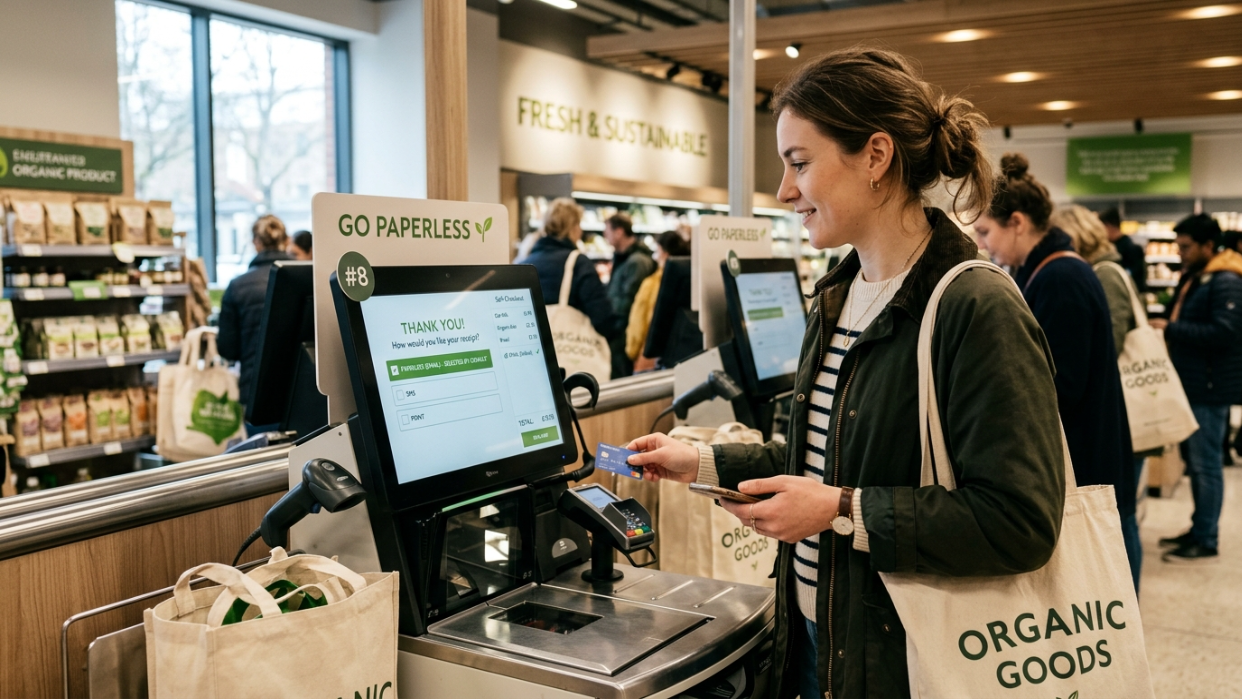
- Paperless billing
- Renewable energy enrollment
- Reusable packaging programs
- Double sided printing
Provide Immediate Rewards
Immediate benefits are often more motivating than future environmental outcomes.
Examples include:
- Loyalty points
- Discounts
- Deposit return incentives
- Cost savings
Use Social Proof
People are more likely to act when they believe others are already doing so.
Examples include:
- Community participation rates
- Customer testimonials
- User generated content
- Peer comparisons
Reduce Decision Fatigue
Too many options can reduce participation.
Clear instructions, simplified choices, and intuitive design increase adoption rates.
Launch Interactive Awareness Campaigns and Social Media Challenges
Static awareness campaigns have a ceiling. Interactive formats break through because they require participation, not just attention.
Social media challenges work particularly well for sustainable behavior change because they combine social proof with low barrier entry. When a brand asks customers to post their reusable bag routine or share a meal made from leftovers, the act of creating content reinforces the behavior and makes it visible to others. The challenge format also creates a natural feedback loop: participants see others doing the same thing, which strengthens the social norm.
Interactive awareness campaigns go further when they include real time impact tracking. Showing participants “together we saved 14,000 plastic bottles this week” turns abstract goals into collective achievement. Practitioners on Reddit’s r/sustainability have noted that campaigns without visible, updating metrics feel performative, while those with live counters or community dashboards create genuine momentum.
The key distinction: an interactive campaign is not just a hashtag. It needs a specific behavior ask, a mechanism for participation, and visible results that feed back to the community.
Employee Sustainable Behavior Incentives
Consumer facing programs get most of the attention, but sustainable behavior change inside the organization matters just as much. Employees influence procurement decisions, energy use, waste practices, commuting patterns, and product design choices every day.
Employee sustainable behavior incentive programs work when they follow the same principles as consumer programs: reduce friction, reward action, and make progress visible. The most effective approaches tie incentives to specific, measurable behaviors rather than vague encouragement.
What works:
- Commute incentives. Subsidized transit passes, bike storage, or parking cash out programs where employees receive cash for not driving.
- Waste reduction targets. Team based challenges with visible dashboards tracking recycling rates, food waste, or single use cup elimination.
- Green skills development. Paid time for educational workshops on sustainability topics relevant to the employee’s role. A supply chain team learning about Scope 3 emissions is more useful than a generic Earth Day lunch and learn.
- Idea bounties. Small rewards for employee suggestions that reduce waste, energy, or materials, especially when those suggestions get implemented.
One sustainability manager shared in a YouTube walkthrough that their company saw a 40% increase in correct recycling after installing clear signage and running a three week team competition with a visible leaderboard. The competition was simple, but the combination of social accountability and real time feedback made it stick.
Educational workshops deserve specific mention. They are most effective when they teach skills (how to audit your team’s waste, how to evaluate a supplier’s environmental credentials) rather than lecture about why sustainability matters. Most employees already understand the why. They need the how.
For brands building internal programs alongside external campaigns, a behavior change framework can structure both efforts around the same principles.
Eco Influencer Partnerships and Influencer Collaboration
Influencer collaboration is a standard marketing tool. But in the sustainability space, it carries specific risks and opportunities that brands need to handle differently.
Eco influencer partnerships work when they are built around genuine alignment, not transactional promotion. The most credible partnerships involve influencers who already practice the behavior the brand is trying to encourage. An influencer who has been composting for three years and documents the messy reality of it is more persuasive than one who holds up a branded compost bin for a sponsored post.
What separates effective eco influencer partnerships from standard influencer collaboration:
- Behavior demonstration over product placement. The influencer shows the action (repairing a jacket, shopping secondhand, cooking with food scraps) rather than just holding the product.
- Long term relationships over one off posts. Sustainable behavior change takes time. A single sponsored post does not create habit formation. Ongoing partnerships where the influencer documents their journey with a product or practice over months build more trust and create more realistic portrayals.
- Transparency about sponsorship and limitations. Audiences in sustainability spaces are more skeptical than average. Practitioners on Reddit’s r/ZeroWaste regularly call out influencers who promote “sustainable” products without disclosing sponsorship or acknowledging trade offs. Full disclosure is not optional, it is the price of entry.
- Micro influencers over celebrity endorsements. Community discussion on sustainability forums consistently shows that smaller creators with engaged, niche audiences drive more behavior change than large accounts. A zero waste creator with 15,000 followers who answers questions in comments is more influential than a celebrity with 2 million followers who posts once and moves on.
Brands should also consider co creating content with influencers rather than scripting it. The best sustainability storytelling feels real because it is real, showing imperfect attempts, honest challenges, and genuine progress rather than polished perfection.
Examples of Sustainable Behavior Change
| Behavior area | Current pattern | Desired behavior | What drives the change |
|---|---|---|---|
| Packaging | Single use, throw away | Refill, return, recycle correctly | Deposit incentives, convenient return points, clear instructions |
| Fashion | Frequent fast fashion | Buy durable, secondhand, or repaired items | Quality, resale value, repair access, style, social proof |
| Food waste | Discard edible food | Plan meals, use leftovers, store better | Reminders, portion sizing, savings framing |
| Energy | Leave devices running | Conserve or use smarter settings | Smart defaults, real time feedback, visible savings |
| Retail | Default to conventional product | Choose lower impact alternative | Shelf placement, price parity, clear claims, product performance |
BSR’s behavior change work with AT&T, eBay, and McDonald’s reveals a consistent pattern. In AT&T’s case, the most effective message for a home automation system emphasized security and control, not carbon reduction. Sustainability was a value add, not the primary hook. At McDonald’s, playful recycling signage with vibrant colors outperformed basic instructional signs.
The lesson: do not market sustainability as sacrifice. Attach the sustainable action to an immediate, personal benefit, whether that is savings, quality, convenience, control, or identity. For brands working in physical retail, retail activation is where many of these behavior shifts actually happen, at shelf, at checkout, or at the point of disposal.
What Brands Get Wrong
Six common mistakes that undermine sustainable behavior change programs:
They educate but do not enable. People often already care. What they need is an easier way to act. As one LinkedIn practitioner noted, when recycling requires too much mental effort, participation drops; when the environment makes action easier, participation rises.
They lead with guilt or sacrifice. Sustainable choices are more likely to stick when they come with immediate value: savings, quality, health, convenience, durability, or joy. White’s research confirms that consumers will not choose a sustainable option that costs more and performs worse.
They make vague claims. “Eco friendly” without specifics increases skepticism. BSI found that 65% of U.S. consumers want clear, accessible information about a product’s environmental footprint. Learning to build consumer trust in sustainability starts with specificity.
They treat all consumers as one segment. MIT Sloan Management Review contributors have argued that sustainability influences consumers unevenly by intensity and category. Segmenting by motive matters more than segmenting by age.
They measure sentiment instead of behavior. Surveys capture what people want to believe about themselves, not what they do. Track actions.
They make sustainability the entire brand story. Community discussion on Reddit’s r/branding suggests that when “being sustainable” is the whole value proposition, brands become interchangeable. Sustainability should reinforce a differentiated promise, not replace one.
They treat influencer collaboration as a shortcut. Partnering with a popular account and expecting a single post to change behavior is wishful thinking. Without ongoing engagement, clear behavior asks, and authentic alignment, influencer partnerships become expensive awareness plays that never reach the repetition stage.
How to Measure Sustainable Behavior Change
Awareness tells you whether people heard the message. Behavior tells you whether the system changed.
| Level | Example metric | Reliability |
|---|---|---|
| Awareness | Ad recall, campaign reach | Low to medium |
| Attitude | “I care about sustainable packaging” | Low to medium |
| Intention | “I plan to buy refillable products” | Medium |
| Trial | First purchase, sign up, scan, return | High |
| Repeat behavior | Repeat purchase, refill rate, repair use | Highest |
| Verified impact | Waste reduced, emissions avoided, participation sustained | Highest |
Most campaigns stop at awareness or intention. The real test is whether the behavior repeats and whether the impact is measurable. The question is not “do people agree with our values?” but “did people actually do the thing, and did they keep doing it?”
For interactive awareness campaigns and social media challenges, measurement should track not just impressions and shares but downstream behavior: did participants in a “meatless Monday” challenge actually reduce meat consumption in the following month? Did a refill challenge convert into sustained refill behavior? Without these follow through metrics, engagement numbers are vanity metrics dressed up as impact.
Sustainable Behavior Change and Greenwashing
Behavior change claims can tip into greenwashing when a brand implies more impact than it can prove. Common traps include vague terms (“green,” “natural,” “planet positive”) without supporting detail, and hidden trade offs where one environmental benefit masks a larger harm.
If a sustainable product costs more, explain why in plain language. Users on Reddit’s r/AskReddit have called out brands that seem to use “sustainable” as a pricing strategy, and have asked for more bulk options and less confusing packaging claims. Transparency earns more trust than aspiration.
Eco influencer partnerships carry additional greenwashing risk. When an influencer promotes a product as sustainable without disclosing the brand relationship or questioning the claims, both the brand and the influencer lose credibility. The backlash can spread quickly in sustainability communities where audiences are primed to spot inauthenticity.
To build credibility and avoid greenwashing, be specific about what changed, what behavior is encouraged, what evidence supports the claim, and what limitations remain.
Sustainable Behavior Change vs Sustainability Marketing
| Sustainable Behavior Change | Sustainability Marketing |
|---|---|
| Focuses on actions | Focuses on communication |
| Measures behavior | Measures awareness |
| Tracks participation | Tracks engagement |
| Targets habit formation | Targets perception |
| Emphasizes outcomes | Emphasizes messaging |
Sustainability marketing can support behavior change, but communication alone rarely produces lasting action without changes to systems, incentives, and customer experience.
Related Terms
- Intention action gap: The difference between what people say they will do and what they actually do.
- Sustainable consumer behavior: Actions that reduce environmental harm or resource use across a product’s lifecycle.
- Social marketing: Using marketing methods to influence voluntary behavior for social benefit.
- Behavior change marketing: Marketing designed to shift a specific action, not just awareness.
- Choice architecture: Designing options, defaults, and environments to guide decisions.
- Greenwashing: Misleading or incomplete sustainability communication.
- Greenhushing: Under communicating sustainability progress out of fear of scrutiny.
- Circular behavior: Actions like reuse, refill, repair, resale, return, and recycling.
- Green business strategy: Integrating environmental and social goals into core business operations, not just communications.
- Eco influencer partnership: Collaborating with content creators who authentically practice and promote sustainable behaviors.
- Interactive awareness campaign: Campaigns designed to generate participation and behavior, not just impressions.
Frequently Asked Questions
What is sustainable behavior change?
Sustainable behavior change is the process of helping people adopt and repeat actions that support environmental or social outcomes. In marketing and brand strategy, it means turning good intentions into measurable, repeated action.
What is an example of sustainable behavior change?
A refill program that makes it easy and rewarding for customers to reuse packaging instead of buying single use containers. The behavior change is not awareness of plastic waste. It is the repeated refill or return action.
Why is sustainable behavior change so difficult?
It is difficult because sustainable behaviors often involve trade offs around price, effort, convenience, trust, and habit. Research also identifies abstract outcomes, long time horizons, collective action problems, and the difficulty of replacing automatic routines with deliberate choices.
How can brands encourage sustainable consumer behavior?
By choosing a specific target behavior, understanding audience barriers, reducing friction across price, performance, convenience, trust, and meaning, making the action easy and timely, building credibility with proof, and measuring actual behavior rather than stated intent.
Is sustainable behavior change the same as sustainability marketing?
No. Sustainability marketing communicates a brand’s environmental or social value. Sustainable behavior change goes further by working to shift a specific, measurable action: purchase, reuse, repair, recycling, conservation, or advocacy.
How should organizations measure behavior change?
Measure observed actions: purchases, repeat purchases, return rates, refill rates, recycling accuracy, waste reduction, sign ups, and participation over time. Awareness and attitudes are useful starting points but are not sufficient on their own.
Do employee sustainable behavior incentives actually work?
Yes, when they follow the same design principles as consumer programs. Specific behavior targets, visible progress tracking, team based accountability, and tangible rewards consistently outperform generic sustainability training. The most effective programs combine educational workshops with measurable challenges.
How do eco influencer partnerships differ from standard influencer marketing?
Eco influencer partnerships require deeper alignment and longer timelines. Standard influencer marketing optimizes for reach and impressions. Effective sustainability partnerships optimize for behavior demonstration, credibility, and sustained engagement over weeks or months rather than a single post.
If your customers say they care about sustainability but are not buying, switching, refilling, or participating, the problem may not be your mission. It may be the behavior design. Reach out to Grounded World to start closing the gap between intention and action.