 Gaia
GaiaTL;DR
Most social impact campaigns generate awareness but fail to change what people actually do. This article breaks down 15 social impact campaign examples that closed that gap, from Dove’s two-decade brand transformation to a 2026 Webby-winning campaign that hacked algorithmic censorship. Each entry includes hard outcome data and a behavioral analysis of why it worked. The patterns across all 15 reveal a repeatable framework for campaigns that move people from caring to acting.
Quick Answer: What Do the Best Social Impact Campaigns Have in Common?
The most successful social impact campaigns don't simply raise awareness. They change behavior.
After analyzing 15 campaigns across nonprofits, consumer brands, health organizations, and advocacy groups, five patterns consistently appear:
Success factor | Example |
|---|---|
Research-backed insights | Dove's 2% beauty study |
Low-friction actions | Red Nose Day's $1 purchase |
Behavioral nudges | Tide's cold-water defaults |
Brand-cause alignment | Patagonia's environmental activism |
Long-term commitment | Dove's 20-year platform |
The biggest lesson is simple: awareness creates attention, but reducing friction creates action.
Why Social Impact Campaigns Matter More Than Ever
Here’s the uncomfortable truth about social impact campaigns: most of them fail. They win awards, generate impressions, trend for a day, then vanish without changing a single behavior. The campaigns worth studying are the ones that broke through.
The stakes for getting this right keep climbing. According to the Edelman Trust Barometer, 84% of consumers say they need to share values with a brand before they’ll buy from it. Seventy-one percent say brands must take a stance on issues when under pressure. And 60% of consumers are now buying or boycotting brands specifically to express their politics.
The 2025 Edelman data adds another layer: 80% of people now trust brands they use more than they trust business, media, government, NGOs, or even their employers. Brands have become the most trusted institutions in many people’s lives, which means the obligation to act is no longer optional. If a brand ignores societal issues, most consumers will assume the worst, that you’re complicit or hiding something. For 60% of the economically powerful boomer generation, that silence would make them less likely to buy.
But there’s a catch. A Deloitte global study found that the percentage of respondents who adopted more climate-friendly activities fell from 65% to 53% between 2021 and 2023. People say they care. They don’t always follow through. This is what behavioral scientists call the intention-action gap, and it explains why consumers say they care but don’t buy.
The 15 social impact campaign examples below are the ones that figured out how to close that gap. Each one made people act, not just notice.
Explore Gaia, our AI-powered diagnostic tool, to identify where your biggest intention-action gaps are.
What Is a Social Impact Campaign?
A social impact campaign is a coordinated marketing, communication, or advocacy initiative designed to influence social behavior, public perception, policy, or community outcomes while advancing an organization's mission.
Unlike traditional advertising, social impact campaigns measure success through outcomes such as:
Donations
Volunteer participation
Behavior changes
Policy changes
Community engagement
Social awareness
A social impact campaign can be led by:
Brands
Nonprofits
Government agencies
Advocacy groups
Social enterprises
The strongest campaigns create measurable action rather than temporary visibility.
At-a-Glance Comparison Table
Campaign | Brand/Org | Year | Key Result | Type | Best For |
|---|---|---|---|---|---|
Real Beauty | Dove/Unilever | 2004–now | $2.5B → $6.5B brand value; 114M youth reached | CPG / Brand purpose | Long-term brand transformation |
Don’t Buy This Jacket | Patagonia | 2011 | +30% sales; $1B revenue by 2017 | Retail / Anti-consumerism | Authenticity-driven loyalty |
#AssumeThatiCan | CoorDown | 2024 | 150M views in one week; 7 Cannes Lions | Nonprofit / Inclusion | Low-budget, high-emotion impact |
Red Nose Day | Walgreens × Comic Relief | 2015–now | $275M+ raised total | Retail-nonprofit partnership | Scaled cause marketing at retail |
Ice Bucket Challenge | ALS Association | 2014 | $115M raised | Viral UGC | Social-proof-driven fundraising |
Turn to Cold | Tide / P&G | 2021–now | Millions of behavioral shifts targeted | CPG / Sustainability | Behavioral nudge at scale |
Face of 10 | Dove | 2024 | Extended reach to pre-teen audiences | CPG / Youth wellbeing | Targeting emerging social issues |
Talk Away the Dark | AFSP | 2024 | 2024 Webby Award winner | Nonprofit / Mental health | Authentic community engagement |
#UncensorYourHealth | Ladywell / Saatchi & Saatchi | 2025 | 2026 Webby Award winner | Health / Women’s empowerment | Fighting platform censorship |
The Mom B.A. | LinkedIn / R/GA | 2025 | 2026 Webby CSR Award winner | Tech / CSR | Internal-external CSR alignment |
One for One | TOMS | 2006–now | Millions of shoes donated; model evolved | Retail / Social enterprise | Buy-one-give-one pioneering |
Charity: Water | Charity: Water | 2006–now | Transparent dollar tracking for donors | Nonprofit / Clean water | Radical donation transparency |
#StopTheBeautyTest | Dove India | 2021 | 200K pledges; 8M youth target by 2025 | CPG / Regional activism | Localized purpose campaigns |
Rewrite Her Story | Grounded World × Plan International | — | Changed image-bank algorithms globally | Agency / Gender equity | Systemic change through creative |
See Joan Run | Grounded World × She Should Run | — | Millions of impressions; surge in nominations | Agency / Political inclusion | Modest-budget, high-behavior-change |
Now, the full breakdown.
The 5 Types of Social Impact Campaigns
Not all social impact campaigns pursue the same objective.
Understanding the different campaign models makes it easier to identify which approach fits your organization.
Campaign type | Primary objective | Example |
|---|---|---|
Awareness campaigns | Increase public understanding | Talk Away the Dark |
Behavior-change campaigns | Change everyday habits | Turn to Cold |
Cause marketing campaigns | Connect purchases with impact | Red Nose Day |
Advocacy campaigns | Influence policy or systems | Rewrite Her Story |
Corporate social responsibility campaigns | Align business and social outcomes | The Mom B.A. |
Several of the examples below overlap multiple categories, but most fall into one dominant model.
The 15 Best Social Impact Campaign Examples
1. Dove, “Campaign for Real Beauty”
Best for: Long-term brand transformation through purpose
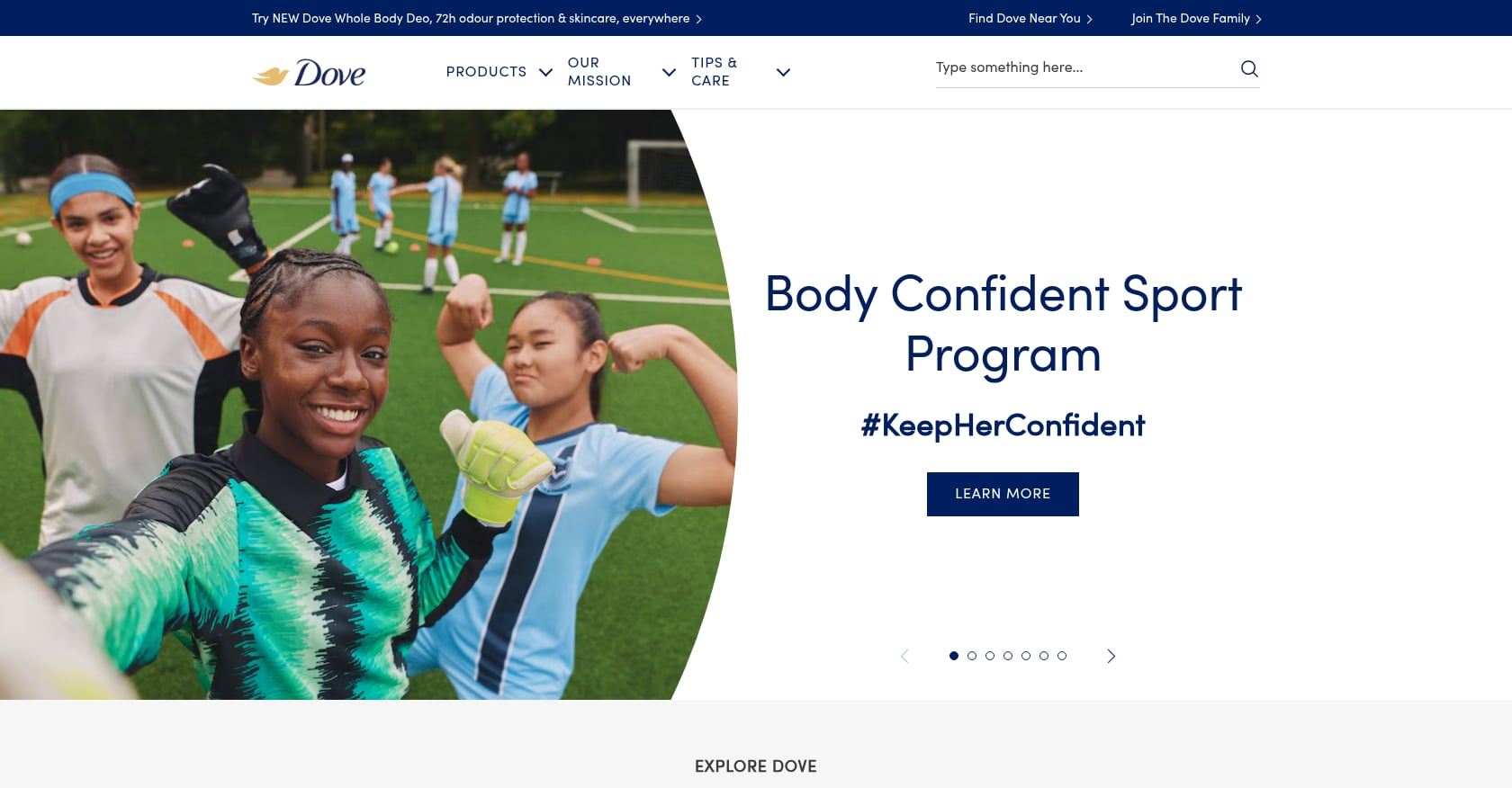
In 2004, Dove commissioned a global study and discovered that only 2% of women around the world described themselves as beautiful. That single data point became the foundation for what Ad Age would later rank as the No. 1 ad campaign of the 21st century.
What they did: Dove replaced airbrushed models with real women across every touchpoint, billboards, TV, digital, and packaging. The campaign evolved with culture: from challenging retouching (2006’s “Evolution” spot) to confronting social media’s impact to, in 2024, committing to never use AI-generated imagery to represent real women.
Results:
Global sales grew from approximately $2.5 billion in 2004 to over $4 billion by 2014
The “Evolution” spot earned an estimated $150 million in media value from a $50,000 production budget
The Dove Self-Esteem Project has reached over 114 million young people across 153 countries
Brand value now nears $6.5 billion, holding the No. 9 spot in Kantar’s BrandZ UK Most Valuable Brands ranking
Why it worked: The campaign was built on research, not a creative hunch. That 2% statistic gave it credibility and emotional punch from day one. But the real genius was consistency. Twenty years of compounding brand purpose built something no single campaign burst could replicate. Each era found a fresh cultural tension (retouching, social media, AI) that kept the positioning relevant.
The honest tradeoff: Dove is owned by Unilever, the same corporation that simultaneously owned Axe (Lynx in the UK), a brand whose advertising routinely depicted women as passive sexual rewards. This structural contradiction has been the most persistent critique, and a useful reminder that purpose-driven marketing requires organizational coherence, not just a good campaign.
2. Patagonia, “Don’t Buy This Jacket”
Best for: Anti-consumerist brand positioning that paradoxically drives sales
On Black Friday 2011, Patagonia took out a full-page ad in The New York Times featuring a photo of its R2 fleece jacket and three words: “Don’t Buy This Jacket.” Below, the ad detailed the environmental cost of producing the garment and asked consumers to consider whether they really needed it.
What they did: The ad wasn’t a stunt. It was the public-facing expression of a deeper commitment to environmental accountability, part of Patagonia’s Common Threads Initiative that encouraged customers to reduce, repair, reuse, and recycle.
Results:
Sales increased approximately 30% in the months following the campaign
By 2017, Patagonia reached $1 billion in annual revenue
Company valuation grew to approximately $3 billion
In 2022, founder Yvon Chouinard transferred ownership to a trust, directing roughly $100 million annually to fight climate change
Why it worked: The campaign triggered reciprocity. By showing genuine concern for the environment (even at apparent cost to itself), Patagonia created a psychological debt. Consumers who valued that authenticity reciprocated by becoming fiercely loyal advocates. The consistency principle also played a role: once people identified as Patagonia customers, buying more from the brand reinforced their self-image as environmentally conscious.
The honest tradeoff: Telling people not to buy your product only works if your product quality justifies the eventual purchase. Patagonia’s lifetime guarantee and repair program made the anti-consumption message credible. Without that operational backing, the same ad would have read as hollow.
3. CoorDown, “#AssumeThatiCan”
Best for: Nonprofits challenging societal bias through emotional storytelling on a budget
Stereotypes and low expectations have long limited opportunities for people with Down syndrome. For World Down Syndrome Day 2024, Italian charity CoorDown launched “Assume That I Can,” featuring Canadian actress Madison Tevlin in a film that powerfully urged viewers to rethink their assumptions.
What they did: Instead of asking for sympathy or awareness, the campaign demanded higher expectations. The film showed Tevlin pushing back against the low bar society sets for people with Down syndrome, reframing disability not as limitation but as underestimation.
Results:
Over 150 million views within one week
Seven Cannes Lions including one Gold, four Silver, and two Bronze across Film, Film Craft, Health & Wellness, and Social & Influencer categories
Gold for Co-Creator and User Generated Content, Silver for Social Film at Cannes
Why it worked: The narrative inversion was everything. Rather than positioning people with Down syndrome as recipients of charity, the campaign positioned society as the party that needed to change. This gave viewers agency and accountability simultaneously. It proved that you don’t need major celebrities for impact. You need a sharp insight delivered with conviction.
4. Walgreens × Red Nose Day
Best for: Retail-nonprofit partnerships at massive scale
When Comic Relief US brought Red Nose Day from the UK to the United States in 2015, Walgreens became the campaign’s anchor retail partner. The concept was simple: buy a red foam nose for $1 at any Walgreens, and the proceeds fund programs fighting child poverty.
What they did: This is cause marketing in its most refined form, a low-friction transaction that turns a retail visit into a charitable act. The campaign paired in-store product sales with a national NBC telethon, celebrity participation, and heavy social media amplification.
Results:
Record-breaking $49 million raised in 2022’s key fundraising window alone
$275 million raised since 2015
Walgreens specifically contributed over $140 million
In 2015, Walgreens sold out of 5 million noses in just over a week
67% of Americans now recognize Red Nose Day; an estimated 40 million Americans supported the campaign in 2019
Why it worked: This is a masterclass in closing the intention-action gap. The ask is frictionless (one dollar), the action is visible (a red nose you wear in public), and the social proof is built in (your colleagues, your kids’ teachers, and strangers at the grocery store are all wearing one). When the barrier to action is this low and the social signal this clear, participation becomes the default.
5. ALS Association, Ice Bucket Challenge
Best for: Viral user-generated content for health causes
The Ice Bucket Challenge became the defining viral fundraiser of the 2010s. Participants dumped ice water over their heads, posted the video on social media, and nominated three friends to do the same within 24 hours or donate to ALS research. Most people did both.
What they did: The ALS Association didn’t create the challenge (it emerged organically from participants), but they amplified it strategically. Celebrity participation from Bill Gates to Oprah created a cascade effect.
Results:
Over $115 million raised for ALS research
The funding led to real research breakthroughs, including the identification of a new ALS gene (NEK1)
Why it worked: Three behavioral levers operated simultaneously. Social proof (seeing friends participate made the behavior feel normal), a low barrier to entry (ice and a bucket are free), and a built-in sharing mechanism (the nomination chain). The action itself, getting drenched, was inherently entertaining, which solved social media’s fundamental need for watchable content. The campaign didn’t compete with the platform. It fed it.
The honest tradeoff: The challenge was largely unrepeatable. Attempts to replicate the format for other causes have consistently underperformed because the viral dynamics were partly serendipitous.
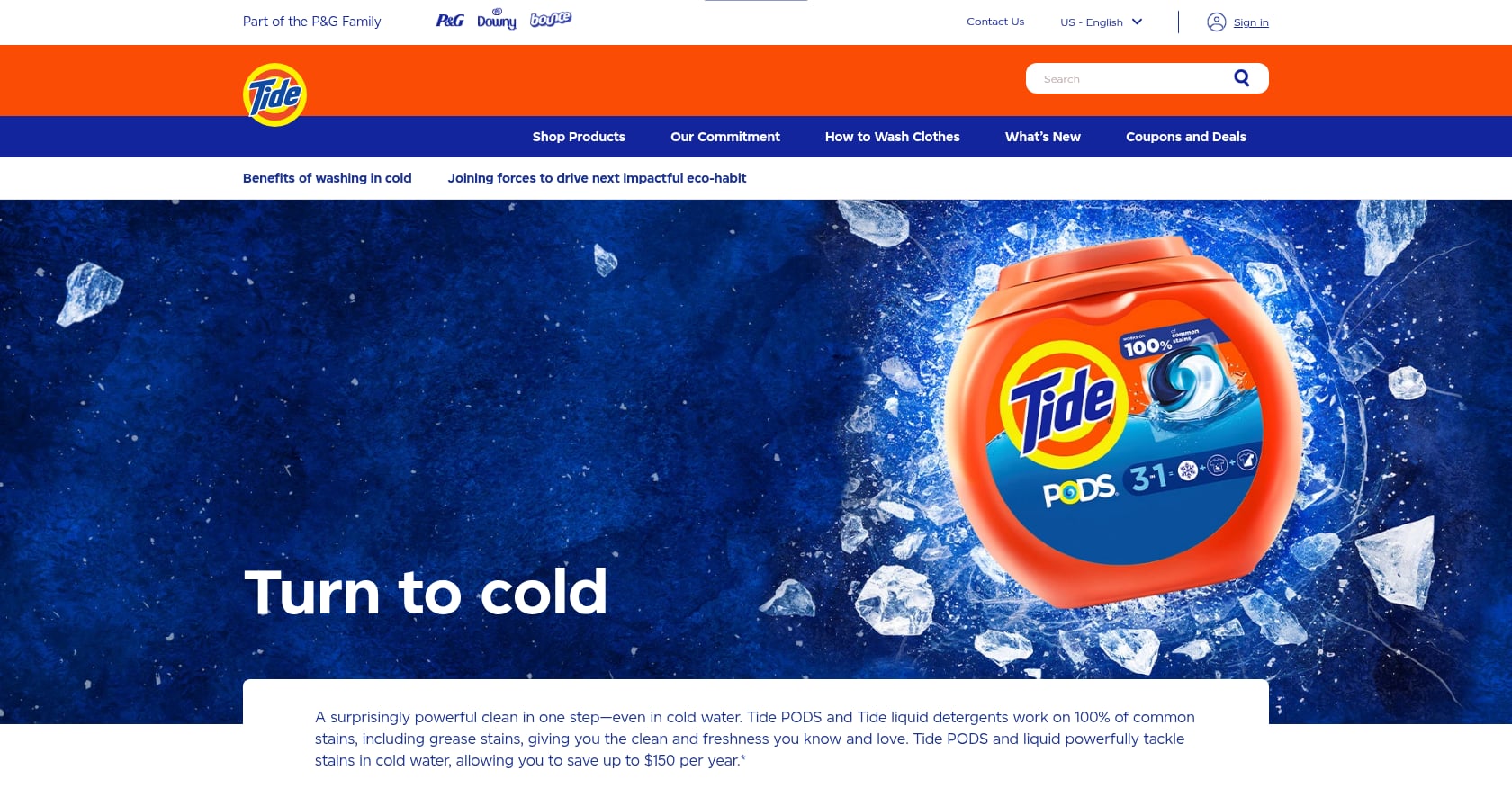
6. Tide, “Turn to Cold” / #ColdWaterClean
Best for: Closing the intention-action gap on everyday sustainability behavior
Tide’s insight was straightforward: heating water accounts for up to 90% of the energy consumed in a single laundry load. Getting millions of people to switch to cold water washing would have a larger environmental impact than most “green” product launches ever could.
What they did: In 2021, Tide set a goal for three out of four U.S. laundry loads to be washed in cold water by 2030. But rather than just running ads, the brand partnered with appliance manufacturers to change machine defaults, a classic behavioral nudge operating at the system level. They also reformulated their product to perform better in cold water, removing the performance objection entirely.
Results:
Millions of behavioral shifts targeted through combined advertising, product reformulation, and appliance partnerships
Campaign ongoing with measurable tracking toward 2030 goal
Why it worked: Tide didn’t ask consumers to sacrifice anything. Cold water was reframed as better performance, not just greener living. This matters because practitioners on Reddit and marketing forums consistently flag a gap between “making a campaign look good” and “proving it changed behavior.” Tide’s approach bypassed the awareness-only trap by changing defaults and removing friction. It’s one of the strongest social impact campaign examples of applied behavioral science in a commercial context.
Discover how to identify your own intention-action gaps and design campaigns that close them.
7. Dove, “Face of 10”
Best for: Targeting emerging social issues before they calcify
In 2024, Dove launched “Face of 10,” a campaign spotlighting that girls as young as ten are being targeted by beauty companies and swept into social media’s impossible standards. The campaign featured real girls, not models, and called out the industry’s role in normalizing early-age appearance pressure.
What they did: Extended Dove’s 20-year Real Beauty platform into the specific cultural tension of pre-teen social media exposure. This wasn’t a rehash; it was a strategic flanking move into territory competitors hadn’t touched.
Results:
Extended the Dove Self-Esteem Project’s reach, already at 114 million young people globally
Generated significant media coverage by naming a problem many parents recognized but few brands addressed
Why it worked: It proved that a two-decade-old brand platform can still find fresh territory. The insight (ten-year-olds are being marketed anti-aging products) was specific enough to feel urgent and broad enough to resonate across demographics.
8. American Foundation for Suicide Prevention, “Talk Away the Dark”
Best for: Mental health awareness through authentic community engagement
“Talk Away the Dark” won a 2024 Webby Award in the social impact category by bringing light to the topic of suicide in a way that was neither exploitative nor clinical.
What they did: The campaign used the hashtag #TalkAwayTheDark to break barriers around discussing mental health struggles, targeting both people at risk and non-suicidal individuals who could help others. The messaging centered on one simple behavioral prescription: talking helps.
Results:
2024 Webby Award winner for Social Impact
Widespread adoption of the hashtag across platforms
Why it worked: Mental health campaigns often fail because they either patronize their audience or trigger the very distress they aim to address. “Talk Away the Dark” threaded the needle by giving people a concrete, repeatable action (talk) rather than an abstract aspiration (be more aware). The campaign’s name itself was the instruction manual.
9. Ladywell, “#UncensorYourHealth”
Best for: Fighting platform censorship of women’s health content
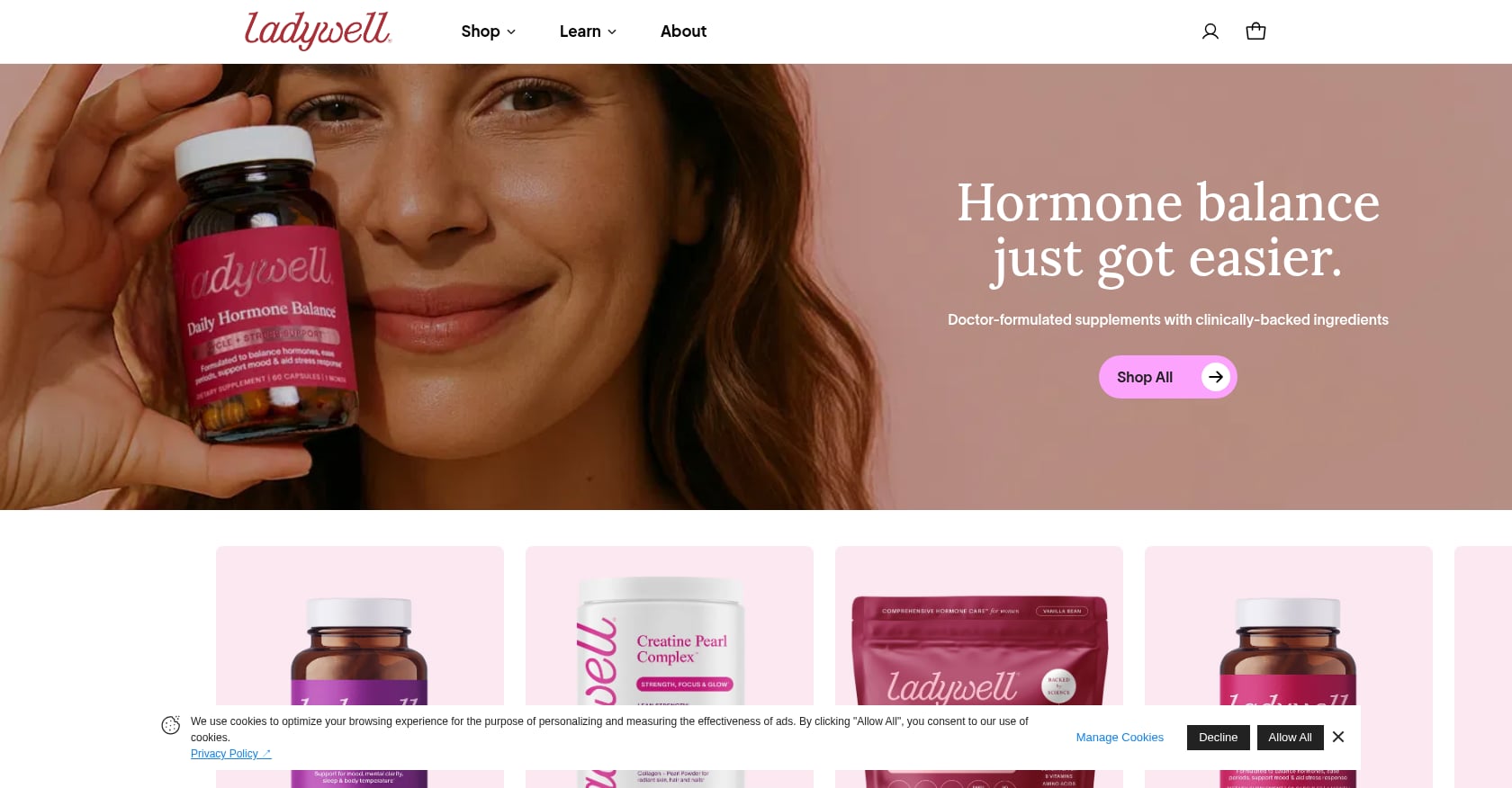
This 2026 Webby Award winner for Best Social Impact Campaign, created by Saatchi & Saatchi, tackled a systemic problem: social media algorithms routinely suppress women’s health content, flagging terms related to menstruation, menopause, and reproductive health as inappropriate.
What they did: The campaign used a linguistic phenomenon called typoglycemia (the brain’s ability to read misspelled words) to help women-led health businesses bypass algorithmic censorship. By intentionally misspelling flagged terms in ways readers could still understand, the content evaded automated filters while remaining fully comprehensible.
Results:
Won the 2026 Webby Award for Best Social Impact Campaign
Provided a practical, replicable tool for women’s health businesses facing censorship
Why it worked: This wasn’t just awareness. It was a hack. Instead of merely pointing out that censorship exists, the campaign gave people a tool to circumvent it. That distinction, between identifying a problem and solving it, separates the social impact campaign examples that generate think pieces from the ones that generate change.
10. LinkedIn, “The Mom B.A.”
Best for: Corporate social responsibility with internal-external coherence
Created by R/GA, LinkedIn’s “The Mom B.A.” won the 2026 Webby Award for CSR Campaign. The campaign recognized the skills mothers develop through caregiving, project management, conflict resolution, budget optimization, crisis response, and reframed them as legitimate professional qualifications.
What they did: The campaign positioned parenting experience as equivalent to advanced business education, directly challenging the resume gap that penalizes mothers in the job market. It aligned LinkedIn’s platform (professional identity) with a social issue (workplace gender equity) in a way that felt native rather than performative.
Results:
2026 Webby Award for CSR Campaign
Reinforced LinkedIn’s positioning as a platform advocating for equitable professional opportunity
Why it worked: The best CSR strategy campaigns connect the company’s core business to the social issue it’s addressing. LinkedIn is a professional networking platform. Mothers face systemic professional disadvantage. The connection is organic, not forced.
11. TOMS, “One for One”
Best for: Pioneering the buy-one-give-one model
TOMS launched with a promise: for every pair of shoes purchased, the company would donate a pair to a child in need. The model was revolutionary when it debuted in 2006 and fundamentally reshaped how consumers thought about cause-related marketing.
What they did: Built the social impact mechanism directly into the transaction. There was no separate donation ask, no additional step. Buying the product was the charitable act.
Results:
Millions of shoes donated across dozens of countries
Created an entire category of “social enterprise” consumer brands
Inspired hundreds of imitators across industries
Why it worked: The model eliminated the intention-action gap entirely. You didn’t have to do anything extra to participate. The tradeoff is that TOMS eventually acknowledged the model’s limitations (donated shoes could undermine local economies), and evolved toward funding community-based programs instead. That willingness to publicly course-correct actually strengthened credibility.
12. Charity: Water
Best for: Radical donation transparency
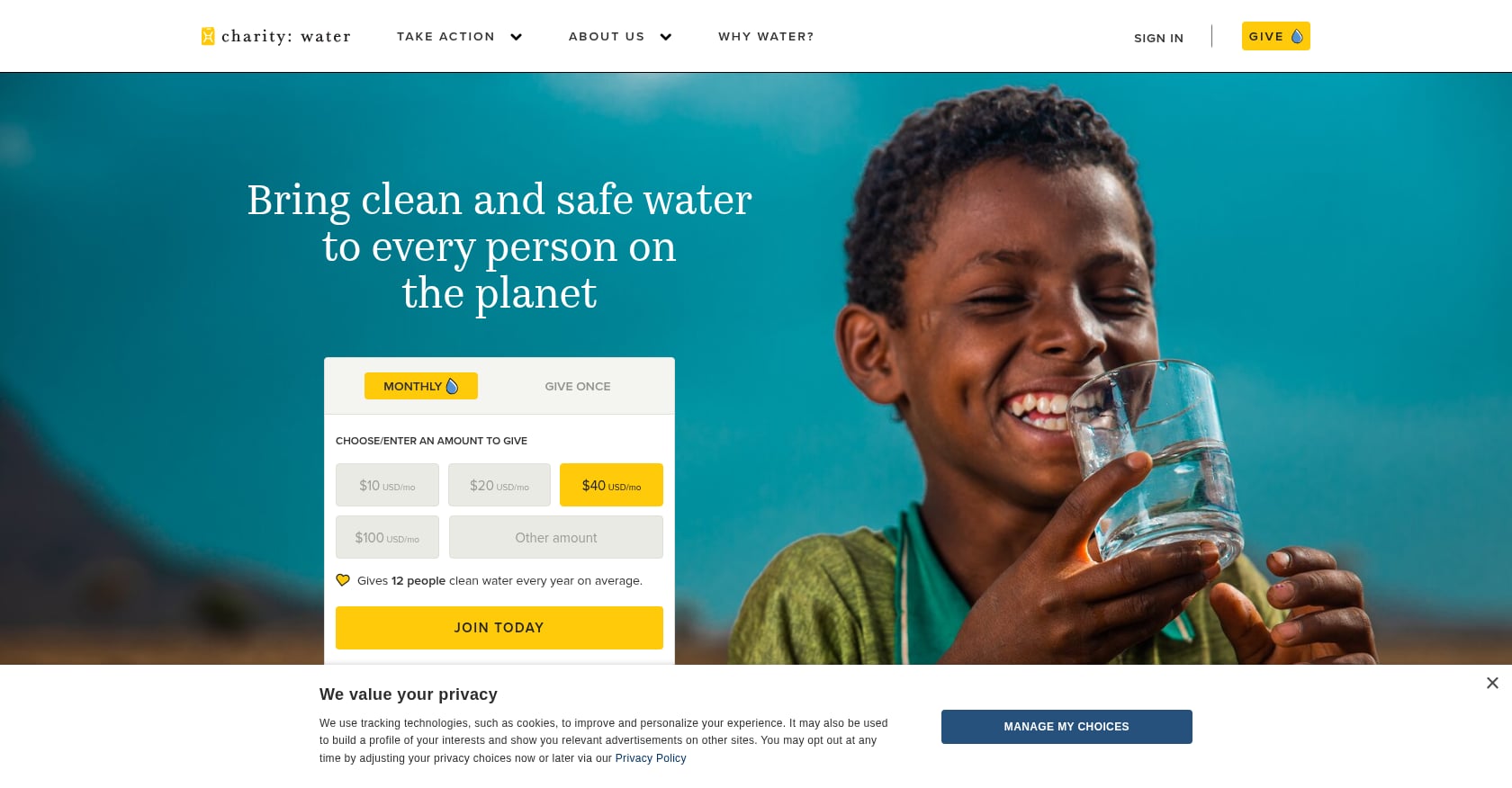
Charity: Water pioneered a transparency model that showed donors exactly where each dollar went. Using GPS coordinates, photos, and sensor data from wells, the organization provided verifiable proof that donations resulted in clean water access.
What they did: Separated operational funding (covered by private donors and sponsors) from public donations (100% directed to water projects). Then made every project trackable. Donors could see the specific well their money funded, the community it served, and whether it was still operational.
Results:
Built one of the most trusted nonprofit brands in the world
Pioneered donation-mapping technology now emulated across the sector
Raised hundreds of millions for clean water projects globally
Why it worked: Trust is the currency of nonprofit fundraising, and Charity: Water solved the trust problem with technology. This matters because, as environmental advocates on Reddit note, movements that depend on public trust find reputational risk particularly devastating. Charity: Water removed the trust question entirely by making outcomes visible and verifiable. For anyone thinking about impact measurement, this organization is the benchmark.
13. Dove India, “#StopTheBeautyTest”
Best for: Localizing a global purpose platform for regional cultural tensions
Dove’s India team adapted the global Real Beauty platform to address a locally specific issue: the marriage market’s emphasis on appearance, where women are openly evaluated on skin tone, weight, and features by prospective in-laws.
What they did: Through the Dove Self-Esteem Project, the campaign invited 200,000 people to pledge against body shaming, with a goal of empowering 8 million young minds by 2025.
Results:
200,000 pledges against body shaming
Extended the Dove Self-Esteem Project’s reach with culturally specific resonance
Why it worked: Global campaigns often lose their edge when localized. This one gained edge. By naming a cultural practice (the “beauty test” in arranged marriage contexts) that millions of Indian women recognized, the campaign felt locally owned rather than globally imposed.
14. Grounded World × Plan International, “Rewrite Her Story”
Best for: Systemic change through creative intervention
This multi-award-winning campaign tackled gender bias at an unexpected source: stock photo libraries. These image banks shape how girls and women are represented across media, advertising, and editorial content worldwide, and they were overwhelmingly populated with stereotypical imagery.
What they did: The campaign changed the algorithms in image banks to remove gender bias and discrimination against girls. Rather than running ads about the problem, the team intervened at the infrastructure level, altering the systems that perpetuate stereotyping.
Results:
Changed image-bank algorithms globally
Multiple awards for social impact
Why it worked: Most social impact campaign examples target consumer behavior. This one targeted the system that shapes consumer perception. By going upstream, to the stock libraries that editors and designers use daily, the campaign created compounding impact that doesn’t require ongoing ad spend to sustain.
15. Grounded World × She Should Run, “See Joan Run”
Best for: Modest budget, high behavior change
The gender gap in U.S. politics persists not because women can’t win elections, but because too few women are asked to run. “See Joan Run” was a participatory campaign that spotlighted this gap and invited action.
What they did: A simple, participatory idea that made the gender gap in political representation visible, shareable, and actionable, all on a modest budget.
Results:
Millions of media impressions
A major increase in women being nominated to run for office
Demonstrated what’s possible when insight, culture, and action line up
Why it worked: The campaign succeeded because it converted awareness into a specific behavior (nominating a woman to run). That behavioral specificity is what separates campaigns that trend from campaigns that change things.
What Makes a Social Impact Campaign Actually Work
After studying these 15 examples, clear patterns emerge. These aren’t best practices in the vague sense. They’re the specific mechanisms that separated campaigns that changed behavior from campaigns that merely won attention.
1. Start with a research-backed insight, not a creative concept. Dove’s 2% statistic. Tide’s energy-per-load data. Patagonia’s environmental cost transparency. CoorDown’s reframing of low expectations. The strongest campaigns were built on discovered truths, not invented narratives.
2. Close the intention-action gap. The best campaigns make acting easy: buy a $1 nose, switch to cold water, share a video, sign a pledge. When the distance between “I care” and “I did something” shrinks to nearly zero, participation rates soar.
3. Align brand truth with cultural tension. Research shows that if there’s a large enough gap between a brand’s activism and its internal values, the activism will be perceived as corporate hypocrisy. Social or political activism from a company with poor labor practices or unsustainable business operations can actually decrease buying intention. The campaigns above worked because the brand had earned the right to speak.
4. Sustain, don’t stunt. Dove has run for 20 years. Red Nose Day has run for 10+. Patagonia’s commitment is literally embedded in its ownership structure. One-off campaigns rarely move long-term metrics. The compounding effect of consistency is irreplaceable.
5. Measure what matters. Tie campaign outcomes to behavior change, revenue, or policy, not just impressions. Practitioners on marketing forums consistently note that the gap between “looking good” and “proving behavioral change” is where most campaigns lose credibility. Every example above can point to a number that isn’t an impression count.
Which Metrics Should Social Impact Campaigns Measure?
One of the biggest mistakes organizations make is measuring awareness while ignoring behavior.
The strongest campaigns track outcomes that demonstrate real-world impact.
Metric | What it measures |
|---|---|
Donations | Fundraising effectiveness |
Pledges | Commitment to action |
Volunteer registrations | Community mobilization |
Product adoption | Behavioral change |
Revenue | Commercial impact |
Policy changes | Institutional impact |
Participation rate | Audience engagement |
Long-term retention | Sustained behavior |
Vanity metrics such as impressions, likes, and views can provide useful context, but they rarely prove impact by themselves.
Avoiding Greenwashing and Performative Activism
No article about social impact campaign examples would be complete without addressing the campaigns that get it wrong.
The pitfalls of greenwashing, rainbow washing, and pinkwashing pose significant obstacles to authentic CSR. Greenwashing misrepresents environmental efforts. Rainbow washing and pinkwashing exploit LGBTQ+ issues for marketing without concrete support for the community. Both practices jeopardize trust, undermine CSR efforts, and inflict serious reputational harm.
As Molly Marshall, Client Strategy and Insights Partner at Basis, puts it: “Brands need to be loud and proud about what they stand for. But they also need to do that consistently. When brands try to please everyone or shift their values according to the cultural or political climate, that’s when they receive backlash.”
The 2025 Edelman data reinforces this. While brands have traditionally been expected to promote values through social causes, consumers today also want economic hope and personal stability. The shift from “we” issues to “me” benefits means campaigns that feel like corporate virtue signaling without personal relevance will increasingly fall flat.
For environmental advocates, whose work depends on public trust and moral authority, this reputational risk is particularly devastating. Environmental movements have built their credibility on transparency, honesty, and authentic community engagement. A brand that undermines that credibility hurts not just itself but the entire cause.
The safest path isn’t silence. Silence is worse. The safest path is coherence: say what you do, do what you say, and avoid greenwashing by ensuring your external messaging matches internal reality.
How to Build Your Own Social Impact Campaign
Moving from inspiration to execution requires structure. Based on the patterns above, here’s a practical sequence:
Spark: Use short videos, creator collaborations, and creative ads to raise awareness. Prompt shares, saves, and comments. This is where most campaigns start and, unfortunately, where most campaigns stop.
Deepen: Link to explainers, community toolkits, and partner pages. Use stories and long-form posts to add context and name your theory of change. Give people a reason to care beyond the emotional hit.
Convert: Create clear calls to volunteer, donate, or pledge. Lower friction with one-click actions and mobile-first flows. Remember the Red Nose Day principle: if the action takes more than ten seconds, you’ll lose most of your audience.
Sustain: Spotlight brand advocates and local organizers, engage followers, publish monthly outcomes, and keep a steady drumbeat between tentpole moments. This is where compounding happens.
The hardest part isn’t the creative. It’s diagnosing where the intention-action gap lives in your specific audience and designing the right intervention to close it.
Start with a free discovery call to identify where your social impact campaign can drive real behavior change.
Social Impact Campaign Planning Template
Use this framework before launching a campaign.
Planning question | Example |
|---|---|
What problem are we solving? | Childhood hunger |
What behavior must change? | Increase food donations |
What prevents action? | Lack of awareness |
How can we reduce friction? | One-click donations |
What action should people take? | Donate |
How will we measure success? | Donation growth |
If you can't answer all six questions, your campaign strategy probably needs additional refinement.
Social Impact Campaign Success Formula
Research + Cultural Tension + Friction Reduction + Authenticity + Long-Term Commitment = Behavior Change
Think about the 15 examples in this article:
Dove → Research + consistency
Patagonia → Authenticity + brand alignment
Red Nose Day → Friction reduction
Tide → Behavioral nudges
Charity: Water → Transparency
Different campaigns used different tactics, but all of them combined these five variables.
Frequently Asked Questions
What is a social impact campaign?
A social impact campaign is a strategic marketing effort designed to address a social, environmental, or cultural issue while advancing a brand’s or organization’s goals. Unlike standard advertising, these campaigns aim to change behavior, policy, or public perception on issues like health, equity, sustainability, or poverty. The most effective ones generate measurable outcomes beyond awareness.
What makes a social impact campaign successful?
The most successful social impact campaigns share five traits: they start with a research-backed insight, they close the intention-action gap by making participation easy, they align the brand’s internal values with the external message, they sustain effort over years rather than weeks, and they measure behavior change rather than just impressions.
How is a social impact campaign different from cause marketing?
Cause marketing is a subset of social impact campaigning that specifically ties a brand’s commercial activity to a charitable cause, like Walgreens selling red noses for Comic Relief. Social impact campaigns are broader and can include awareness campaigns, behavior change initiatives, policy advocacy, and systemic interventions that don’t necessarily involve a purchase transaction. You can explore this distinction in more depth through resources on cause marketing campaigns.
Can small brands run effective social impact campaigns?
Yes. CoorDown’s “#AssumeThatiCan” won seven Cannes Lions without a major celebrity or a massive budget. The “See Joan Run” campaign generated millions of impressions on a modest budget. What matters is the sharpness of the insight, the clarity of the ask, and the alignment between the brand and the issue. Budget helps with reach but doesn’t determine impact.
How do you measure the success of a social impact campaign?
The strongest campaigns measure behavior change (cold water washes adopted, women nominated to run for office, donations raised) rather than just impressions or sentiment. Other valid metrics include policy changes influenced, revenue impact, pledge sign-ups, and sustained brand equity growth. Charity: Water’s GPS-tracked wells are an extreme example of outcome transparency.
What are the biggest risks when running a social impact campaign?
Greenwashing and performative activism are the primary risks. If consumers perceive a gap between your messaging and your actual practices, the backlash can be worse than saying nothing. The Dove/Axe contradiction under Unilever is a frequently cited example. Consistency between internal operations and external campaigns is non-negotiable.
What are some recent social impact campaign examples from 2024-2026?
Recent standouts include CoorDown’s “#AssumeThatiCan” (2024, 7 Cannes Lions), Dove’s “Face of 10” (2024, addressing pre-teen beauty standards), AFSP’s “Talk Away the Dark” (2024 Webby winner), Ladywell’s “#UncensorYourHealth” (2026 Webby winner for Best Social Impact Campaign), and LinkedIn’s “The Mom B.A.” (2026 Webby winner for CSR Campaign).
How do I get started building a social impact campaign?
Begin with diagnosis, not creative. Understand what your audience says they care about versus what they actually do. Identify the specific intention-action gap you’re trying to close. Then align that gap with a cultural tension your brand has credibility to address. If you want a structured starting point, Gaia’s AI-powered assessment can help map where your biggest opportunities are.