

 Gaia
GaiaTL;DR
The best sustainability marketing agencies do more than produce green-themed campaigns. They connect credible environmental and social action to measurable commercial results while keeping brands out of greenwashing trouble. Grounded World tops this list for brands that need to commercialize sustainability and close the gap between consumer intention and actual behavior. The rest of the shortlist covers enterprise strategy (Futerra), mission-driven brand positioning (BBMG), ESG communications (ThinkPARALLAX), cleantech marketing (Orange Bird), sustainable websites (Wholegrain Digital), purpose-led communications (Enviral), sustainable SEO and content (Akepa), brand identity and packaging (Modern Species), and ESG story distribution (3BL).
What is a sustainability marketing agency?
A sustainability marketing agency is a specialized firm that helps brands communicate environmental and social impact while ensuring regulatory compliance (like the FTC Green Guides or EU EmpCo). Unlike traditional agencies, they focus on claims substantiation, behavioral science to bridge the intention-action gap, and measurable ESG reporting to drive commercial growth without greenwashing.If you're still weighing the category before shortlisting names, our sustainability marketing agency overview covers what these services include. This list is a specific use case within that broader category.
Why Choosing a Sustainability Marketing Agency Is Harder Than It Looks
Sustainability should be a growth advantage. Products making ESG-related claims averaged 28% cumulative growth over five years, compared with 20% for products without such claims, according to McKinsey and NielsenIQ research covering $400 billion in annual US retail revenue. But the same study cautions this is correlation, not causation, and the researchers did not verify whether the claims were true (source).
That distinction matters. A 2024 BSI survey found that 76% of US consumers are more likely to buy from companies that can verify environmental credentials, and 65% want clear, accessible information about a product’s environmental footprint (source). Meanwhile, the European Commission reports that 53% of green claims give vague, misleading, or unfounded information, and 40% have no supporting evidence at all (source).
The risk of hiring the wrong agency is not just a weak campaign. It is wasted budget, internal misalignment, regulatory exposure, or sustainability work that never converts into customer adoption. This guide compares the best sustainability marketing agencies by use case, pricing signals, public review footprint, and honest tradeoffs, so you can shortlist the right partner without guessing.
How We Evaluated These Agencies
Every agency on this list was assessed across six dimensions:
Sustainability depth. Does the agency specialize in sustainability, ESG, social impact, climate, circularity, or purpose-led brands?
Commercialization ability. Can it connect sustainability to revenue, retail conversion, behavior change, or demand generation?
Claims discipline. Does it show awareness of greenwashing risk, proof requirements, and regulatory considerations?
Service fit. Does it cover the channels and deliverables buyers actually need?
Public proof. Case studies, certifications, third-party reviews, named clients, and impact reporting.
Transparency. Published pricing, minimum project size, review footprint, and clear positioning.
Pricing and review data are included where publicly available. Most sustainability marketing agencies do not publish fixed rates because work is custom-scoped. Where that is the case, we say so directly.
At-a-Glance Comparison
Agency | Best For | Pricing Signal | Public Review Signal | Core Strength | Main Limitation |
|---|---|---|---|---|---|
Grounded World | Commercializing sustainability and behavior change | Custom; complimentary 5C assessment and discovery call | Named case studies; B Corp certified; limited third-party review footprint | Bridges purpose and profit through research, activation, and measurement | Not a low-cost plug-and-play option |
Futerra | Enterprise sustainability strategy and culture-shifting campaigns | No public pricing; positioned for larger budgets | High public authority; major brand examples | Global sustainability strategy and creative | Likely less accessible for smaller brands |
BBMG | Mission-driven brand strategy and positioning | $100,000+ minimum (Clutch) | Clutch listing not yet reviewed | Deep brand purpose and identity work | High minimum; less suited for lean execution |
ThinkPARALLAX | ESG strategy, reporting, and stakeholder communications | Custom (no public pricing found) | Clutch profile exists; no reviews visible | ESG communications systems | Less evidence for consumer-facing activation |
Orange Bird | Cleantech, climate tech, circular economy marketing | $5,000+ minimum; $100–$149/hr (Clutch) | 5.0 rating, 12 reviews (Clutch) | Technical B2B sustainability sectors | Narrower focus than broad brand-purpose work |
Wholegrain Digital | Sustainable, lower-carbon WordPress websites | $100–$149/hr; projects $10K–$49K (Clutch) | 4.5 rating, 7 reviews (Clutch) | Digital sustainability and low-carbon web design | Web only; not full brand strategy |
Enviral | Purpose-led communications and campaigns | No public pricing found | Impact report presence; limited third-party reviews | Purpose definition and brand voice | Less clear on commercial activation |
Akepa | SEO, content, and growth marketing for sustainable brands | No public pricing; free day of consultation | Self-authored ranking content; limited independent data | Data-driven digital growth | Narrower than full sustainability strategy |
Modern Species | Sustainable brand identity and packaging | No public pricing found | B Corp and 1% for the Planet noted | Brand refresh, packaging, and visual systems | Design-focused; not full-funnel marketing |
3BL | ESG storytelling distribution and communications reach | No public pricing found | 3,800+ ESG stories distributed (Oct 2024–Oct 2025) | Scale and reach for sustainability content | Distribution platform, not boutique strategy |
Sustainability Agency Service Matrix
Agency | Strategy | Content/SEO | Reporting/ESG | Web/Digital | Packaging |
Grounded World | ✅ | ✅ | ✅ | ❌ | ✅ |
Futerra | ✅ | ✅ | ❌ | ❌ | ❌ |
BBMG | ✅ | ❌ | ❌ | ✅ | ✅ |
Orange Bird | ❌ | ✅ | ❌ | ✅ | ❌ |
Wholegrain Digital | ❌ | ❌ | ❌ | ✅ | ❌ |
Modern Species | ❌ | ❌ | ❌ | ❌ | ✅ |
What Makes a Good Sustainability Marketing Agency?
A sustainability marketing agency helps organizations communicate and activate environmental or social impact in a way that is credible, specific, audience-relevant, and commercially useful. That is different from what a traditional creative or performance agency does.
A traditional agency might focus on awareness, media buying, brand aesthetics, or conversion optimization. A sustainability marketing agency should also understand claims substantiation, greenwashing risk, stakeholder scrutiny, consumer behavior barriers, regulatory frameworks, and the complexity of environmental and social tradeoffs.
The distinction is not cosmetic. As one ranking page from Akepa puts it, sustainability should be core to the agency’s work, not a one-off campaign bolted onto otherwise standard marketing (source). Snowball Creations makes a similar point, defining sustainable marketing as promotion of ethical, environmentally friendly, or socially responsible products and services while warning that it becomes greenwashing when used to mislead consumers (source).
The Intention-Action Gap Problem
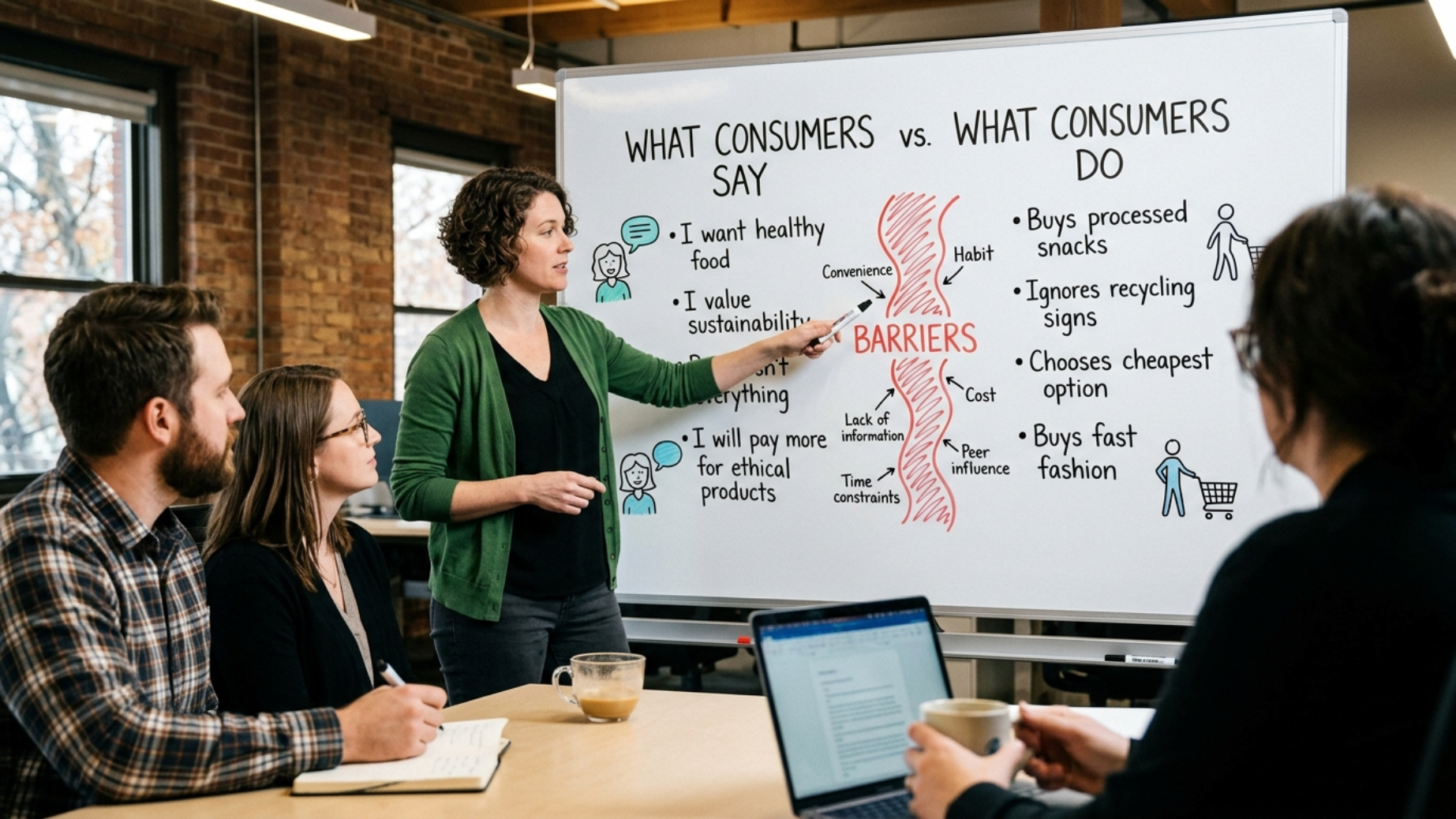
Here is the core challenge most agencies miss. Consumers may say they care about sustainability but still choose the cheaper, faster, or more familiar option. McKinsey’s 2024 consumer research found that economic uncertainty has made younger consumers less willing to pay premiums for sustainability, summarizing the trend as “value upstages values” (source).
This means the best sustainability marketing agencies cannot rely on moral messaging alone. They need to make the sustainable choice easier, clearer, more desirable, and more credible. That requires understanding how to bridge the intention-action gap in sustainable behavior, not just telling a nice story.
Practitioners on Reddit echo this. In an r/marketing discussion, marketers raised a real concern: sustainability is complex, guidance is unclear, and growth pressure can push it lower on the agenda. The implication is straightforward. If sustainability marketing does not connect to commercial outcomes, it gets cut when budgets tighten (source).
Which Type Do You Need?
“Sustainability marketing agency” is not one category. Before comparing firms, clarify what you actually need.
Your Need | Agency Type to Look For | What to Evaluate |
|---|---|---|
Prove sustainability claims | ESG communications / sustainability strategy | Claim substantiation, reporting, stakeholder engagement |
Get consumers to choose your product | Consumer behavior / brand activation | Intention-action gap research, retail activation, claims testing |
Define brand purpose | Brand purpose / positioning | Research, narrative, identity, internal alignment |
Generate demand | Sustainable growth marketing | SEO, paid media, content, conversion optimization |
Build a credible website | Sustainable web design | Low-carbon design, UX, accessibility |
Amplify ESG stories | ESG media / distribution | Story distribution, PR, stakeholder reach |
Redesign packaging or identity | Sustainable brand / design | Packaging, materials awareness, shelf impact |
With that framework in mind, here are the 10 best sustainability marketing agencies worth shortlisting.
The 10 Best Sustainability Marketing Agencies
1. Grounded World
Best for: Brands that need to close the intention-action gap by turning sustainability commitments into measurable behavior change, activation, and commercial growth, not just green campaigns.
Grounded World is a B Corp-certified boutique marketing agency built around a single premise: sustainability should drive business outcomes, not just communications assets. Its four-phase model (Discover, Articulate, Activate, Accelerate) moves from research and gap diagnosis through brand strategy, market activation, and impact measurement.
What sets Grounded apart is its focus on diagnosing and closing the intention-action gap, the disconnect between what consumers say they value and what they actually buy. This is the problem most sustainability campaigns ignore entirely. Rather than leading with creative, Grounded starts with AI-assisted 5C landscape assessments (Company, Culture, Category, Competitor, Consumer) and builds strategy from evidence.
Key services:
Sustainability marketing and storytelling
Consumer behavior change research and activation
Brand purpose, positioning, identity, and architecture
Commercial innovation and go-to-market strategy
Retail activation, shopper strategy, and category selling stories
Stakeholder engagement, partnerships, and cross-functional alignment
Claims and concept testing
Impact measurement and reporting
Social impact campaigns
Pricing: Custom-scoped engagements. No public pricing tiers. Offers a complimentary AI-driven 5C landscape assessment and discovery call.
Public proof: B Corp certification (reported B Impact Score of 116), Ethical Agency Alliance, 1% for the Planet, Science Based Targets, named a Top 100 Global Social Impact Company. The ANA has published or endorsed its Brand Purpose to Profit (BPP) framework. Named case studies include Grove Collaborative, Tribes on the Edge, Wasu, Fresh Air Fund, Mary’s Center, UNMAS, Plan USA, and Network of Executive Women.
Tradeoffs:
Not a self-serve or low-cost option.
No transparent pricing packages.
Likely custom-scoped, so not ideal for brands looking for a quick, cheap social media campaign.
Choose Grounded World if your sustainability or social impact investments are real but are not translating into consumer action, internal alignment, retail traction, or revenue growth. If you need brand activation strategy that transforms purpose into profit, this is the agency built for that problem.
Book a discovery call with Grounded World
2. Futerra
Best for: Enterprise brands and global organizations that need high-level sustainability strategy and culture-shifting campaigns.
Futerra is one of the most recognized names in sustainability consulting and creative. Multiple ranking pages position it as a female-led B Corp working with corporate giants like Mars, Google, IKEA, Danone, and WWF (source). Its strength is helping large organizations define sustainability strategy and turn it into ambitious, culturally resonant campaigns.
Key services:
Sustainability strategy
Creative campaigns and storytelling
Climate and sustainability communications
Global corporate and NGO work
Thought leadership around making sustainability desirable
Pricing: No public pricing found. Competitor rankings consistently position Futerra for larger brands with ambitious budgets, so startup-friendly pricing should not be assumed.
Public proof: Strong public authority, repeated inclusion across ranking pages, and high-profile client examples. No third-party client review profile with useful pricing or review depth was found during research.
Tradeoffs:
Likely not the first call for smaller brands with limited budgets.
More enterprise and culture-change oriented than hands-on retail activation or shopper conversion.
Pricing transparency is weak.
Choose Futerra if you are an enterprise brand or NGO needing high-level sustainability strategy with global creative ambition.
3. BBMG
Best for: Nonprofits, foundations, and mission-driven organizations that need deep brand purpose and positioning work.
BBMG is a Brooklyn-based branding agency that has built its reputation on purpose-led strategy. Its Clutch listing describes a team of 10–49 employees with services spanning branding, graphic design, market research, marketing strategy, digital strategy, and web design (source).
Key services:
Brand purpose and positioning
Brand identity and visual systems
Market research
Marketing strategy
Digital strategy and web design
Pricing: Clutch lists a $100,000+ minimum project size. Hourly rate is undisclosed.
Public proof: Established reputation in the purpose-driven space. However, the Clutch listing says “Not yet reviewed,” meaning public third-party review data is limited.
Tradeoffs:
High apparent minimum puts it out of reach for many smaller organizations.
Stronger fit for strategic brand work than ongoing performance marketing or lean activation.
Limited public review data despite strong brand authority.
Choose BBMG if the challenge is foundational: defining what the organization stands for and how purpose shows up in brand identity and positioning.
4. ThinkPARALLAX
Best for: Corporate ESG strategy, sustainability reporting, and stakeholder communications.
ThinkPARALLAX positions itself as a full-service ESG strategy and communication agency, based in Encinitas, California (source). Its focus sits squarely in the corporate communications space, helping companies translate sustainability strategy into reports, narratives, and stakeholder-facing materials.
Key services:
ESG strategy
ESG communications
Stakeholder communication systems
Sustainability reporting and narrative support
Pricing: No reliable public pricing found. Work is likely custom-scoped given the strategic nature of ESG communications.
Public proof: Clutch profile exists, but the review section did not show client reviews during research. Public review footprint appears limited.
Tradeoffs:
Better for investor, employee, and stakeholder audiences than consumer-facing activation.
Less evidence found for retail activation, packaging, or demand generation.
Pricing and review transparency are weak.
Choose ThinkPARALLAX if your audience is investors, executives, or ESG stakeholders rather than end consumers. For consumer behavior change and retail activation grounded in sustainability market research, a different type of agency is a better fit.
5. Orange Bird
Best for: Cleantech, climate tech, circular economy, and sustainable agriculture marketing.
Orange Bird stands out among the best sustainability marketing agencies for its deep focus on technical B2B sectors. Its Clutch profile describes a full-service sustainability marketing agency focused on brands, products, and services that support the transition to a circular economy (source).
Key services:
Marketing and communications strategy
Branding and design
SEO, content marketing, and advertising
PR and analyst relations
Social media and conversion optimization
Marketing automation and website development
Pricing: Clutch minimum project size is $5,000+. Average hourly rate is $100–$149. Most common project size is under $49,999 based on 8 reviews.
Public proof: Clutch rating of 5.0 across 12 reviews. Quality score: 5.0. Willingness to refer: 5.0. One Clutch review for Cascade Drives reported LinkedIn unique visitors increased 517%, followers grew 55%, and engagement rate increased 593% after Orange Bird’s content marketing support.
Real-world feedback: A Clutch reviewer praised Orange Bird’s ability to quickly understand a highly technical niche and translate it into clear messaging.
Tradeoffs:
Stronger fit for technical climate and cleantech sectors than broad consumer brand purpose.
May be less relevant for nonprofits, retail activation, or packaging work.
Netherlands-headquartered (though a US location is also listed on Clutch).
Choose Orange Bird if you are a cleantech, climate tech, or circular economy company that needs marketing from people who genuinely understand your technical domain.
6. Wholegrain Digital
Best for: Purpose-led organizations that need a sustainable, lower-carbon WordPress website.
Wholegrain Digital has spent 15 years focused on digital strategy and user experience for positive businesses (source). If your sustainability commitment extends to your digital footprint, this is the specialist.
Key services:
Sustainable web design and development
WordPress expertise
Digital strategy
UX design
Low-carbon website architecture
Pricing: Clutch hourly rate of $100–$149. Most common project size is $10,000–$49,999. Project costs are cited at approximately $4,000–$30,000 annually. Cost rating: 4.5/5 (source).
Public proof: Clutch rating of 4.5 across 7 reviews. Clients value the personal attention and direct communication of working with a small company.
Real-world feedback: Clutch’s review summary notes a scalability concern from one client, which is worth considering for larger enterprise programs.
Tradeoffs:
Best for websites, not full sustainability commercialization.
Not the right fit for brand purpose strategy, consumer research, retail activation, or stakeholder alignment.
Small-company benefits come with potential capacity constraints.
Choose Wholegrain Digital if you need a credible, well-built, lower-impact website and nothing else. Do not mistake it for a full-service sustainability marketing agency.
7. Enviral
Best for: Purpose-led communications, brand voice development, and sustainability campaigns.
Enviral provides combined marketing and communications support, helping companies define purpose and voice while executing on e-commerce, paid media, and email marketing (source).
Key services:
Sustainability communications
Purpose definition and brand voice
Paid media and e-commerce
Email marketing
Sustainability education and content
Pricing: No public pricing found. Treat as custom-scoped.
Public proof: Published an impact report, which signals commitment. Listed on Norvell Jefferson’s 2026 ranking. However, public third-party review data was not surfaced during research.
Tradeoffs:
Strong communications and purpose angle.
Less clear from available sources whether it offers deep consumer research, retail activation, or commercial innovation tied to revenue.
Pricing and review transparency are limited.
Choose Enviral if the brief is purpose-led communications. For organizations that also need commercial innovation, stakeholder engagement strategy, and behavior-change activation, look elsewhere.
8. Akepa (The Sustainable Agency)
Best for: Sustainable brands that need SEO, content marketing, and digital growth.
Akepa (also known as The Sustainable Agency) describes itself as focused on data-driven growth marketing for sustainable brands. Its own ranking page claims that purpose-driven clients saw online reach increase by as much as 15 times in two years through ad and content campaigns. The agency promotes a remote-first setup and offers a day of free consultation (source).
Key services:
SEO
Content marketing
Growth marketing
Paid search and advertising
Branding and design
Pricing: No clear public pricing on the ranking page. The free day of consultation is the closest thing to a published offer.
Public proof: Akepa’s ranking page is itself the #1 result for this keyword, which demonstrates SEO competence. Independent review data was not found during research. Results claims should be treated as self-reported unless independently verified.
Tradeoffs:
Good fit for digital acquisition and content.
Less obviously suited for organizational alignment, sustainability strategy, impact reporting, retail activation, or packaging.
Its ranking page is biased because it lists itself first.
Choose Akepa if the brief is specifically sustainable SEO, content, and growth marketing. It should not be the top choice for full commercial sustainability strategy spanning research, activation, and measurement.
9. Modern Species
Best for: Better-for-the-world CPG brands that need brand identity, packaging, and visual systems.
Modern Species is a B Corp and 1% for the Planet registered agency specializing in sustainable branding and packaging. Snowball Creations cites an example where the agency helped a regenerative agriculture chocolate company grow bar sales by 18% after a brand refresh (source).
Key services:
Brand identity
Packaging design
Visual systems
Brand refresh for ethical and sustainable products
Pricing: No public pricing found. Likely custom branding and design project pricing.
Public proof: B Corp certification and 1% for the Planet membership noted by third parties. The 18% sales lift example provides concrete evidence of commercial impact. No independent client review platform data was found.
Tradeoffs:
Strong design and branding fit.
Not a full sustainability marketing agency if you need research, behavioral strategy, retail activation, impact reporting, or omnichannel demand generation.
Limited public review footprint.
Choose Modern Species if sustainability needs to show up in a clearer, more credible identity and packaging system, particularly for CPG.
10. 3BL
Best for: Companies with ready-to-distribute ESG stories that need reach and visibility.
3BL operates more as a media and distribution platform than a traditional agency. It reports that more than 3,800 sustainability and ESG stories were published across its network between October 2024 and October 2025 (source). 3BL has also published research framing sustainability as a $44 billion opportunity for brands.
Key services:
ESG storytelling and news distribution
Corporate sustainability communications
Thought leadership and media network
Pricing: No reliable public pricing found. Likely varies by distribution and communications package.
Public proof: Strong content footprint with thousands of published stories. No third-party client review signal surfaced during research.
Tradeoffs:
Better for distribution and amplification than upstream brand strategy or activation.
Not the right fit if the brand has not yet clarified its proof, claims, or commercial sustainability strategy.
A complementary option, not a replacement for a strategy and activation partner.
Choose 3BL if you already have credible sustainability stories and need to amplify them. If you still need to define the story, test claims, or drive behavior change, start with strategy first.
How to Choose the Right Sustainability Marketing Agency
Most ranking pages list agencies without helping you decide between them. Use this five-fit framework.
1. Proof Fit
Can the agency work with actual sustainability evidence, not just aspirational language?
2026 Regulatory Landscape: What You Must Know
In 2026, the era of "aspirational" green marketing is over. As of September 27, 2026, the EU’s Empowering Consumers Directive (EmpCo) is fully enforceable, prohibiting generic environmental claims (like "eco-friendly" or "green") without specific, third-party verified excellence. In the US, while the FTC Green Guides updates have faced delays, California’s SB 343 now strictly regulates recyclability symbols. Any agency you hire must be able to navigate these legal frameworks to prevent your brand from facing fines of up to 4% of annual turnover.
Ask any agency: what evidence do you require before making environmental or social claims? If they cannot answer that question clearly, move on. For more on this, read about how to avoid greenwashing in sustainability marketing.
2. Commercial Fit
Can the agency connect sustainability to customer behavior, purchase intent, loyalty, or revenue?
This is where most sustainability agencies fall short. They produce beautiful purpose statements and impact reports that never influence a buying decision. The McKinsey/NielsenIQ data shows sustainability claims can correlate with sales growth, but McKinsey’s 2024 consumer research also shows that price and value still dominate purchase decisions. A good agency understands both realities.
3. Audience Fit
Does the agency specialize in your main audience? The needs differ dramatically depending on whether you are speaking to consumers, retail buyers, investors, employees, NGOs, donors, or B2B technical buyers. An agency strong in ESG investor communications may be completely wrong for shopper activation. An agency great at cleantech demand generation may have no experience with nonprofit donor engagement.
4. Channel Fit
Can the agency execute in the channels that matter to you? Check for retail and point-of-sale, packaging, paid media, SEO, PR, ESG reporting, internal campaigns, events, websites, influencer, and social. If you need retail activation and the agency only does content marketing, that is a mismatch regardless of how strong their sustainability credentials are.
5. Operating Model Fit
Can the agency match your team’s maturity?
Early-stage startup: Needs positioning, messaging, scrappy activation.
Scaling brand: Needs shopper and retail activation, performance, content, measurement.
Enterprise: Needs stakeholder alignment, governance, reporting, global consistency.
Nonprofit: Needs social impact campaigns, partnerships, donor engagement, advocacy.
A boutique agency like Grounded World offers flexibility without big-retainer overhead. An enterprise consultancy like Futerra operates at a different scale entirely. Neither is universally better. It depends on what you need right now.
How Much Do Sustainability Marketing Agencies Cost?
Pricing is the biggest missing piece in this market. Most sustainability marketing agencies do not publish fixed packages because work depends on research depth, stakeholder complexity, creative deliverables, media spend, reporting needs, and claims-substantiation risk.
Here is what the available data tells us.
Public Pricing Benchmarks
Clutch’s 2026 branding pricing guide reports that most branding projects reviewed on the platform cost $10,000–$49,999, the average cost of working with a branding agency is $71,652, the typical timeline is 8 months, and average agency rates are $100–$149/hour (source).
Among the agencies on this list:
Orange Bird: $5,000+ minimum project size, $100–$149/hour
Wholegrain Digital: $100–$149/hour, most common project size $10,000–$49,999
BBMG: $100,000+ minimum project size
Grounded World: Custom pricing, no public tiers
Budget Expectations by Use Case
Use Case | Likely Budget Range | Notes |
|---|---|---|
Messaging audit or claims review | Low five figures | Depends on evidence base and legal review |
Brand purpose or positioning strategy | Mid five figures to six figures | Clutch average branding project is ~$71,652 |
Sustainable website | $10,000–$49,999 | Scope depends on CMS, design, copy, integrations |
Cleantech marketing campaign | $5,000+ minimum at some agencies | Paid media spend is usually separate |
Enterprise purpose or brand strategy | Six figures possible | BBMG’s Clutch minimum is $100,000+ |
Full sustainability commercialization program | Custom | Research, strategy, activation, measurement, and stakeholder alignment expand scope significantly |
What to Ask About Pricing
If an agency will not publish pricing, ask for a sample scope. A credible proposal should separate strategy, research, creative, activation, media, measurement, and optional add-ons. Be cautious of agencies that sell sustainability messaging before understanding your evidence base.
Greenwashing Red Flags When Hiring an Agency
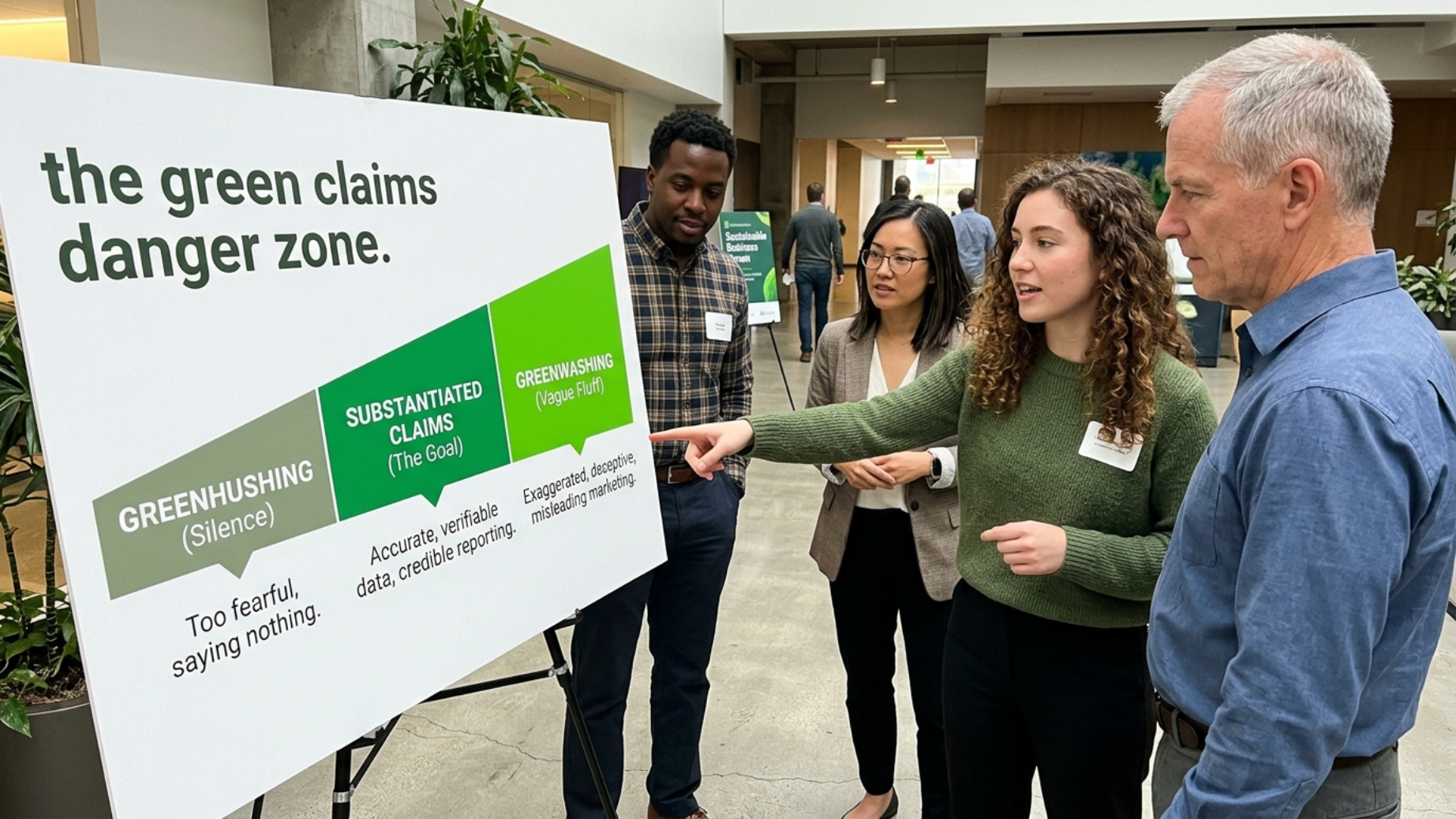
European Commission data shows that 53% of green claims are vague, misleading, or unfounded and 40% lack supporting evidence (source). Practitioners on Reddit consistently say they look for certifications, hard facts, production details, and measurable practices when evaluating whether a company is greenwashing. One user identifying as a corporate sustainability worker in consumer goods said generic “green” claims are usually a marketing ploy and that tangible action is far more convincing (source).
Watch for these red flags when evaluating sustainability marketing agencies:
They lead with vague language. Words like “green,” “eco,” “planet-friendly,” or “conscious” without proof should raise immediate suspicion.
They do not ask for data. A credible agency asks for sustainability reports, certifications, LCA data, supplier information, and claims documentation before creating anything.
They promise premiums. If an agency tells you consumers will pay more just because your brand is sustainable, they are oversimplifying research that is far more nuanced.
They treat compliance as an afterthought. The FTC Green Guides exist for a reason. Ask how the agency handles claim qualification and substantiation.
They ignore tradeoffs. Real sustainability involves tradeoffs (recyclable packaging with higher emissions, sustainable materials with higher prices). An agency that pretends otherwise is not being honest.
They jump to creative before research. If the first deliverable is a campaign concept rather than an evidence review, that is backwards.
They have no position on greenhushing. Some brands do meaningful sustainability work but are afraid to talk about it. A good agency helps you communicate with confidence and specificity, not silence.
Claims Readiness: A Mini-Audit Before You Contact Agencies
Before reaching out, assess your own readiness:
What sustainability actions are real and documented?
Which claims are certified or third-party verified?
Which claims are aspirational and need qualification?
Which claims create legal or reputational risk?
Which audiences need proof: consumers, retail buyers, investors, employees, donors?
What specific behavior needs to change?
What commercial metric matters most: purchase intent, conversion, engagement, loyalty, or stakeholder support?
This kind of self-assessment maps directly to the discovery phase of an agency engagement. Grounded World’s Discover service is designed around exactly this type of gap diagnosis, including intention-action gap research and 5C landscape assessment.
30-Second Agency Vetting Checklist
Before signing a contract, ask these three "acid test" questions:
"Can I see your claims substantiation workflow?" (If they don't have one, they are a liability).
"How do you account for 'Value upstages Values' in your creative?" (They must address McKinsey's 2024 findings on price sensitivity).
"Do you have a dedicated ESG data lead?" (Marketing alone isn't enough in 2026; they need data literacy).
When Grounded World Is the Right Choice
Grounded World is the right sustainability marketing agency if:
Your sustainability or social impact investments are real but not translating into traction.
Your team is stuck between purpose and profit.
Your sustainability messaging is credible but underperforming commercially.
You need to quantify or close the intention-action gap.
You need research, strategy, positioning, activation, and measurement connected in one engagement.
You need cross-functional alignment across marketing, sustainability, CSR, innovation, product, retail, and leadership.
You need a boutique, B Corp-certified partner rather than a large agency retainer.
You are a nonprofit or social enterprise that needs campaigns, partnerships, and measurable social impact tied to real outcomes.
Grounded’s four-phase model (Discover, Articulate, Activate, Accelerate) is built for organizations that are done treating sustainability as a side message and ready to make it a growth engine.
That starts with mapping where your commitments and your customers' behavior diverge. See our discovery approach.
Start with a complimentary 5C landscape assessment and discovery call
Frequently Asked Questions
What does a sustainability marketing agency do?
A sustainability marketing agency translates environmental and social impact into commercial growth. Beyond typical creative work, they specialize in claims substantiation, behavioral science to close the "intention-action gap," and navigating complex 2026 regulations like the EU's ECGT to ensure marketing is both credible and profitable.
How is a sustainability marketing agency different from an ESG communications agency?
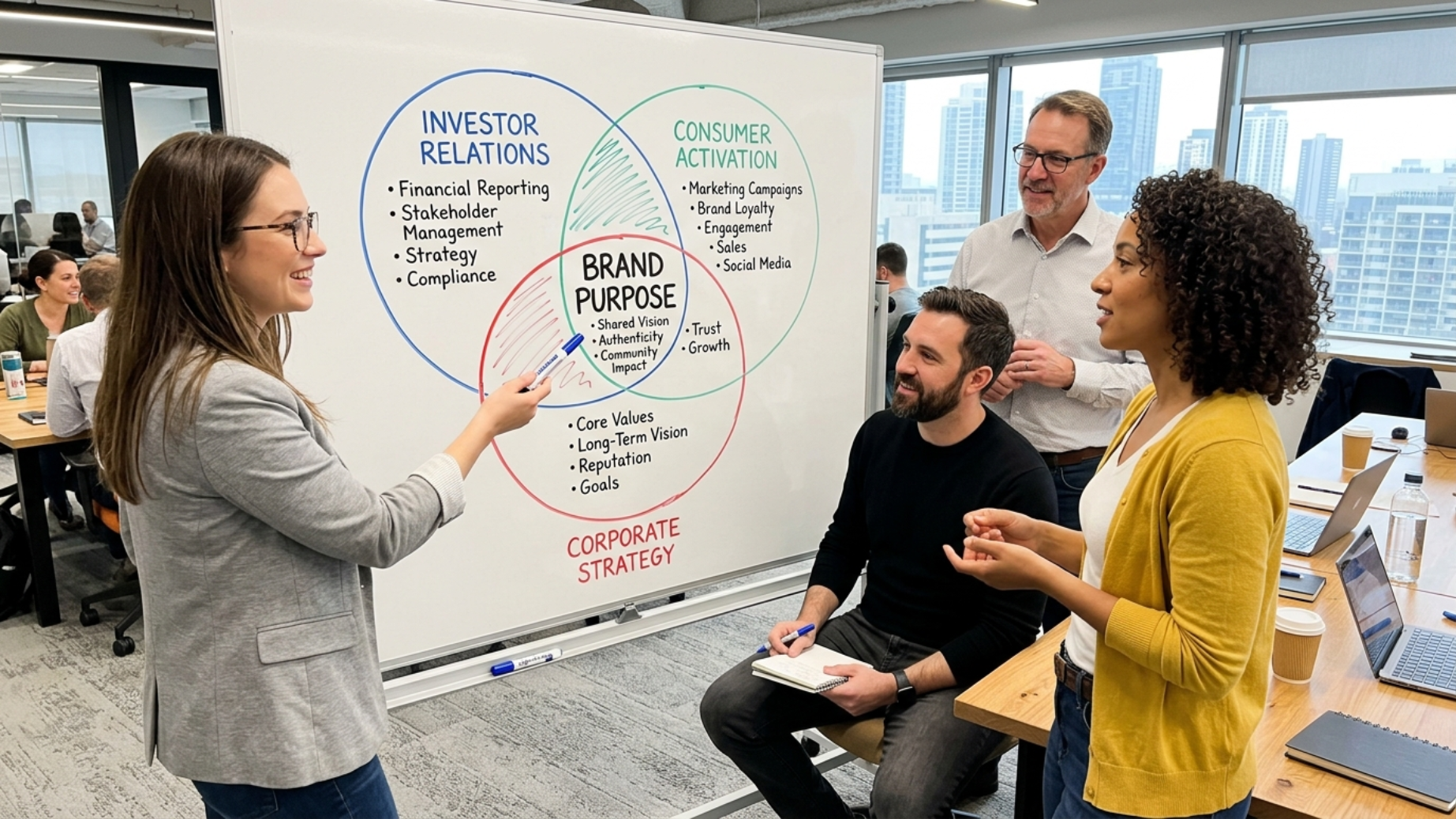
ESG communications agencies primarily target investors and regulators through formal reporting and stakeholder narratives. Sustainability marketing agencies focus on customer-facing activation, using brand strategy, shopper marketing, and digital growth tactics to turn a company’s ESG commitments into increased market share and consumer loyalty.
How much does a sustainability marketing agency cost?
Sustainability marketing costs vary by scope, but average branding projects range from $10,000 to $49,999. Enterprise-level strategy often exceeds $100,000, while specialized cleantech campaigns may start around $5,000. Comprehensive commercialization programs involving deep research and measurement are typically custom-scoped based on stakeholder complexity.
How do I know if an agency can help me avoid greenwashing?
A credible agency must demonstrate a rigorous process for substantiating claims. Ask if they utilize a dedicated compliance framework (like the FTC Green Guides) and if they involve sustainability data leads early in the creative process. In 2026, generic claims like "eco-friendly" are legally high-risk without third-party verification.
Do sustainability claims actually help sales?
Yes, but they are not a "silver bullet." While McKinsey/NielsenIQ data previously showed a 28% growth rate for ESG-claimed products, 2026 market data suggests that sustainability only scales when paired with value. Consumers prioritize the "sustainable choice" when it is equally convenient, effective, and competitively priced.
What is greenhushing, and why is it a risk?
Greenhushing occurs when brands under-communicate their sustainability achievements to avoid scrutiny or greenwashing accusations. This is a strategic risk because it prevents brands from building the long-term credibility and consumer trust required to win in a market where 76% of shoppers prioritize verified environmental credentials.
Should I choose a boutique or global sustainability agency?
Choose a boutique agency like Grounded World for senior-level strategy, speed, and integrated behavior-change research. Choose a global agency like Futerra for enterprise-scale culture shifts and worldwide campaign infrastructure. For mid-market brands, boutique firms generally offer a better ROI by focusing on commercial activation over high-level consulting.